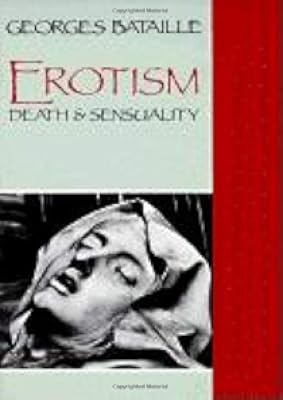
Erotism: Death and Sensuality
by Georges Bataille
On This Page
Description
Taboo and sacrifice, transgression and language, death and sensuality--Georges Bataille pursues these themes with an original, often startling perspective. He challenges any single discourse on the erotic. The scope of his inquiry ranges from Emily Bronte to Sade, from St. Therese to Claude Levi-Strauss and Dr. Kinsey; and the subjects he covers include prostitution, mythical ecstasy, cruelty, and organized war. Investigating desire prior to and extending beyond the realm of sexuality, show more heargues that eroticism is "a psychological quest not alien to death." " . . . one of the most original and unsettling of those thinkers who, in the wake of Sade and Nietzsche, have confronted the possibility of thought in a world that has lost its myth of transcendence."--Peter Brooks,New York Times Book Review "Bataille is one of the most important writers of the century."--Michel Foucault "[An] urgent, thrusting book about love, sex, death and spirituality by Georges Bataille."--Mark Price,Philosophy Now Georges Bataille (1897-1962) was a French intellectual and literary icon who wrote essays, novels, and poems exploring philosophical and sociological subjects such as eroticism and surrealism. City Lights published more of Bataille's works includingThe Impossible,The Tears of Eros, andStory of the Eye. show lessTags
Recommendations












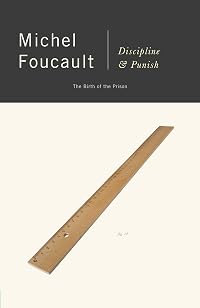

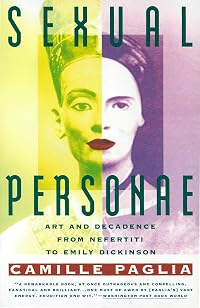
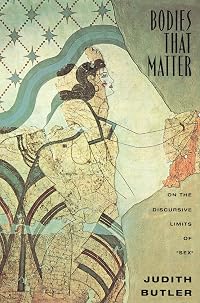

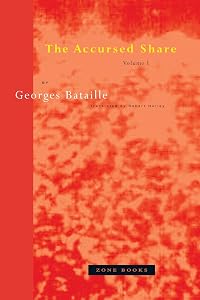
Member Recommendations
Member Reviews
I can say with certainty that this is a life changing book for me. I've started reading it for a second time as I'm sure there's a lot that I've missed. I can see how many readers could be repelled by Bataille's deconstruction of the heavy, harsh realities he grapples with. The subject matter, by itself, is brutally real. Some sentences jump out at me with absolute clarity; others remain murky and mysterious, refusing to give up their secrets -- Even after a second reading. Contradictions exist within the space of a sentence in this work. Bataille breaks down concepts that are at once elemental yet complex -- For example, "continuity" versus "discontinuity". This is an oversimplification, but in essence, Bataille examines the overlap show more between life and death; between existence and non-existence; and the role eroticism plays within that arena.
Bataille has been referred to as the "metaphysician of evil", a moniker that I find to be sensational. According to Bataille, eroticism moves man towards death; or alternatively, man moves towards death in pursuing the erotic, which he cannot help but doing, since eroticism is intrinsic to his very nature. Work acts as a barrier against the potentially malign influence of decadent eroticism. Although sex and sexuality in themselves are amoral -- Bataille makes use of a moral perspective in his study of the connection between eroticism and death. Human sacrifice (and its evolution into pastel Christianity / puritanical monotheism) and the writings of Marquis DeSade appear as two memorable themes in this work; as several other Goodreads reviewers have noted -- The chapter on DeSade is compelling.
While reading "Erotism" I asked myself the question: "Must I now view life through Bataille's dark prism? And the answer was unequivocally: "Yes". On a technical note, I find the translation to be problematic [this has been observed by other Goodreads reviewers as well]; typos abound and while many of them are innocuous -- There are instances where both the typos and the mistranslations possibly contribute to misinterpretation of specific shades of meaning. show less
Bataille has been referred to as the "metaphysician of evil", a moniker that I find to be sensational. According to Bataille, eroticism moves man towards death; or alternatively, man moves towards death in pursuing the erotic, which he cannot help but doing, since eroticism is intrinsic to his very nature. Work acts as a barrier against the potentially malign influence of decadent eroticism. Although sex and sexuality in themselves are amoral -- Bataille makes use of a moral perspective in his study of the connection between eroticism and death. Human sacrifice (and its evolution into pastel Christianity / puritanical monotheism) and the writings of Marquis DeSade appear as two memorable themes in this work; as several other Goodreads reviewers have noted -- The chapter on DeSade is compelling.
While reading "Erotism" I asked myself the question: "Must I now view life through Bataille's dark prism? And the answer was unequivocally: "Yes". On a technical note, I find the translation to be problematic [this has been observed by other Goodreads reviewers as well]; typos abound and while many of them are innocuous -- There are instances where both the typos and the mistranslations possibly contribute to misinterpretation of specific shades of meaning. show less
With this work Bataille attempts to delve into the primeval nature of man and the constructs of taboo and transgression he has used to distance himself from it. This is the philosophy of the macabre: sex, death, and evil are explored in a comprehensive scope that spans time from the "invention" of labor (which initiated the necessity of taboo, according to Bataille) all the way to the publication of the Kinsey Reports, and he criticizes them within the framework he has now firmly established in the preceding one hundred and fifty pages. Bataille goes on to explore Christian mysticism in relation to the erotic, the taboo of incest, and the philosophy of de Sade, which he picks apart and re-examines with critical propositions that are show more nothing short of revolutionary.
Though this work is now over fifty years old, it is doubtful that any book since has improved upon it nor even come close to it, nor that one has even dared. Some may find portions of the work misogynist, others may even find the work dated, and nearly all readers will find that at certain points an explanation of mere pornography borders on the esoteric and indecipherable. However, Bataille is trying to express that which cannot be expressed in language. Most concepts defy language itself, they are outside of it. Bataille himself states this. We see then what a lofty undertaking this work is, and the fact that it is so fluid, enlightening, and precise in spite of that is a monumental achievement. show less
Though this work is now over fifty years old, it is doubtful that any book since has improved upon it nor even come close to it, nor that one has even dared. Some may find portions of the work misogynist, others may even find the work dated, and nearly all readers will find that at certain points an explanation of mere pornography borders on the esoteric and indecipherable. However, Bataille is trying to express that which cannot be expressed in language. Most concepts defy language itself, they are outside of it. Bataille himself states this. We see then what a lofty undertaking this work is, and the fact that it is so fluid, enlightening, and precise in spite of that is a monumental achievement. show less
Devo confessar que a primeira vez que li O erotismo numa outra edição achei-o demasiado falocêntrico, mas eu estava sendo anacrônica ao julgá-lo assim, pois o mundo (e a literatura) era falocêntrico quando foi escrito, felizmente com o passar das décadas vieram o estudos de gênero e podemos agora aproveitar o que há de bom no livro de Bataille revisando para nossos propósitos, que no meu caso aborda pesquisa em torno de Hilda Hilst, pois convenhamos, não se estuda Hilst sem entender Bataille.
The overarching Freudian dogma that runs this book annoyed me, as well as the assumption that penetration is necessarily a submissive act for women. Female sexuality is definitely short-changed. The outlook this book has on sexuality is outdated and biologically incoherent. It may have been influential and forward in its time, but I don't understand why people still recommend and read this book.
Good work and a classic in French culture, but much of what is written is somewhat dated and needs to be rethought. Bataille represents the branch of Surrealism that broke with the communist side of that movement after WWII. JFL
death, orgasms, rituals, sex, power, weird french theory. God I love this book.
Bataille was singly the greatest mind in human history when it came to analyzing the truth of the human condition.
Members
- Recently Added By
Lists

el
1,139 works; 1 member
Author Information

242+ Works 12,417 Members
Georges Bataille was a French poet, novelist, and philosopher. He was born in Billon, Puy-de-Dome, in central France on September 10, 1897. His father was already blind and paralyzed from syphilis when Bataille was born. In 1915, Bataille's father died, his mind destroyed by his illness. The death marked his son for life. While working at the show more Bibliotheque National in Paris during the 1920s, Bataille underwent psychoanalysis and became involved with some of the intellectuals in the Surrealist movement, from whom he learned the concept of incongruous imagery in art. In 1946 he founded the journal Critique, which published the early work of some of his contemporaries in French intellectual life, including Roland Barthes and Jacques Derrida. Bataille believed that in the darkest moments of human existence-in orgiastic sex and terrible death-lay ultimate reality. By observing them and even by experiencing them, actually in sex and vicariously in death, he felt that one could come as close as possible to fully experiencing life in all its dimensions. Bataille's works include The Naked Beast at Heaven's Gate (1956), A Tale of Satisfied Desire (1953), Death and Sensuality: A Study of Eroticism and the Taboo (1962), and The Birth of Art: Prehistoric Painting (1955). Bataille died in Paris on July 8, 1962. (Bowker Author Biography) show less
Some Editions
Common Knowledge
- Canonical title*
- L' Erotisme
- Original title
- L'Érotisme
- Original publication date
- 1957
- People/Characters
- Donatien Alphonse-François, Marquis de Sade
- First words
- The human spirit is prey to the most astounding impulses. Man goes constantly in fear of himself. His erotic urges terrify him. The saint turns from the voluptuary in alarm; she does not know that his unacknowledgeable pas... (show all)sions and her own are really one.
- Last words
- (Click to show. Warning: May contain spoilers.)The pinnacle of being stands revealed in its entirety only through the movements of transgression in which, thought founded on the development of awareness through work, at last transcends work in the knowledge that it cannot be subordinate to it.
- Blurbers
- Foucault, Michel
- Original language*
- Francés
*Some information comes from Common Knowledge in other languages. Click "Edit" for more information.
Classifications
- Genres
- Nonfiction, Philosophy, Literature Studies and Criticism, General Nonfiction, Religion & Spirituality
- DDC/MDS
- 306.7 — Society, government, & culture Social sciences, sociology & anthropology Social Behavior - Dating, Marriage, Divorce Sexual relations
- LCC
- HQ61 .B3813 — Social sciences The family. Marriage, Women and Sexuality The Family. Marriage. Women Sexual life Sex instruction and sexual ethics
- BISAC
Statistics
- Members
- 1,404
- Popularity
- 16,886
- Reviews
- 9
- Rating
- (3.97)
- Languages
- 14 — Chinese, Czech, Danish, Dutch, English, French, German, Italian, Japanese, Norwegian (Bokmål), Norwegian, Polish, Spanish, Portuguese (Portugal)
- Media
- Paper, Ebook
- ISBNs
- 46
- ASINs
- 13