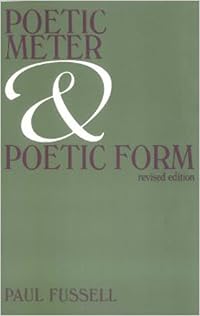
Poetic Meter and Poetic Form
by Paul Fussell
On This Page
Description
Helps aspiring readers enlarge their sensitivity to the rhythmical and formal dimensions of poetry.Tags
Recommendations



Member Reviews
I heartily recommend "Poetic Meter and Poetic Form" by Paul Fussell, Jr. His prose is elegant, erudite and brimming with subtle humor. (You may have read his history on WWII, which I hear from historian friends, is excellent.)
I bought "Poetic Meter and Poetic Form" as a ragged little paperback in college for 2 dollars and didn't read it until this fall, nearly 30 years after. It was waiting for me to "mature" into it. I must say, it was one of the best reads of all time for me, because it opened up the English tradition--from Old English to present, giving a historic overview. It teaches scansion, which is necessary to developing a talent in hearing the quirks particular to meter, the deviations that make meter interesting. My edition show more lacks the chapter on free verse, which Fussell included in a later version.
Robert Frost said he didn't write free verse because it would be playing tennis without a net! I wish kids in school were taught meter in school, because they are missing out on the fabulous English accentual-syllabic tradition. Kids are taught that scribbling a few lines of words and arranging them in an interesting way makes poetry. It does not.
BTW, I would read the last 2 chapters first. It speaks more broadly of art, which benefited my outlook on creative endeavors far beyond poetry. show less
I bought "Poetic Meter and Poetic Form" as a ragged little paperback in college for 2 dollars and didn't read it until this fall, nearly 30 years after. It was waiting for me to "mature" into it. I must say, it was one of the best reads of all time for me, because it opened up the English tradition--from Old English to present, giving a historic overview. It teaches scansion, which is necessary to developing a talent in hearing the quirks particular to meter, the deviations that make meter interesting. My edition show more lacks the chapter on free verse, which Fussell included in a later version.
Robert Frost said he didn't write free verse because it would be playing tennis without a net! I wish kids in school were taught meter in school, because they are missing out on the fabulous English accentual-syllabic tradition. Kids are taught that scribbling a few lines of words and arranging them in an interesting way makes poetry. It does not.
BTW, I would read the last 2 chapters first. It speaks more broadly of art, which benefited my outlook on creative endeavors far beyond poetry. show less
This is not the first book to read on the subject of how form assists meaning in poetry; for that I would go back to John Ciardi’s How Does a Poem Mean? But Fussell’s book is a good, succinct one for those who have some little knowledge of prosody and want a very good summation of metrics and of traditional forms in English poetry, along with a discussion of how metrical substitutions work. The heart of the book is a chapter called “Structural Principles: Example of the Sonnet,” that may be the best short discussion of the sonnet ever written.
Fussell works systematically through the subject, liberally sprinkling the text with examples, most of which clearly support his points. He begins his first section “Poetic Meter,” show more with “The Nature of Meter” and its importance as “a prime physical and emotional constituent of poetic meaning.” “The Technique of Scansion” is the short, necessary chapter to make the book useful to any real examination of how a poem’s sound works. The third chapter, on variations, points out several principles, as well as many examples, of how defeating the expectations of regular meter is the poet’s most versatile sound tool.
The historical context is given a chapter: how the stressed alliterative hemistichs of Old English verse give way to accentual-syllabic rhyming verse, the lyric prosody of songs and ballads, and the emergence of the five-stress, decasyllabic line Chaucer uses most often in his predominant couplets, and finally the explosion of forms in the Renaissance, with its poets’ mastery of blank verse, their experiments with quantitative verse, their innovations in the sonnet form, and more. The eighteenth century refines a few forms like the iambic pentameter couplet. The nineteenth century experiments again with many forms, rediscovers the versatility of the ballad, and more. In America, Whitman opens the dramatic monologue form to long lines with biblical echoes. The twentieth century uses Whitman’s example to experiment and often comes back to loose accentual-syllabic regularity.
Free verse gets a chapter by itself—Christopher Smart, Whitman, Roethke, D. H. Lawrence, William Carlos Williams, Marianne Moore, A. R. Ammons and Pound.
Fussell puts what he had already laid out together in “Some Implications of Metrical Analysis.” Then he begins the second section, called “Poetic Form.” “Structural Principles: The Example of the Sonnet” may be called the heart of the book and is certainly its best chapter. Fussell looks at the variations the sonnet has taken in English, the way poets have exploited the relationships of its parts to structure their poems, and the historical implications of these matters.
He goes through the fixed forms in “The English Stanzas”—first use and associations from that and use by others. He points out the dilemma of recent poets: they cannot use “forms irretrievably associated with the opposite” of what they want to convey about experience, but poetry demands expressive form, and the old forms have not been replaced. “Some Critical Implications of Stanzaic forms” has examples showing successful and not so successful uses of traditional stanzas and nonce forms—the considerations here are mainly structural, dealing with how a poetic argument is constructed or how it moves from one affective state to another. “Conventions and the Individual Talent” echoes T. S. Eliot in saying “The individual talent is speechless without the conventions.” show less
Fussell works systematically through the subject, liberally sprinkling the text with examples, most of which clearly support his points. He begins his first section “Poetic Meter,” show more with “The Nature of Meter” and its importance as “a prime physical and emotional constituent of poetic meaning.” “The Technique of Scansion” is the short, necessary chapter to make the book useful to any real examination of how a poem’s sound works. The third chapter, on variations, points out several principles, as well as many examples, of how defeating the expectations of regular meter is the poet’s most versatile sound tool.
The historical context is given a chapter: how the stressed alliterative hemistichs of Old English verse give way to accentual-syllabic rhyming verse, the lyric prosody of songs and ballads, and the emergence of the five-stress, decasyllabic line Chaucer uses most often in his predominant couplets, and finally the explosion of forms in the Renaissance, with its poets’ mastery of blank verse, their experiments with quantitative verse, their innovations in the sonnet form, and more. The eighteenth century refines a few forms like the iambic pentameter couplet. The nineteenth century experiments again with many forms, rediscovers the versatility of the ballad, and more. In America, Whitman opens the dramatic monologue form to long lines with biblical echoes. The twentieth century uses Whitman’s example to experiment and often comes back to loose accentual-syllabic regularity.
Free verse gets a chapter by itself—Christopher Smart, Whitman, Roethke, D. H. Lawrence, William Carlos Williams, Marianne Moore, A. R. Ammons and Pound.
Fussell puts what he had already laid out together in “Some Implications of Metrical Analysis.” Then he begins the second section, called “Poetic Form.” “Structural Principles: The Example of the Sonnet” may be called the heart of the book and is certainly its best chapter. Fussell looks at the variations the sonnet has taken in English, the way poets have exploited the relationships of its parts to structure their poems, and the historical implications of these matters.
He goes through the fixed forms in “The English Stanzas”—first use and associations from that and use by others. He points out the dilemma of recent poets: they cannot use “forms irretrievably associated with the opposite” of what they want to convey about experience, but poetry demands expressive form, and the old forms have not been replaced. “Some Critical Implications of Stanzaic forms” has examples showing successful and not so successful uses of traditional stanzas and nonce forms—the considerations here are mainly structural, dealing with how a poetic argument is constructed or how it moves from one affective state to another. “Conventions and the Individual Talent” echoes T. S. Eliot in saying “The individual talent is speechless without the conventions.” show less
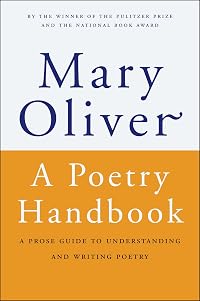
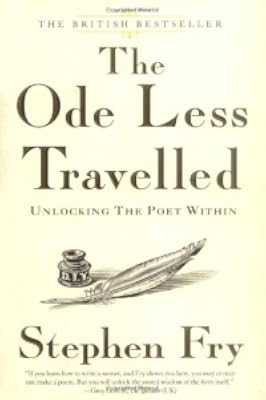
This is, indeed, an authoritative guide to meter and form. However, Fussell's arrogance had me running to other equally authoritative yet substantially less elitist sources. Try Mary Oliver's Rules of the Dance or Stephen Fry's The Ode Less Travelled instead.
Helpful but no imperative. A good explanation of prosody (without getting too lofty) and decent source for examples. I used the book to help my students scan poems better. *NOTE* The chapter on free verse is garbage.
A study of the mechanics behind the art. Fussell looks into what separates good from great in poetry, again, froma mechanical standpoint.
Excerpts from distinctive poems illustrate the author's appreciation of the metrical and formal aspects of poetry. Source: GoodReads
"This book might be required reading for all students of poetry because it makes wonderfully clear the relationship of metrics to the formal achievement of meaning ... Fussell's command of his subject and his never-failing common sense will guarantee ... enrichment for anyone who takes the time to read this book." Source: Publisher GoogleBooks (Random House 1979 edition (ISBN 0394321200)
"This book might be required reading for all students of poetry because it makes wonderfully clear the relationship of metrics to the formal achievement of meaning ... Fussell's command of his subject and his never-failing common sense will guarantee ... enrichment for anyone who takes the time to read this book." Source: Publisher GoogleBooks (Random House 1979 edition (ISBN 0394321200)
Paperback: 190 pages
Publisher: McGraw-Hill Humanities/Social Sciences/Languages; Revised edition (January 1, 1979)
Language: English
ISBN-10: 0075536064
ISBN-13: 978-0075536062
Product Dimensions: 0.5 x 5.3 x 8.2 inches
Shipping Weight: 7.2 ounces (View shipping rates and policies)
Average Customer Review: 4.6 out of 5 stars See all reviews (15 customer reviews)
Amazon Best Sellers Rank: #39,615 in Books (See Top 100 in Books)
Publisher: McGraw-Hill Humanities/Social Sciences/Languages; Revised edition (January 1, 1979)
Language: English
ISBN-10: 0075536064
ISBN-13: 978-0075536062
Product Dimensions: 0.5 x 5.3 x 8.2 inches
Shipping Weight: 7.2 ounces (View shipping rates and policies)
Average Customer Review: 4.6 out of 5 stars See all reviews (15 customer reviews)
Amazon Best Sellers Rank: #39,615 in Books (See Top 100 in Books)
Members
- Recently Added By
Author Information

24+ Works 7,336 Members
Paul Fussell Jr. was born in Pasadena, California on March 22, 1924. He was drafted into the Army in 1943 while attending Pomona College. During his tour of duty, he won the Bronze Star and two Purple Hearts. He returned to college in 1945. He received a bachelor of arts degree from Pomona College in 1947 and a master's degree and a doctorate in show more English from Harvard University. He taught English at Connecticut College for Women, Rutgers University, and the University of Pennsylvania. During this time he wrote several books on literary topics including The Rhetorical World of Augustan Humanism: Ethics and Imagery from Swift to Burke, Poetic Meter and Poetic Form, and Samuel Johnson and the Life of Writing. In 1975, he published The Great War and Modern Memory, which was a study of World War I and how its horrors fostered a disillusioned modernist sensibility. This book won both the National Book Critics Circle Award for Criticism and the National Book Award for Arts and Letters. His other works include Abroad: British Literary Traveling Between the Wars, Class: A Guide Through the American Status System, Wartime: Understanding and Behavior in the Second World War, BAD: Or, the Dumbing of America, and Doing Battle: The Making of a Skeptic. He died of natural causes on May 23, 2012 at the age of 88. (Bowker Author Biography) show less
Common Knowledge
- Original publication date
- 1965
Classifications
Statistics
- Members
- 704
- Popularity
- 40,669
- Reviews
- 8
- Rating
- (3.99)
- Languages
- English
- Media
- Paper
- ISBNs
- 3
- ASINs
- 3