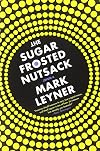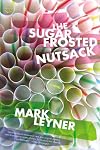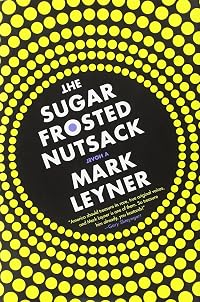
The Sugar Frosted Nutsack
by Mark Leyner
On This Page
Description
From the bestselling and wildly imaginative novelist Mark Leyner, a romp through the excesses and exploits of gods and mortals. High above the bustling streets of Dubai, in the world's tallest and most luxurious skyscraper, reside the gods and goddesses of the modern world. Since they emerged 14 billion years ago from a bus blaring a tune remarkably similar to the Mister Softee jingle, they've wreaked mischief and havoc on mankind. Unable to control their jealousies, the gods have splintered show more into several factions, led by the immortal enemies XOXO, Shanice, La Felina, Fast-Cooking Ali, and Mogul Magoo. Ike Karton, an unemployed butcher from New Jersey, is their current obsession. Ritualistically recited by a cast of drug-addled bards, The Sugar Frosted Nutsack is Ike's epic story. A raucous tale of gods and men confronting lust, ambition, death, and the eternal verities, it is a wildly fun, wickedly fast gambol through the unmapped corridors of the imagination. show lessTags
Recommendations
















Member Recommendations
Member Reviews
'Tis a book of opposites. Intellectual and low-brow. Erudite and juvenile. The Sugar Frosted Nutsack is in-your-face postmodernism and self-referential to the max. Reminded me, in some ways, of a book by a young Scottish whippersnapper named MJ Nichols while he was in college. If you are new to Leyner and his comedy of the absurd, I recommend you start with My Cousin, My Gastroenterologist instead. I still find MCMG to be his best and most startling work. I have enjoyed all his fiction to one degree or another, but I've never felt he attained quite the anarchic glee of that first short story collection. And in the case of The Sugar Frosted Nutsack, he has taken his absurdity quite seriously...and the result is something less humorous show more and less surprising...if smarter (in some ways).
The premise, roughly (and it can only be captured roughly as the premise of the book itself is constantly under attack by the book), is: one blue-collar anti-Semite (self-satirically?) unemployed anarcho-primitivist (in name only?) Ike Karton (Kike Cartoon?) is a pawn of—and masturbatory object of—a ridiculous crew of all-powerful yet entirely petty Gods and Goddesses. Got that? I thought so. To continue: Ike Karton has visions of his own impending death (suicide by cop? fall guy for the Gods?), and he slowly moves toward it through the book while the book itself represents his story as an oral Bible. An oral retelling of his life becomes the Bible of civilization and TSFN continually recaptures and recaptures the telling of the retelling of the retelling his life in fits and starts. Bible, as in, apparently, in this world there is only one religion left standing, the worship of Ike Karton and his family, and this book Cliff Notes his story. Unfortunately, for us and for Ike, the Gods are (maybe) vying for (or in cahoots, taking turns for)...power? entertainment? the best pranks on humanity?)...and as a result, everything is just pretty much...fucked up.
And like any good postmodern romp, the story eats itself over and over again. Referring to itself, accusing itself of rewriting itself. The author showing his cards, pulls the rug out from under you, and tricks you. Giving you a sense of meaning, then stealing it.
Makes sense? Piece of cake.
I'm going to relate two quotes from the book.
This first quote is the author stating what the "innermost secret" of the "epic" is. And I believe he is blatantly stating it even though it is couched in the ridiculous.
[Note, when I reference T.S.F.N, this is exactly how Leyner writes it, and he also includes the boldface and italics...something he does throughout the entire book in a way that is clearly annoying, but I suspect intentionally annoying.]
Replace "eons of entropic silence" with "the way this book is written" and you've pretty much got it. Leyner is vanquishing sense and sensibility in an orgy of self-contradiction. Leading you to think there is meaning and then snatching it away in an impossible attempt to recreate meaninglessness meaning. So, there you have it.
This second quote is essentially Leyner providing a critical description of the tone of the story and it neatly sums up the premise as well. As he writes, "Even those who consider all this total bullshit have to concede that it's upscale, artisanal bullshit of the highest order."
Indeed. Indeed. show less
The premise, roughly (and it can only be captured roughly as the premise of the book itself is constantly under attack by the book), is: one blue-collar anti-Semite (self-satirically?) unemployed anarcho-primitivist (in name only?) Ike Karton (Kike Cartoon?) is a pawn of—and masturbatory object of—a ridiculous crew of all-powerful yet entirely petty Gods and Goddesses. Got that? I thought so. To continue: Ike Karton has visions of his own impending death (suicide by cop? fall guy for the Gods?), and he slowly moves toward it through the book while the book itself represents his story as an oral Bible. An oral retelling of his life becomes the Bible of civilization and TSFN continually recaptures and recaptures the telling of the retelling of the retelling his life in fits and starts. Bible, as in, apparently, in this world there is only one religion left standing, the worship of Ike Karton and his family, and this book Cliff Notes his story. Unfortunately, for us and for Ike, the Gods are (maybe) vying for (or in cahoots, taking turns for)...power? entertainment? the best pranks on humanity?)...and as a result, everything is just pretty much...fucked up.
And like any good postmodern romp, the story eats itself over and over again. Referring to itself, accusing itself of rewriting itself. The author showing his cards, pulls the rug out from under you, and tricks you. Giving you a sense of meaning, then stealing it.
Makes sense? Piece of cake.
I'm going to relate two quotes from the book.
This first quote is the author stating what the "innermost secret" of the "epic" is. And I believe he is blatantly stating it even though it is couched in the ridiculous.
[Note, when I reference T.S.F.N, this is exactly how Leyner writes it, and he also includes the boldface and italics...something he does throughout the entire book in a way that is clearly annoying, but I suspect intentionally annoying.]
This is the innermost secret of the epic. Before the arrival of the Gods, everything was wildly italicized. This was the time of the so-called “Spring Break." There were only phenomena and vaguely defined personages, and there was really no discernible distinction between phenomena and personages. There were no "Gods” per se, no dramatis personae, there was only an undifferentiated, unidimensional T.S.F.N.—only the infinitely recursive story and its infinitely droning loops, varying infinitesimally with each iteration. But once the Gods arrived and got off the bus, they insisted on being boldfaced signifiers. The whole epic is about the war on the part of T.S.F.N. to vanquish the boldfaced signifiers and reestablish the "golden age" when things happened without any discernible context; when there were no recognizable patterns; when it was all incoherent; when isolated, disjointed events would take place only to be engulfed by an opaque black void, their relative meaning, their significance, annulled by the eons of entropic silence that estranged one form from the next...
Replace "eons of entropic silence" with "the way this book is written" and you've pretty much got it. Leyner is vanquishing sense and sensibility in an orgy of self-contradiction. Leading you to think there is meaning and then snatching it away in an impossible attempt to recreate meaninglessness meaning. So, there you have it.
This second quote is essentially Leyner providing a critical description of the tone of the story and it neatly sums up the premise as well. As he writes, "Even those who consider all this total bullshit have to concede that it's upscale, artisanal bullshit of the highest order."
Indeed. Indeed. show less
(Reprinted from the Chicago Center for Literature and Photography [cclapcenter.com]. I am the original author of this essay, as well as the owner of CCLaP; it is not being reprinted illegally.)
It would not be off the mark to call Mark Leyner the "King of the Bizarro Authors," given that he is one of the only practitioners in the whole country of this "Monty Python meets Psychobilly" subgenre to regularly score lucrative contracts with large mainstream publishers, and to be featured in such national media outlets as Entertainment Weekly. And now after a long hiatus, he's finally back with a new novel, the appropriately absurdist The Sugar Frosted Nutsack; and after reading through this latest inspired piece of weirdness, it's easy to see show more why he's the undisputed king of this particular genre, because the pure sense of imagination that Leyner brings to the table far outstrips almost anything that almost any other American bizarro author is writing these days. Ostensibly about a group of ancient gods that are still around to meddle in human affairs, now living in a penthouse apartment at the top of a Dubai skyscraper, like most bizarro novels this is merely chapter-one window-dressing so that the marketing people have something to write on the dust jacket, with the story quickly expanding so to eventually be about everything in the world and nothing all at the same time, a gloriously chaotic wallowing in the pure joy of language itself, a proud literary tradition that (with a little squinting) can be directly traced all the way back to G.K. Chesterton at the end of the Victorian Age. Granted, this is a bawdy and hyperactive version of Chesterton, but I believe that proto-nerd would highly approve of the work of Mark Leyner; and so will fans of Douglas Adams, Will Self, David David Katzman and Hunter S. Thompson, a clever stream-of-consciousness fairytale that's best experienced by passing it quickly from one ear through the other, and letting the burningly unique images seer a tattoo on the back of your psychic retinas.
Out of 10: 9.0, or 10 for fans of bizarro fiction show less
It would not be off the mark to call Mark Leyner the "King of the Bizarro Authors," given that he is one of the only practitioners in the whole country of this "Monty Python meets Psychobilly" subgenre to regularly score lucrative contracts with large mainstream publishers, and to be featured in such national media outlets as Entertainment Weekly. And now after a long hiatus, he's finally back with a new novel, the appropriately absurdist The Sugar Frosted Nutsack; and after reading through this latest inspired piece of weirdness, it's easy to see show more why he's the undisputed king of this particular genre, because the pure sense of imagination that Leyner brings to the table far outstrips almost anything that almost any other American bizarro author is writing these days. Ostensibly about a group of ancient gods that are still around to meddle in human affairs, now living in a penthouse apartment at the top of a Dubai skyscraper, like most bizarro novels this is merely chapter-one window-dressing so that the marketing people have something to write on the dust jacket, with the story quickly expanding so to eventually be about everything in the world and nothing all at the same time, a gloriously chaotic wallowing in the pure joy of language itself, a proud literary tradition that (with a little squinting) can be directly traced all the way back to G.K. Chesterton at the end of the Victorian Age. Granted, this is a bawdy and hyperactive version of Chesterton, but I believe that proto-nerd would highly approve of the work of Mark Leyner; and so will fans of Douglas Adams, Will Self, David David Katzman and Hunter S. Thompson, a clever stream-of-consciousness fairytale that's best experienced by passing it quickly from one ear through the other, and letting the burningly unique images seer a tattoo on the back of your psychic retinas.
Out of 10: 9.0, or 10 for fans of bizarro fiction show less
The Sugar Frosted Nutsack has the distinction of being as close to "metafiction" in a pure sense as one is likely to ever get, with recursive fractal curlicues redoubling constantly such that, as with some poetry, you can anticipate entire stanzas, but also constantly filling in more detail, as in discussions of Mandelbrot and the infinitely long coastline of Great Britain.
But there is also a heart at the center, suggesting that the closest movie analogue is actually Mulholland Drive rather something much more obvious at first glance, like Detention.
Or, to put it another way, as it moves from a story of a character struggling to be an individual, and heroic in his own way, to the story of everybody trying to frame that story, it lends show more heroism to that character simply by dint of his being the center of the constantly re-framed story. Does that make sense?
Further, it references this by offering that some have postulated that that character has, in fact, been a statue the entire time, thus auto-critiquing its own narrative point and structure.
And it has all of the wacky Leyner hijinx his other fiction does: too many pop-culture references to count, a genuinely astounding vocabulary and breadth of knowledge that seems almost wasteful, and astonishing imagination matched with descriptions that manage to convey visual imagery pretty much unmatched anywhere else.
As with everything that is so successful a deconstruction, though, it ends up empty except for the experience. show less
But there is also a heart at the center, suggesting that the closest movie analogue is actually Mulholland Drive rather something much more obvious at first glance, like Detention.
Or, to put it another way, as it moves from a story of a character struggling to be an individual, and heroic in his own way, to the story of everybody trying to frame that story, it lends show more heroism to that character simply by dint of his being the center of the constantly re-framed story. Does that make sense?
Further, it references this by offering that some have postulated that that character has, in fact, been a statue the entire time, thus auto-critiquing its own narrative point and structure.
And it has all of the wacky Leyner hijinx his other fiction does: too many pop-culture references to count, a genuinely astounding vocabulary and breadth of knowledge that seems almost wasteful, and astonishing imagination matched with descriptions that manage to convey visual imagery pretty much unmatched anywhere else.
As with everything that is so successful a deconstruction, though, it ends up empty except for the experience. show less
A pantheon of hungover deities roll into the universe on a bus playing something that sounds a lot like the Mister Softee jingle, take residence in Dubai's Burj Khalifa, and turn their collective gaze on Ike Karton, a 48-year-old, 5'7", unemployed, Jersey City butcher.
The Sugar Frosted Nutsack is exactly the sort of next novel you might expect from Mark Leyner, in that Mark Leyner's indescribable, hyper-experimental, postmodern fiction generally defies the notion of expectation. If you expect however that it's hilarious, you wont't be disappointed.
The Sugar Frosted Nutsack is exactly the sort of next novel you might expect from Mark Leyner, in that Mark Leyner's indescribable, hyper-experimental, postmodern fiction generally defies the notion of expectation. If you expect however that it's hilarious, you wont't be disappointed.
Mark Leyner's new book has been getting a lot of media attention, partly because it's a "comeback" book, and partly because he is associated with the generation that includes David Foster Wallace and Jonathan Franzen. (Apparently there is a YouTube video of an old episode of "Charlie Rose" with Leyner, Wallace, and Franzen as the guests, made before Franzen was widely known.)
The reviews I have seen praise Leyner mainly for going there: he says things and writes in ways that are not usually permitted in novels. (One reviewer put it that way: he was astonished at what he read, and wondered, "Is that permitted?") People say his writing is astonishing, virtuoso, brilliant. People find him hilarious; reviewers mention how they laughed -- show more often, loudly, even continuously. An especially common sentiment is that his work makes other novels seem old-fashioned. Here is one of the Amazon reviews, in full:
"It took me exactly 3 pages of this book to make me realize that I've been ever so slightly bored with every other book I've read... since Leyner's last book. This is the divine comedy."
I won't deny I smiled a number of times reading the book: it would be hard not to smile when Leyner is telling us, for example, that J.D. Salinger wrote an article with A.J. Foyt and published it in "Highlights for Children." The book's central conceit, that the universe is run by a white van-load full of gods who appeared about 14 billion years ago and are obsessed with someone named Ike who lives in New Jersey, is the kind of opening move that announces -- all by itself, with no need for an accompanying novel -- that as soon as any rule of novel writing, or even of propriety, appears, it will be happily broken.
But I never laughed reading "The Sugar-Frosted Nutsack." I tried to picture the sort of reader Leyner was imagining: such a person would come to the novel with her head filled with Austen, Tolstoy, Nabokov, Forster, Greene, Roth, Updike, and especially Franzen, Ford, McCarthy, Proulx... and by the very first page they'd be shocked, dismayed, and delighted. (This is one reason, I think, why Wallace once envied Leyner, even though Wallace tried hard not to depend on fireworks, paranoia, virtuoso writing, and hallucigenic scenarios.)
It is more difficult to imagine the kind of reader for whom the entire book is funny, joke after joke. Several reviewers hinted that the book became boring, but reviewers who liked "The Sugar-Frosted Nutsack" (like the one quoted above) tend to identify it as a kind of revelation of the inherently boring nature of other books. Boredom figures in Leyner's work in a complicated way; for me, thinking about boredom was the most interesting part of reading.
The book staves off something that counts as boredom by keeping up a nearly uniform pitch of hysteria. In the entire book there are only a few moments in which the narrator's voice relaxes -- when the double exclamation marks, italics, pop culture references, scattered references, Pynchonesque paranoia, Barth-like meta-references, all around goofiness, and boldface celebrity names let up just a little. One such passage is a list of things that Ike, the hero, loved about his childhood. Without its context, that list would be a lyrical, unironic, nostalgic evocation of memories that have largely been lost. In context, it's drowned out by the gods and their craziness. Another passage, also a list, is about what men can understand about women. It turns out it was plagiarized from "O," Oprah's magazine. The novel itself admits that, and it's also credited in the endpapers. Out of context, that list would be sincere and heartfelt (as it would have been in "O"); in the novel it's said that people who take the list that way are hard to figure out.
What, then, cold count as boredom in this book? Here are two possible positions:
1. For me, it's the flood of writing itself that became boring, mainly because it was unmodulated (except for those interesting brief passages), and also because the individual jokes weren't funny. And that, in turn, was because I am used to unexpected juxtapositions of high and low culture, past and present, sense and nonsense, seriousness and irony: those kinds of jolts were a stock in trade of first-generation postmodernism. If you find it humorous to see Mircea Eliade's name juxtaposed with the name the god of testicles, that may be because you are anxious about the values and meanings of serious culture, philosophy, high art, and so forth, so it's a relief to see them deflated. If you aren't anxious, then it isn't especially funny to see those juxtapositions: they are a little funny, sure, but not in a sustainable way.
2. For some of Leyner's fans, the flood is the opposite of boring, and it reveals the fundamentally boring nature of other novels. Readers who are energized by a continuous barrage of wild writing are, I think, good examples of what the philosopher Karsten Harries called the "kitsch economy." In kitsch, what matters is effects, and in each repetition they have to be done more intensely, more densely, than before. The "kitsch economy" is tied to perpetual inflation: each new novel, film, painting, or composition has to have more special effects than the one before, because the effect of each innovation -- the hit, the force of the drug -- wears off. Readers who find that Leyner makes other novelists boring will soon be needing him, or someone else, to be more outrageous, more condensed, more brilliant...
Boredom and its opposites (attention, immersion, absorption) are one of the themes that makes the book interesting. Another is what counts as funny, and why. Those were the kinds of things I was thinking of as I read. The book's repetitiveness, which some reviewers criticized, is part of the whole game: if what matters is to be entertained continuously, with no letup, and if one of the ways of accomplishing that is to be perverse, then what better strategy than to make repetition part of the plot? The book would have been twice as good if it were twice as long. Or, in the spirit of Oulipo: it would have been a thousand times as good if it were a thousand times longer. show less
The reviews I have seen praise Leyner mainly for going there: he says things and writes in ways that are not usually permitted in novels. (One reviewer put it that way: he was astonished at what he read, and wondered, "Is that permitted?") People say his writing is astonishing, virtuoso, brilliant. People find him hilarious; reviewers mention how they laughed -- show more often, loudly, even continuously. An especially common sentiment is that his work makes other novels seem old-fashioned. Here is one of the Amazon reviews, in full:
"It took me exactly 3 pages of this book to make me realize that I've been ever so slightly bored with every other book I've read... since Leyner's last book. This is the divine comedy."
I won't deny I smiled a number of times reading the book: it would be hard not to smile when Leyner is telling us, for example, that J.D. Salinger wrote an article with A.J. Foyt and published it in "Highlights for Children." The book's central conceit, that the universe is run by a white van-load full of gods who appeared about 14 billion years ago and are obsessed with someone named Ike who lives in New Jersey, is the kind of opening move that announces -- all by itself, with no need for an accompanying novel -- that as soon as any rule of novel writing, or even of propriety, appears, it will be happily broken.
But I never laughed reading "The Sugar-Frosted Nutsack." I tried to picture the sort of reader Leyner was imagining: such a person would come to the novel with her head filled with Austen, Tolstoy, Nabokov, Forster, Greene, Roth, Updike, and especially Franzen, Ford, McCarthy, Proulx... and by the very first page they'd be shocked, dismayed, and delighted. (This is one reason, I think, why Wallace once envied Leyner, even though Wallace tried hard not to depend on fireworks, paranoia, virtuoso writing, and hallucigenic scenarios.)
It is more difficult to imagine the kind of reader for whom the entire book is funny, joke after joke. Several reviewers hinted that the book became boring, but reviewers who liked "The Sugar-Frosted Nutsack" (like the one quoted above) tend to identify it as a kind of revelation of the inherently boring nature of other books. Boredom figures in Leyner's work in a complicated way; for me, thinking about boredom was the most interesting part of reading.
The book staves off something that counts as boredom by keeping up a nearly uniform pitch of hysteria. In the entire book there are only a few moments in which the narrator's voice relaxes -- when the double exclamation marks, italics, pop culture references, scattered references, Pynchonesque paranoia, Barth-like meta-references, all around goofiness, and boldface celebrity names let up just a little. One such passage is a list of things that Ike, the hero, loved about his childhood. Without its context, that list would be a lyrical, unironic, nostalgic evocation of memories that have largely been lost. In context, it's drowned out by the gods and their craziness. Another passage, also a list, is about what men can understand about women. It turns out it was plagiarized from "O," Oprah's magazine. The novel itself admits that, and it's also credited in the endpapers. Out of context, that list would be sincere and heartfelt (as it would have been in "O"); in the novel it's said that people who take the list that way are hard to figure out.
What, then, cold count as boredom in this book? Here are two possible positions:
1. For me, it's the flood of writing itself that became boring, mainly because it was unmodulated (except for those interesting brief passages), and also because the individual jokes weren't funny. And that, in turn, was because I am used to unexpected juxtapositions of high and low culture, past and present, sense and nonsense, seriousness and irony: those kinds of jolts were a stock in trade of first-generation postmodernism. If you find it humorous to see Mircea Eliade's name juxtaposed with the name the god of testicles, that may be because you are anxious about the values and meanings of serious culture, philosophy, high art, and so forth, so it's a relief to see them deflated. If you aren't anxious, then it isn't especially funny to see those juxtapositions: they are a little funny, sure, but not in a sustainable way.
2. For some of Leyner's fans, the flood is the opposite of boring, and it reveals the fundamentally boring nature of other novels. Readers who are energized by a continuous barrage of wild writing are, I think, good examples of what the philosopher Karsten Harries called the "kitsch economy." In kitsch, what matters is effects, and in each repetition they have to be done more intensely, more densely, than before. The "kitsch economy" is tied to perpetual inflation: each new novel, film, painting, or composition has to have more special effects than the one before, because the effect of each innovation -- the hit, the force of the drug -- wears off. Readers who find that Leyner makes other novelists boring will soon be needing him, or someone else, to be more outrageous, more condensed, more brilliant...
Boredom and its opposites (attention, immersion, absorption) are one of the themes that makes the book interesting. Another is what counts as funny, and why. Those were the kinds of things I was thinking of as I read. The book's repetitiveness, which some reviewers criticized, is part of the whole game: if what matters is to be entertained continuously, with no letup, and if one of the ways of accomplishing that is to be perverse, then what better strategy than to make repetition part of the plot? The book would have been twice as good if it were twice as long. Or, in the spirit of Oulipo: it would have been a thousand times as good if it were a thousand times longer. show less
This is probably the weirdest, most absurd novel I have ever read. It is self-referential, insane, imaginative. I have never read anything like it, and I couldn't recommend it to anyone who doesn't like the strange. It has created its own mythos that mocks myth and storytelling and itself. I can completely imagine most people who read this absolutely hating it or not making it through. I guess I'm one of those few who found it funny.
The Sugar Frosted Nutsack: A Novel by Mark Leyner (New York: Little, Brown, and Company, 2012. 247 pp) Originally Posted at http://www.wherepenmeetspaper.com
Mark Leyner is a “postmodern” American author known for employing an unconventional writing style in his works of fiction. He is most well-known for The Tetherballs of Bougainville. Leyner has worked for Esquire, George, and is also a writer for MTV. He is also known for being critiqued in David Foster Wallace’s essay, “E Unibus Pluram: Television and U.S. Fiction.”
Just. Plain. Weird.
While I have never been high on marijuana, I imagine the drug-induced feeling resembles The Sugar Frosted Nutsack. The book reads like Douglas Adams, author of The Hitchhiker's Guide to the show more Galaxy, had a literary baby with a run-on-sentence. The Sugar Frosted Nutsack is most likely the weirdest novel I’ve ever read. But, in the interest of a longer review, I’ll try to recount the “plot” of the novel for your convenience. If anything, the novel is a tale of the gods.
The gods and goddesses of the world reside among the bustling metropolis of Dubai. These gods emerged 14 billion years ago from a bus, after a spring break party.
“During the Belle Époque—that period of time, about fourteen billion years ago, after the Gods were delivered by bus from some sort of ‘Spring Break’ during which they are said to have ‘gone wild’—the Gods put things in order, made them comprehensible, provided context, imposed coherence of meaning, i.e., they created the world as we know it today” (26).
XOXO
The bus, meanwhile, blares a tune sounding like the Mister Softee jingle. The gods, since they emerged from the bus, have wreaked havoc and mischief on mankind. The gods include Mogul Magoo, who is the god of the breast implant and the god of the nut sack; The god Fast-Cooking Ali, whose masterpiece is the creation of the woman’s bottom; The god Koji Mizokami who fashioned the composer Béla Bartók out of his own nether regions, and the god XOXO is of particular note.
“The God of Head Trauma (who was also, of course, the God of Concussions, the God of Dementia, the God of Alcoholic Blackouts, the God of Brainwashing, Implanted Thoughts, and Cultural Amnesia) was called El Cucho (‘The Old Man’). This was a facetious epithet because El Cucho had a lustrously youthful appearance—a million-watt smile and a streaming surfer-boy mane of blond hair. He wore a tiger-skin loincloth. In the eternal schism between El Brazo and La Felina on one side versus Mogul Magoo and his snake-headed Pistoleras on the other, El Cucho (who as also known as ‘Kid Coma’ and ‘XOXO’) was firmly in the El Brazo / La Felina camp. XOXO liked sitting around with circus performers and hockey players and boxers and plying them with drugged sherbet. He liked to mess with people’s minds—to make them forget things or put alien ideas in their heads. (Year after year, he was consistently voted both ‘Most Sadistic’ and ‘Friendliest’ God by his peers!)” (17).
Ike the Butcher
These strange gods, then, emerge from fighting and spring-break-partying and begin to act as noble bards, reenacting and reciting the famous Ike Karton’s story. Ike is a forty-eight year old unemployed butcher from New Jersey, who is evidently loved by the gods. He’s the latest craze.
“Ike’s a Taurus and an autodidact, and his diction tends to be Victorian, actually (think Matthew Arnold and Thomas Hardy). The ‘real’ Ike is such a sweetheart, such a pussycat in a way…although he’s capable of unprovoked spasms of explosive violence where you’re like:
I cannot believe
He just did that” (46).
Ike is a borderline anti-Semite, and a favorite of the goddess La Felina (the usually stoned goddess of humility) whose refrain for him is “Ike Always Keeps It Simple and Sexy”. The gods recount the tale of how Ike seduces La Felina and also eventually commits suicide by being killed by a police officer.
A Hallucination
The immortal XOXO, however, hacks into the tale from which the gods recite. He tries to make it too confusing to read (like the novel itself). The immortal XOXO plagues the book with randomness, tons of clichés, and strange references to Alan Greenspan. XOXO tries to make Mark Leyner’s book stranger than Leyner himself actually wrote! While hard to read, the tactic of writing a novel which was “hacked” by one of its characters is ingenious. It explains the complexity and why the book reads like a major Hunter S. Thompson hallucination.
The book is extremely complicated, and doesn’t have a strong sense of plot or character development. With run-on sentences, random bolded and italicized words, and neo-mythology the book is original, to say the least. At the same time, I feel like original isn’t a good enough word. Try The Sugar Frosted Nutsack if you dare—you may like it, and you may not, just be prepared for complete weirdness.
Originally Posted at http://www.wherepenmeetspaper.com show less
Mark Leyner is a “postmodern” American author known for employing an unconventional writing style in his works of fiction. He is most well-known for The Tetherballs of Bougainville. Leyner has worked for Esquire, George, and is also a writer for MTV. He is also known for being critiqued in David Foster Wallace’s essay, “E Unibus Pluram: Television and U.S. Fiction.”
Just. Plain. Weird.
While I have never been high on marijuana, I imagine the drug-induced feeling resembles The Sugar Frosted Nutsack. The book reads like Douglas Adams, author of The Hitchhiker's Guide to the show more Galaxy, had a literary baby with a run-on-sentence. The Sugar Frosted Nutsack is most likely the weirdest novel I’ve ever read. But, in the interest of a longer review, I’ll try to recount the “plot” of the novel for your convenience. If anything, the novel is a tale of the gods.
The gods and goddesses of the world reside among the bustling metropolis of Dubai. These gods emerged 14 billion years ago from a bus, after a spring break party.
“During the Belle Époque—that period of time, about fourteen billion years ago, after the Gods were delivered by bus from some sort of ‘Spring Break’ during which they are said to have ‘gone wild’—the Gods put things in order, made them comprehensible, provided context, imposed coherence of meaning, i.e., they created the world as we know it today” (26).
XOXO
The bus, meanwhile, blares a tune sounding like the Mister Softee jingle. The gods, since they emerged from the bus, have wreaked havoc and mischief on mankind. The gods include Mogul Magoo, who is the god of the breast implant and the god of the nut sack; The god Fast-Cooking Ali, whose masterpiece is the creation of the woman’s bottom; The god Koji Mizokami who fashioned the composer Béla Bartók out of his own nether regions, and the god XOXO is of particular note.
“The God of Head Trauma (who was also, of course, the God of Concussions, the God of Dementia, the God of Alcoholic Blackouts, the God of Brainwashing, Implanted Thoughts, and Cultural Amnesia) was called El Cucho (‘The Old Man’). This was a facetious epithet because El Cucho had a lustrously youthful appearance—a million-watt smile and a streaming surfer-boy mane of blond hair. He wore a tiger-skin loincloth. In the eternal schism between El Brazo and La Felina on one side versus Mogul Magoo and his snake-headed Pistoleras on the other, El Cucho (who as also known as ‘Kid Coma’ and ‘XOXO’) was firmly in the El Brazo / La Felina camp. XOXO liked sitting around with circus performers and hockey players and boxers and plying them with drugged sherbet. He liked to mess with people’s minds—to make them forget things or put alien ideas in their heads. (Year after year, he was consistently voted both ‘Most Sadistic’ and ‘Friendliest’ God by his peers!)” (17).
Ike the Butcher
These strange gods, then, emerge from fighting and spring-break-partying and begin to act as noble bards, reenacting and reciting the famous Ike Karton’s story. Ike is a forty-eight year old unemployed butcher from New Jersey, who is evidently loved by the gods. He’s the latest craze.
“Ike’s a Taurus and an autodidact, and his diction tends to be Victorian, actually (think Matthew Arnold and Thomas Hardy). The ‘real’ Ike is such a sweetheart, such a pussycat in a way…although he’s capable of unprovoked spasms of explosive violence where you’re like:
I cannot believe
He just did that” (46).
Ike is a borderline anti-Semite, and a favorite of the goddess La Felina (the usually stoned goddess of humility) whose refrain for him is “Ike Always Keeps It Simple and Sexy”. The gods recount the tale of how Ike seduces La Felina and also eventually commits suicide by being killed by a police officer.
A Hallucination
The immortal XOXO, however, hacks into the tale from which the gods recite. He tries to make it too confusing to read (like the novel itself). The immortal XOXO plagues the book with randomness, tons of clichés, and strange references to Alan Greenspan. XOXO tries to make Mark Leyner’s book stranger than Leyner himself actually wrote! While hard to read, the tactic of writing a novel which was “hacked” by one of its characters is ingenious. It explains the complexity and why the book reads like a major Hunter S. Thompson hallucination.
The book is extremely complicated, and doesn’t have a strong sense of plot or character development. With run-on sentences, random bolded and italicized words, and neo-mythology the book is original, to say the least. At the same time, I feel like original isn’t a good enough word. Try The Sugar Frosted Nutsack if you dare—you may like it, and you may not, just be prepared for complete weirdness.
Originally Posted at http://www.wherepenmeetspaper.com show less
Members
- Recently Added By
Author Information

15+ Works 4,482 Members
Common Knowledge
- Canonical title
- The Sugar Frosted Nutsack
- Original publication date
- 2012
- Quotations
- Ike's ongoing self-narration (which is an echolalic karaoke recitation of what he hears streaming in his head) is similar to - and thought by many experts to derive from - the flowing auto-narrative of the basket-ball dribbli... (show all)ng nine-year-old who, at dusk, alone on the family driveway half-court, weaves back and forth, half-hearing and half-murmuring his own play-by-play: "...he's got a lot going on that could potentially distract him...algebra midterm...his mom's calling him to come inside...his asthma inhaler just fell out of his pocket...but somehow he totally shuts all that out of his mind...crowd's going ca-razy!...but the kid's in his own private Idaho...clock's ticking down...badass craves the drama...lives for this shit...Gunslingaaaah...he can hear the automatic garage-door opener...that means his dad's gonna be pulling into the driveway in, like, fifteen seconds...un-fucking-believable that he's about to take this shot under this kind of pressure, with the survival of the species on the line...and look at him out there - dude's ice...is this guy human or what?...his foot's hurting from when he stepped on his retainer in his room last night...but he can play with pain...we've seen that time and time again...he's stoic...a cold-blooded professional...Special Ops...Hitman with the Wristband...hand-eye coordination like a Cyborg Assassin...his mom's calling him to come in and feed the dog and help set the table for dinner...the woman is doing everything she can possibly do to rattle him...but this guy's not like the rest of us...he is un-fucking-flappable...he dribbles between his legs...OK, hold on...he dribbles between his legs...hold on...he dribbles...hold on...he dribbles between his legs (yes!)...fakes right, fakes left, double pump-fakes...there's one second left on the clock...and he launches...an impossibly... long... fadeway... jumpaaah... it's off the rim...but he fights for the offensive rebound like some kind of rabid samurai...etc., etc."
Classifications
Statistics
- Members
- 184
- Popularity
- 176,409
- Reviews
- 13
- Rating
- (2.69)
- Languages
- English, French
- Media
- Paper, Audiobook, Ebook
- ISBNs
- 10
- ASINs
- 2