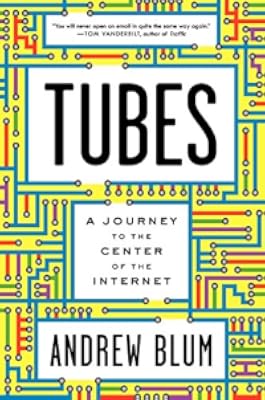
Tubes: A Journey to the Center of the Internet
by Andrew Blum
On This Page
Description
When your Internet cable leaves your living room, where does it go? Almost everything about our day-to-day lives--and the broader scheme of human culture--can be found on the Internet. But what is it physically? And where is it really? Our mental map of the network is as blank as the map of the ocean that Columbus carried on his first Atlantic voyage. The Internet, its material nuts and bolts, is an unexplored territory. Until now. In Tubes, journalist Andrew Blum goes inside the Internet's show more physical infrastructure and flips on the lights, revealing an utterly fresh look at the online world we think we know. It is a shockingly tactile realm of unmarked compounds, populated by a special caste of engineer who pieces together our networks by hand; where glass fibers pulse with light and creaky telegraph buildings, tortuously rewired, become communication hubs once again. From the room in Los Angeles where the Internet first flickered to life to the caverns beneath Manhattan where new fiber-optic cable is buried; from the coast of Portugal, where a ten-thousand-mile undersea cable just two thumbs wide connects Europe and Africa, to the wilds of the Pacific Northwest, where Google, Microsoft, and Facebook have built monumental data centers--Blum chronicles the dramatic story of the Internet's development, explains how it all works, and takes the first-ever in-depth look inside its hidden monuments. This is a book about real places on the map: their sounds and smells, their storied pasts, their physical details, and the people who live there. For all the talk of the "placelessness" of our digital age, the Internet is as fixed in real, physical spaces as the railroad or telephone. You can map it and touch it, and you can visit it. Is the Internet in fact "a series of tubes" as Ted Stevens, the late senator from Alaska, once famously described it? How can we know the Internet's possibilities if we don't know its parts? Like Tracy Kidder's classic The Soul of a New Machine or Tom Vanderbilt's recent bestseller Traffic, Tubes combines on-the-ground reporting and lucid explanation into an engaging, mind-bending narrative to help us understand the physical world that underlies our digital lives. show lessTags
Recommendations












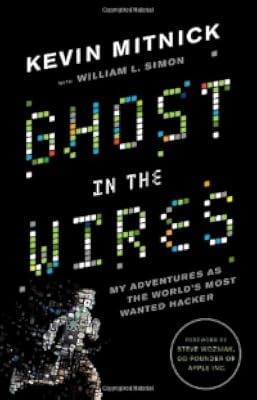
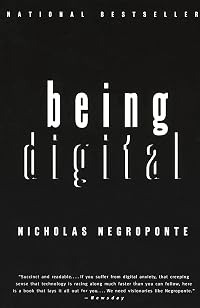


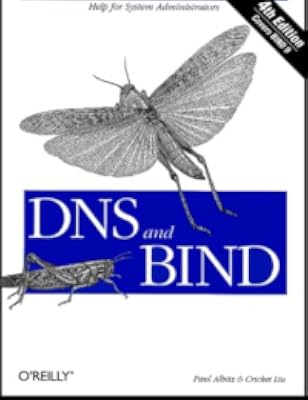










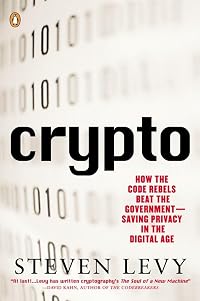










Member Recommendations

Grant_Floyd Read in context of Snowden revelations to understand simple structure of internet connections in key locations that would be tapped by NSA, following on to read Shadow Factory by James Bamford: central mountain location of data centres, internet exchange near Washington, transatlantic cable, Palo Alto IX, Dutch and German differing approaches but both open vs data centre approach, lack of different cables down the coast of Africa, and some history about the original message exchange server
Member Reviews
This is a solid book with good journalism about a piece of our information infrastructure that is vital, but poorly understood and frequently ignored. Andrew Blum sets out with a project: follow the cable out of his house back to the physical structure of the Internet. What follows is a interesting and personable exploration of global networking. Blum avoids technical talk, I didn't have to use much of what I learned getting an ancient Network+ certification to follow him. {Tech: He briefly mentions TCP and IP and also the physical, network, and transport layers, but not in the context of the OSI model.} While Blum is no engineer, I think he make wise choices about how to frame his book. His story of following the tubes from his house show more to find the Internet is interesting. He identifies hidden parts of our global network structure and sheds some light on an industry that is usually obscure. Sure, we all heard about Global Crossing when they went bankrupt, but Blum explains how the undersea fiber business works in lay persons terms that is illuminating.
I really enjoyed listening to Blum read Tubes. Many author-read books on Audible make me wish they'd have sprung for voice talent, but Blum does a good job here. I enjoyed the content and subject matter. I enjoyed his perspective, humor, and insight. Over all, this was very well done.
So, if you have ever been curious about how fiber networks are structured or want to know how the internet gets to your house, read this. If you want to more about the OSI network model, router protocols, or packet switching, look elsewhere. If fiber networks and physical infrastructure bore you, avoid at all costs. show less
I really enjoyed listening to Blum read Tubes. Many author-read books on Audible make me wish they'd have sprung for voice talent, but Blum does a good job here. I enjoyed the content and subject matter. I enjoyed his perspective, humor, and insight. Over all, this was very well done.
So, if you have ever been curious about how fiber networks are structured or want to know how the internet gets to your house, read this. If you want to more about the OSI network model, router protocols, or packet switching, look elsewhere. If fiber networks and physical infrastructure bore you, avoid at all costs. show less
A travelogue of a different kind. Looking at the geography of the internet requires physical travel and the ability to apply metaphors to that which can't be seen. Andrew Blum travels the route of the internet to discover how much it still relies on the old geography of past trade routes. His story benefits from the willingness of internet companies and engineers to show him the guts of internet. Google is the one exception--his visit to their data center is by his own admission a "farce" where he shown nothing more interesting than their lunch room. Written at a level that the non-technical audience (me) can understand. Recommend it.
A surprisingly compelling read about the hardware (tubes) or physical infrastructure that enables the Internet. Challenged at times by repeated descriptions of non-descript office buildings housing routers, wires and servers. At other times, though, almost mystical about the route our data takes over this physical infrastructure,
A digerati travelogue, from an author who seems as much sociologist as infrastructure geek. Worth the read, even if you think you know the topic.
Andrew Blum is a journalist who wonders about the physical reality of the internet: How does his computer connect to the net? Where do the cables go to? How do they join up? Where are all the data centers? What pathway do the data packets take, and what does that look like on maps of the US and the world?
Blum decides to travel around the US and Europe to talk to experts at various levels of complexity: the ISP centre, Internet Exchanges, and data centres belonging to Google and Facebook. Most of the facilities consist of drab, anonymous-looking box-buildings in out-of-the-way places. He is present when an underwater cable coming from West Africa is connected to one in Portugal; he also visits the location where a transatlantic cable show more arrives in Cornwall.
This was interesting: Blum does a good job of leading us through his journey of discovery. What I didn’t like was his tendency to inject too much drama and pathos into his writings: he likes to draw conclusions that, when written up in the style of, say, Time Magazine or Vanity Fair, spiral into Anthopology and Large-Scale Societal Impact Of Things. Several of his musings on those topics are fairly pedestrian, but the overwrought way he presents them makes them seem hollow sometimes. show less
Blum decides to travel around the US and Europe to talk to experts at various levels of complexity: the ISP centre, Internet Exchanges, and data centres belonging to Google and Facebook. Most of the facilities consist of drab, anonymous-looking box-buildings in out-of-the-way places. He is present when an underwater cable coming from West Africa is connected to one in Portugal; he also visits the location where a transatlantic cable show more arrives in Cornwall.
This was interesting: Blum does a good job of leading us through his journey of discovery. What I didn’t like was his tendency to inject too much drama and pathos into his writings: he likes to draw conclusions that, when written up in the style of, say, Time Magazine or Vanity Fair, spiral into Anthopology and Large-Scale Societal Impact Of Things. Several of his musings on those topics are fairly pedestrian, but the overwrought way he presents them makes them seem hollow sometimes. show less
I was first alerted to this book when a short illustrative photo-essay was published in Wired, showing some of the facilities that the author had visited. Having embarked upon the information superhighway when geography still seemed like a relevant factor to the home user - UK game servers were always significantly faster than American ones - I was interested in a physical history of the internet.
The author is mainly a writer on architecture, rather than technology, which was of great value to this book. It meant he was able to succinctly capture the physical essence of a building or place in evocative language. He was also very effective at maintaining the reader's interest in his quest to track down something which is actually of show more minor concern on a day to day basis and, as he says in the book, the physical reality of 'the internet' is rather non-descript and generic; it is the dream of all the information that flows through it that makes the hundreds of thousands of boxes and lights, and millions of metres of cables exciting.
My only complaint was that some of the chapters jumped around a little bit, without it being clear why one episode was being left apparently incomplete. This was a minor quibble. I would definitely be interested in reading more of Mr Blum's books, and more books by 'physical' writers about the the manifestation of intangible things like the internet. show less
The author is mainly a writer on architecture, rather than technology, which was of great value to this book. It meant he was able to succinctly capture the physical essence of a building or place in evocative language. He was also very effective at maintaining the reader's interest in his quest to track down something which is actually of show more minor concern on a day to day basis and, as he says in the book, the physical reality of 'the internet' is rather non-descript and generic; it is the dream of all the information that flows through it that makes the hundreds of thousands of boxes and lights, and millions of metres of cables exciting.
My only complaint was that some of the chapters jumped around a little bit, without it being clear why one episode was being left apparently incomplete. This was a minor quibble. I would definitely be interested in reading more of Mr Blum's books, and more books by 'physical' writers about the the manifestation of intangible things like the internet. show less
This was very exciting, in an armchair tech sort of way. The author goes out and visits various physical places where "the internet" happens, like major switching hubs, content storage, and the points where submarine communications cables COME OUT OF THE OCEAN LIKE A KRAKEN. As you can probably tell, the last one was a special geeky thrill for me, because that is still something that boggles my mind, and now I want to go on a field trip to Porthcurno (the whole thing sounds delightfully mundane, not only the cable part, like you would go, and people would ask what you did, and you would say "I looked at a cable and then did nothing for a week. Nothing!" And not in a relaxing, spa nothing way, but literally nothing.). At any rate, the show more author then describes all of these places in a fairly accessible way with geeky enthusiasm.
I did find it a little odd that he kept framing his descriptions with this theme that "the typical internet user never thinks about WHERE this stuff is happening," which I could believe is true, but rather don't think it's an accurate description that the typical internet user who bothers to read this book never thinks about it. I think about it all the time, and so do a lot of people I know. show less
I did find it a little odd that he kept framing his descriptions with this theme that "the typical internet user never thinks about WHERE this stuff is happening," which I could believe is true, but rather don't think it's an accurate description that the typical internet user who bothers to read this book never thinks about it. I think about it all the time, and so do a lot of people I know. show less
Members
- Recently Added By
Published Reviews
ThingScore 100
[This] quixotic and winning book is an attempt to comprehend the physical realities of the Internet, to describe how this seemingly intangible thing is actually constructed.
added by timtom
Lists

The r/AskScience Reading List
159 works; 3 members
Author Information

8 Works 873 Members
Common Knowledge
- Canonical title
- Tubes: A Journey to the Center of the Internet
- Original publication date
- 2012
- Important places
- Internet
- Epigraph
- It is not down in any map; true places never are.- Herman Melville
Somehow I knew that the notional space behind all of the computer screens would be one single universe.- William Gibson - Dedication
- For Davina and Phoebe
- First words
- (Prologue) On a bitterly cold day a few winters ago, the Internet stopped working.
On the January day I arrived in Milwaukee, it was so cold that the streets themselves had blanched white. - Last words
- (Click to show. Warning: May contain spoilers.)"We are live on the Internet right now."
(Click to show. Warning: May contain spoilers.)(Epilogue) Wherever I am, and wherever you are. - Blurbers
- Foer, Joshua; Vanderbilt, Tom; Hohn, Donovan; Goldberger, Paul
Classifications
- Genres
- Technology, Nonfiction, General Nonfiction, Science & Nature, History
- DDC/MDS
- 384.309 — Society, government, & culture Commerce, communications & transportation regulations Communications Computer communication
- LCC
- TK5105.875 .I57 .B58 — Technology Electrical engineering. Electronics. Nuclear engineering Electrical engineering. Electronics. Nuclear Telecommunication
- BISAC
Statistics
- Members
- 672
- Popularity
- 42,766
- Reviews
- 23
- Rating
- (3.43)
- Languages
- English, German, Spanish, Turkish
- Media
- Paper, Audiobook, Ebook
- ISBNs
- 16
- ASINs
- 10