On This Page
Description
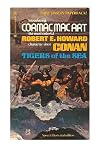
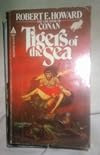
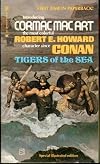
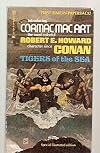
"Cormac Mac Art... descendant of other warriors from the time-forgotten lands of Atlantis and Cimmeria, molded in the tradition of Conan and Kull. Lusty, savage, adventuresome, Cormac, known as an Cluiun, the Wolf, is a renegade and a pirate whose character was forged from the same cold steel as his relentless sword. Roaming the seas of King Arthur's Britain with his comrade-in-arms, the Viking Wulfhere the Skull-splitter, Cormac's battles with men and monarchs scale new hights in the show more fantasy kingdom of Robert E. Howard." --Back cover. show lessTags
Recommendations








Member Reviews
This is a collection of stories about one of Howard's lesser-known heroes, Cormac Mac Art, an Irish renegade now adventuring with a band of Danish sea rovers led by Wolfhere Skullsplitter. One of the stories (Night of the Wolf) overlaps with the Bran Mak Morn series and is also included in the collection Bran Mak Morn (see its entry). Three of the stories, the title story read like variations on a theme -- In all three, Cormac enters potentially hostile rulers' halls alone, twice odisguised as "Partha Mac Othna," once under his own name, though misrepresenting his intentions; they involve Cormac interacting with 'vikings" somewhat anachronistically operating out of the Shetland isIn two stores, pIcs lands (though Howard is careful to show more say these are ere "robbers's roosts, not the later permanent settlements) --the time frame is around the time of King Arthur (say late 400s early 500s AD). In one story, Arthur's father Uther Pendragon is ruling southwestern Britain; by the last story Uther is apparently dead and Arthur himself is gathering forces aided by Lancelot and Gawain (given to late-medieval forms of their names). In two stories, Picts (in the small dark version used in the Bran Mak Morn series) attack Viking settlements.
The variations on these themes are as follows: in Tigers of the Sea, Geraint. Romano-British king of west-central Britain, hires Cormac and Wulfhere's crew to rescue his sister Helen, who had been taken by Picts. They are joined by her betrothed, Marcus, a very Roman Romano-Briton.Cormac (as Partha) goes to the settlement of the Dalriada Scot Eochaidh, and learns from the boasts of a visiting Pict that Helen has been tsend to the Shetlands for sacrifice to the Pictish Moongod. Cormac is recognized but fights his way out and takes Wulfhere's ship northward. En route they capture a Jutish ship and learn the Jutes took Helen from the Picts and sold her to a Viking chief named Thorlief (settled in the Shetlands as in the theme above). Cormac and Marcus try to buy Helen from Thorlief, but the surviving Jutes have reached Thorlief first, and he sides with them, setting off a ferocious fight; as Wulhere's outnumnbered crew are losing, Thorlief's men are suddenly hit by the Picts, who slaughter them to regain their sacrifice. Fortunately, the Juitish chief has taken the jewel Helen wore which designated her as the sacrifice, so the Picts agree to sacrifice him instead and let Cormac and his men take Helen home.
On Swords of the Northern Sea, Cormac comes openly as himself (though claiming falsely to have been the only survivor of the loss of his ship --actually Wulfhere and his men also escaped and are hiding in the woods), to the hall of the Viking Rognor on a northern island who is about t marry a British woman, Tarala, (daughter of a chief in western Britain, taken by Rognor from Saxons who ha captured her). A deformed Byzantine dwarf, Anzace, reveals that Rognor's young Jutish lieutenant Hakon loves the girl and plans to escape with her. Hakon is imprisoned to await death. but Cormac frees him --they agree on a joint attack on Thorlief by Hakon's Jutes and Wuifhere's Danes, which succeeds after desperate fighting. Rognor and his bodyguard and slain and the surviving VIkings accept Hakon's leadership. Hakon gives Wulflhere and Cormac a new ship. This simplified version is the only one without Picts.
In the third variation, Night of the Wolf, a Viking, Thjorwald, has settled on a Pictish island in the Shetlands; a Pictish chief complains that the Vikings oppress his people and threatens vengeance, but is beaten ad thrown out. Cormac as Partha is there to try to ransom a captured Dane, but Thorwald recognizes him and has him imprisoned to await death. That night the Picts attack; an old Viking tries to free Cormac to help him escape, but is killed by the Picts. Cormac frees the captive Dane and they manage to escape and join Wulfhere, while the Picts slaughter the Vikings, men, women and children. (the Pictish chief and Thorwald slay each other.) It turns out that the Dane Cormac has saved is an exiled claimant to the throne of Denmark, and he promises to "in-law' Wulhere and his outlaws if they back him, which they set out to do. This is the only version not centering on rescuing a woman.
The very last story, 'Temple of the Abomination'" is very different from the other three , drawing together three traditions --Lovecraft's Cthulu Mythos, Howard's own KIng Kull series, and the Cormac stories. Cormac is leading Wulfhere's band through western Britain to attack the Saxons in the east when they come to a strange temple. It is defended by satyrs wom th Danes defeat rather easily. They find a Christian priest who has been horribly tortured, who tells them the satyrs serve the last of the Serpentmen from Kull's time, who has a Shuggoth (from Lovecraft) in a pit under a trapdoor under the temple. After a final fight, Cormac mortally wounds the serpentman and drive him into the pit. Though it could be called a horror story, it is not very scary, since Cormac and the Danes are obviously militarily superior to the monstrous threat. show less
The variations on these themes are as follows: in Tigers of the Sea, Geraint. Romano-British king of west-central Britain, hires Cormac and Wulfhere's crew to rescue his sister Helen, who had been taken by Picts. They are joined by her betrothed, Marcus, a very Roman Romano-Briton.Cormac (as Partha) goes to the settlement of the Dalriada Scot Eochaidh, and learns from the boasts of a visiting Pict that Helen has been tsend to the Shetlands for sacrifice to the Pictish Moongod. Cormac is recognized but fights his way out and takes Wulfhere's ship northward. En route they capture a Jutish ship and learn the Jutes took Helen from the Picts and sold her to a Viking chief named Thorlief (settled in the Shetlands as in the theme above). Cormac and Marcus try to buy Helen from Thorlief, but the surviving Jutes have reached Thorlief first, and he sides with them, setting off a ferocious fight; as Wulhere's outnumnbered crew are losing, Thorlief's men are suddenly hit by the Picts, who slaughter them to regain their sacrifice. Fortunately, the Juitish chief has taken the jewel Helen wore which designated her as the sacrifice, so the Picts agree to sacrifice him instead and let Cormac and his men take Helen home.
On Swords of the Northern Sea, Cormac comes openly as himself (though claiming falsely to have been the only survivor of the loss of his ship --actually Wulfhere and his men also escaped and are hiding in the woods), to the hall of the Viking Rognor on a northern island who is about t marry a British woman, Tarala, (daughter of a chief in western Britain, taken by Rognor from Saxons who ha captured her). A deformed Byzantine dwarf, Anzace, reveals that Rognor's young Jutish lieutenant Hakon loves the girl and plans to escape with her. Hakon is imprisoned to await death. but Cormac frees him --they agree on a joint attack on Thorlief by Hakon's Jutes and Wuifhere's Danes, which succeeds after desperate fighting. Rognor and his bodyguard and slain and the surviving VIkings accept Hakon's leadership. Hakon gives Wulflhere and Cormac a new ship. This simplified version is the only one without Picts.
In the third variation, Night of the Wolf, a Viking, Thjorwald, has settled on a Pictish island in the Shetlands; a Pictish chief complains that the Vikings oppress his people and threatens vengeance, but is beaten ad thrown out. Cormac as Partha is there to try to ransom a captured Dane, but Thorwald recognizes him and has him imprisoned to await death. That night the Picts attack; an old Viking tries to free Cormac to help him escape, but is killed by the Picts. Cormac frees the captive Dane and they manage to escape and join Wulfhere, while the Picts slaughter the Vikings, men, women and children. (the Pictish chief and Thorwald slay each other.) It turns out that the Dane Cormac has saved is an exiled claimant to the throne of Denmark, and he promises to "in-law' Wulhere and his outlaws if they back him, which they set out to do. This is the only version not centering on rescuing a woman.
The very last story, 'Temple of the Abomination'" is very different from the other three , drawing together three traditions --Lovecraft's Cthulu Mythos, Howard's own KIng Kull series, and the Cormac stories. Cormac is leading Wulfhere's band through western Britain to attack the Saxons in the east when they come to a strange temple. It is defended by satyrs wom th Danes defeat rather easily. They find a Christian priest who has been horribly tortured, who tells them the satyrs serve the last of the Serpentmen from Kull's time, who has a Shuggoth (from Lovecraft) in a pit under a trapdoor under the temple. After a final fight, Cormac mortally wounds the serpentman and drive him into the pit. Though it could be called a horror story, it is not very scary, since Cormac and the Danes are obviously militarily superior to the monstrous threat. show less
http://www.fireandsword.com/Reviews/tigerssea.html
If there was anyplace that Robert E. Howard loved more than his native Texas, it was Celtic fringe of Europe, the sea-girt isles where the Gaels made the last stand of Celtic culture. Most of his heroes are of Celtic descent (Francis X. Gordon, Kirby O’Donnell), or from pre-proto-Celtic groups (Kull the Atlantean, Conan the Cimmerian), or actual, honest-to-Crom, Irish Gaels (Turlough Dubh, Black Vulmea, Cormac FitzGeoffrey). Among the latter is the Gaelic sea-rover, Cormac Mac Art.
If there was anyplace that Robert E. Howard loved more than his native Texas, it was Celtic fringe of Europe, the sea-girt isles where the Gaels made the last stand of Celtic culture. Most of his heroes are of Celtic descent (Francis X. Gordon, Kirby O’Donnell), or from pre-proto-Celtic groups (Kull the Atlantean, Conan the Cimmerian), or actual, honest-to-Crom, Irish Gaels (Turlough Dubh, Black Vulmea, Cormac FitzGeoffrey). Among the latter is the Gaelic sea-rover, Cormac Mac Art.
Ratings
Members
- Recently Added By
Author Information

1,892+ Works 32,134 Members
Robert E. Howard was born in Peaster, Texas on January 22, 1906. At the beginning of his writing career, he primarily wrote pulp fiction and had numerous stories published in the pulp magazine Weird Tales including Spear and Fang, The Hyena, Wolfshead, Red Shadows, and The Shadow Kingdom. He created the character of Conan the Barbarian in the show more pages of Weird Tales. By 1936, almost all of his fiction writing was in the western genre and his first novel, A Gent from Bear Creek, was about to be published. He committed suicide on June 11, 1936 at the age of 30. (Bowker Author Biography) show less

Robert E. Howard has a Legacy Library. Legacy libraries are the personal libraries of famous readers, entered by LibraryThing members from the Legacy Libraries group.
Some Editions
Series

Belongs to Publisher Series
Work Relationships
Is contained in
Common Knowledge
- Canonical title
- Tigers of the sea
- Original title
- Tigers of the sea
- Original publication date
- 1974
- People/Characters
- Cormac Mac Art
Classifications
Statistics
- Members
- 255
- Popularity
- 126,625
- Reviews
- 2
- Rating
- (3.52)
- Languages
- English, German, Hungarian
- Media
- Paper
- ISBNs
- 7
- ASINs
- 7