
On This Page
Description
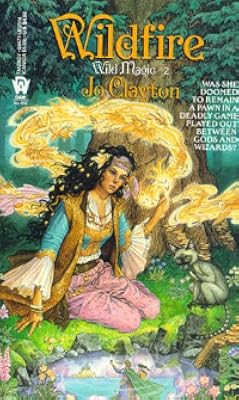
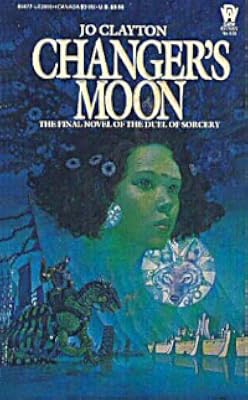
When magic calls--not even Brann, the Drinker of Souls, can resist. And now the Chained God has drawn upon every spell at his command in a life-and-death struggle to break free of the energy-draining trap which holds him before he is driven into total dissolution. To win release from his invisible prison, the Chained God must obtain six talismans of power, and he will use Brann and the demon children, the sorcerer Maksim, and all their former allies--as well as deadly predators from another show more dimension--as pawns in a desperate campaign to breach the strongholds of gods, shamans, wizards, and priests, and steal the magical orbs that are the vital focal points for a magical spell more powerful than any Brann's world has ever experienced. And should Brann and the rest fail to obtain even one of the precious talismans in time, not only will the Chained God's doom be sealed but a new and all consuming evil will be released on Brann's own world! show lessTags
Recommendations

















Member Reviews
As is the case with most of my reviews of series, this is going to lean more toward a review of the author and her oeuvre rather than the details of these individual books. Anyway, Jo Clayton is a science fiction and fantasy author with a very distinctive voice, and I appreciate many aspects of her work that keep me coming back over and over.
First, she doesn't rely on some sort of generic northern European cultural and geographical model for her fantasies. Instead, she draws upon many, many different cultures and landscapes for inspiration. Concomitantly, both her protagonists and especially other characters are ethnically very diverse--it's not a white universe with a few people of color thrown in as sparse leavening. No, entire show more swathes in every world she builds, whether SF or fantasy, feature people of all different colors and beyond the human spectrum, once the various humanoid species she creates are thrown in. We get to see her spectacular, diverse, and original world-building because her stories generally involve the characters traversing the landscape and negotiating many different cultures in the course of their quest.
Second, her characters are more than racially and ethnically diverse. She also has characters reflecting a wide range of ages, physical and mental abilities, sexualities, social classes and so on. In fact, many of her key players come squarely from marginalized populations. So her books are some of the most inclusive and representative of any I've ever read. Moreover, her plots invariably involve a resistance movement to a newly repressive regime, so she explicitly explores the kyriarchy and the nature of oppression, at scales ranging from the individual to entire societies. Rather than ignoring social inequalities in favor of some airy fantasy wish fulfillment, she uses these social tensions to motivate the plot. However, I confess that after reading 20+ of her books, this theme begins to get old, no matter how creatively she explores it.
Third, her stories abound with strong characters, particularly women. No need to consult the Bechdel test, because her protagonist is always a powerful woman working with many other women as well as men in an epic tale involving dozens of characters, and usually shifting viewpoints. Even fairly minor characters have names and personalities that make them individuals--once again, far exceeding the standard treatment in this genre. However, that is not to say that she doesn't succumb to a formula. Nowhere is this more apparent than her protagonists: always a powerful woman with exceptional abilities, usually seriously psychologically damaged by her past, fond of hot tea, long baths, and often sailing men. Brann, the Drinker of Souls, is no exception, though she's traumatized in thebeginning of the trilogy rather than her past, which is unusually wholesome and happy for this author.
Fourth, she clearly has a great love for artisans and others whose livelihoods derive from their labors. Every book I've read features important secondary characters and compelling descriptions of their labors (before the plot sends everything to hell, of course): weavers, potters, dancers, musicians, sailors, goldsmiths (jewelry), herbalists, and on and on. This narrative of daily life and tightly woven society gives her stories a reality and depth that are almost unique in action-driven novels.
Fifth, Jo Clayton is another author who invents an ecology to go along with her invented culture. We meet new animals, crops, trees, and many other organisms, and they aren't always mammals and angiosperms, which greatly please the biology geek in me, who is very unimpressed with the lackluster imaginations of most authors who at best might dream up new names for the same old things.
Sixth, her writing style can also be experimental. In the same way that Stand on Zanzibar introduced new narrative techniques to science fiction, Jo Clayton plays around with text, moving beyond linear prose in some passages, particularly opening material and especially in second and third installments of a trilogy. Often, it is very graphically oriented, reading more like staging directions in a screenplay. Mind you, this isn't necessarily easy to process, but once again, distinguishes her writing from the bulk of the genre.
So that's the general overview of Jo Clayton's works. Drinker of Souls introduces us to Brann, the young daughter of a potter in a remote, mountainous artisan community. She is out in the field one day, along the flanks of their (mostly) dormant volcano, sketching various creatures, when disaster strikes, and life as she knows it is over, and she can never go back home. Soldiers from the oh-so-distant king have appeared to enslave her people, and she is transformed by twin children (Yaril and Jaril) trapped from another reality to be a conduit of energy (souls!) to sustain their lives in this strange world. Adventure ensues as she copes with this trauma and tries to save her people.
Blue Magic takes place maybe a century later. The descendant of one of the secondary characters calls upon Brann for assistance, and someone tries to magically assassinate her. Again, adventure ensues and new parts of the world are explored.
There's another gap between A Gathering of Stones and Blue Magic. It retains some of the characters from Blue Magic and even Drinker of Souls (beyond the obvious Brann, Yaril, and Jaril, I mean). With a new exciting adventure plot, the loose ends are all wrapped up and the heroes mostly get their long-delayed happy ending. show less
First, she doesn't rely on some sort of generic northern European cultural and geographical model for her fantasies. Instead, she draws upon many, many different cultures and landscapes for inspiration. Concomitantly, both her protagonists and especially other characters are ethnically very diverse--it's not a white universe with a few people of color thrown in as sparse leavening. No, entire show more swathes in every world she builds, whether SF or fantasy, feature people of all different colors and beyond the human spectrum, once the various humanoid species she creates are thrown in. We get to see her spectacular, diverse, and original world-building because her stories generally involve the characters traversing the landscape and negotiating many different cultures in the course of their quest.
Second, her characters are more than racially and ethnically diverse. She also has characters reflecting a wide range of ages, physical and mental abilities, sexualities, social classes and so on. In fact, many of her key players come squarely from marginalized populations. So her books are some of the most inclusive and representative of any I've ever read. Moreover, her plots invariably involve a resistance movement to a newly repressive regime, so she explicitly explores the kyriarchy and the nature of oppression, at scales ranging from the individual to entire societies. Rather than ignoring social inequalities in favor of some airy fantasy wish fulfillment, she uses these social tensions to motivate the plot. However, I confess that after reading 20+ of her books, this theme begins to get old, no matter how creatively she explores it.
Third, her stories abound with strong characters, particularly women. No need to consult the Bechdel test, because her protagonist is always a powerful woman working with many other women as well as men in an epic tale involving dozens of characters, and usually shifting viewpoints. Even fairly minor characters have names and personalities that make them individuals--once again, far exceeding the standard treatment in this genre. However, that is not to say that she doesn't succumb to a formula. Nowhere is this more apparent than her protagonists: always a powerful woman with exceptional abilities, usually seriously psychologically damaged by her past, fond of hot tea, long baths, and often sailing men. Brann, the Drinker of Souls, is no exception, though she's traumatized in thebeginning of the trilogy rather than her past, which is unusually wholesome and happy for this author.
Fourth, she clearly has a great love for artisans and others whose livelihoods derive from their labors. Every book I've read features important secondary characters and compelling descriptions of their labors (before the plot sends everything to hell, of course): weavers, potters, dancers, musicians, sailors, goldsmiths (jewelry), herbalists, and on and on. This narrative of daily life and tightly woven society gives her stories a reality and depth that are almost unique in action-driven novels.
Fifth, Jo Clayton is another author who invents an ecology to go along with her invented culture. We meet new animals, crops, trees, and many other organisms, and they aren't always mammals and angiosperms, which greatly please the biology geek in me, who is very unimpressed with the lackluster imaginations of most authors who at best might dream up new names for the same old things.
Sixth, her writing style can also be experimental. In the same way that Stand on Zanzibar introduced new narrative techniques to science fiction, Jo Clayton plays around with text, moving beyond linear prose in some passages, particularly opening material and especially in second and third installments of a trilogy. Often, it is very graphically oriented, reading more like staging directions in a screenplay. Mind you, this isn't necessarily easy to process, but once again, distinguishes her writing from the bulk of the genre.
So that's the general overview of Jo Clayton's works. Drinker of Souls introduces us to Brann, the young daughter of a potter in a remote, mountainous artisan community. She is out in the field one day, along the flanks of their (mostly) dormant volcano, sketching various creatures, when disaster strikes, and life as she knows it is over, and she can never go back home. Soldiers from the oh-so-distant king have appeared to enslave her people, and she is transformed by twin children (Yaril and Jaril) trapped from another reality to be a conduit of energy (souls!) to sustain their lives in this strange world. Adventure ensues as she copes with this trauma and tries to save her people.
Blue Magic takes place maybe a century later. The descendant of one of the secondary characters calls upon Brann for assistance, and someone tries to magically assassinate her. Again, adventure ensues and new parts of the world are explored.
There's another gap between A Gathering of Stones and Blue Magic. It retains some of the characters from Blue Magic and even Drinker of Souls (beyond the obvious Brann, Yaril, and Jaril, I mean). With a new exciting adventure plot, the loose ends are all wrapped up and the heroes mostly get their long-delayed happy ending. show less
Ratings
Members
- Recently Added By
Author Information

49+ Works 7,119 Members
Some Editions
Series

Belongs to Publisher Series
Work Relationships
Is contained in
Common Knowledge
- Canonical title
- A Gathering of Stones
- Original title
- A Gathering of Stones
- Original publication date
- 1989
- First words
- IMPETUS:
The drive toward Rebirth begins:
The Chained God looked at h/itself and found little to like in what h/it saw. Even as h/it watched, cells died and h/its intelligence diminished by that much. H/its LIFE dim... (show all)inished. Time is, h/it thought. The harvest is due. Bring forth the Tools. Draw in the Catalysts. Let the Rebirthing commence. - Last words
- (Click to show. Warning: May contain spoilers.)If nothing else, we do have time.
Classifications
Statistics
- Members
- 179
- Popularity
- 182,894
- Reviews
- 1
- Rating
- (3.63)
- Languages
- English, German
- Media
- Paper
- ISBNs
- 2


