
The Last Man
by Mary Wollstonecraft Shelley
On This Page
Description
Mary Shelley, the author of Frankenstein, wrote the apocalyptic novel The Last Man in 1826. Its first person narrative tells the story of our world standing at the end of the twenty-first century and - after the devastating effects of a plague - at the end of humanity. In the book Shelley writes of weaving this story from a discovery of prophetic writings uncovered in a cave near Naples. The Last Man was made into a 2008 film..
Tags
Recommendations

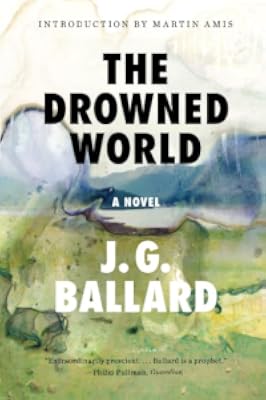
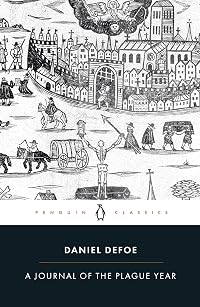
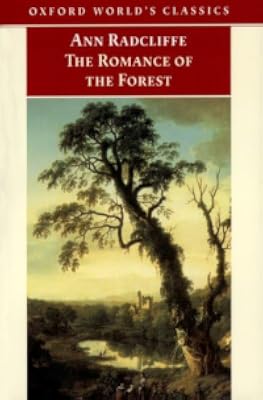








Member Recommendations

Member Reviews
Mary Shelley’s “The Last Man” showed promise near the beginning:
“There is no fruition in their vacant kindness, and sharp rocks lurk beneath the smiling ripples of these shallow waters.”
And then took nearly two hundred pages to find another passage worth recording:
“She described in vivid terms the ceaseless care that with still renewing hunger ate into her soul; she compared this gnawing of sleepless expectation of evil, to the vulture that fed on the heart of Prometheus; under the influence of this eternal excitement, and of the interminable struggles she endured to combat and conceal it, she felt, she said, as if all the wheels and springs of the animal machine worked at double rate, and were fast consuming themselves.”
A show more main character dies in part one only to resurrect immediately from false rumor in the subsequent section—and I didn’t even give a shit. I could not wait to finish this book. Which saddens me since I enjoyed what I’ve read from Shelley, namely: “Frankenstein”, “The Pilgrims” and an assortment of short stories. I understand that it’s a precursor to what would become standard in the SF tradition, that it was a statement about the female voice (her own, really) in literature in her time, that it had incorporated a host of personal tragedies (the deaths of her husband, Percy Bysshe Shelley, and two children, as well as their friend, Lord Byron), and that she had felt herself to be “The Last Man”, cut off from intellectual and emotional support and left in a world scarred with its own kind of plague. But, Jesus, did the whole work need to be so boring? For all the effort expended, the experiences and influences that had informed it, I was unprepared for the work to be largely expositional, emotionally detached (or ridiculously hyperbolic, which felt like the same thing, truthfully) and fraught with awkward phrasing. Any glittering poetic moment was quickly strangled in overlong sentences stuffed with information that neither propelled the narrative nor added substance to the imagery. And the last man of the title? Yeah, that doesn’t fucking happen until the final pages. So you go through this whole tedious ordeal only to be left with a man alone in an unfamiliar world trying to reckon his own humanity in the absence of any humankind. Later, Richard Matheson would explore this idea with unrivaled proficiency in “I Am Legend”.
Forerunner or not, classic or not, “The Last Man” failed me in so many ways as to be exemplary. I honestly cannot think offhand when I’ve been so absolutely disappointed in a book. Any social statements that the work may have offered were undercut by being too close to the subject, losing objectivity, staring into a maelstrom in which the ship with one’s entire existence in its holds had been lost, only to start the narrative with the painstaking details of each person involved with loading that cargo. The on-board bill of lading would’ve been more interesting. And, truth be told, the author’s introduction, which had almost nothing to do with the book, was the most engaging bit of writing in the whole damn version that I own.
“The Last Man-This-Could-Have-Been-So-Much-Better”. Tragedy doesn’t always make for better fiction. I realize that may be sacrilege for some; especially given that this work is deemed a “classic”. And while Shelley’s “Frankenstein” is iconic, painful and blooded with first-hand tragedy, too, it’s a far more riveting story. show less
“There is no fruition in their vacant kindness, and sharp rocks lurk beneath the smiling ripples of these shallow waters.”
And then took nearly two hundred pages to find another passage worth recording:
“She described in vivid terms the ceaseless care that with still renewing hunger ate into her soul; she compared this gnawing of sleepless expectation of evil, to the vulture that fed on the heart of Prometheus; under the influence of this eternal excitement, and of the interminable struggles she endured to combat and conceal it, she felt, she said, as if all the wheels and springs of the animal machine worked at double rate, and were fast consuming themselves.”
A show more main character dies in part one only to resurrect immediately from false rumor in the subsequent section—and I didn’t even give a shit. I could not wait to finish this book. Which saddens me since I enjoyed what I’ve read from Shelley, namely: “Frankenstein”, “The Pilgrims” and an assortment of short stories. I understand that it’s a precursor to what would become standard in the SF tradition, that it was a statement about the female voice (her own, really) in literature in her time, that it had incorporated a host of personal tragedies (the deaths of her husband, Percy Bysshe Shelley, and two children, as well as their friend, Lord Byron), and that she had felt herself to be “The Last Man”, cut off from intellectual and emotional support and left in a world scarred with its own kind of plague. But, Jesus, did the whole work need to be so boring? For all the effort expended, the experiences and influences that had informed it, I was unprepared for the work to be largely expositional, emotionally detached (or ridiculously hyperbolic, which felt like the same thing, truthfully) and fraught with awkward phrasing. Any glittering poetic moment was quickly strangled in overlong sentences stuffed with information that neither propelled the narrative nor added substance to the imagery. And the last man of the title? Yeah, that doesn’t fucking happen until the final pages. So you go through this whole tedious ordeal only to be left with a man alone in an unfamiliar world trying to reckon his own humanity in the absence of any humankind. Later, Richard Matheson would explore this idea with unrivaled proficiency in “I Am Legend”.
Forerunner or not, classic or not, “The Last Man” failed me in so many ways as to be exemplary. I honestly cannot think offhand when I’ve been so absolutely disappointed in a book. Any social statements that the work may have offered were undercut by being too close to the subject, losing objectivity, staring into a maelstrom in which the ship with one’s entire existence in its holds had been lost, only to start the narrative with the painstaking details of each person involved with loading that cargo. The on-board bill of lading would’ve been more interesting. And, truth be told, the author’s introduction, which had almost nothing to do with the book, was the most engaging bit of writing in the whole damn version that I own.
“The Last Man-This-Could-Have-Been-So-Much-Better”. Tragedy doesn’t always make for better fiction. I realize that may be sacrilege for some; especially given that this work is deemed a “classic”. And while Shelley’s “Frankenstein” is iconic, painful and blooded with first-hand tragedy, too, it’s a far more riveting story. show less
Throughout, it is hard not to see some kind of inverse structural parallel to the story of Adam and Even being cast out of Eden. To see what I mean, imagine the iteration of knowledge (of good and evil) that stemmed from consuming the forbidden fruit and imagine the development of societies, technologies, and norms that stemmed from complexification and codifications of that knowledge. In such a modern society, it seems fair to say that our sense of self would be inextricably entailed in the social. Nobody is truly an unfettered individual that is not dependent, at some level, on others and on civil, modernized society. The narrator states at one point: "I was devoured by a restless wish to be something others" (p.39). Yes -- that seems show more like the outcome of our enculturation to society. And yet, that seems like a real problem for the Romantics of Mary Shelley's time, who valued a return to nature, emotion, and individualism. Our social context will not allow it.
The Last Man seems to imagine a return that natural, Edenic state, through the removal social structures and obligations via the extermination of the human race by plague. As the plague claims its victims, social institutions start to collapse: government, military, commerce, agriculture. Unfettered at last, what is the Romantic archetype individual to do? Well, the pursuits of individual reflection and self-discovery through writing and reading become a bit pointless. Our narrator again: "to read were futile -- to write, vanity indeed. The whole earth, late wide circus for the display of dignified exploits, vast theatre for a magnificent drama, now presented a vacant space, an empty stage" (p.308). It's boring here all by myself -- who am I going to tell about all the insights I've developed about myself?
Even as the last four people on earth wind down their last days, "seek[ing] some natural Paradise, some garden of the earth were our simple wants may be easily supplied" there is a grim recognition that, granted the ability to be truly individual and free of obligations to the grand social project, is a problem. At best they seek "the enjoyment of a delicious climate to compensate for the social pleasures we have lost" (p.312).
For as much as I often wish that I had more solitude, I'm sure that Shelley is correct in this speculation about how much of a bummer true and total individuality and isolation would be. This feels like it must be a theme in other castaway-type literature, and I almost makes me want to go back and read Robinson Crusoe to see if there are similar themes
This is a difficult book to enjoy and frequently I didn't. I was convinced that I was going to give it 2 star rating, but now that I have had a chance to reflect a bit, maybe 2.5 (rounded up). show less
The Last Man seems to imagine a return that natural, Edenic state, through the removal social structures and obligations via the extermination of the human race by plague. As the plague claims its victims, social institutions start to collapse: government, military, commerce, agriculture. Unfettered at last, what is the Romantic archetype individual to do? Well, the pursuits of individual reflection and self-discovery through writing and reading become a bit pointless. Our narrator again: "to read were futile -- to write, vanity indeed. The whole earth, late wide circus for the display of dignified exploits, vast theatre for a magnificent drama, now presented a vacant space, an empty stage" (p.308). It's boring here all by myself -- who am I going to tell about all the insights I've developed about myself?
Even as the last four people on earth wind down their last days, "seek[ing] some natural Paradise, some garden of the earth were our simple wants may be easily supplied" there is a grim recognition that, granted the ability to be truly individual and free of obligations to the grand social project, is a problem. At best they seek "the enjoyment of a delicious climate to compensate for the social pleasures we have lost" (p.312).
For as much as I often wish that I had more solitude, I'm sure that Shelley is correct in this speculation about how much of a bummer true and total individuality and isolation would be. This feels like it must be a theme in other castaway-type literature, and I almost makes me want to go back and read Robinson Crusoe to see if there are similar themes
This is a difficult book to enjoy and frequently I didn't. I was convinced that I was going to give it 2 star rating, but now that I have had a chance to reflect a bit, maybe 2.5 (rounded up). show less
It took me some while to get into ‘The Last Man’, both because of its slow start and my present preoccupation with moving house. The style throughout is extremely florid and capital-R Romantic, as you would expect from Mary Shelley. To set the scene prior to the apocalypse, however, the narrator describes in minute detail how noble, beautiful, and wonderful his friends, wife, and children are. This dominates the first 70 or so pages. There follows a war between the Greeks and Turks, concurrent with some emotional melodrama, which advances us to around page 175. Thereafter the novel really gets into its stride, because from then on the main character is Death. Mary Shelley devotes reams of voluptuous, epic description to a plague show more that over years wipes out the human race. She summons gorgeous metaphors and heights of emotion to convey the horror of events. Moreover, she anticipates the current fascination with post-apocalyptic ruins by repeatedly describing cities denuded of human life; London’s streets are often said to be covered in long grass, for instance.
I quite liked this book just as a novel, but it is really most interesting as a very early example of the post-apocalyptic genre that now has such great popularity. I also found it curious to contemplate Shelley’s ideas of how the UK would be in the 2080s. She thought that there would still be a quasi-feudal aristocracy, but that England would be a republic with a ‘Protector’ (title presumably borrowed from Cromwell). Somewhat sadly considering that Mary Wollstonecraft was her mother, the female characters in this book don’t get much involved in politics and are generally to be found fainting and looking after their children. Perdita and Evadne have more complex lives than just caring for others, but both are very unhappy.
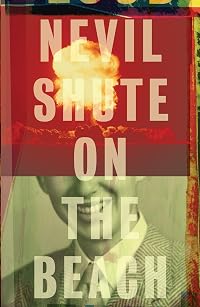
Ultimately, though, the strength of the book lies not with the characters, who are largely props to contextualise the overwhelming disaster of the plague. When Shelley was writing, there was no expectation that a new plague would be cured by scientists working feverishly; in her vision of the 2080s no-one even knows how it spreads. As a meditation on death, at the individual, group, and species level, ‘The Last Man’ is powerful and in places frightening. The inevitability of humanity’s end reminded me of the much later novel [b:On the Beach|38180|On the Beach|Nevil Shute|https://images.gr-assets.com/books/1327943327s/38180.jpg|963772] by Nevil Shute. Many passages in it demand to be declaimed and the dialogue feels akin to that of a play. For example:
If you enjoy language of that nature, you will like this novel. I am not surprised to learn that it was the first that she wrote after Percy Shelley’s death. And as ever, I advise you to read the introduction last. One notable comment in it is that the novel was badly reviewed when first published. It was rather before its time. show less
I quite liked this book just as a novel, but it is really most interesting as a very early example of the post-apocalyptic genre that now has such great popularity. I also found it curious to contemplate Shelley’s ideas of how the UK would be in the 2080s. She thought that there would still be a quasi-feudal aristocracy, but that England would be a republic with a ‘Protector’ (title presumably borrowed from Cromwell). Somewhat sadly considering that Mary Wollstonecraft was her mother, the female characters in this book don’t get much involved in politics and are generally to be found fainting and looking after their children. Perdita and Evadne have more complex lives than just caring for others, but both are very unhappy.
Ultimately, though, the strength of the book lies not with the characters, who are largely props to contextualise the overwhelming disaster of the plague. When Shelley was writing, there was no expectation that a new plague would be cured by scientists working feverishly; in her vision of the 2080s no-one even knows how it spreads. As a meditation on death, at the individual, group, and species level, ‘The Last Man’ is powerful and in places frightening. The inevitability of humanity’s end reminded me of the much later novel [b:On the Beach|38180|On the Beach|Nevil Shute|https://images.gr-assets.com/books/1327943327s/38180.jpg|963772] by Nevil Shute. Many passages in it demand to be declaimed and the dialogue feels akin to that of a play. For example:
“Hear, O ye inhabitants of the earth,” he cried, “hear thou, all seeing, but most pitiless Heaven! Hear thou too, O tempest-tossed heart, which breathes out these words, yet faints beneath their meaning! Death is among us! The earth is beautiful and flower-bedecked, but she is our grave! The cloud of heaven weep for us - the pageantry of the stars is but our funeral torchlight.”
If you enjoy language of that nature, you will like this novel. I am not surprised to learn that it was the first that she wrote after Percy Shelley’s death. And as ever, I advise you to read the introduction last. One notable comment in it is that the novel was badly reviewed when first published. It was rather before its time. show less
pheeeeeewwwww, loud and long sigh of relief. I have at last finished this book, more than 400 pages of verbose tedium. It was a struggle. Though set at the end of the 21st century, conveniently ending in the year 2100, the narrative describes a world barely advanced from that of the author herself in the early 19th century - no electricity, no technology, no form of transport other than on horseback or by boat - or balloon for those in a hurry (it takes six days from the south of Italy to the north of France). Battles are fought on horseback, with musket and cannon. England is a bucolic place with no industry, living from agriculture and, one presumes, trade (as warehouses in London are stocked with goods such as Indian silks). People show more still use thee, thou and ye and use a convoluted, archaic language. The Queen of England has been replaced by an elected Lord Protector, who governs from Windsor. And no antibiotics - which accounts for almost the entire population of the globe succumbing to the plague, leaving at the end just one survivor to write his tale for hypothetical descendants of survivors who will by chance understand English. Shelley writes long, poetic ungrammatical sentences with sometimes weird spellings (vallies, journies, pourtray...), and quite often I had to mentally remove commas that separated subjects from verbs and place them in the right place in order to grasp the meaning. Of course, Shelley could not know that Constantinople would become Istanbul, that Greece would not be a world power, that there would be two world wars and no Austro-Hungarian empire, or such things as telephones and computers, but I do wish she had been a little more inventive and far-sighted. The one star I have bestowed in the rating is for the illustrations, which are beautiful paintings by Caspar David Friedrich, exceedingly well chosen to match the mood of the text perfectly (really they merit 5 stars all to themselves but I wouldn't want anyone to think I liked the book). The one thing I have gained from reading this (and I was very tempted to give up many times along the way) is a realisation of everything we have achieved, and some of the valuable things we have lost, since Mary Shelley's day. show less
"Pestilence had become a part of our future, our existence; it was to be guarded against, like the flooding of rivers, the encroachments of ocean, or the inclemency of the sky."
Well that was a LOT... i mean the first 150-200 pages could have been cut without much loss and even when it gets to the main event so to speak, there are several sidestories which while they add a little tend to slow things down even more.
Having said that, the overall feeling of length did actualy contribute to the slow beat down of the characters in an effective way.
The style is a bit lyrical and stagey, for want of a better term a lot of stage-like speeches declaiming against the heavens sort of thing.
I vacillated as to whether to give this 3 or 4 stars but show more overall its worth the 4. It has some very surprising elements for its age.
Its quite an unreligious work which is pretty strange for the era and have a lot of interesting things to say about monarchy, manliness, war, relationships etc. Someone even has an affair, which is a weird subjuect to discuss for the time.
In its darker places it comes close to the Walking Dead in terms or showing the failure of human nature in a crisis, and while it always pulls back from these brinks; Shelley having a little more faith in man (or at least English Man) than a modern writer; her opinion of Nature's nature is darker.
Overall, this might actualy be a more depressing story than the Walking Dead... yeah you heard that right! :P .
This is definitely only for the patient reader who can also withstand the early 19th century vocab, but well worth it if you can make it through.
P.S: There is a LibriVox recording, its done by many different readers so a little hit and miss in terms of quality but i did find it healpful to get through an extra chapter here and there.
There are also a couple of similar books i've run into, M.P.Shiels [b:The Purple Cloud|209525|The Purple Cloud|Matthew Phipps Shiel|https://i.gr-assets.com/images/S/compressed.photo.goodreads.com/books/1328817985l/209525._SY75_.jpg|923941] and [b:The Last Man|19273857|The Last Man|Alfred Noyes|https://i.gr-assets.com/images/S/compressed.photo.goodreads.com/books/1386458115l/19273857._SY75_.jpg|23983125] by Alfred Noyes. This makes a very interesting comparison with those, especially with The Purple Cloud :lol . show less
Well that was a LOT... i mean the first 150-200 pages could have been cut without much loss and even when it gets to the main event so to speak, there are several sidestories which while they add a little tend to slow things down even more.
Having said that, the overall feeling of length did actualy contribute to the slow beat down of the characters in an effective way.
The style is a bit lyrical and stagey, for want of a better term a lot of stage-like speeches declaiming against the heavens sort of thing.
I vacillated as to whether to give this 3 or 4 stars but show more overall its worth the 4. It has some very surprising elements for its age.
Its quite an unreligious work which is pretty strange for the era and have a lot of interesting things to say about monarchy, manliness, war, relationships etc. Someone even has an affair, which is a weird subjuect to discuss for the time.
In its darker places it comes close to the Walking Dead in terms or showing the failure of human nature in a crisis, and while it always pulls back from these brinks; Shelley having a little more faith in man (or at least English Man) than a modern writer; her opinion of Nature's nature is darker.
Overall, this might actualy be a more depressing story than the Walking Dead... yeah you heard that right! :P .
This is definitely only for the patient reader who can also withstand the early 19th century vocab, but well worth it if you can make it through.
P.S: There is a LibriVox recording, its done by many different readers so a little hit and miss in terms of quality but i did find it healpful to get through an extra chapter here and there.
There are also a couple of similar books i've run into, M.P.Shiels [b:The Purple Cloud|209525|The Purple Cloud|Matthew Phipps Shiel|https://i.gr-assets.com/images/S/compressed.photo.goodreads.com/books/1328817985l/209525._SY75_.jpg|923941] and [b:The Last Man|19273857|The Last Man|Alfred Noyes|https://i.gr-assets.com/images/S/compressed.photo.goodreads.com/books/1386458115l/19273857._SY75_.jpg|23983125] by Alfred Noyes. This makes a very interesting comparison with those, especially with The Purple Cloud :lol . show less
Looking at my review of Shelley's Frankenstein, I noted I had written that the "flowery, melodramatic style sometimes made me roll my eyes." But I also remember by and large enjoying that book, and being impressed by the play of ideas and imagination. Enough I had wanted to read this other book by Shelley, the other one that could also be called science fiction (her other works of fiction mainly being historical fiction.) After all, Mary Shelley is often hailed as the mother of science fiction, or maybe the grandmother, with Jules Verne and H.G. Wells as the proud papas. And here is this tale of the end of the world, or of humanity at least due to a pandemic, set centuries after her time (though in our current century.) I thought it show more suggestive that the great work of Olaf Stapledon, Last and First Men, (which I have yet to read, but is considered one of the great and influential science fiction works) had a similar title. Well, this was wretched. I doubt it had much influence on later science fiction or post-apocalyptic works. Apparently the idea of "the last man" or "lastness" had been common in the decades before publication and was nothing new. The Last Man was badly received when published in 1826 and went out of print for more than a century. Sometimes even bad books are worth reading for the influence they've had on culture, literature or history. Unlike the case with Frankenstein, I doubt that's the case here.
Intrinsic value? Oh dear God, I don't even know where to begin detailing the problems with this novel and how much I lament that trees died in its name. First, the very first rule of fiction is, "show, don't tell." The tell in this novel is mammoth. You know how you can tell? Flipping through pages you'll see little dialogue. In the midst of reading this I dipped into Jane Austen's Pride and Prejudice (1813) to remind myself that yes, they did already know how to write novels back then and there it was when I glanced down on the page--lively, plausible, complex characterizations, witty dialogue, wise and insightful comments about human nature--well integrated into the narrative--and restrained emotion. Mary Shelley on the other hand has the most emo characters I've ever read--even by the standards of the at times overwrought Frankenstein. I never thought of Brits as a weepy people, not even in the romantic era but Good God. And the exclamation points, the capitalizations, the classical metaphors, the archaic language, the frequent quotation of poetry. Let's have a short sample:
In the deepest fountain of my heart the pulses were stirred; around, above, beneath, the clinging Memory as a cloak enwrapt me. In no one moment of coming time did I feel as I had done in time gone by. The spirit of Idris hovered in the air I breathed; her eyes were ever and for ever bent on mine; her remembered smile blinded my faint gaze, and caused me to walk as one, not in eclipse, not in darkness and vacancy--but in a new and brilliant light, too novel, too dazzling for my human senses. On every leaf, on every small division of the universe (as on the hyacinth ac is engraved) was imprinted the talisman of my existence--SHE LIVES! SHE IS!
That was chosen from a random page--most of it is... well worse. And though this is set over 250 years in the future, at the end of the 21st century, there is no imaginative speculation about the future on display here. There are balloons for fast travel--an invention from the century before the book was published. And Britain is a republic with an elected Lord Protector. That's it. Otherwise this is a decidedly pre-industrial setting with no discernible social differences from the time the novel was written. Never mind cars or trains, this is a world still connected by horse and sail. It might be said that it was easier for Verne and Wells writing in the midst of the Industrial Revolution to imagine voyages through time and under the sea and into space. Maybe so, but I did expect better from the author of Frankenstein.
The book does have one redeeming quality that kept me somewhat interested, especially through the first third. Both the back cover of the book and the introduction reveals this is somewhat a roman-a-clef. Volume 1, the first third of the novel, is basically a domestic drama--no apocalypse in sight--but I did find there the dynamics of the characters interesting in a voyeuristic sense. Mary Shelley wasn't just the author of Frankenstein. She was the wife of Percy Bysshe Shelley, one of the great English Romantic Poets, and they were close to another of the great English poets--Lord Byron. Supposedly the character of Adrian is based on Percy Bysshe Shelley and Lord Raymond is a portrait of Lord Byron. (If true-to-life then Bryon was a prime jerk.) If you have the Oxford edition, I don't recommend reading the introduction before the main text, since it gives away the entire plot--but what it did detail of Mary Shelley's life and circle did have some fascinating parallels in the book. The few times I felt moved by the book was when I felt I could read on the page how Mary Shelley must herself have felt like the last human on the earth after the death of so many she had held dear not long before she wrote the novel. The isolation at the end of the novel and hint of hope really is well done. In fact, the last chapter was great--it just came 450 pages too late. So if you're fascinated by these literary figures, you might find (well, some of) this book of interest: otherwise, I'd leave this novel to the academics. show less
Intrinsic value? Oh dear God, I don't even know where to begin detailing the problems with this novel and how much I lament that trees died in its name. First, the very first rule of fiction is, "show, don't tell." The tell in this novel is mammoth. You know how you can tell? Flipping through pages you'll see little dialogue. In the midst of reading this I dipped into Jane Austen's Pride and Prejudice (1813) to remind myself that yes, they did already know how to write novels back then and there it was when I glanced down on the page--lively, plausible, complex characterizations, witty dialogue, wise and insightful comments about human nature--well integrated into the narrative--and restrained emotion. Mary Shelley on the other hand has the most emo characters I've ever read--even by the standards of the at times overwrought Frankenstein. I never thought of Brits as a weepy people, not even in the romantic era but Good God. And the exclamation points, the capitalizations, the classical metaphors, the archaic language, the frequent quotation of poetry. Let's have a short sample:
In the deepest fountain of my heart the pulses were stirred; around, above, beneath, the clinging Memory as a cloak enwrapt me. In no one moment of coming time did I feel as I had done in time gone by. The spirit of Idris hovered in the air I breathed; her eyes were ever and for ever bent on mine; her remembered smile blinded my faint gaze, and caused me to walk as one, not in eclipse, not in darkness and vacancy--but in a new and brilliant light, too novel, too dazzling for my human senses. On every leaf, on every small division of the universe (as on the hyacinth ac is engraved) was imprinted the talisman of my existence--SHE LIVES! SHE IS!
That was chosen from a random page--most of it is... well worse. And though this is set over 250 years in the future, at the end of the 21st century, there is no imaginative speculation about the future on display here. There are balloons for fast travel--an invention from the century before the book was published. And Britain is a republic with an elected Lord Protector. That's it. Otherwise this is a decidedly pre-industrial setting with no discernible social differences from the time the novel was written. Never mind cars or trains, this is a world still connected by horse and sail. It might be said that it was easier for Verne and Wells writing in the midst of the Industrial Revolution to imagine voyages through time and under the sea and into space. Maybe so, but I did expect better from the author of Frankenstein.
The book does have one redeeming quality that kept me somewhat interested, especially through the first third. Both the back cover of the book and the introduction reveals this is somewhat a roman-a-clef. Volume 1, the first third of the novel, is basically a domestic drama--no apocalypse in sight--but I did find there the dynamics of the characters interesting in a voyeuristic sense. Mary Shelley wasn't just the author of Frankenstein. She was the wife of Percy Bysshe Shelley, one of the great English Romantic Poets, and they were close to another of the great English poets--Lord Byron. Supposedly the character of Adrian is based on Percy Bysshe Shelley and Lord Raymond is a portrait of Lord Byron. (If true-to-life then Bryon was a prime jerk.) If you have the Oxford edition, I don't recommend reading the introduction before the main text, since it gives away the entire plot--but what it did detail of Mary Shelley's life and circle did have some fascinating parallels in the book. The few times I felt moved by the book was when I felt I could read on the page how Mary Shelley must herself have felt like the last human on the earth after the death of so many she had held dear not long before she wrote the novel. The isolation at the end of the novel and hint of hope really is well done. In fact, the last chapter was great--it just came 450 pages too late. So if you're fascinated by these literary figures, you might find (well, some of) this book of interest: otherwise, I'd leave this novel to the academics. show less
A strange, unsettling story, supposedly a "lesser" work by Mary Shelley but I vastly preferred it to Frankenstein. Possibly because one of the characters consists of MWS doing her best Byron impersonation, which is pretty entertaining. All in all, not a brilliant book, but densely packed with images, themes, and contradictions that make it a treasure trove for analysis.
Members
- Recently Added By
Lists

Folio Society
831 works; 48 members

Survey of Classic Dystopias
29 works; 4 members

Lovecraft's 'Supernatural Horror in Literature' Reading List
216 works; 8 members

Dystopian and Apocalyptic Literature
350 works; 74 members

Vote - Bookmarque's Teetering TBR Tower
33 works; 8 members

Readers Guide to Steampunk
65 works; 1 member

Literary Witches
86 works; 4 members
Read These Too
458 works; 9 members

Viral Outbreaks and Pandemics
82 works; 8 members

Found manuscripts
35 works; 2 members

Kate & Cheyanne's Horror Extravaganza
144 works; 6 members
Talk Discussions
Past Discussions
Folio Archives 345: The Last Man by Mary Shelley 2012 in Folio Society Devotees (October 2023)
Author Information

437+ Works 73,543 Members
Mary Wollstonecraft Shelley was born in England on August 30, 1797. Her parents were two celebrated liberal thinkers, William Godwin, a social philosopher, and Mary Wollstonecraft, a women's rights advocate. Eleven days after Mary's birth, her mother died of puerperal fever. Four motherless years later, Godwin married Mary Jane Clairmont, bringing show more her and her two children into the same household with Mary and her half-sister, Fanny. Mary's idolization of her father, his detached and rational treatment of their bond, and her step-mother's preference for her own children created a tense and awkward home. Mary's education and free-thinking were encouraged, so it should not surprise us today that at the age of sixteen she ran off with the brilliant, nineteen-year old and unhappily married Percy Bysshe Shelley. Shelley became her ideal, but their life together was a difficult one. Traumas plagued them: Shelley's wife and Mary's half-sister both committed suicide; Mary and Shelley wed shortly after he was widowed but social disapproval forced them from England; three of their children died in infancy or childhood; and while Shelley was an aristocrat and a genius, he was also moody and had little money. Mary conceived of her magnum opus, Frankenstein, or the Modern Prometheus, when she was only nineteen when Lord Byron suggested they tell ghost stories at a house party. The resulting book took over two years to write and can be seen as the brilliant creation of a powerful but tormented mind. The story of Frankenstein has endured nearly two centuries and countless variations because of its timeless exploration of the tension between our quest for knowledge and our thirst for good. Shelley drowned when Mary was only 24, leaving her with an infant and debts. She died from a brain tumor on February 1, 1851 at the age of 54. (Bowker Author Biography) show less
Some Editions
Series
Belongs to Publisher Series
Work Relationships
Is contained in
Is abridged in
Common Knowledge
- Canonical title
- The Last Man
- Original title
- The Last Man
- Alternate titles*
- Der letzte Mensch
- Original publication date
- 1826
- People/Characters
- Lionel Verney; Lord Raymond; Adrian, Earl of Windsor; Idris Verney; Perdita Verney; Clara (show all 14); Princess Evadne Zaimi; Countess of Windsor; Merrival; Ryland; Alfred Verney; Evelyn Verney; The Imposter; Juliet
- Important places
- Windsor, Berkshire, England, UK; Constantinople, Ottoman Empire; Rome, Italy; Ravenna, Emilia-Romagna, Italy; Milan, Lombardy, Italy; London, England, UK (show all 9); Fontainebleau, Seine-et-Marne, Île-de-France, France; Paris, Île-de-France, France; Athens, Greece
- Related movies
- The Last Man (2008 | IMDb)
- Epigraph
- Let no man seek
Henceforth to be foretold what shall befall
Him or his children.
-Milton - Dedication
- Di mie tenere frondi altro lavoro
Credea mostrarte; e qual fero pianeta
Ne' nvidiò insieme, o mio nobil tesoro?
Text from the author's introduction.
Notes from the Wordsworth Classics 2004 edition state tha... (show all)t 'The choice of quotation at once laments the loss of Percy Bysshe Shelley and dedicates the text to him. And identifies it as sonnet 322, Petrarch's Lyric Poems translated and edited as follows by R. M. Durling, Harvard University Press, 1976
I thought to show you some other work of my young leaves;
and what cruel planet was displeased to see us together,
O my noble treasure?
TO THE ILLUSTRIOUS DEAD.
SHADOWS, ARISE, AND READ YOUR FALL!
BEHOLD THE HISTORY OF THE
LAST MAN
Lionel Verney
narrator / fictional author
From the last pages of the book. - First words
- I visited Naples in the year 1818.
- Quotations
- Life is not the thing romance writers describe it; going through the measures of a dance, and after various evolutions arriving at a conclusion, when the dancers may sit down and repose. While there is life there is action an... (show all)d change. We go on, each thought linked to the one which was its parent, each act to a previous act. No joy or sorrow dies barren of progeny, which for ever generated and generating, weaves the chain that make our life.
One word, in truth, had alarmed her more than battles or sieges, during which she trusted Raymond's high command would exempt him from danger, that word, as yet it was not more o her, was "plague." This enemy to the human rac... (show all)e had begun early in June to raise its serpent head on he shores of the Nile; parts of Asia, not usually subject to this evil, were infected. It was in Constantinople; but as each year that City experienced a like visitation, small attention was paid to those accounts which declared more people to have died there already, than usually made up the accustomed prey of the whole of the hotter months.
Let us live for each other and for happiness, let us seek peace in our dear home...let us leave"life" that we may "live."
Ye are all going to die, I thought, already your tomb is built up around you. Awhile because you are gifted with agility and strength, you fancy that you live: but frail is the "bower of flesh" that encaskets life; dissoluble... (show all) the silver cord that binds you to it. The joyous soul charioted from pleasure to pleasure by the graceful mechanism of well-formed limbs, will suddenly feel the axle-tree give way and spring and wheel dissolve in dust. Not one of you, O fated crowd, can escape - not one!
Thousands die unlamented; for beside the yet warm corpses the mourner was stretched, made mute by death.
We first had bid adieu to the state of things, which having existed many thousand years seemed eternal; such a state of government, obedience, traffic and domestic intercourse, as had moulded our hearts and capacities, as far... (show all) back as memory could reach. Then to patriotic zeal, to the arts, to reputation, to enduring fame, to the name of country, we had bidden farewell. We saw depart all hope of retrieving our ancient state - all expectation, except the feeble one of saving our individual lives from the wreck of the past.
Verney, the last of the race of Englishmen, had taken up his abode in Rome...Friend, come! I wait for thee!
The spirit of life seemed to linger in his form, as a dying flame on an altar flickers on the embers of an accepted sacrifice.
To our right the Acropolis rose high, spectatress of a thousand changes, of ancient glory, Turkish slavery, and the restoration of dear-bought liberty; tombs and cenotaphs were strewed thick around, adorned by ever renewing v... (show all)egetation; the mighty dead hovered over their monuments, and beheld in our enthusiasm and congregated numbers a renewal of the scenes in which they had been actors.
"You clothe your meaning, Perdita," I replied, "in powerful words, yet that meaning is selfish and unworthy of you. You have often agreed with me that there is but one solution to the intricate riddle of life; to improve ours... (show all)elves, and contribute to the happiness of others: and now, in the very prime of life, you desert your principles, and shut yourself up in useless solitude."
But in this mortal life extremes are always matched; the thorn grows with the rose, the poison tree and the cinnamon mingle their boughs.
Such is human nature, that beauty and deformity are often closely linked. In reading history we are chiefly struck by the generosity and self-devotion that follow close on the heels of crime, veiling with supernal flowers the... (show all) stain of blood. Such acts were not wanting to adorn the grim train that waited on the progress of the plague.
We feared the balmy air--we feared the cloudless sky, the flower-covered earth, and delightful woods, for we looked on the fabric of the universe no longer as our dwelling, but our tomb, and the fragrant land smelled to the a... (show all)pprehension of fear like a wide church-yard.
It is a part of man's nature to adapt itself through habit even to pain and sorrow. Pestilence had become a part of our future, our existence; it was to be guarded against, like the flooding of rivers, the encroachments of oc... (show all)ean, or the inclemency of the sky. After long suffering and bitter experience, some panacea might be discovered; as it was, all that received infection died--all however were not infected; and it became our part to fix deep the foundations, and raise high the barrier between contagion and the sane; to introduce such order as would conduce to the well-being of the survivors, and as would preserve hope and some portion of happiness to those who were spectators of the still renewed tragedy.
The painted birds flitted through the shades; the careless deer reposed unhurt upon the fern--the oxen and the horses strayed from their unguarded stables, and grazed among the wheat, for death fell on man alone.
Hope, she said, was better than a doctor's prescription, and every thing that could sustain and enliven the spirits, or more worth than drugs and mixtures.
Whoever labours for man must often find ingratitude, watered by vice and folly, spring from the grain which he has sown.
Sheath your weapons; these are your brothers, commit not fratricide; soon the plague will not leave one for you to glut your revenge upon: will you be more pitiless than pestilence?
Were we not happy in this paradisaical retreat? If some kind spirit had whispered forgetfulness to us, methinks we should have been happy here, where the precipitous mountains, nearly pathless, shut from our view that far fie... (show all)lds of desolate earth, and with small exertion of the imagination, we might fancy that the cities were still resonant with popular hum, and the peasant still guided his plough through the furrow, and that we, the world's free denizens, enjoyed a voluntary exile, and not a remediless cutting off from our extinct species.
Alas! why must I record the hapless delusion of this matchless specimen of humanity? What is there in our nature that is for ever urging us on towards pain and misery? We are not formed for enjoyment; and, however we may be a... (show all)ttuned to the reception of pleasureable emotion, disappointment is the never-failing pilot of our life's bark, and ruthlessly carries us on to the shoals.
We were as a man who hears that his house is burning, and yet hurries through the streets, borne along by a lurking hope of a mistake, till he turns the corner, and sees his sheltering roof enveloped in a flame. Before it had... (show all) been a rumor; but now in words uneraseable, in definite and undeniable print, the knowledge went forth. Its obscurity of situation rendered it the more conspicuous: the diminutive letters grew gigantic to the bewildered eye of fear: they seemed graven with a pen of iron, impressed by fire woven in the clouds, stamped on the very front of the universe. - Last words
- (Click to show. Warning: May contain spoilers.)Thus around the shores of deserted earth, while the sun is high, and the moon waxes or wanes, angels, the spirits of the dead, and the ever-open eye of the Supreme, will behold the tiny bark, freighted with Verney--the LAST MAN.
- Original language
- English
*Some information comes from Common Knowledge in other languages. Click "Edit" for more information.
Classifications
Statistics
- Members
- 2,015
- Popularity
- 10,377
- Reviews
- 45
- Rating
- (3.20)
- Languages
- 11 — Arabic, Czech, English, Finnish, French, German, Hungarian, Italian, Portuguese, Spanish, Swedish
- Media
- Paper, Audiobook, Ebook
- ISBNs
- 182
- UPCs
- 2
- ASINs
- 44