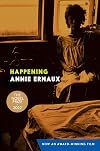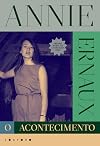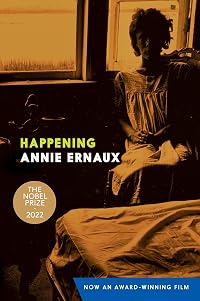
Happening
by Annie Ernaux
On This Page
Description
In 1963, Annie Ernaux, 23 and unattached, realizes she is pregnant. Shame arises in her like a plague: Understanding that her pregnancy will mark her and her family as social failures, she knows she cannot keep that child. This is the story, written forty years later, of a trauma Ernaux never overcame. In a France where abortion was illegal, she attempted, in vain, to self-administer the abortion with a knitting needle. Fearful and desperate, she finally located an abortionist, and ends up show more in a hospital emergency ward where she nearly dies. In Happening, Ernaux sifts through her memories and her journal entries dating from those days. Clearly, cleanly, she gleans the meanings of her experience. show lessTags
Recommendations

























Member Reviews
I really did not know what I was in for when I picked up this book.
I saw a used copy, realized it was the Ernaux everyone had been talking about for a while, and I decided to buy it. Even when I picked it up to read it, basically what I knew was that it was a translated memoir by a French author who lots of people revered.
I read the first few pages in the car, waiting on one of the kids, and quickly realized that was not the venue for this book.
I read the rest in one sitting, gripped by an ever increasing sense of anxiety and horror.
After Ernaux pulls through her ordeal and is released from the hospital, the relief is so profound she feels intoxicated, saved, proud. It was a state I could not access in the slightest, stuck in my chair show more feeling physically ill, nauseated, unsure of how to switch gears and move on.
CW: abortion, miscarriage, pregnancy loss
The book is an examination of a period in Ernaux's life when she is unexpectedly, unwantedly pregnant, and needs an abortion. At a time when abortion was illegal. She has no idea where to turn, how to find out who will help her, and many of those who she trusts with the information treat her as a curiosity, put her off, or refuse to help. Once she finally hears of someone who can do the procedure, she has no way to evaluate this person, the method to be used, anything at all. And when the procedure doesn't work as expected, still there is hardly anyone to turn to for help. A doctor gives unhelpful advice and then washes his hands of her. It is not until she is literally bleeding out on the floor that anyone in the legal medical profession will help her.
I want to have things to say about her writing, the way she approaches both the topic and the process of writing this memoir, but I cannot get past my visceral horror, especially in our post-Roe era, knowing how many women in this very country are, were, and will be in the same state. I cannot get past my own memories of going into shock during an emergent miscarriage. Not having enough blood pressure to stand.
I suppose I am glad I didn't know what I was getting into, or I might have put this book off forever.
And it was incredible. show less
I saw a used copy, realized it was the Ernaux everyone had been talking about for a while, and I decided to buy it. Even when I picked it up to read it, basically what I knew was that it was a translated memoir by a French author who lots of people revered.
I read the first few pages in the car, waiting on one of the kids, and quickly realized that was not the venue for this book.
I read the rest in one sitting, gripped by an ever increasing sense of anxiety and horror.
After Ernaux pulls through her ordeal and is released from the hospital, the relief is so profound she feels intoxicated, saved, proud. It was a state I could not access in the slightest, stuck in my chair show more feeling physically ill, nauseated, unsure of how to switch gears and move on.
CW: abortion, miscarriage, pregnancy loss
The book is an examination of a period in Ernaux's life when she is unexpectedly, unwantedly pregnant, and needs an abortion. At a time when abortion was illegal. She has no idea where to turn, how to find out who will help her, and many of those who she trusts with the information treat her as a curiosity, put her off, or refuse to help. Once she finally hears of someone who can do the procedure, she has no way to evaluate this person, the method to be used, anything at all. And when the procedure doesn't work as expected, still there is hardly anyone to turn to for help. A doctor gives unhelpful advice and then washes his hands of her. It is not until she is literally bleeding out on the floor that anyone in the legal medical profession will help her.
I want to have things to say about her writing, the way she approaches both the topic and the process of writing this memoir, but I cannot get past my visceral horror, especially in our post-Roe era, knowing how many women in this very country are, were, and will be in the same state. I cannot get past my own memories of going into shock during an emergent miscarriage. Not having enough blood pressure to stand.
I suppose I am glad I didn't know what I was getting into, or I might have put this book off forever.
And it was incredible. show less
While she was a student at Rouen in the early 1960s, Annie Ernaux became pregnant and was obliged to resort to an illegal abortion, an experience she treated in the context of fiction in her first novel, Les armoires vides (1974). Twenty-five years on from that, prompted by a scare about a possible HIV infection, she decided that it was time to revisit those events in the more direct form of a memoir.
She tells us in graphic detail about the things the pregnancy and the abortion procedure did to her, physically and psychologically, and about how the people around her reacted: the friends who helped in practical ways, despite their convictions; men who were turned on by the idea that this was a girl who had evidently had sex with someone show more else and thus might well agree to have sex with them; the doctors who pushed her away with Catholic distaste, the others who clearly resented her for putting them into an ethical and legal dilemma there was no clean way out of, and the others again who were sympathetic but did little of practical benefit to her, all as a result of a law that put her in danger without in any way achieving its stated objective.
But there are also a lot of other little things that Ernaux takes note of with her sharp eye for social detail, like the body-language of the patients and doctors in the HIV clinic, the films and songs of the time, or the telling detail of the junior doctor in a Rouen hospital who is rude to her when she asks him a question, and later mortified to discover that she is not "some girl from the Monoprix" but a university student. A nurse ticks Annie off for putting the unfortunate doctor in a false position by not revealing her true status: she leaves us to work out for ourselves the (very 1960s) implications that it would have been perfectly acceptable for a doctor to be rude to a working class woman, and that being a student automatically makes you at least an honorary member of the middle class...
This ought to be a period piece, describing an unpleasant but almost forgotten corner of women's lives, but sadly it still seems to be just as relevant as it would have been had Ernaux been brave (or foolish) enough to write it in 1964. show less
She tells us in graphic detail about the things the pregnancy and the abortion procedure did to her, physically and psychologically, and about how the people around her reacted: the friends who helped in practical ways, despite their convictions; men who were turned on by the idea that this was a girl who had evidently had sex with someone show more else and thus might well agree to have sex with them; the doctors who pushed her away with Catholic distaste, the others who clearly resented her for putting them into an ethical and legal dilemma there was no clean way out of, and the others again who were sympathetic but did little of practical benefit to her, all as a result of a law that put her in danger without in any way achieving its stated objective.
But there are also a lot of other little things that Ernaux takes note of with her sharp eye for social detail, like the body-language of the patients and doctors in the HIV clinic, the films and songs of the time, or the telling detail of the junior doctor in a Rouen hospital who is rude to her when she asks him a question, and later mortified to discover that she is not "some girl from the Monoprix" but a university student. A nurse ticks Annie off for putting the unfortunate doctor in a false position by not revealing her true status: she leaves us to work out for ourselves the (very 1960s) implications that it would have been perfectly acceptable for a doctor to be rude to a working class woman, and that being a student automatically makes you at least an honorary member of the middle class...
This ought to be a period piece, describing an unpleasant but almost forgotten corner of women's lives, but sadly it still seems to be just as relevant as it would have been had Ernaux been brave (or foolish) enough to write it in 1964. show less
4.25
A short but impactful tale of the authors quest to getting an abortion with anti-abortion laws in France.
This is such an important book, and Annie Ernaux knows it. There is delicate urgency in the tone. She has a unique way of touching and expanding on deeply emotional experiences in the most matter-of-fact way while retaining a raw vulnerability to the prose. There were parts where I simply had to pause and breathe.
There is no glorification of the triad she embarked on, she doesn't see herself as a hero. She was just a desperate 20-something with little resources and no one to turn to. I cannot even imagine the strength it took to revisit a period of your life so that other people feel seen and heard. I have nothing but respect show more and admiration for her.
"Maybe the true purpose of my life is for my body, my sensations and my thoughts to become writing, in other words, something intelligible and universal, causing my existence to merge into the lives and heads of other people." show less
A short but impactful tale of the authors quest to getting an abortion with anti-abortion laws in France.
This is such an important book, and Annie Ernaux knows it. There is delicate urgency in the tone. She has a unique way of touching and expanding on deeply emotional experiences in the most matter-of-fact way while retaining a raw vulnerability to the prose. There were parts where I simply had to pause and breathe.
There is no glorification of the triad she embarked on, she doesn't see herself as a hero. She was just a desperate 20-something with little resources and no one to turn to. I cannot even imagine the strength it took to revisit a period of your life so that other people feel seen and heard. I have nothing but respect show more and admiration for her.
"Maybe the true purpose of my life is for my body, my sensations and my thoughts to become writing, in other words, something intelligible and universal, causing my existence to merge into the lives and heads of other people." show less
I think this should be required reading for men.
To understand fully the nature of abortion — not in the abstract, as a personal or political issue, to be discussed and debated in public forum — but as an actual physical process of violent trauma and the subsequent shame and ostracism which follows, I think it requires a work like this, which lays out the reality of the subject in no uncertain terms and with an unflinching commitment to the truth. Ernaux's account of her experience is precise (as much as it can be when dealing with imperfect memory), and she refuses to (or, cannot) detach herself from the overlapping and overwhelming emotions involved.
This book highlights not only an immediate and urgent need for proper reproductive show more healthcare throughout society, but it also brings to light the silent network of women who live in solidarity with others, and who risk themselves (their careers, their social standings) to provide care to other women. show less
To understand fully the nature of abortion — not in the abstract, as a personal or political issue, to be discussed and debated in public forum — but as an actual physical process of violent trauma and the subsequent shame and ostracism which follows, I think it requires a work like this, which lays out the reality of the subject in no uncertain terms and with an unflinching commitment to the truth. Ernaux's account of her experience is precise (as much as it can be when dealing with imperfect memory), and she refuses to (or, cannot) detach herself from the overlapping and overwhelming emotions involved.
This book highlights not only an immediate and urgent need for proper reproductive show more healthcare throughout society, but it also brings to light the silent network of women who live in solidarity with others, and who risk themselves (their careers, their social standings) to provide care to other women. show less
This was incredibly sad to read. The remembrance of a near death experience suffered while the writer was still a young student and abortion was illegal in France. A journal written over thirty years before she decided to write about her horrific experience supplements the work of memory. What results from this work is not only an exploration of the different ways misogyny affects the freedom of women over their bodies, but also the different ways barriers such as social class and poverty affect access. That act of returning to memory, reliving it, making an effort to be honest despite the pain, shame, and fear suffered in such a traumatic experience, is admirable.
I don't think I can rate this because
1) It's short, even for a novella - my kindle had it at 56 pages. It didn't give me enough time to adapt to her style and understand where she was coming from.
2) As far as I can tell this is an as accurate as possible retelling of events that actually happened to her. There's a beginning and end in the present and a few asides throughout the book on the difficulties of memory, but the asides don't add up to much. It just feels weird rating something like that.
3) My expectations were probably weird from just picking up her top book on here on the basis that she's a Nobel laureate so this must be Literature, in the fiction sense. Somehow I expected more fictionalising. Maybe that's stupid but in the show more short space of the book I just didn't have time to adjust my expectations.
Ultimately I don't know what I thought about it because so much of it is about context. I'm not sure her reflections about the process of remembering really did anything for me. The story is well told, with a few interesting bits about class but that again are minor asides. It's an evocative picture of an event and what led up to it, at least the parts that seemed important to her on recollection. She talks about how it was important to her to share something that went on behind closed doors for so, so many people and that since then is kind of not talked about. And it is important! And I think reading this at the time of release it would have had much more impact because it was talked about even less, or like she says it had a veil passed over it even when it was talked about in the abstract. This is impossible to say without sounds a massive turd, but I guess I just felt a little surprised that of all the stories about abortions now, this would be picked out as *particularly* valuable and "good". Because it is valuable. But the way we understand art and "urgent" "important" stories is weird, and it colours how I feel about the book in a probably very unfair way. I don't know. It's certainly not bad. it's just complicated. show less
1) It's short, even for a novella - my kindle had it at 56 pages. It didn't give me enough time to adapt to her style and understand where she was coming from.
2) As far as I can tell this is an as accurate as possible retelling of events that actually happened to her. There's a beginning and end in the present and a few asides throughout the book on the difficulties of memory, but the asides don't add up to much. It just feels weird rating something like that.
3) My expectations were probably weird from just picking up her top book on here on the basis that she's a Nobel laureate so this must be Literature, in the fiction sense. Somehow I expected more fictionalising. Maybe that's stupid but in the show more short space of the book I just didn't have time to adjust my expectations.
Ultimately I don't know what I thought about it because so much of it is about context. I'm not sure her reflections about the process of remembering really did anything for me. The story is well told, with a few interesting bits about class but that again are minor asides. It's an evocative picture of an event and what led up to it, at least the parts that seemed important to her on recollection. She talks about how it was important to her to share something that went on behind closed doors for so, so many people and that since then is kind of not talked about. And it is important! And I think reading this at the time of release it would have had much more impact because it was talked about even less, or like she says it had a veil passed over it even when it was talked about in the abstract. This is impossible to say without sounds a massive turd, but I guess I just felt a little surprised that of all the stories about abortions now, this would be picked out as *particularly* valuable and "good". Because it is valuable. But the way we understand art and "urgent" "important" stories is weird, and it colours how I feel about the book in a probably very unfair way. I don't know. It's certainly not bad. it's just complicated. show less
Annie Ernaux was in her early twenties when she found herself pregnant with a child she didn't want. She turned her formidable intellectual powers to the best way of putting an end to her problem, but in France in the early 1960s, her options were limited.
Abortion is a somber subject, and this brief account is not easy to read. I found Annie's single-minded focus on getting rid of it disconcerting. Still this book is worth reading for its realistic depiction of the dangers of back alley abortions in the era before legalization.
Abortion is a somber subject, and this brief account is not easy to read. I found Annie's single-minded focus on getting rid of it disconcerting. Still this book is worth reading for its realistic depiction of the dangers of back alley abortions in the era before legalization.
Members
- Recently Added By
Lists

Books Read in 2022
5,168 works; 114 members

Best Biographies of Notable Women
279 works; 101 members

Spotted in Public
9 works; 1 member

contemporary literary fiction list to check out
47 works; 1 member
Author Information

60+ Works 8,993 Members
Annie Ernaux was born in 1940 in Normandy. She is the winner of numerous prizes including the Prix Renaudot. Her "A Woman's Story", "A Man's Place", and "Simple Passion" were all "New York Times" Notable Books. "A Woman's Story" was also a "Los Angeles Times" Fiction Prize finalist and "A Man's Place" was a French-American Foundation Award show more finalist. Her Previous book "Shame", was named a Best Book of 1998 by "Publishers Weekly". Her books are taught in schools throughout France as contemporary classics. Ernaux lives outside Paris. (Bowker Author Biography) show less
Some Editions
Awards and Honors
Distinctions
Notable Lists
Series
Belongs to Publisher Series
Gallimard, Folio (3556)
Work Relationships
Is contained in
Common Knowledge
- Canonical title
- Happening
- Original title
- L'événement
- Original publication date
- 2000
- Related movies
- L'événement (2021)
- Epigraph
- ‘ I wish for two things: that happening turn to writing. And that writing be happening.’
- Michel Leiris
‘ I wonder if memory is not simply a question of following things to the end.’
- Yuko Tsushima - First words
- I got off at Barbes.
- Last words*
- (Click to show. Warning: May contain spoilers.)Op het perron van station Malesherbes dacht ik bij mezelf dat ik was teruggegaan naar de passage Cardinet, omdat ik geloofde dat daar iets zou gaan gebeuren.
- Original language
- French
*Some information comes from Common Knowledge in other languages. Click "Edit" for more information.
Classifications
Statistics
- Members
- 831
- Popularity
- 33,118
- Reviews
- 43
- Rating
- (4.17)
- Languages
- 16 — Catalan, Danish, Dutch, English, Finnish, French, German, Galician, Italian, Portuguese (Portugal), Romanian, Serbian, Croatian, Spanish, Swedish, Turkish
- Media
- Paper, Audiobook, Ebook
- ISBNs
- 53
- ASINs
- 13