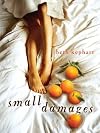
Small Damages
by Beth Kephart
On This Page
Description
Eighteen-year-old Kenzie of Philadelphia, pregnant by Yale-bound Kevin, is bitter when her mother sends her to Spain to deliver and give her baby away, but discovers a makeshift family with the rancher who takes her in, his cook, and the young man they have raised together.Tags
Recommendations



















Member Reviews
Knowing how Beth Kephart agonizes over every word, every phrase, I started Small Damages with the intention of identifying some of the imagery that I thought particularly descriptive. I soon abandoned that because I became so engrossed in the story. I realized that it’s not one or two phrases that make a wonderful story, it the whole, the continued visualization, the constant perfect phrasing that makes you want to read, non-stop. That’s how I felt with Small Damages.
Eighteen-year-old Kenzie is shipped off to a ranch in rural Spain outside Seville, by an ashamed mother, to live with people she’s never met, in a country she’s never been, to give birth to an unexpected child. The child’s father is taking no responsibilty and show more Kenzie’s father, who she adored, died of a heart attack several months prior. Small Damages is Kenzie’s story to her unborn child.
I’ll admit, I was dubious about reading a story about a teenager going to Spain to give her child up for adoption. But that was silly. Beth Kephart is the author and “beautifully written, ‘can’t put it down’” stories is her middle name. From the beginning, the reader internalizes Kenzie’s loneliness and feelings of abandonment by those who supposedly love her. This is enhanced by Kephart’s description of the isolation of the ranch, Los Nietos, where Kenzie will live, assisting the cook. You share with her the muddle of emotions about the adotpion, as she starts talking directly to her unborn daughter, describing the sights and sounds around her.
Small Damages’ characters are perfection. The image of brusque, plump Estela, the cook who does not give love easily, but once she does it is with her whole heart and soul, is vivid. The shy teenager, Esteban, who is more comfortable with his birds and horses than with people, is spot on. The Gypsies, to whom life is song, add a unique color to the tapestry of this story. The ancillary characters and plot lines are buttercream icing atop the tasty seven layer cake of Small Damages. If I were ever to set foot in Los Nietos, I would never leave.
The themes–family need not be biological, home is the place where people love you, regrets cannot be undone–are exquisitely illustrated in Small Damages.
Small Damages by Beth Kephart is Printz Award and National Book Award worthy, without a doubt. However, Beth, there is one thing you did leave out of Small Damages…the recipes for some of Estela’s dishes, like that paella for instance (you can smell the aroma from the description in the book)! I read Small Damages in a day because I couldn’t put it down. I’ll read it again, slowly, to savor it. show less
Eighteen-year-old Kenzie is shipped off to a ranch in rural Spain outside Seville, by an ashamed mother, to live with people she’s never met, in a country she’s never been, to give birth to an unexpected child. The child’s father is taking no responsibilty and show more Kenzie’s father, who she adored, died of a heart attack several months prior. Small Damages is Kenzie’s story to her unborn child.
I’ll admit, I was dubious about reading a story about a teenager going to Spain to give her child up for adoption. But that was silly. Beth Kephart is the author and “beautifully written, ‘can’t put it down’” stories is her middle name. From the beginning, the reader internalizes Kenzie’s loneliness and feelings of abandonment by those who supposedly love her. This is enhanced by Kephart’s description of the isolation of the ranch, Los Nietos, where Kenzie will live, assisting the cook. You share with her the muddle of emotions about the adotpion, as she starts talking directly to her unborn daughter, describing the sights and sounds around her.
Small Damages’ characters are perfection. The image of brusque, plump Estela, the cook who does not give love easily, but once she does it is with her whole heart and soul, is vivid. The shy teenager, Esteban, who is more comfortable with his birds and horses than with people, is spot on. The Gypsies, to whom life is song, add a unique color to the tapestry of this story. The ancillary characters and plot lines are buttercream icing atop the tasty seven layer cake of Small Damages. If I were ever to set foot in Los Nietos, I would never leave.
The themes–family need not be biological, home is the place where people love you, regrets cannot be undone–are exquisitely illustrated in Small Damages.
Small Damages by Beth Kephart is Printz Award and National Book Award worthy, without a doubt. However, Beth, there is one thing you did leave out of Small Damages…the recipes for some of Estela’s dishes, like that paella for instance (you can smell the aroma from the description in the book)! I read Small Damages in a day because I couldn’t put it down. I’ll read it again, slowly, to savor it. show less
The catalog copy for SMALL DAMAGES describes it as “JUNO meets UNDER THE TUSCAN SUN,” and I suppose that’s an effective shorthand. The sun here is in Spain rather than northern Italy, and Kenzie Spitzer is less in control of her situation than Juno MacGuff (and also less blessed with supportive parents)--but if you need to give a point of reference, it’ll do.
The whole idea of sending a pregnant teenager away until she has given birth--and given away her baby to adoptive parents, so that she can then return home from her mysterious trip and pick up her life where she left off--is an oddly old-fashioned one, and while the novel is clearly contemporary, its time frame isn’t quite current. It’s also an interesting angle on the show more question of “choice” debate, in which adoption seems to be the least-discussed choice much of the time--but unlike Juno, Kenzie doesn’t feel much ownership of this particular choice. Feeling resentful and out of control, her stay in Spain seems like exile, and her inadequate knowledge of the language is only one source of her discomfort as she struggles to come to terms with the turns her life has taken.
Beth Kephart, on the other hand, seems to operate very comfortably within this foreign setting, and SMALL DAMAGES is among her best work. Having said that, even less-stellar Beth Kephart is still pretty darn good, but I think this is her richest, most resonant novel since THE HEART IS NOT A SIZE (also set in a Spanish-speaking country). It’s not hard to get caught up in the beauty of Kephart's writing--well-constructed, evocative description is among her particular strengths--but the story she’s telling here is particularly engaging. Her Kenzie isn’t always easy to like--she’s angry, confused, and comes off a bit spoiled at times--but her emotional growth over the course of the novel is convincing. Her voice is distinctive--less articulate than some of the author’s prior teenage protagonists (or Juno MacGuff, for that matter), maybe, but that suits both her general confusion and the foreign-ness of her setting. Influential cross-generational relationships are becoming another hallmark of Kephart's fiction; her teens struggle with their parents (one of whom may be absent or dead), but there are grandparent surrogates who play important roles, like the elderly lesbian neighbors in YOU ARE MY ONLY and Kenzie’s cooking teacher/guardian Estela here. Kenzie and Estela’s relationship develops believably from mutual irritation to real affection, and significantly affects Kenzie’s decisions later in the novel.
I’ve called several of Beth Kephart's books “the best one yet”--and I’m saying it again, but something feels different about SMALL DAMAGES. I think it brings the author’s gifts as writer and storyteller (which are not always synonymous or co-occurring things) together more effectively than any of her earlier fiction has, and I feel that it will stay with me longer. If you haven’t gotten around to reading Beth Kephart yet, start here--SMALL DAMAGES is one of the best books I’ve read this year. show less
The whole idea of sending a pregnant teenager away until she has given birth--and given away her baby to adoptive parents, so that she can then return home from her mysterious trip and pick up her life where she left off--is an oddly old-fashioned one, and while the novel is clearly contemporary, its time frame isn’t quite current. It’s also an interesting angle on the show more question of “choice” debate, in which adoption seems to be the least-discussed choice much of the time--but unlike Juno, Kenzie doesn’t feel much ownership of this particular choice. Feeling resentful and out of control, her stay in Spain seems like exile, and her inadequate knowledge of the language is only one source of her discomfort as she struggles to come to terms with the turns her life has taken.
Beth Kephart, on the other hand, seems to operate very comfortably within this foreign setting, and SMALL DAMAGES is among her best work. Having said that, even less-stellar Beth Kephart is still pretty darn good, but I think this is her richest, most resonant novel since THE HEART IS NOT A SIZE (also set in a Spanish-speaking country). It’s not hard to get caught up in the beauty of Kephart's writing--well-constructed, evocative description is among her particular strengths--but the story she’s telling here is particularly engaging. Her Kenzie isn’t always easy to like--she’s angry, confused, and comes off a bit spoiled at times--but her emotional growth over the course of the novel is convincing. Her voice is distinctive--less articulate than some of the author’s prior teenage protagonists (or Juno MacGuff, for that matter), maybe, but that suits both her general confusion and the foreign-ness of her setting. Influential cross-generational relationships are becoming another hallmark of Kephart's fiction; her teens struggle with their parents (one of whom may be absent or dead), but there are grandparent surrogates who play important roles, like the elderly lesbian neighbors in YOU ARE MY ONLY and Kenzie’s cooking teacher/guardian Estela here. Kenzie and Estela’s relationship develops believably from mutual irritation to real affection, and significantly affects Kenzie’s decisions later in the novel.
I’ve called several of Beth Kephart's books “the best one yet”--and I’m saying it again, but something feels different about SMALL DAMAGES. I think it brings the author’s gifts as writer and storyteller (which are not always synonymous or co-occurring things) together more effectively than any of her earlier fiction has, and I feel that it will stay with me longer. If you haven’t gotten around to reading Beth Kephart yet, start here--SMALL DAMAGES is one of the best books I’ve read this year. show less
Originally reviewed at http://www.flyleafreview.com/2012/06/book-review-small-damages-by-beth.html
I recently swapped ARC's with my blogger friend Jen, and Small Damages was the book I chose. I had to look the title and the author up online to read a synopsis because I was unfamiliar with both. From that I gleaned that the book dealt with teen pregnancy, not a subject I'm opposed to reading about, though not a subject that I feel compelled to read about either. You know, just sort of middle of the road. But, what made me take a look at this book a little more closely was the setting: Spain. I have been reading a lot of books lately that feature a setting I have always wanted to visit. Flirting In Italian took me to Tuscany. Lovestruck show more Summer let me see Austin, The Sky is Everywhere showed me northern California (ok, I've been there but would love to visit again.) And I have always, always longed to travel to Spain. I didn't even read a review of Small Damages, I just went with my gut and asked Jen for it. Best. Swap. Ever.
Because I haven't read any other books by Kephart (and she has a very impressive array of work under her belt) and because I didn't read any reviews of Small Damages beforehand, I started this book completely blank. I wasn't sure what to expect from her. What I discovered, from page one, is that Beth Kephart is one of those rare breeds that can take a collection of words and construct them in way that almost paints an image. Beth Kephart, like some of my very favorite authors, puts words to paper like an artist puts paint to canvas. I think if I could pick one author that reminds me the most of the way Kephart writes it would be Gayle Forman. Like Forman, Kephart's writing is deeply emotive. Her words evoke visual images. I don't just mean in the way she describes things. It's more than that. Her writing is descriptive but it also has a quality to it that sets a tone or mood. Her expressions are subtle and nuanced. She has written prose, but with a very poetic quality to it.
When I open the door, a nun blackbirds by, and I keep walking out into the air, which smells like fruit and sun and the color blue; it smells like blue in Seville.
See what I mean? This passage came from page five. Once I read that, I knew I was hooked. And the book just got better.
When we first meet Kenzie, she is newly arrived in Seville, Spain and is about to set off for Los Nietos, the farmhouse (or cortijo) owned by Miguel, a friend of a friend of Kenzie's mother, who has agreed to take her in until her child is born. The child will then be adopted by a couple Miguel knows and Kenzie will return to the States and start college in the fall. To say Kenzie is in a bad place would be an understatement. Not only is she pregnant, she recently lost her father, who in her own words, was her favorite. The father of Kenzie's baby, Kevin, while not a bad guy, has decided to let Kenzie handle things on her own, in effect taking himself out of the equation by refusing to accompany Kenzie to Spain.Worse still, Kenzie and Kevin told no one, not even their very close knit group of friends, about the pregnancy. The only other person who knows is her mother, who proceeded to spirit Kenzie away for the summer until the baby is born and then plans to bring her home and act as if nothing ever happened. It is the way her mother deals with life's hardships. It's the way she dealt with Kenzie's dad's death, she grieved for a brief period of time, then swept it under the rug. Kenzie, however, is not like her mother.
I loved the character of Kenzie. She is just one of many complicated characters found within the pages of Small Damages. The majority of the book is written in the "now" but we do get to see what happened in the past, from the time just before Kenzie's dad's death up to the discovery of her pregnancy. It's not only an effective way to tell the story, but it also shows the reader the person Kenzie once was, and the person she's become since. Before, Kenzie was happy and part of a loving, supportive group of friends. But because she and Kevin chose not to tell anyone about the baby, she has isolated herself from that support. Her mom packing her off to Spain further cemented that isolation. The Kenzie we meet now is sad, angry, confused, resentful and frustrated. She feels helpless and out of control, and most of all, she feels alone and far way from home. She's just biding her time at the cortijo, growing more surly and frustrated every day.
"And that's it. That's it today; I can't stand it. I can't stand being here, on my own, invisible but also growing larger. I stumble from bed and shower in the cold water I can't get used to--let the cold, cold water burn. I throw on a dress, head down the hall, cut through the courtyard, and it's like I'm nowhere, like I'm already gone, like I will be gone four months from now. She was here then she wasn't. Pretend it never happened. Under the tiled arch, down the chalk of road, I walk...
It's sunflowers in the fields instead of bulls. It's houses nobody lives in, horses nobody rides, a man on a mule trotting by. It's abandoned wells and steam on the horizon, a cat crossing the road, and I can't get enough distance."
One of the ways she deals with this loneliness is by speaking to her unborn child, and in fact the whole book seems to be a conversation between Kenzie and the baby. I think it's in these small moments, when she's addressing the baby, that I fell in love with Kenzie. Even though she acts bratty and petulant at times, as a mother, I still found that I could relate to her and sympathize with her through these interactions with her unborn child.
Though she feels alone, Kenzie is actually surrounded by a cast of colorful, vibrant, complicated characters, each with their own stories to tell. There is Miguel, the owner of Los Nietos and a breeder of bulls by trade. There is Esteban, who lives at Los Nietos and cares for the horses (more on him in a bit.) There are the Gypsies: Luis, Angelita, Arcadio, and the rest, who have traveled to the cortijo, and whose music is woven throughout the story.
"Outside my window, in a puddle of courtyard moon, the Gypsies are singing some song...
Estela turns to watch Arcadio on the loveseat, his guitar on his knee, his fingers running hard against the strings. Angelita pulls at her dress like it's an animal, she works a pair of castanets. Joselita bangs at the half barrel, and whatever Bruno sings, Rafael chases with some turned-inside-out note of his own. The song is a black thing with wings:
Come with me,
Come with me,
Tell your mother I'm your cousin
I can't think straight
When I see you on the street.
I can't think straight,
And I keep on looking at you.'
And there is Estela, the "Queen of Los Nietos." All of these characters are important, but it is the relationship that develops between Kenzie and Estela that makes up the core of the story. Estela is bristly and sharp tongued, but beneath her prickly surface is a heart as big as the moon. She can be petty and jealous, but she has so much love in her. Estela is the backbone of the house, as most mother's are. She cooks and cleans, and generally takes care of things around the place, including the people that live there. Cooking and the preparation of food plays a huge role in this book, and I loved that. The dishes Estela and Kenzie prepare, Albondigas de bonito, paella, flan, gazpacho, langostinos, are as much a part of the Spanish setting as the land itself. The preparation of food is a steady backdrop as Kenzie and Estela become friends and we learn more of Estela's own sad past. You guys, I have SO much love in my heart for that grumpy little Spanish woman, and her kinship with Kenzie is hands down one of my favorite "mother-daughter" relationships I have read to date.
As Kenzie begins to heal and work through her emotions gradually accepting the ways, both good and bad, that her life has changed, a lovely backstory between Estela and Luis unfolds. I LOVE the way Kephart wrote this story within a story, it's such a subtle yet powerful layer that helps to round out the entire tale.
And another subtle and sweet layer of Small Damages, is the connection that arises between Kenzie and Esteban, the quiet, private, pensive boy who also lives at the farm. I wasn't sure the role Esteban would play in this book for he is most definitely written as a man of few words. But Kenzie and Esteban do strike up a friendship, and like Estela and Miguel, he becomes an important part of Kenzie's new support system. You guys, I am big fan of romance in books. All kinds. I like the big, in-your-face romance of some books, but I also can appreciate the soft, quiet, less obtrusive romance like the one written in Small Damages. It is a completely different kind of animal, but no less breathtaking, heart pounding or effective. In many ways I was reminded of the love story between Puck and Sean in Maggie Stiefvater's The Scorpio Races. And if you have my review of that book, you know that I LOVE the romance between those two.
I would be remiss if I did not mention the setting, after all, it's what drew me to this book in the first place. I loved Kephart's descriptions of the Spanish countryside that is the setting of Los Nietos. I loved reading about the hot, dusty, dry summer days and flat pastures filled with the toro bravos and olive and orange groves. Loved reading about the birds and the plants and the trees of the forest that Esteban loves. And I was equally awed by the city of Seville, with it's many cathedrals and grand architecture. Beyond the land, the people and the customs are also rendered beautifully. There is a magical quality to this place Kephart has written about.
"The sky goes on for miles. Wherever there are cathedrals there is gold, and whenever I breathe, I smell oranges, and more and more, I feel confused. Across the way, the kids aren't banging with their paddles anymore, and the old knitter is staring down toward the street, her eyes on the pack of Gypsies who have begun to dance and sing flamenco, who move forward now, slow, a parade. On the rooftops, a kid disappears and then returns with a basket of carnations on his arm. He tosses a red bud down to the ground, toward the Gypsy song. He tosses another. The Gypsies look up and a crowd starts to gather, and the boy keeps tossing flowers. Now the knitter leans in and takes a stem and throws it.
"Olé" says the boy with the basket.
I turn to the woman beside me. She says nothing, explains nothing. I turn and watch Miguel and his friends, who aren't talking anymore, who have started to lean out, toward the flamenco. Miguel goes first--grabs a fat fistful of the blossoms from the bathtub, opens his hand, sprinkles them down, and all of a sudden, it's like Seville is raining flowers in the sun."
I know from my research on the author that she has traveled and lived in Spain, and I feel like the above event was something she might have witnessed. It's clear that she loves the country and that it is written from her heart. I love how with just a few words she can transport me to that place, and I feel like I am there, on that street, watching all those red blooms raining down on me.
This book is not a long one, but again, like Gayle Forman's If I Stay, there is SO much punch packed into this slim volume. And without spoiling, I just want to say that the way Kephart chose to end this book is, in my opinion, PERFECT. It is one of those endings that just lifted me up and made my heart happy and hopeful. I loved this book you guys, I love the journey that Kenzie takes, and I love the outcome of that journey. I think that the characters Beth Kephart has written are brilliant and I know they are going to stay with me for a very long time. I hope, hope, hope that this little book gets the attention that it deserves. Small Damages has everything that I love about Young Adult (and New Adult) contemporaries and I know that this will not be the last book by Beth Kephart that I will read. There is a reason that readers and authors such as Ruta Sepetys (of Between Shades of Gray fame) are raving about this book. If you are a fan of contemporaries do yourself a favor and pick up Small Damages when it releases on July 19th.
5/5 Stars show less
I recently swapped ARC's with my blogger friend Jen, and Small Damages was the book I chose. I had to look the title and the author up online to read a synopsis because I was unfamiliar with both. From that I gleaned that the book dealt with teen pregnancy, not a subject I'm opposed to reading about, though not a subject that I feel compelled to read about either. You know, just sort of middle of the road. But, what made me take a look at this book a little more closely was the setting: Spain. I have been reading a lot of books lately that feature a setting I have always wanted to visit. Flirting In Italian took me to Tuscany. Lovestruck show more Summer let me see Austin, The Sky is Everywhere showed me northern California (ok, I've been there but would love to visit again.) And I have always, always longed to travel to Spain. I didn't even read a review of Small Damages, I just went with my gut and asked Jen for it. Best. Swap. Ever.
Because I haven't read any other books by Kephart (and she has a very impressive array of work under her belt) and because I didn't read any reviews of Small Damages beforehand, I started this book completely blank. I wasn't sure what to expect from her. What I discovered, from page one, is that Beth Kephart is one of those rare breeds that can take a collection of words and construct them in way that almost paints an image. Beth Kephart, like some of my very favorite authors, puts words to paper like an artist puts paint to canvas. I think if I could pick one author that reminds me the most of the way Kephart writes it would be Gayle Forman. Like Forman, Kephart's writing is deeply emotive. Her words evoke visual images. I don't just mean in the way she describes things. It's more than that. Her writing is descriptive but it also has a quality to it that sets a tone or mood. Her expressions are subtle and nuanced. She has written prose, but with a very poetic quality to it.
When I open the door, a nun blackbirds by, and I keep walking out into the air, which smells like fruit and sun and the color blue; it smells like blue in Seville.
See what I mean? This passage came from page five. Once I read that, I knew I was hooked. And the book just got better.
When we first meet Kenzie, she is newly arrived in Seville, Spain and is about to set off for Los Nietos, the farmhouse (or cortijo) owned by Miguel, a friend of a friend of Kenzie's mother, who has agreed to take her in until her child is born. The child will then be adopted by a couple Miguel knows and Kenzie will return to the States and start college in the fall. To say Kenzie is in a bad place would be an understatement. Not only is she pregnant, she recently lost her father, who in her own words, was her favorite. The father of Kenzie's baby, Kevin, while not a bad guy, has decided to let Kenzie handle things on her own, in effect taking himself out of the equation by refusing to accompany Kenzie to Spain.Worse still, Kenzie and Kevin told no one, not even their very close knit group of friends, about the pregnancy. The only other person who knows is her mother, who proceeded to spirit Kenzie away for the summer until the baby is born and then plans to bring her home and act as if nothing ever happened. It is the way her mother deals with life's hardships. It's the way she dealt with Kenzie's dad's death, she grieved for a brief period of time, then swept it under the rug. Kenzie, however, is not like her mother.
I loved the character of Kenzie. She is just one of many complicated characters found within the pages of Small Damages. The majority of the book is written in the "now" but we do get to see what happened in the past, from the time just before Kenzie's dad's death up to the discovery of her pregnancy. It's not only an effective way to tell the story, but it also shows the reader the person Kenzie once was, and the person she's become since. Before, Kenzie was happy and part of a loving, supportive group of friends. But because she and Kevin chose not to tell anyone about the baby, she has isolated herself from that support. Her mom packing her off to Spain further cemented that isolation. The Kenzie we meet now is sad, angry, confused, resentful and frustrated. She feels helpless and out of control, and most of all, she feels alone and far way from home. She's just biding her time at the cortijo, growing more surly and frustrated every day.
"And that's it. That's it today; I can't stand it. I can't stand being here, on my own, invisible but also growing larger. I stumble from bed and shower in the cold water I can't get used to--let the cold, cold water burn. I throw on a dress, head down the hall, cut through the courtyard, and it's like I'm nowhere, like I'm already gone, like I will be gone four months from now. She was here then she wasn't. Pretend it never happened. Under the tiled arch, down the chalk of road, I walk...
It's sunflowers in the fields instead of bulls. It's houses nobody lives in, horses nobody rides, a man on a mule trotting by. It's abandoned wells and steam on the horizon, a cat crossing the road, and I can't get enough distance."
One of the ways she deals with this loneliness is by speaking to her unborn child, and in fact the whole book seems to be a conversation between Kenzie and the baby. I think it's in these small moments, when she's addressing the baby, that I fell in love with Kenzie. Even though she acts bratty and petulant at times, as a mother, I still found that I could relate to her and sympathize with her through these interactions with her unborn child.
Though she feels alone, Kenzie is actually surrounded by a cast of colorful, vibrant, complicated characters, each with their own stories to tell. There is Miguel, the owner of Los Nietos and a breeder of bulls by trade. There is Esteban, who lives at Los Nietos and cares for the horses (more on him in a bit.) There are the Gypsies: Luis, Angelita, Arcadio, and the rest, who have traveled to the cortijo, and whose music is woven throughout the story.
"Outside my window, in a puddle of courtyard moon, the Gypsies are singing some song...
Estela turns to watch Arcadio on the loveseat, his guitar on his knee, his fingers running hard against the strings. Angelita pulls at her dress like it's an animal, she works a pair of castanets. Joselita bangs at the half barrel, and whatever Bruno sings, Rafael chases with some turned-inside-out note of his own. The song is a black thing with wings:
Come with me,
Come with me,
Tell your mother I'm your cousin
I can't think straight
When I see you on the street.
I can't think straight,
And I keep on looking at you.'
And there is Estela, the "Queen of Los Nietos." All of these characters are important, but it is the relationship that develops between Kenzie and Estela that makes up the core of the story. Estela is bristly and sharp tongued, but beneath her prickly surface is a heart as big as the moon. She can be petty and jealous, but she has so much love in her. Estela is the backbone of the house, as most mother's are. She cooks and cleans, and generally takes care of things around the place, including the people that live there. Cooking and the preparation of food plays a huge role in this book, and I loved that. The dishes Estela and Kenzie prepare, Albondigas de bonito, paella, flan, gazpacho, langostinos, are as much a part of the Spanish setting as the land itself. The preparation of food is a steady backdrop as Kenzie and Estela become friends and we learn more of Estela's own sad past. You guys, I have SO much love in my heart for that grumpy little Spanish woman, and her kinship with Kenzie is hands down one of my favorite "mother-daughter" relationships I have read to date.
As Kenzie begins to heal and work through her emotions gradually accepting the ways, both good and bad, that her life has changed, a lovely backstory between Estela and Luis unfolds. I LOVE the way Kephart wrote this story within a story, it's such a subtle yet powerful layer that helps to round out the entire tale.
And another subtle and sweet layer of Small Damages, is the connection that arises between Kenzie and Esteban, the quiet, private, pensive boy who also lives at the farm. I wasn't sure the role Esteban would play in this book for he is most definitely written as a man of few words. But Kenzie and Esteban do strike up a friendship, and like Estela and Miguel, he becomes an important part of Kenzie's new support system. You guys, I am big fan of romance in books. All kinds. I like the big, in-your-face romance of some books, but I also can appreciate the soft, quiet, less obtrusive romance like the one written in Small Damages. It is a completely different kind of animal, but no less breathtaking, heart pounding or effective. In many ways I was reminded of the love story between Puck and Sean in Maggie Stiefvater's The Scorpio Races. And if you have my review of that book, you know that I LOVE the romance between those two.
I would be remiss if I did not mention the setting, after all, it's what drew me to this book in the first place. I loved Kephart's descriptions of the Spanish countryside that is the setting of Los Nietos. I loved reading about the hot, dusty, dry summer days and flat pastures filled with the toro bravos and olive and orange groves. Loved reading about the birds and the plants and the trees of the forest that Esteban loves. And I was equally awed by the city of Seville, with it's many cathedrals and grand architecture. Beyond the land, the people and the customs are also rendered beautifully. There is a magical quality to this place Kephart has written about.
"The sky goes on for miles. Wherever there are cathedrals there is gold, and whenever I breathe, I smell oranges, and more and more, I feel confused. Across the way, the kids aren't banging with their paddles anymore, and the old knitter is staring down toward the street, her eyes on the pack of Gypsies who have begun to dance and sing flamenco, who move forward now, slow, a parade. On the rooftops, a kid disappears and then returns with a basket of carnations on his arm. He tosses a red bud down to the ground, toward the Gypsy song. He tosses another. The Gypsies look up and a crowd starts to gather, and the boy keeps tossing flowers. Now the knitter leans in and takes a stem and throws it.
"Olé" says the boy with the basket.
I turn to the woman beside me. She says nothing, explains nothing. I turn and watch Miguel and his friends, who aren't talking anymore, who have started to lean out, toward the flamenco. Miguel goes first--grabs a fat fistful of the blossoms from the bathtub, opens his hand, sprinkles them down, and all of a sudden, it's like Seville is raining flowers in the sun."
I know from my research on the author that she has traveled and lived in Spain, and I feel like the above event was something she might have witnessed. It's clear that she loves the country and that it is written from her heart. I love how with just a few words she can transport me to that place, and I feel like I am there, on that street, watching all those red blooms raining down on me.
This book is not a long one, but again, like Gayle Forman's If I Stay, there is SO much punch packed into this slim volume. And without spoiling, I just want to say that the way Kephart chose to end this book is, in my opinion, PERFECT. It is one of those endings that just lifted me up and made my heart happy and hopeful. I loved this book you guys, I love the journey that Kenzie takes, and I love the outcome of that journey. I think that the characters Beth Kephart has written are brilliant and I know they are going to stay with me for a very long time. I hope, hope, hope that this little book gets the attention that it deserves. Small Damages has everything that I love about Young Adult (and New Adult) contemporaries and I know that this will not be the last book by Beth Kephart that I will read. There is a reason that readers and authors such as Ruta Sepetys (of Between Shades of Gray fame) are raving about this book. If you are a fan of contemporaries do yourself a favor and pick up Small Damages when it releases on July 19th.
5/5 Stars show less
“Five months is forever,” I told her.
“You made your choices,” she said and I said, “No.” Because the only thing I chose was you. – from Small Damages -
Kenzie has just graduated high school when she finds herself pregnant. The father is a boy named Kevin, on his way to Yale and unwilling to accept a child in his life. Kenzie’s mother makes it clear that to stay in Pennsylvania and have this child will not be suitable…and so Kenzie is sent to a small town just outside of Seville, Spain to have her baby and then surrender the infant to a young couple who wishes to adopt.
When Kenzie first arrives in Spain, she is alone, scared and angry. She is resentful of the woman tasked with her care, a woman by the name of Estela who show more carries her own secrets and “small damages.”
Coincidence or bad luck or no luck. Don Quixote. Whatever it was. Estela’s life is all subtractions. It is small damages and heartache. – from Small Damages -
But, as the days pass, Kenzie discovers something under the bright, hot Spanish sky – acceptance, love, and healing. Among the gypsies, and under the careful guidance of Estela who teaches her to cook, by the side of a special horse named Tierra, and through the eyes of a young man named Esteban…Kenzie finds a family.
Beth Kephart’s newest novel is filled with her signature beautiful prose. It takes the reader into the heart of a young girl who still mourns the death of her father and struggles with the reality of her unborn baby. It introduces Estela, a complicated woman whose huge heart is reflected in the delicious food she makes. It uncovers the colors of Spain and makes the reader fall in love with the people who call that country home.
Down the road and past the arch, the olive trees are casting webs of purple shadows. Across the way, between the sunflowers, the clover is green and the cacti bloom. Out on the horizon, there’s the leaking of silver, blue, and green, like the sea. I sit up front, with Miguel and Luis. The Gypsies sit in the back, in the bed of the truck, while the wind blows a song through Arcadio’s strings. – from Small Damages -
Kephart explores the themes of loss, the connection between parent and child, and the process of healing our hearts. Lyrical and profound, the words which shape this story take the reader on a journey from suburban American life into the mystical and colorful world of a Spanish cortijo.
I loved this novel and its appealing young protagonist. I loved the journey, and the discovery, the hope and the sadness, the path toward healing after trauma, the knowledge that we are never really alone, and that home is not a place on a map but the people who love you. Beth Kephart is an artist with words and Small Damages is another astonishing literary success.
Highly recommended.
FTC Disclosure: In the spirit of full disclosure, readers should know I have a friendship with the author. They should also know that I loved Beth’s words before I discovered the beautiful person behind them. show less
“You made your choices,” she said and I said, “No.” Because the only thing I chose was you. – from Small Damages -
Kenzie has just graduated high school when she finds herself pregnant. The father is a boy named Kevin, on his way to Yale and unwilling to accept a child in his life. Kenzie’s mother makes it clear that to stay in Pennsylvania and have this child will not be suitable…and so Kenzie is sent to a small town just outside of Seville, Spain to have her baby and then surrender the infant to a young couple who wishes to adopt.
When Kenzie first arrives in Spain, she is alone, scared and angry. She is resentful of the woman tasked with her care, a woman by the name of Estela who show more carries her own secrets and “small damages.”
Coincidence or bad luck or no luck. Don Quixote. Whatever it was. Estela’s life is all subtractions. It is small damages and heartache. – from Small Damages -
But, as the days pass, Kenzie discovers something under the bright, hot Spanish sky – acceptance, love, and healing. Among the gypsies, and under the careful guidance of Estela who teaches her to cook, by the side of a special horse named Tierra, and through the eyes of a young man named Esteban…Kenzie finds a family.
Beth Kephart’s newest novel is filled with her signature beautiful prose. It takes the reader into the heart of a young girl who still mourns the death of her father and struggles with the reality of her unborn baby. It introduces Estela, a complicated woman whose huge heart is reflected in the delicious food she makes. It uncovers the colors of Spain and makes the reader fall in love with the people who call that country home.
Down the road and past the arch, the olive trees are casting webs of purple shadows. Across the way, between the sunflowers, the clover is green and the cacti bloom. Out on the horizon, there’s the leaking of silver, blue, and green, like the sea. I sit up front, with Miguel and Luis. The Gypsies sit in the back, in the bed of the truck, while the wind blows a song through Arcadio’s strings. – from Small Damages -
Kephart explores the themes of loss, the connection between parent and child, and the process of healing our hearts. Lyrical and profound, the words which shape this story take the reader on a journey from suburban American life into the mystical and colorful world of a Spanish cortijo.
I loved this novel and its appealing young protagonist. I loved the journey, and the discovery, the hope and the sadness, the path toward healing after trauma, the knowledge that we are never really alone, and that home is not a place on a map but the people who love you. Beth Kephart is an artist with words and Small Damages is another astonishing literary success.
Highly recommended.
FTC Disclosure: In the spirit of full disclosure, readers should know I have a friendship with the author. They should also know that I loved Beth’s words before I discovered the beautiful person behind them. show less
One of the most indulgent things about reading a Beth Kephart novel is getting the sense of being fully transported into another time and place. For example, in The Heart is Not a Size, she immersed her reader in the heartbreak that is Juarez, Mexico. With Dangerous Neighbors, one is swept back into 1876, at the height of the Centennial Exposition in Philadelphia.
This literary levitation is one of the reasons why Kephart's books lend themselves so well to being read in one sitting.
That's certainly not a requirement in order to experience the extraordinary sense of place and time that make up a Beth Kephart book, but that is precisely how I tend to read her books, including Small Damages, her fourteenth.
Like the reader of her show more coming-of-age story, Kenzie Spitzer has also been suddenly whisked away - to southern Spain, banished by her detached mother who is more concerned about what people might think about 18 year old Kenzie's unplanned pregnancy than what Kenzie herself might want or need.
And what Kenzie needs, we learn, are several people she once had but who have now been made distant by the separation of two oceans or two worlds. Her once-best-friend-turned-boyfriend Kevin (and the father of the baby) is enjoying a carefree summer with her friends on the Jersey shore. Her father is dead, gone in an instant from a heart attack. Replacing them all are strangers in the old cortijo in Spain where Kenzie, abandoned by her own mother (a parallel for her own connection to her unborn child) is sent to live, until she has her baby and until it is given up for adoption - no questions asked, no input from Kenzie.
In Spain, Kenzie stays in a villa with Estela, a cook who is an acquaintance of a sorority friend of her mother's. There's Miguel, Luis, sensitive Esteban, a band of musical Gypsies, and the couple who plans to adopt the baby. Each of them has something to teach Kenzie about love, about secrets and regret, about loss, about healing, about distance and time.
"Distance isn't the end of love." She touches her heart and closes her eyes. "You write to him, Kenzie. If you love him."
"Maybe he doesn't love me anymore. Maybe that's how it is."
"Know your own heart first. Be careful." (pg. 77)
"Nothing goes away, Esteban says, after a long time passes. Not the things you remember, and not the things you still want." (pg. 152)
When you read a Beth Kephart novel, you expect an immersion in color, in poetry and language, a sensory experience, an exploration into the heart. Small Damages is no exception. Here, we feel the heat of the Spanish sun; we hear the sizzle and pop of the onions in the pan while Estella prepares paella; we see the brilliant colors of the oranges and smell their fragrance. We feel Kenzie's hurt and heartbreak; it is palpable on the page. (Since she has lost her dad, she might do well to become acquainted with Katie D'Amore, who lost her mom and who we met in Beth's novel Nothing But Ghosts. They do reside in pretty close proximity on Philadelphia's Main Line, after all.)
Through it all, we go to Spain within the folds of a story that is laden with symbolism and meaning - for it is impossible to miss the religious symbolism and life and death undertones in Small Damages. (Yeah, I'm going to go there.)
It's more prevalent here than in any other of Beth's books I've read, yet is handled beautifully and with such grace. From the presence of the nuns "blackbirding by" to the visits to Necropolis to Kenzie's mother's declarations of what to do about the baby ("I'm calling Dr. Sam. We're going to fix this." "Fix it?" I said), to Miguel's bulls that will soon be taken away, to Kenzie's tender interactions of addressing the baby directly, to the birds (including actual STORKS!), to the storyline about adoption, to Estela's exclamations of Santa Maria, madre de Dios. All this, sometimes even within several paragraphs.
"He points to the sky, and I hear what he hears - a church bell song and also a flamenco song - and suddenly I'm wondering what would have happened if I had had a plan this morning, had not woken up and cold showered and started walking on my way to who knows where. Think ahead, Kevin always said, but I don't know how to think anymore, or what to think about, and now, from around the bend come a bride and groom and a party, and suddenly I am thinking about you - how I wish you could see this, wish I could someday tell you how, at the end of the procession, there was a pig and after that pig there were four boys chasing it straight through the streets.
Your eyes are on the sides of your head, and then they move forward. They are black seeds, and then they blink. I can't remember if it's happened already. You're not some tiny half inch anymore. You're a baby, my baby, but you won't be. You aren't. You are Javier and Adair's, and I know nothing - they're telling me nothing - about them.
'I have something for to show you,' Miguel says, when the crowd is gone and the pig is lost and we can still hear the holler of boys. He takes me around to the other side of town. 'The Necropolis,' he says. It's a low hill relaxed beneath the shade of cypress trees. We walk between slabs of stone walls and down into a world carved out of sand, a world of Roman ruins.
'Two hundred tombs,' Miguel says, and he says, 'Go and see,' He stays where he is. I walk alone through walls that seem carved out of earth toward rooms that definitely are, and everything is timeless, everything is smooth, everything is like it must have always been. Gone is gone; it lasts forever." (pg. 87)
In this life, none of us escapes unscathed. We're all left with damages, small and large. Through Kenzie's eyes, we see those and those of the people in her midst. We see the sting of regret, but we also see the power of choices. Small Damages reminds the reader that even when we think they aren't, our choices are still there, always ours for the making. show less
This literary levitation is one of the reasons why Kephart's books lend themselves so well to being read in one sitting.
That's certainly not a requirement in order to experience the extraordinary sense of place and time that make up a Beth Kephart book, but that is precisely how I tend to read her books, including Small Damages, her fourteenth.
Like the reader of her show more coming-of-age story, Kenzie Spitzer has also been suddenly whisked away - to southern Spain, banished by her detached mother who is more concerned about what people might think about 18 year old Kenzie's unplanned pregnancy than what Kenzie herself might want or need.
And what Kenzie needs, we learn, are several people she once had but who have now been made distant by the separation of two oceans or two worlds. Her once-best-friend-turned-boyfriend Kevin (and the father of the baby) is enjoying a carefree summer with her friends on the Jersey shore. Her father is dead, gone in an instant from a heart attack. Replacing them all are strangers in the old cortijo in Spain where Kenzie, abandoned by her own mother (a parallel for her own connection to her unborn child) is sent to live, until she has her baby and until it is given up for adoption - no questions asked, no input from Kenzie.
In Spain, Kenzie stays in a villa with Estela, a cook who is an acquaintance of a sorority friend of her mother's. There's Miguel, Luis, sensitive Esteban, a band of musical Gypsies, and the couple who plans to adopt the baby. Each of them has something to teach Kenzie about love, about secrets and regret, about loss, about healing, about distance and time.
"Distance isn't the end of love." She touches her heart and closes her eyes. "You write to him, Kenzie. If you love him."
"Maybe he doesn't love me anymore. Maybe that's how it is."
"Know your own heart first. Be careful." (pg. 77)
"Nothing goes away, Esteban says, after a long time passes. Not the things you remember, and not the things you still want." (pg. 152)
When you read a Beth Kephart novel, you expect an immersion in color, in poetry and language, a sensory experience, an exploration into the heart. Small Damages is no exception. Here, we feel the heat of the Spanish sun; we hear the sizzle and pop of the onions in the pan while Estella prepares paella; we see the brilliant colors of the oranges and smell their fragrance. We feel Kenzie's hurt and heartbreak; it is palpable on the page. (Since she has lost her dad, she might do well to become acquainted with Katie D'Amore, who lost her mom and who we met in Beth's novel Nothing But Ghosts. They do reside in pretty close proximity on Philadelphia's Main Line, after all.)
Through it all, we go to Spain within the folds of a story that is laden with symbolism and meaning - for it is impossible to miss the religious symbolism and life and death undertones in Small Damages. (Yeah, I'm going to go there.)
It's more prevalent here than in any other of Beth's books I've read, yet is handled beautifully and with such grace. From the presence of the nuns "blackbirding by" to the visits to Necropolis to Kenzie's mother's declarations of what to do about the baby ("I'm calling Dr. Sam. We're going to fix this." "Fix it?" I said), to Miguel's bulls that will soon be taken away, to Kenzie's tender interactions of addressing the baby directly, to the birds (including actual STORKS!), to the storyline about adoption, to Estela's exclamations of Santa Maria, madre de Dios. All this, sometimes even within several paragraphs.
"He points to the sky, and I hear what he hears - a church bell song and also a flamenco song - and suddenly I'm wondering what would have happened if I had had a plan this morning, had not woken up and cold showered and started walking on my way to who knows where. Think ahead, Kevin always said, but I don't know how to think anymore, or what to think about, and now, from around the bend come a bride and groom and a party, and suddenly I am thinking about you - how I wish you could see this, wish I could someday tell you how, at the end of the procession, there was a pig and after that pig there were four boys chasing it straight through the streets.
Your eyes are on the sides of your head, and then they move forward. They are black seeds, and then they blink. I can't remember if it's happened already. You're not some tiny half inch anymore. You're a baby, my baby, but you won't be. You aren't. You are Javier and Adair's, and I know nothing - they're telling me nothing - about them.
'I have something for to show you,' Miguel says, when the crowd is gone and the pig is lost and we can still hear the holler of boys. He takes me around to the other side of town. 'The Necropolis,' he says. It's a low hill relaxed beneath the shade of cypress trees. We walk between slabs of stone walls and down into a world carved out of sand, a world of Roman ruins.
'Two hundred tombs,' Miguel says, and he says, 'Go and see,' He stays where he is. I walk alone through walls that seem carved out of earth toward rooms that definitely are, and everything is timeless, everything is smooth, everything is like it must have always been. Gone is gone; it lasts forever." (pg. 87)
In this life, none of us escapes unscathed. We're all left with damages, small and large. Through Kenzie's eyes, we see those and those of the people in her midst. We see the sting of regret, but we also see the power of choices. Small Damages reminds the reader that even when we think they aren't, our choices are still there, always ours for the making. show less
From http://tatalonline.blogspot.com/2012/11/small-damages-by-beth-kephart.html:
Some novels are a celebration of plot and place and conflict resolution. Others prefer to focus on language, flirting at times with being closer to poetry than prose. Somehow, Small Damages manages to give the reader the best of both worlds and then some.
Kenzie is 18, pregnant, and being shipped off to Seville, Spain. Her mother wants her away from the stigma and judgment. Her boyfriend wants to go to college without added responsibility. Now Kenzie is alone on a bull farm with strangers in a strange place trying to come to terms with the twists her life has taken over the past year.
With that description, some of you may be shaking your heads, thinking show more “been there, done that.” This has all the makings of your standard “issue” novel—teen pregnancy, dead parent, heartbreak—with the added bonus of an exotic location. And perhaps in different hands it would have been just another addition to this growing genre, but a few pages is all it takes to realize that Small Damages is so much more.
First of all, there is the language—each word so carefully chosen that you can’t help but savor them one by one. There is no section of this book you’ll find yourself skimming. Then there is Seville—gorgeously rendered, orange-tree draped Seville that I now desperately want to visit. And finally there are the characters—those heartbreakingly, wonderfully realized characters.
Kenzie has been given the task on the farm of helping Estela in the kitchen, learning to cook the best dishes of the region. Estela is distracted, though, by the arrival of Luis and his band of gypsies, who sing haunting songs and offer strange gifts. And then there is Esteban, the young man who helps with the bulls and talks to horses and has a story of his own. In fact, they each have their own stories, and as the past is revealed, Kenzie begins to realize that is the choices we make during our struggles that ultimately define us.
Seamlessly combining the history and cuisine of Spain with a story of love and family, Small Damages is a slight novel that packs a huge punch. show less
Some novels are a celebration of plot and place and conflict resolution. Others prefer to focus on language, flirting at times with being closer to poetry than prose. Somehow, Small Damages manages to give the reader the best of both worlds and then some.
Kenzie is 18, pregnant, and being shipped off to Seville, Spain. Her mother wants her away from the stigma and judgment. Her boyfriend wants to go to college without added responsibility. Now Kenzie is alone on a bull farm with strangers in a strange place trying to come to terms with the twists her life has taken over the past year.
With that description, some of you may be shaking your heads, thinking show more “been there, done that.” This has all the makings of your standard “issue” novel—teen pregnancy, dead parent, heartbreak—with the added bonus of an exotic location. And perhaps in different hands it would have been just another addition to this growing genre, but a few pages is all it takes to realize that Small Damages is so much more.
First of all, there is the language—each word so carefully chosen that you can’t help but savor them one by one. There is no section of this book you’ll find yourself skimming. Then there is Seville—gorgeously rendered, orange-tree draped Seville that I now desperately want to visit. And finally there are the characters—those heartbreakingly, wonderfully realized characters.
Kenzie has been given the task on the farm of helping Estela in the kitchen, learning to cook the best dishes of the region. Estela is distracted, though, by the arrival of Luis and his band of gypsies, who sing haunting songs and offer strange gifts. And then there is Esteban, the young man who helps with the bulls and talks to horses and has a story of his own. In fact, they each have their own stories, and as the past is revealed, Kenzie begins to realize that is the choices we make during our struggles that ultimately define us.
Seamlessly combining the history and cuisine of Spain with a story of love and family, Small Damages is a slight novel that packs a huge punch. show less
There are books that pump your adrenaline for you and there are books, like Small Damages by Beth Kephart, that seep deep into your being, settle there, making their mark on your emotions, your perceptions about other cultures, and your own world view. Kephart has a skill unlike other young adult authors in that she never sees her younger readers as incapable of understanding or of deep emotion. She trusts them to follow her characters in their unusual circumstances and settings and garner a deeper understanding of what it means to mature from a child into an adult and the responsibilities that weigh on them even now when they are so young in this modern world.
Kenzie Spitzer is an 18-year-old pregnant girl who struggles with the loss of show more her father and the silence of her mother every day, and she keeps secrets from her friends, her family, and herself. Kevin Sullivan, the boyfriend, is on his way to Yale in the fall, and she had planned to attend Newhouse film school after a summer on the New Jersey shore in a rented house with her boyfriend and friends. To say the least, her life is turned upside down by the pregnancy news, but what’s worse is the decision to have the child and give it up for adoption is taken out of her hands when her mother makes arrangements for her to go to Los Nietos (the granchildren) ranch in Spain where she will be cared for by her mother’s friends Miguel and Estela until the baby is born.
Read the full review: http://savvyverseandwit.com/2012/08/small-damages-by-beth-kephart.html show less
Kenzie Spitzer is an 18-year-old pregnant girl who struggles with the loss of show more her father and the silence of her mother every day, and she keeps secrets from her friends, her family, and herself. Kevin Sullivan, the boyfriend, is on his way to Yale in the fall, and she had planned to attend Newhouse film school after a summer on the New Jersey shore in a rented house with her boyfriend and friends. To say the least, her life is turned upside down by the pregnancy news, but what’s worse is the decision to have the child and give it up for adoption is taken out of her hands when her mother makes arrangements for her to go to Los Nietos (the granchildren) ranch in Spain where she will be cared for by her mother’s friends Miguel and Estela until the baby is born.
Read the full review: http://savvyverseandwit.com/2012/08/small-damages-by-beth-kephart.html show less
Members
- Recently Added By
Author Information

39+ Works 2,122 Members
Beth Kephart's first book was a National Book Award finalist & was named a best book of the year by "Salon," the "Philadelphia Inquirer," & others. Kephart has won a 2000 grant from the National Endowment for the Arts, the 1998 Leeway grant, & the 1997 Pennsylvania Council on the Arts top grant for fiction. Her essays & articles have appeared in show more magazine nationwide. She lives in Pennsylvania. (Bowker Author Biography) show less
Awards and Honors
Notable Lists
Common Knowledge
- Epigraph
- Through the empty arch comes a wind, a mental wind blowing relentlessly over the heads of the dead, in search of new landscapes and unknown accents; a wind that smells of baby's spittle, crush grass, and jellyfish veil, annou... (show all)ncing the constant baptism of newly created things. Federico Garcia Lorca
- Dedication
- For Jeremy, who once said, long ago, Tell the story of the living, not the dying.
- First words
- The streets of Seville are the size of sidewalks, and there are alleys leaking off from the streets.
- Last words
- (Click to show. Warning: May contain spoilers.)Then he brakes the truck and turns the wheel, and he is driving fast, fast, fast through the heat, the wind through the strings, the sound of return beneath our wheels.
Classifications
Statistics
- Members
- 169
- Popularity
- 194,263
- Reviews
- 14
- Rating
- (3.84)
- Languages
- Dutch, English
- Media
- Paper, Ebook
- ISBNs
- 4
- ASINs
- 1