On This Page
Description
Letters and numbers are used to create the sounds of words and simple sentences 4 u 2 figure out with the aid of illustrations.Tags
Recommendations



Member Reviews
This is the most awesome book for kids in the world. I remember this book like it was yesterday. Making the sounds and trying to figure out which words they were trying to mean. When I got each one I was simply enthralled. I would do the happy dance all through the halls into the kitchen to show my Mom that I had succeeded. I was a happy girl. In a sense I was reading, even though I was too young to read at the time. Even now, I remember how happy this book made me.
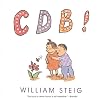
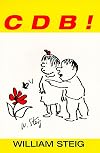
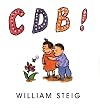
As an example, the books name CDB comes with a picture of a large bee and a flower - meaning
S e e t h e B e e
When I recognized that I was ecstatic. I was over the moon. To this day those three letters in succession will make me smile. I think all parents should get their show more kids this book. Make their brains work hard for rewards, instead of having everything presented to them on a silver platter in multimedia. How else will their brains grow if you don't?
CDB is one of my all time favorite childrens books and I absolutely love it. show less
As an example, the books name CDB comes with a picture of a large bee and a flower - meaning
S e e t h e B e e
When I recognized that I was ecstatic. I was over the moon. To this day those three letters in succession will make me smile. I think all parents should get their show more kids this book. Make their brains work hard for rewards, instead of having everything presented to them on a silver platter in multimedia. How else will their brains grow if you don't?
CDB is one of my all time favorite childrens books and I absolutely love it. show less
Retelling: This is not a story so much as a series of puzzles. Author and cartoonist William Steig and his wife and collaborator Jeanne use letters in the English language that sound like words to create sentences. For example, the title of the book, "C D B!" means "See the bee." The illustrations in the book will help you crack the code if you can't right away and there is an answer key at the end if you get too stuck.
Thoughts and Feelings: Reading this book was a little like learning to read all over again. First you make the sounds, then you change them a bit, then you put the emphasis in a different place or use a different tone and eventually a whole sentence with meaning emerges! I found it delightful!
Thoughts and Feelings: Reading this book was a little like learning to read all over again. First you make the sounds, then you change them a bit, then you put the emphasis in a different place or use a different tone and eventually a whole sentence with meaning emerges! I found it delightful!
This is an inventive picture book unlike any other, something one can say about any Steig book. The word puzzles vary in difficulty, and the hardest probably will stump younger readers. The one featured on the cover is an example of one of the easiest. Solutions for all are included at the end.
Another delightful book by William Steig! I enjoyed sharing this one with my students, and I've kept a personal copy of it after all these years. Figuring some of the words out reminds me of deciphering some car license plates. The delight in figuring some of them out put a smile on my face! I hadn't picked this book up in several years, so a few of them took me a few seconds to figure out! Didn't mind, though--that much longer to enjoy! The illustrations are fun, and there's a key to the letter-sentences in the back of the book.
Okay, this book is VERY confusing!! Steig uses letters as codes on the pages, which he defines in the back. The illustrations give some hints to decoding the letters, but not too much. I had a difficult time trying to translate the codes. I wouldn't read this book out loud without first studying the definitions because I wouldn't want to look like a fool. However, I bet the kids would have a blast laughing at me trying and I can almost guarantee that they would get the translations faster and better than I could.
I wanted to give five stars but some parts of this book are quite hard to understand. This book is get for students that spell words the way they sound. The best part is "I M 2 O-L 4 U."
One of my favorite books of all time! My dad loves these little things and I have really fond memories of reading it with him as a kid.
Members
- Recently Added By
Lists

Children's Humor
51 works; 6 members
Author Information

73+ Works 31,412 Members
William Steig was born in Brooklyn, New York, on November 14, 1907, and spent his childhood in the Bronx. Steig found an outlet for his talent by creating cartoons for the high school newspaper. After high school graduation, Steig spent two years at City College, three years at the National Academy, and five days at the Yale School of Fine Arts show more before dropping out. During his early days as a free-lance artist, he supplemented his income with work in advertising, although he intensely disliked it. He illustrated for the The New Yorker, beginning in 1930. During the 1940s, Steig's creativity found a more agreeable outlet when he began carving figurines in wood; his sculptures are on display as part of the collection in the historic home of Franklin D. Roosevelt in Hyde Park, New York, and in several museums in New England. In 1967, Bob Kraus, a fellow cartoonist at The New Yorker, was in the process of organizing Windmill Books, an imprint for Harper & Row. Kraus suggested that Steig try writing and illustrating a book for a young audience. The result was Steig's letter-puzzle book entitled C D B!, published in 1968. Roland the Minstrel Pig, was published the same year. With his very next title, Sylvester and the Magic Pebble, he won the Caldecott Medal. The Amazing Bone was also a Caldecott Honor Book.In 1972, Steig published his first children's novel, Dominic, which won the Christopher Award. Abel's Island followed and was a Newberry Honor Book. William Steig died in October 3, 2003 in Boston Massachusettes. (Bowker Author Biography) show less
Series

Common Knowledge
- Canonical title
- CDB!
- Original publication date
- 1968
- Dedication
- For Charlotte Reine Steiner
- First words
- C D B!
- Last words
- (Click to show. Warning: May contain spoilers.)L-C S N X-T-C.
Classifications
- Genre
- Children's Books
- DDC/MDS
- 793.734 — Arts & recreation Recreation, sports, and performing arts Indoor games and amusements Non-action games, puzzles [boardgames now 794] Puzzles and puzzle games Word Games
- LCC
- GV1507 .W8 .S75 — Geography, Anthropology and Recreation Recreation. Leisure Recreation. Leisure Games and amusements Parties. Party games and stunts Puzzles
- BISAC
Statistics
- Members
- 773
- Popularity
- 36,227
- Reviews
- 16
- Rating
- (3.86)
- Languages
- English, French
- Media
- Paper
- ISBNs
- 18
- ASINs
- 8