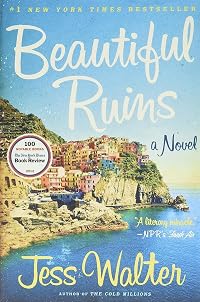
Beautiful Ruins
by Jess Walter
On This Page
Description
A novel that spans fifty years. The Italian housekeeper and his long-lost American starlet; the producer who once brought them together, and his assistant. A glittering world filled with unforgettable characters.Tags
Recommendations




Member Recommendations
by anonymous user
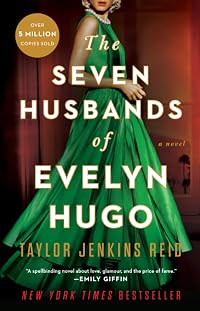
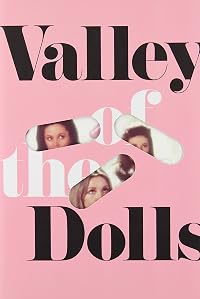
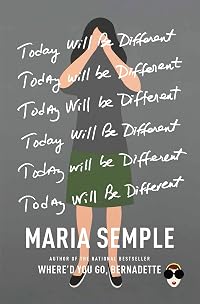
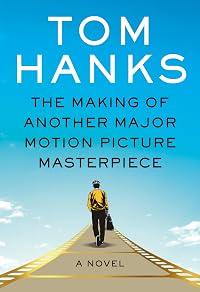
wandering_star Does what this book is trying to do; does it better.
13
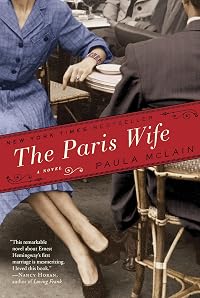
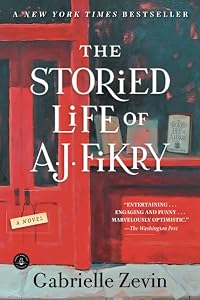
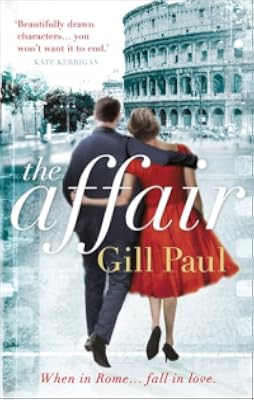
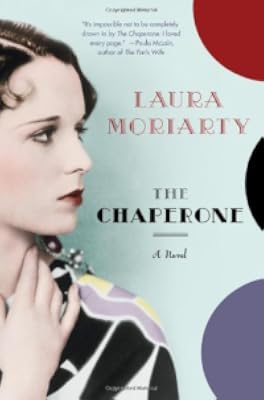
BookshelfMonstrosity Exotic backdrops -- Italy in Beautiful Ruins and Jamaica in The Pirate's Daughter -- combine with Hollywood glamor (and scandal) in these engaging historical novels, in which past events influence present-day situations. Both feature cameo appearances by real-life movie stars.
Member Reviews
"Life is a blatant act of imagination." Brilliant and fascinating story bridging "recently," or at least a digital era and the past of 1962-post-war Italy. In the present, Claire Silver is a production assistant to legendary, but washed-up producer Michael Deane who has descended into the tripe of reality shows. Claire longs for the golden age of film and to make something worthwhile and meaningful. She is on the cusp of change - maybe a new job? maybe losing the old boyfriend? and leaves things up to Fate on a Wild Pitch Friday when 2 random figures show up at her studio office, late in the day. Both have cards from Deane, which gives them a chance to pitch a story: Shane Wheeler has a screen play about the Donner Party, and Pasquale show more Tursi has a 50 year old story and the need to find an American actress he met at his family resort in Italy in 1962. Luckily, Shane translates Italian and the group is off on an adventure to find Dee Moray who was supposed to star in Cleopatra with Richard Burton and Liz Taylor, but due to illness (which turns out to be pregnancy by Burton) ends up at Pasquale's door. "Pasquale entertained the unwieldy thought that he'd somehow summoned her, that after years of living in this place, after months of grief and loneliness and waiting for Americans, he'd created this woman from old bits of cinema and books, from the lost artifacts and ruins of his dreams, from his epic, enduring solitude. (13) Weaving these two threads back and forth is tricky, but deftly handled by the author with humor and reflection. Past Pasquale is a dreamer, trying to transform the resort he inherited (The Hotel Adequate View) from his dead father and runs with his depressed mother and "witchy" Aunt into something that will attract American tourists. He envisions a beach (man-made) and a tennis court built into the rocky cliffs. Nothing about the geography or the tiny village (nicknamed Whore's Crack) is conducive to this. First a drunk, dejected, war-torn American writer, Alvis Bender shows up at the resort year after year to try to write a novel and make sense of his role in WWII in Italy. Then beautiful Dee Moray shows up and makes Pasquale believe anything is possible. The two develop a friendship, which could potentially become more, but so many complicating factors make this almost impossible: Pasquale has fathered a child in Florence, though the mother will not allow him to accept responsibility. Dee is pregnant by Burton, has to decide between abortion (Switzerland) or having the child and giving up her career, not to mention keeping her mouth shut about the father, Pasquale has his mother and aunt to look after and a business to run. These circumstances and tension are slowly drawn out through the book, alternating with searching for Dee in the present, who now goes by Debra Moore. Enter one more strand to make this a stable story: Pat Moore, Debra's ne-er-do-well son, who fights the demons of addiction while trying to make a career for himself in music. His hapless adventures and his fraught relationship with Debra add more drama and another wrinkle to the whole mess. All of these folks and few more converge in a community theatre in ID where the Deane party witnesses the performance of their lives, acted by Pat and directed by Debra. It is truly life-changing for all those involved and the story settles itself into a satisfactory ending with each person getting what they want/deserve in the end. It all comes down to the advice of Pasquale's mother when he was young: "the smaller the space between your desire and what is right, the happier you will be." (304) I loved how time, place, chance all played into a singular story that was so indicative of life and its disappointments, discoveries and surprises. Top-notch! show less
Book on CD performed by Edoardo Ballerini
On a sunny day in 1962, a young hotel owner, Pasquale, spies a boat approaching his small Italian village. Aboard is a beautiful, young, American actress, Dee, and Pasquale is instantly smitten. Fast forward to the present day, and a Hollywood producer’s assistant is hearing “pitches” on the studio’s back lot, when an elderly Italian gentleman approaches looking for Michael Deane. He’s hoping Deane can help him find Dee.
What a delightful story! Moving back and forth in time, and with multiple styles and points of view, Walter has crafted a love story with wide appeal. The twists and turns in the story stretched the bounds of credulity, but I didn’t care. I was engaged and entertained show more from page one, and was so sorry to see it end.
Edoardo Ballerini was simply marvelous performing the audio version. I loved the way he voiced Pasquale, Dee, Michael Deane and the many supporting cast members – including Richard Burton, Aunt Valeria, and a host of fishermen. show less
On a sunny day in 1962, a young hotel owner, Pasquale, spies a boat approaching his small Italian village. Aboard is a beautiful, young, American actress, Dee, and Pasquale is instantly smitten. Fast forward to the present day, and a Hollywood producer’s assistant is hearing “pitches” on the studio’s back lot, when an elderly Italian gentleman approaches looking for Michael Deane. He’s hoping Deane can help him find Dee.
What a delightful story! Moving back and forth in time, and with multiple styles and points of view, Walter has crafted a love story with wide appeal. The twists and turns in the story stretched the bounds of credulity, but I didn’t care. I was engaged and entertained show more from page one, and was so sorry to see it end.
Edoardo Ballerini was simply marvelous performing the audio version. I loved the way he voiced Pasquale, Dee, Michael Deane and the many supporting cast members – including Richard Burton, Aunt Valeria, and a host of fishermen. show less
This book had a major deficit to make up: first because of the "spinster librarian" comment, second because of the GPS/MapQuest situation, and finally because the author does a half-hearted job at expressing the two female leads' points of view. Details? Will do.
The spinster librarian comment is so lame that I actually put my book down in disgust; I couldn't stand to look at it for awhile. This idea of spinsterhood is an affront because it calls up the dark days when a woman's happiness and success in life were thought to be directly related to her marital status. Men defining women. Calling up this dusty old cliche outs the author as completely out of touch with the female experience, and modern American society in general.
This show more cluelessness about the modern female experience was on ample display when the story was told from Claire's or Dee's perspectives. They are completely at the mercy of the whims of the men they encounter, with minimal care given to fleshing out their thoughts or motivations. Or maybe there was an adequate amount of fleshing out, but the author was more intent on how their thoughts and motivations would impact the men and further the plot, rather than making these women believable in their own right.
The business about getting lost driving in LA because the character didn't get the GPS option for his rental car was absurd - every middle class American between 12 and 70 years old has a smartphone with mapping capabilities. This was true when the book was first published (2012), and the fact that it was used as a plot device made me embarrassed for the author. He really couldn't think of another way to get the character to call his ex-wife? And when he does call the ex, he asks her to go on MapQuest for directions! MAPQUEST?! Is that even still around? (I checked and it still exists; who knew?) Clearly the author started this book back in 2001 and forgot to update this little episode to reflect this decade's technology.
I feel better getting all that off my chest. And with all that being said, the book did manage to hook me. I really love books that layer characters' lives over the tops of each other, showing how each comes to the intersection and where they go after and all jumbled in time so the future reveals the past reveals the future reveals the now. It feels so true, truer than true - like a more true version of real life. I can't get enough.I especially love epilogues (or in this case, epilogue-like sections) that wrap it all up and summarize how each person's life spins out and ends. Not necessarily death, but just the place where their stories comfortably rest. It almost always leaves me feeling happily wistful. show less
The spinster librarian comment is so lame that I actually put my book down in disgust; I couldn't stand to look at it for awhile. This idea of spinsterhood is an affront because it calls up the dark days when a woman's happiness and success in life were thought to be directly related to her marital status. Men defining women. Calling up this dusty old cliche outs the author as completely out of touch with the female experience, and modern American society in general.
This show more cluelessness about the modern female experience was on ample display when the story was told from Claire's or Dee's perspectives. They are completely at the mercy of the whims of the men they encounter, with minimal care given to fleshing out their thoughts or motivations. Or maybe there was an adequate amount of fleshing out, but the author was more intent on how their thoughts and motivations would impact the men and further the plot, rather than making these women believable in their own right.
The business about getting lost driving in LA because the character didn't get the GPS option for his rental car was absurd - every middle class American between 12 and 70 years old has a smartphone with mapping capabilities. This was true when the book was first published (2012), and the fact that it was used as a plot device made me embarrassed for the author. He really couldn't think of another way to get the character to call his ex-wife? And when he does call the ex, he asks her to go on MapQuest for directions! MAPQUEST?! Is that even still around? (I checked and it still exists; who knew?) Clearly the author started this book back in 2001 and forgot to update this little episode to reflect this decade's technology.
I feel better getting all that off my chest. And with all that being said, the book did manage to hook me. I really love books that layer characters' lives over the tops of each other, showing how each comes to the intersection and where they go after and all jumbled in time so the future reveals the past reveals the future reveals the now. It feels so true, truer than true - like a more true version of real life. I can't get enough.
Jess Walter’s Beautiful Ruins is spellbinding.
Readers searching for something to sweep them up and out to sea need look no further than the author’s latest, and I can promise you the plot is every bit as delicious and enticing as the lush cover photo suggests.
Fluctuating between the making of the Liz Taylor and Richard Burton classic “Cleopatra” in Italy and present-day Los Angeles, Walter introduces a cast of unforgettable characters. Though I was innately more interested in the scenes from 1962 than the modern plot, both were crucial to Walter’s story of love lost and found — and honor redeemed. Pasquale is a hopelessly endearing character — someone you want to hug and help. Naive, lovely actress Dee entrances him show more immediately, but it’s hard to tell if it’s Dee that effortlessly captures his heart . . . or the idea of what she could finally bring to his colorless life.
You know how sometimes you’re reading, grow bored and just skim a bunch of paragraphs . . . only to realize you’ve missed absolutely nothing? I hate that. And Beautiful Ruins is the opposite of that reading experience. It’s a blink-and-you’ll-miss-it masterpiece of many intricate stories, and the setting made me feel like I could step in and share a glass of wine with the motley Italian crew. Even Michael Deane, a selfish buffoon who royally screws up others’ lives, manages to somehow seem likeable.
The book’s story-within-a-story quality completely sucked me in, too. Beyond the fate of the principle characters, we’re given the movie treatment of a heartwarming tale of . . . cannibalism. (Yes: cannibalism.) And somehow it still sounded like a moving, captivating film I might want to see. Honestly.
Readers craving a vibrant story offering glimpses at old Hollywood, the Italian seaside, the effects of war on the innocent and the bonds (and sacrifices) of love need only grab Beautiful Ruins. It’s one of the best books I’ve read this year and one that certainly deserves a spot in your bookcase. show less
Readers searching for something to sweep them up and out to sea need look no further than the author’s latest, and I can promise you the plot is every bit as delicious and enticing as the lush cover photo suggests.
Fluctuating between the making of the Liz Taylor and Richard Burton classic “Cleopatra” in Italy and present-day Los Angeles, Walter introduces a cast of unforgettable characters. Though I was innately more interested in the scenes from 1962 than the modern plot, both were crucial to Walter’s story of love lost and found — and honor redeemed. Pasquale is a hopelessly endearing character — someone you want to hug and help. Naive, lovely actress Dee entrances him show more immediately, but it’s hard to tell if it’s Dee that effortlessly captures his heart . . . or the idea of what she could finally bring to his colorless life.
You know how sometimes you’re reading, grow bored and just skim a bunch of paragraphs . . . only to realize you’ve missed absolutely nothing? I hate that. And Beautiful Ruins is the opposite of that reading experience. It’s a blink-and-you’ll-miss-it masterpiece of many intricate stories, and the setting made me feel like I could step in and share a glass of wine with the motley Italian crew. Even Michael Deane, a selfish buffoon who royally screws up others’ lives, manages to somehow seem likeable.
The book’s story-within-a-story quality completely sucked me in, too. Beyond the fate of the principle characters, we’re given the movie treatment of a heartwarming tale of . . . cannibalism. (Yes: cannibalism.) And somehow it still sounded like a moving, captivating film I might want to see. Honestly.
Readers craving a vibrant story offering glimpses at old Hollywood, the Italian seaside, the effects of war on the innocent and the bonds (and sacrifices) of love need only grab Beautiful Ruins. It’s one of the best books I’ve read this year and one that certainly deserves a spot in your bookcase. show less
Delightful. Beneath the frothy, steamed-milk, surface of this novel broods a dark Italian espresso of love and regret and more love. Of course love leads to complications, not least of which are the children of passion, excised, hidden, shunned, or, accepted, nurtured, and acknowledged. Between Florence, Rome, and an isolated port along the Italian Riviera, a complicated tangle of parallel plots develop in 1962 during the chaotic filming of the Richard Burton / Liz Taylor spectacular, Cleopatra. The choices made by each character in this fulcrum of decision – the naïve but fruitful neophyte actress, Dee Moray; the failed novelist, Alvis Bender; the sombre yet hopeful minor hotelier, Pasquale Tursi – create ripples spreading through show more the years, coming ashore again more than forty years later.
Jess Walter is masterful in his delicately comic prose, which, even when bounding through a zany scene, holds deep veins of poignancy and honesty. Time after time, I found myself marvelling at Walter’s touch: entirely impressive, without calling attention to itself. Even when he undertakes chapters in alternate modes – there is a short story chapter, a movie pitch chapter, a self-important autobiography from an unsavoury Hollywood producer, a play (all of these ostensibly with different “authors”) – Walter perfectly integrates these modes into the story as a whole; this is never mere display and technical bravura. Moreover, Beautiful Ruins is as singular in its writing as Walter’s previous two novels, The Zero and The Financial Lives of the Poets. When each new work raises the bar of respect for an author, you can only hope his career flourishes long into the future.
Perhaps our lives, and the stories of our lives, cannot hope to amount to more in the end than beautiful ruins. If so, then we could do worse than hope for a bit of Jess Walter’s humane insight into the wonderful process of our ruination. Highly recommended. show less
Jess Walter is masterful in his delicately comic prose, which, even when bounding through a zany scene, holds deep veins of poignancy and honesty. Time after time, I found myself marvelling at Walter’s touch: entirely impressive, without calling attention to itself. Even when he undertakes chapters in alternate modes – there is a short story chapter, a movie pitch chapter, a self-important autobiography from an unsavoury Hollywood producer, a play (all of these ostensibly with different “authors”) – Walter perfectly integrates these modes into the story as a whole; this is never mere display and technical bravura. Moreover, Beautiful Ruins is as singular in its writing as Walter’s previous two novels, The Zero and The Financial Lives of the Poets. When each new work raises the bar of respect for an author, you can only hope his career flourishes long into the future.
Perhaps our lives, and the stories of our lives, cannot hope to amount to more in the end than beautiful ruins. If so, then we could do worse than hope for a bit of Jess Walter’s humane insight into the wonderful process of our ruination. Highly recommended. show less
Beautiful Ruins - Jess Walter
audio performance by Edoardo Ballerini
4stars
That was then, this is now; but it’s all much the same; the lives of the rich, famous and the wannabes. What is art? Let’s make a deal.
The book alternates time lines from Italy, in 1962 during the filming of Cleopatra, to destination Hollywood in the present century. There are detours to the UK, Seattle, and small town USA, as the story brings together a diverse set of characters. There were lots of characters that I didn’t like in this book and only one that had any appeal at all, Pasquale. Pasquale made the book for me. Pasquale, and the book’s conclusion, and the sharp-edged, blood letting descriptions of each and every character. Scummy or show more ineffectual, depressed or narcissistic, Jess Walters nails it with every character.
I suppose that the aging producer with his female assistant and the wannabe writer were meant to be exaggerations of type, caricatures of the entertainment business. But, I’ve lived and worked a freeway’s hop from Hollywood for over 30 years. I’ve taught child actors and the children of actors. I’ve worked with film school grads and musicians with teaching credentials. For most of these people the entertainment industry is just that. It’s a job that can provide a living, and with luck, creative satisfaction. But I’ve also met the people who populated this book; the ones who live their lives as if they were caricatures of themselves. I didn’t like them, but I have met them. I’m surprised that I liked a book that was all about them.
I liked it because Walters does more than paint a satirically damning picture of the entertainment biz. While he is diagramming failed success stories and successful failures, he has a lot to say about life and art.
“All we have is the story we tell. Everything we do, every decision we make, our strength, weakness, motivation, history, and character-what we believe-none of it is real; it's all part of the story we tell. But here's the thing: it's our goddamned story!”
“...he was part of a ruined generation of young men coddled by their parents--by their mothers especially--raised on unearned self-esteem, in a bubble of overaffection, in a sad incubator of phony achievement.”
“To pitch here is to live. People pitch their kids into good schools, pitch offers on houses they can’t afford, and when they’re caught in the arms of the wrong person, pitch unlikely explanations. Hospitals pitch birthing centers, daycares pitch love, high schools pitch success . . . car dealerships pitch luxury, counselors self-esteem, masseuses happy endings, cemeteries eternal rest . . . It’s endless, the pitching—endless, exhilarating, soul-sucking, and as unrelenting as death. As ordinary as morning sprinklers.”
I didn’t like his characters, but I loved his writing. show less
audio performance by Edoardo Ballerini
4stars
That was then, this is now; but it’s all much the same; the lives of the rich, famous and the wannabes. What is art? Let’s make a deal.
The book alternates time lines from Italy, in 1962 during the filming of Cleopatra, to destination Hollywood in the present century. There are detours to the UK, Seattle, and small town USA, as the story brings together a diverse set of characters. There were lots of characters that I didn’t like in this book and only one that had any appeal at all, Pasquale. Pasquale made the book for me. Pasquale, and the book’s conclusion, and the sharp-edged, blood letting descriptions of each and every character. Scummy or show more ineffectual, depressed or narcissistic, Jess Walters nails it with every character.
I suppose that the aging producer with his female assistant and the wannabe writer were meant to be exaggerations of type, caricatures of the entertainment business. But, I’ve lived and worked a freeway’s hop from Hollywood for over 30 years. I’ve taught child actors and the children of actors. I’ve worked with film school grads and musicians with teaching credentials. For most of these people the entertainment industry is just that. It’s a job that can provide a living, and with luck, creative satisfaction. But I’ve also met the people who populated this book; the ones who live their lives as if they were caricatures of themselves. I didn’t like them, but I have met them. I’m surprised that I liked a book that was all about them.
I liked it because Walters does more than paint a satirically damning picture of the entertainment biz. While he is diagramming failed success stories and successful failures, he has a lot to say about life and art.
“All we have is the story we tell. Everything we do, every decision we make, our strength, weakness, motivation, history, and character-what we believe-none of it is real; it's all part of the story we tell. But here's the thing: it's our goddamned story!”
“...he was part of a ruined generation of young men coddled by their parents--by their mothers especially--raised on unearned self-esteem, in a bubble of overaffection, in a sad incubator of phony achievement.”
“To pitch here is to live. People pitch their kids into good schools, pitch offers on houses they can’t afford, and when they’re caught in the arms of the wrong person, pitch unlikely explanations. Hospitals pitch birthing centers, daycares pitch love, high schools pitch success . . . car dealerships pitch luxury, counselors self-esteem, masseuses happy endings, cemeteries eternal rest . . . It’s endless, the pitching—endless, exhilarating, soul-sucking, and as unrelenting as death. As ordinary as morning sprinklers.”
I didn’t like his characters, but I loved his writing. show less
This is the best novel I've read in years. It spans decades, and has a veracity and a wit and a poignancy. It's about life's choices, and life's secrets, and courage. It's about some people who are oblivious to others, and to some people who do the right thing. Elizabeth Taylor and Richard Burton drop by, and readers walk onto the set of Cleopatra and visit a small coastal village that is a poor relation to Portofino. You smile as you read and then you frown at some unexpected catastrophe: the book is like life in its infinite palette. From the terror of World War II to the inanity of reality television, this is a work that you'll always remember. It's that good.
Members
- Recently Added By
Published Reviews
ThingScore 100
Ruins constitutes a departure for Walter, another unplowed field, and he harrows it straight and true, turning up the fertile humus of the culture’s soiled psyche. Beautiful Ruins collides its broad range of characters in unexpected, unique ways, and the wonderful light touch of the satire makes them eminently believable. Unlike the Juvenalian satirists, whose righteous indignation sometimes show more results in flat, two-dimensional, cardboard characterizations, Walter’s people inspire sympathy, belief, even a little self-examination. Am I like this? Do I have any qualities that resemble the ones I’m reading about here? If I do, where do I get help?
Jess Walter has written a novel that sprawls on the lawn, looks up fondly at the achingly blue American sky and gazes into the deep humor of our collective human condition. That’s what good satire does—it reminds us who we really are. Humans. show less
Jess Walter has written a novel that sprawls on the lawn, looks up fondly at the achingly blue American sky and gazes into the deep humor of our collective human condition. That’s what good satire does—it reminds us who we really are. Humans. show less
added by zhejw
Walter is simply great on how we live now, and — in this particular book — on how we lived then and now, here and there. “Beautiful Ruins” is his Hollywood novel, his Italian novel and his Pacific Northwestern novel all braided into one: an epic romance, tragicomic, invented and reported (Walter knows his “Cleopatra” trivia), magical yet hard-boiled (think García Márquez meets show more Peter Biskind), with chapters that encompass not just Italy in the ’60s and present-day Hollywood, but also Seattle and Britain and Idaho, plot strands unfolding across the land mines of the last half-century — an American landscape of vice, addiction, loss and heartache, thwarted careers and broken dreams. It is also a novel about love: amorous love, filial love, parental love and the deep, sustaining love of true friendship....
His balanced mixture of pathos and comedy stirs the heart and amuses as it also rescues us from the all too human pain that is the motor of this complex and ever-evolving novel. Any reservations the reader might have about another book about Hollywood, about selling one’s soul (or someone else’s, and pocketing the change) will probably be swept aside by this high-wire feat of bravura storytelling. Walter is a talented and original writer. show less
His balanced mixture of pathos and comedy stirs the heart and amuses as it also rescues us from the all too human pain that is the motor of this complex and ever-evolving novel. Any reservations the reader might have about another book about Hollywood, about selling one’s soul (or someone else’s, and pocketing the change) will probably be swept aside by this high-wire feat of bravura storytelling. Walter is a talented and original writer. show less
added by zhejw
This novel is a standout not just because of the inventiveness of its plot, but also because of its language. Jess Walter is essentially a comic writer: Sometimes he's asking readers to laugh at the human condition; sometimes he's inviting us to just plain laugh.
added by zhejw
Lists

Top Five Books of 2013
1,562 works; 721 members

Best 21st Century Books (So Far)
670 works; 86 members

Favourite Books
1,817 works; 308 members

Summer Reads 2014
207 works; 69 members

Top Five Books of 2018
802 works; 265 members

Top Five Books of 2014
1,064 works; 398 members

Top Five Books of 2015
811 works; 241 members

Books Read in 2014
2,343 works; 86 members

Books Read in 2017
4,249 works; 130 members

Carole's List
445 works; 13 members

Books Read in 2022
5,166 works; 114 members

Global Reads: Books Set in Western Europe
186 works; 10 members

Books recommended by Calgary Public Library staff
1,588 works; 4 members

Books Read in 2024
4,623 works; 126 members

IMPAC Dublin Literary Award 2014 longlist
150 works; 3 members

Books Read in 2021
5,361 works; 114 members

HarperCollins Publishers
144 works; 3 members

KayStJ's to-read list
1,616 works; 11 members

Books Read in 2013
65 works; 1 member

Five star books
1,755 works; 108 members
Author Information

22+ Works 10,616 Members
Jess Walter was born on July 20, 1965. He graduated from Eastern Washington University. Before becoming an author, he worked as a journalist. His work has appeared in Newsweek, the Washington Post, the Los Angeles Times, and the Boston Globe. He has written one nonfiction book and several novels. His works include Every Knee Shall Bow, Over show more Tumbled Graves, The Zero, and Beautiful Ruins. His novel, Citizen Vince, won the 2005 Edgar Allan Poe Award for best novel. He was the co-author of Christopher Darden's 1996 bestseller In Contempt. (Bowker Author Biography) show less
Some Editions
Awards and Honors
Awards
Distinctions
Notable Lists
Series
Belongs to Publisher Series
Harper Perennial Olive Editions (2015 Olive)
Common Knowledge
- Canonical title
- Beautiful Ruins
- Original title
- Beautiful Ruins
- Original publication date
- 2012
- People/Characters
- Pasquale Tursi; Debra "Dee Moray" Moore; Claire Silver; Michael Deane; Shane Wheeler; Pat Bender (show all 9); Richard Burton; Alvis Bender; Elizabeth Taylor
- Important places
- Porto Vergogna, Italy; Los Angeles, California, USA; Portland, Oregon, USA; London, England, UK; Edinburgh, Scotland, UK; Seattle, Washington, USA (show all 7); Sandpoint, Idaho, USA
- Important events
- World War II
- Epigraph
- The ancient Romans built their greatest masterpieces of architecture for wild beasts to fight in.
-- Voltaire, The Complete Letters
Cleopatra: I will not have love as my master.
Marc Antony: Then you will not have love.
-- from the 1963 disaster film Cleopatra
[Dick] Cavett's four great interviews with Richard Burton were done in 1980...Burton, fifty-four at the time, and already a beautiful ruin, was mesmerizing.
-'Talk Story' by Louis Menand, The New Yorker, 22 November 20... (show all)10 - Dedication
- To Anne, Brooklyn, Ava, and Alec
- First words
- The dying actress arrived in his village the only way one could come directly -- in a boat that motored into the cove, lurched past the rock jetty, and bumped against the end of the pier.
- Quotations
- Pasquo, the smaller the space between your desire and what is rght, the happier you will be.(page 304)
But aren't all great quests folly? El Dorado and the Fountain of Youth and the search for intelligent life in the cosmos--we know what's out there. It's what Isn't that truly compels us....true quests aren't measured in tim... (show all)e or distance anyway, so much as in hope. There are only two good outcomes for a quest like this, the hope of the serendipitous savant--sail for Asia and stumble on America--and the hope of scarecrows and tin men: that you find out you had the thing you sought all along. (p.428)
All we have is the story we tell. Everything we do, every decision we make, our strength, weakness, motivation, history, and character--...it's our story...Your parents don't get to tell your story. Your sisters don't....No... (show all) one gets to tell you what your life means! (p.405-6)
...the more you lived the more regret and longing you suffered, that life was a glorious catastrophe... (p.416-7)
Some memories remain close; you can shut your eyes and find yourself back in them. These are first-person memories--I memories. But there are second person memories, too, distant you memories, and these are trickier: you wa... (show all)tch yourself in disbelief... (p. 394) - Last words
- (Click to show. Warning: May contain spoilers.)And even if they don't find what they're looking for, isn't it enough to be out walking together in the sunlight?
- Blurbers
- Russo, Richard; Handler, Daniel
- Original language*
- Amerikaans
*Some information comes from Common Knowledge in other languages. Click "Edit" for more information.
Classifications
- Genres
- General Fiction, Fiction and Literature, Romance, Historical Fiction
- DDC/MDS
- 813.54 — Literature & rhetoric American literature in English American fiction in English 1900-1999 1945-1999
- LCC
- PS3573 .A4722834 .B43 — Language and Literature American literature American literature Individual authors 1961-
- BISAC
Statistics
- Members
- 4,722
- Popularity
- 3,029
- Reviews
- 286
- Rating
- (3.77)
- Languages
- 8 — Dutch, English, French, German, Hungarian, Portuguese, Spanish, Swedish
- Media
- Paper, Audiobook, Ebook
- ISBNs
- 39
- ASINs
- 14