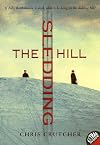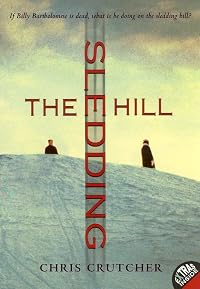
The Sledding Hill
by Chris Crutcher
On This Page
Description
Billy, recently deceased, keeps an eye on his best friend, fourteen-year-old Eddie, who has added to his home and school problems by becoming mute, and helps him stand up to a conservative minister and English teacher who is orchestrating a censorship challenge.Tags
Recommendations
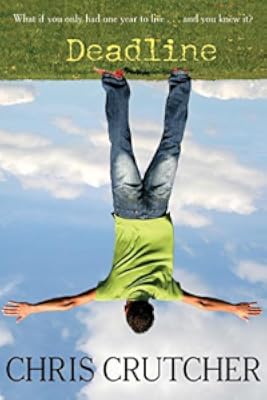
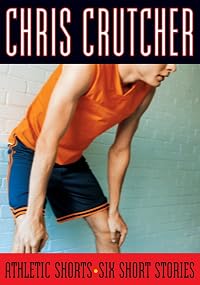
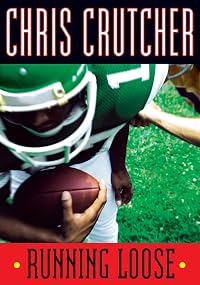
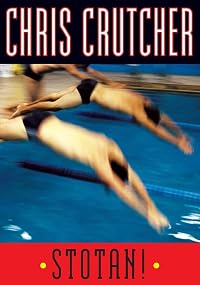
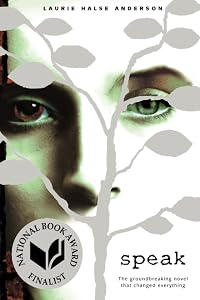
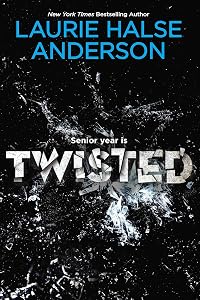

Member Recommendations
Member Reviews
I adore Chris Crutcher's books and have read almost all of them; I never seem to tire of his themes of compassion, intellectual freedom, standing up against bullies, and open discourse. That said, this book did not work well for me, although I appreciate that he tried a new approach. I think that might be the problem: the book's two unusual elements each might have worked better alone, giving the author time to work them out more successfully.
The first element is that the author is narrating posthumously; Billy is killed in a freak accident (he kicks a pile of sheet rock and it falls on him) and he then narrates the story, popping in and out of the other characters' heads as a dead person. I have no problem with this idea, but Billy show more relates the thoughts he sees/hears, sometimes in third person and sometimes in first person, even within the same paragraph. Since he also narrates his own portions in first person, I had to keep stopping to figure out whether a particular thought belonged to Billy or to his friend Eddie, whom Billy visits and helps throughout the narrative.
The second unusual element is that Crutcher inserts himself into the narrative; the book that some characters want to ban is a fictitious book by Chris Crutcher himself. The characters fighting both for and against banning the book check out Crutcher's website and give lots of facts about his life. It comes across as a bit gimmicky and in my mind doesn't add much to the story.
This book is also shorter than most of Crutcher's work, and it feels as though he rushed to the conclusion, which seemed mostly an excuse to have a couple of characters give impassioned speeches. In my opinion, a clever argument given as a speech should rarely be the climax of a book; it then makes the book seem too much of an excuse for the author him/herself to give a speech.
Finally, while I agree with Crutcher that the people/characters we see as the "bad guys" do not generally think they are doing bad things, such as the reverend/school board member who is trying to ban the book, the fact remains that what they are doing *is* wrong, so I'm not willing to just accept that "bad guys aren't that bad" on face value. The characters against censorship lose the battle (all of Crutcher's books are banned in the school) and supposedly win the war (the janitor and librarian who've lost their jobs over this issue get jobs at the public library -- which is completely unrealistic). Somehow, this ending just didn't satisfy.
All these criticisms aside, I think Crutcher is a fantastic writer and I will continue to buy and read his books. I've already pre-ordered his next one! show less
The second unusual element is that Crutcher inserts himself into the narrative; the book that some characters want to ban is a fictitious book by Chris Crutcher himself. The characters fighting both for and against banning the book check out Crutcher's website and give lots of facts about his life. It comes across as a bit gimmicky and in my mind doesn't add much to the story.
This book is also shorter than most of Crutcher's work, and it feels as though he rushed to the conclusion, which seemed mostly an excuse to have a couple of characters give impassioned speeches. In my opinion, a clever argument given as a speech should rarely be the climax of a book; it then makes the book seem too much of an excuse for the author him/herself to give a speech.
Finally, while I agree with Crutcher that the people/characters we see as the "bad guys" do not generally think they are doing bad things, such as the reverend/school board member who is trying to ban the book, the fact remains that what they are doing *is* wrong, so I'm not willing to just accept that "bad guys aren't that bad" on face value. The characters against censorship lose the battle (all of Crutcher's books are banned in the school) and supposedly win the war (the janitor and librarian who've lost their jobs over this issue get jobs at the public library -- which is completely unrealistic). Somehow, this ending just didn't satisfy.
All these criticisms aside, I think Crutcher is a fantastic writer and I will continue to buy and read his books. I've already pre-ordered his next one! show less
This is a clever book that adopts an unusual narrative point of view to explore the concepts of friendship, love, well-being, and censorship. It is particularly welcome as a YA text with a male narrator and centred on a male protagonist that doesn't explore sexual relationships; instead, it explores issues of intelligence, authority, conformity, and integrity.
Eddie, the protagonist, is grieving sudden, deep losses and confronting the challenges of being a teenage boy. A community fight over the removal of books from the school library gives him a focus for healing and working through his emerging sense of identity.
Readers are likely to be challenged by the narrative concept, by the arguments around censorship (particularly the show more contamination theory and the responsible-community theory), and by the author's presence in the text. This book invites thoughtful conversation and mature engagement. It could be rewardingly used in a classroom, for it is sure to stimulate discussion, but is more likely to be successfully introduced to individual readers through recommendation from a trusted source. There are few language concerns per se, but any careful reader will encounter narrative asides, knowing winks, and paraphrasing that signal typical hot-button topics.
I'm very glad to have read this novel. It's thoughtful, approachable, and so, so smart, and I enjoyed it. show less
Eddie, the protagonist, is grieving sudden, deep losses and confronting the challenges of being a teenage boy. A community fight over the removal of books from the school library gives him a focus for healing and working through his emerging sense of identity.
Readers are likely to be challenged by the narrative concept, by the arguments around censorship (particularly the show more contamination theory and the responsible-community theory), and by the author's presence in the text. This book invites thoughtful conversation and mature engagement. It could be rewardingly used in a classroom, for it is sure to stimulate discussion, but is more likely to be successfully introduced to individual readers through recommendation from a trusted source. There are few language concerns per se, but any careful reader will encounter narrative asides, knowing winks, and paraphrasing that signal typical hot-button topics.
I'm very glad to have read this novel. It's thoughtful, approachable, and so, so smart, and I enjoyed it. show less
Billy Bartholomew dies when sheetrock falls on him but his spirit remains around to guide his best friend Eddie Profitt who is doubly devastated by the death of his father. Eddie becomes mute after Billy's death. Mrs. Proffit and the church minister Tarter lean on Eddie to become more active in the church. This coincides with a book challenge (of a fictional Chris Crutcher title, no less) at school. Eddie doesn't agree with the challenge and he's indifferent about joining the church, but Billy helps him see that it's useful to get to know the opposition's side before taking a stand against the challenge.
Despite the unenlightening name and rather innocuous looking cover, I was immediately hooked with this book. In the first chapter, 14-year-old Eddie Proffit's father and then his best friend, Billy Bartholomew, both die in unrelated freak accidents within a few weeks of each other. Eddie is the one to discover both of their bodies, and the shock and grief literally strike Eddie mute. However Billy's death doesn't stop him from narrating the entire book while his spirit decides to stick around Earth for a second time to check up on Eddie. With newfound omniscience, Billy gives the reader insights into Eddie's mind as well as his own thoughts and the thoughts of a few other characters. The next few chapters give the appearance that the show more rest of the book will be devoted to discussing grief, which it does to some extent. However, the book then takes a turn when Eddie's elective course, Really Modern Literature, starts discussing a controversial (and faux) novel, Warren Peece by none other than Chris Crutcher. The small town’s fundamental Christians get up in arms against the book, trying to have it pulled from the course curriculum along with other "obscene" books. Eddie, with some help from Billy's ghost, must decide whether to go with the flow or stand up for a challenged book. This book, while suffering from some writing style flaws, is an interesting look at the process of censorship and the motivations behind both sides of a censorship challenge. show less
I have to say that I loved this book. I don't rate books a 5 star unless I absolutely love it. The Sledding Hill is about a boy who loses his dad and his best friend within months of each other. He feels pressure from the preacher to become baptized. He misses his dad and his friend. Then he is introduced to a book (fictional) by Chris Crutcher. This book makes him realize that he isn't alone in the world and feels like he has friends again.
*********************************************************************************************************
The following contains spoilers so please stop reading if you don't want to spoil the book.
First I want to say that I believe that you have to be saved to be baptized. There were a few other show more things I don't believe in as well but they helped build the book. Religious beliefs aside, I loved this book. I am a future English teacher and know that the greatest books can and will be on the banned book list. I loved how Chris Crutcher wrote himself into this novel because he has been on the banned book list. The relationship that Eddie and Billy's dad was great in this novel. Billy's dad reached out for him when Eddie came over and gave him what he needed. He didn't push Eddie to talk like the Tarter did. When I first picked up this book I wasn't sure what it was going to be about it. I can certainly say I didn't think it was going to be about censorship. Crutcher did a great job with this book. It may be one that I teach in the classroom one day. :-) show less
*********************************************************************************************************
The following contains spoilers so please stop reading if you don't want to spoil the book.
First I want to say that I believe that you have to be saved to be baptized. There were a few other show more things I don't believe in as well but they helped build the book. Religious beliefs aside, I loved this book. I am a future English teacher and know that the greatest books can and will be on the banned book list. I loved how Chris Crutcher wrote himself into this novel because he has been on the banned book list. The relationship that Eddie and Billy's dad was great in this novel. Billy's dad reached out for him when Eddie came over and gave him what he needed. He didn't push Eddie to talk like the Tarter did. When I first picked up this book I wasn't sure what it was going to be about it. I can certainly say I didn't think it was going to be about censorship. Crutcher did a great job with this book. It may be one that I teach in the classroom one day. :-) show less
Crutcher is one of my go-to authors for YA fiction and probably the most inclusive when it comes to the ugly life issues kids face. He's a champion of telling like it is and keeping books in the hands of the reader where they belong. This work,(cool and unusual twist) read just like some of his interviews. It was interesting, impassioned, and right on, but he's preaching to the choir, as it were. I don't know if the equivalent of the Red Brickers would really read it.
Like The Afterlife, Crutcher's POV is that of a dead young person: Billy. While Billy is the voice and soul of the story, it is best friend Eddie that is the heart of the tale. In addition to the loss of his best friend Billy, Eddie is also grieving the loss of his father. In reaction, Eddie stops speaking, thus allowing him to hear all. The primary plot concerns Eddie's role in an attempt to ban a book at his school, but the real story is his struggle to live again in the shadow of an empty sky. This is surely Crutcher's most controversial and least conventional book, as the banned book in question is written by one Chris Crutcher, who even makes an appearance near the end of the book. Its an audacious act that will amaze some readers show more and alienate others, yet shouldn't overshadow: the book isn't about a book banning drama, but rather living life after trauma. Review originally appeared in Novelist. show less
Members
- Recently Added By
Lists

Dead narrators
50 works; 4 members
Author Information

16+ Works 9,109 Members
Chris Crutcher is the critically acclaimed author of seven young adult novels and a collection of short stories, all of which were selected as ALA Best Books for Young Adults. Drawing on his experience as a family therapist and child protection specialist, Crutcher writes honestly about real issues facing teenagers today: making it through school, show more competing in sports, handling rejection and failure, dealing with parents. Chris Crutcher has won two lifetime achievement awards for his work: the Margaret A. Edwards Award for Outstanding Literature for Young Adults, and the ALAN Award for a Significant Contribution to Adolescent Literature. He lives in Spokane, Washington show less
Awards and Honors
Awards
Distinctions
Notable Lists
Common Knowledge
- Important places
- Idaho, USA
Classifications
Statistics
- Members
- 543
- Popularity
- 55,009
- Reviews
- 38
- Rating
- (3.71)
- Languages
- English
- Media
- Paper, Ebook
- ISBNs
- 8
- ASINs
- 3