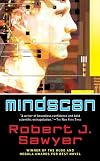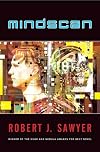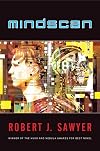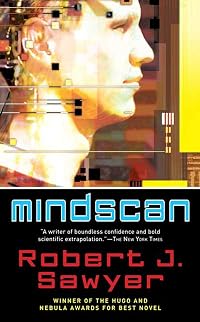
Mindscan
by Robert J. Sawyer
On This Page
Description
Transplanting his consciousness into an android body in order to escape death, Jake Sullivan falls in love with the android Karen, a situation that is further complicated when Jake's biological body takes hostages and demands its mind back.Tags
Recommendations














Member Reviews
There is an unspoken contract between writer and reader.
Everybody knows it but nobody talks about it, because we all instinctively know it and recognize it. The writer promises us well-crafted entertainment and in return we let the author sneak in a few personal views. As long as that?s not too much on the surface. Many writers have made use of that. Heck in the latest Stephen King, The Institute, you can read anti-Trumpism through some of the pages, but he has read the contract and he balances it out with some pro-Trump sentiments and of course plenty of thrills and entertainment.
Robert J. Sawyer has not read the contract and if he has, he willfully ignores it. We?re barraged by pages and pages of what the author wants us to think show more about person-hood, identity and property. This is done by pages and pages of what the author must think is infallible logic all dressed up as a court case. Below that overt litany of views lies a more subtle message: look at how smart I am. At the end I wasn?t just sick of the novel, I was sick and tired of Robert J. Sawyer. Never has an author made me not want to read any of his other works. Not even to verify if this novel is a one-off.
At the very end I didn?t care about the characters, they are as two-dimensional as the robot body they inhabit. The most interesting character in the entire book is the main character?s old girlfriend and we never hear from her again. What I did care about was the strangely gaping plot hole that would have annihilated the entire novel, which brings us to the shaky plot.
The main character pays to have his mind copied into a physical structure that will make the robotic copy identical to the original with the perk that it lives forever. That leaves the problem that there are now two identities, two things that can claim to be the same person. Would a company that provides these services not have thought about all the problems that could arise with that scenario? Apparently not. It never crossed any of the executives? mind to perhaps have the original person create a specific living will in which the ?copy? is made the primary or sole beneficiary. Or even an airtight contract which presages all the thorny ?philosophical? questions brought up in the novel. In fact, throughout the lawsuit, this novel is about, nobody from the evil corporation is questioned, consulted or even mentioned. But that?s not important, because what is important is all massive amounts of thinking done by Robert J. Sawyer. That?s what this book is really about, Robert J. Sawyer. show less
Everybody knows it but nobody talks about it, because we all instinctively know it and recognize it. The writer promises us well-crafted entertainment and in return we let the author sneak in a few personal views. As long as that?s not too much on the surface. Many writers have made use of that. Heck in the latest Stephen King, The Institute, you can read anti-Trumpism through some of the pages, but he has read the contract and he balances it out with some pro-Trump sentiments and of course plenty of thrills and entertainment.
Robert J. Sawyer has not read the contract and if he has, he willfully ignores it. We?re barraged by pages and pages of what the author wants us to think show more about person-hood, identity and property. This is done by pages and pages of what the author must think is infallible logic all dressed up as a court case. Below that overt litany of views lies a more subtle message: look at how smart I am. At the end I wasn?t just sick of the novel, I was sick and tired of Robert J. Sawyer. Never has an author made me not want to read any of his other works. Not even to verify if this novel is a one-off.
At the very end I didn?t care about the characters, they are as two-dimensional as the robot body they inhabit. The most interesting character in the entire book is the main character?s old girlfriend and we never hear from her again. What I did care about was the strangely gaping plot hole that would have annihilated the entire novel, which brings us to the shaky plot.
The main character pays to have his mind copied into a physical structure that will make the robotic copy identical to the original with the perk that it lives forever. That leaves the problem that there are now two identities, two things that can claim to be the same person. Would a company that provides these services not have thought about all the problems that could arise with that scenario? Apparently not. It never crossed any of the executives? mind to perhaps have the original person create a specific living will in which the ?copy? is made the primary or sole beneficiary. Or even an airtight contract which presages all the thorny ?philosophical? questions brought up in the novel. In fact, throughout the lawsuit, this novel is about, nobody from the evil corporation is questioned, consulted or even mentioned. But that?s not important, because what is important is all massive amounts of thinking done by Robert J. Sawyer. That?s what this book is really about, Robert J. Sawyer. show less
Sawyer siempre tiene historias interesantes que contar, y esta es la prueba. En este caso se trata de trasladarse a un probable (y más que posible) futuro cercano, más concretamente al año 2045, en el que una empresa canadiense, Inmortex, ha logrado lo que parecía imposible: copiar la conciencia de un ser humano para trasladarla a un cerebro de nanogel, que a su vez está acoplado a un cuerpo sintético, pero que posee toda la movilidad de un cuerpo normal. Esta tecnología, llamada mindscan, sólo está al alcance de unos pocos ricos, la gran mayoría de ellos personas muy mayores que están en sus últimos años de vida y que desean que su vida y legado continúe. Pero si se trata de una copia de tu mente, ¿qué pasa con el show more original? Inmortex lo tiene todo pensado. Ha creado un hotel de superlujo en la cara oculta de la Luna, fuera de cualquier jurisdicción, donde todas los "originales" pueden pasar sus últimos años como si de unas vacaciones se tratase, sabiendo que van a continuar "viviendo" a través de su otro "yo", y así lo han dejado todo preparado legalmente. Además, al tratarse de un lugar con microgravedad, su salud no se vería nada perjudicada, todo lo contrario.
Este es el escenario en el que se mueve nuestro protagonista, Jacob Sullivan, de 44 años de edad, el cuál sabe que puede morir en cualquier momento, ya que ha heredado una grave enfermedad vasovascular que afecta a su cerebro. Su padre ya la sufrió, pero no ha muerto, sino que vive como un vegetal desde hace años. Ante esta situación, Jacob opta por someterse al mindscan. Los primeros capítulos son muy buenos, porque en ellos asistimos a todo el proceso de copiado, pero no tanto desde una óptica hard, sino desde una visión más personal, en la que vamos sintiendo, junto con Jacob, a todas sus nuevas sensaciones y pensamientos.
La historia me ha gustado bastante, sobre todo la primera parte. Sawyer empieza muy fuerte, pero su novela va de más a menos, y la parte final es menos interesante. Lo mejor es asistir al debate moral y ético que se plantea. La copia, que contiene todas las vivencias hasta el mismo momento de la transferencia, ¿es un ser humano? Es decir, sabiendo que es una mente en el cuerpo de un androide, que no necesita dormir, ni comer, ni beber, ni respirar (es prácticamente inmortal), ¿estaríamos dispuestos a tratarlo como a un ser humano? A lo largo de la novela, se plantean argumentos a favor y en contra, y tú mismo te formas tu propia opinión. Ésto es lo que mejor sabe hacer Sawyer.
Sin duda, se trata de un libro entretenido e interesante. show less
Este es el escenario en el que se mueve nuestro protagonista, Jacob Sullivan, de 44 años de edad, el cuál sabe que puede morir en cualquier momento, ya que ha heredado una grave enfermedad vasovascular que afecta a su cerebro. Su padre ya la sufrió, pero no ha muerto, sino que vive como un vegetal desde hace años. Ante esta situación, Jacob opta por someterse al mindscan. Los primeros capítulos son muy buenos, porque en ellos asistimos a todo el proceso de copiado, pero no tanto desde una óptica hard, sino desde una visión más personal, en la que vamos sintiendo, junto con Jacob, a todas sus nuevas sensaciones y pensamientos.
La historia me ha gustado bastante, sobre todo la primera parte. Sawyer empieza muy fuerte, pero su novela va de más a menos, y la parte final es menos interesante. Lo mejor es asistir al debate moral y ético que se plantea. La copia, que contiene todas las vivencias hasta el mismo momento de la transferencia, ¿es un ser humano? Es decir, sabiendo que es una mente en el cuerpo de un androide, que no necesita dormir, ni comer, ni beber, ni respirar (es prácticamente inmortal), ¿estaríamos dispuestos a tratarlo como a un ser humano? A lo largo de la novela, se plantean argumentos a favor y en contra, y tú mismo te formas tu propia opinión. Ésto es lo que mejor sabe hacer Sawyer.
Sin duda, se trata de un libro entretenido e interesante. show less
After reading Robert J. Sawyer’s latest novel, The Downloaded, I thought it might be time to reread his Mindscan, another book in which he explores issues around uploading human consciousness into quantum computers and downloading them back into their bodies or into android replacements. In Mindscan, Sawyer explores the notion of the personhood of replaced or duplicated minds. If a mind is uploaded from a dying body that is then cured, who gets the estate? Are consciousnesses entangled at a quantum level? Could the same technology produce philosophical zombies—intelligences without self-awareness? It is fun stuff and still fresh.
In Mindscan by Robert J. Sawyer, Jake Sullivan lives with the knowledge that he has the same rare, hereditary disease that resulted in his father's long time vegetative state. He feels doomed until he discovers with his hereditary wealth he can be mindscanned, a process where his entire brain is scanned and downloaded into a technologically superior mechanical body that doesn't breathe, eat, or sleep and is theoretically immortal. The process, however, results in two Jake Sullivans.
While the flesh-and-blood Jake must renounce all ties to his earthly existence and live out the rest of his days in a deluxe retirement village on the dark side of the moon, the mindscanned Jake ends up starting a relationship with Karen Bessarian, a show more wealthy author who has also been mindscanned. When the original Karen dies, her son sues to inherit her estate. Meanwhile, the original Jake has cause to rethink his exiled status and the mindscanned Jake begins to hear voices in his head from other Jakes.
Mindscan speculates on the ethics of bio-technology, the nature of consciousness, and the meaning of life. In Sawyer's future socially liberal Canada contrasts sharply with the fundamental Christian-controlled USA. I felt Sawyer is, as usual, taking some swipes at the USA, which readers in the USA will have to overlook.
In general Mindscan is tightly plotted at the beginning and stays focused, until the trial begins and Jake starts hearing voices. The trial dragged out a little long, becoming mostly Sawyer having a philosophical discussion on the meaning of life, bringing in abortion and the question of when life starts. In reality, the question of the rights of the mindscanned "person" would have been addressed by teams of company legal experts ahead of time and a resolution would be in place. The voices sub-plot didn't work for me - it needed to be either better developed or left out.
But Sawyer also has some brilliant moments and funny passages that make you forgive him for some of his problems and excesses. Highly recommended - It would make a good movie with some editing. http://shetreadssoftly.blogspot.com/ show less
While the flesh-and-blood Jake must renounce all ties to his earthly existence and live out the rest of his days in a deluxe retirement village on the dark side of the moon, the mindscanned Jake ends up starting a relationship with Karen Bessarian, a show more wealthy author who has also been mindscanned. When the original Karen dies, her son sues to inherit her estate. Meanwhile, the original Jake has cause to rethink his exiled status and the mindscanned Jake begins to hear voices in his head from other Jakes.
Mindscan speculates on the ethics of bio-technology, the nature of consciousness, and the meaning of life. In Sawyer's future socially liberal Canada contrasts sharply with the fundamental Christian-controlled USA. I felt Sawyer is, as usual, taking some swipes at the USA, which readers in the USA will have to overlook.
In general Mindscan is tightly plotted at the beginning and stays focused, until the trial begins and Jake starts hearing voices. The trial dragged out a little long, becoming mostly Sawyer having a philosophical discussion on the meaning of life, bringing in abortion and the question of when life starts. In reality, the question of the rights of the mindscanned "person" would have been addressed by teams of company legal experts ahead of time and a resolution would be in place. The voices sub-plot didn't work for me - it needed to be either better developed or left out.
But Sawyer also has some brilliant moments and funny passages that make you forgive him for some of his problems and excesses. Highly recommended - It would make a good movie with some editing. http://shetreadssoftly.blogspot.com/ show less
So, the first Sawyer I read, Flashforward, explored the concept of Destiny vs. Free Will. This explores the concept of Consciousness. Not a whole lot of action, some depressing ideas about the direction we're headed in the near future, characters more as role-players and less as authentic people... but still, a heck of a read, imo. I will keep reading Sawyer, as Ideas is what I read SF for.
In questo affascinante romanzo, Sawyer non smentisce la sua vena di hard sci-fi unita ad una buona dose di temi sociali, che da sempre caratterizzano i suoi riusciti romanzi.In questo caso il tema portante è: cosa fa di una coscienza una persona? Ai suoi occhi? E a quelli della società? Il tutto ruota attorno alla vicenda del protagonista che per sfuggire ad una morte certa causata da una malformazione congenita, decide di duplicare la sua mente in un corpo sintetico. Da qui una serie di vicissitudini che sfociano in un vero e proprio processo sulla dignità di essere viventi dei duplicati, che ritenendosi in tutto e per tutto la continuazione delle entità biologiche che erano, si scontrano con una società che per esempio, non vuole show more riconoscere loro i diritti d'autore o di successione. Sorpresa inattesa di ferragosto! show less
In questo affascinante romanzo, Sawyer non smentisce la sua vena di hard sci-fi unita ad una buona dose di temi sociali, che da sempre caratterizzano i suoi riusciti romanzi.In questo caso il tema portante è: cosa fa di una coscienza una persona? Ai suoi occhi? E a quelli della società? Il tutto ruota attorno alla vicenda del protagonista che per sfuggire ad una morte certa causata da una malformazione congenita, decide di duplicare la sua mente in un corpo sintetico. Da qui una serie di vicissitudini che sfociano in un vero e proprio processo sulla dignità di essere viventi dei duplicati, che ritenendosi in tutto e per tutto la continuazione delle entità biologiche che erano, si scontrano con una società che per esempio, non vuole show more riconoscere loro i diritti d'autore o di successione. Sorpresa inattesa di ferragosto! show less
Members
- Recently Added By
Lists

Books Read in 2017
4,249 works; 129 members
Author Information

107+ Works 20,036 Members
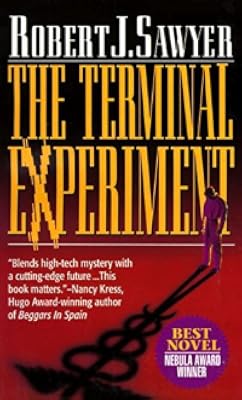
Robert J. Sawyer was born in Ottawa on April 29, 1960, but raised in Toronto. In 1980, while still in high school, Sawyer submitted a short story to the the Rochester Museum and Science Center, which was running a contest for light show ideas. Sawyer didn't win, but the Museum purchased his story Motive anyway and it ran for 192 performances. show more Sawyer went on to attend Toronto's Ryerson Polytechnical Institute, majoring in Radio and Television Arts. In September 1979, he had his first piece of fiction published at the end of his first year, in Ryerson's literary annual, White Wall Review. Sawyer graduated from Ryerson in 1982. Sawyer was hired back the following semester to teach television studio production techniques to second- and third-year students. In the four months interim, he worked for minimum wage at the local SF bookstore, spending all his earnings on books. From 1984 to 1992, while teaching, Sawyer also coordinated a social group of Toronto-area science-fiction writers founded by SF editor Judith Merril. He established a Canadian region of the Science Fiction and Fantasy Writers of America; and in 1998, served as that organization's president. Sawyer also retained freelance nonfiction writing contracts, writing articles for newspapers and magazines, press releases and brochures for corporations, newsletters for government departments. He churned out vast amounts of promotional materials and over 200 articles for computing and personal-finance magazines in a span of five years. But in that time, his only really significant publication was the novelette Golden Fleece, which appeared as the cover story in the September 1988 edition of Amazing Stories. The novel-length Golden Fleece was sold to Warner Books a year later in 1989. The sales of his first five books were uninspiring and Sawyer faced being dropped by his publisher. Sawyer decided to take the time to write a book, without a contract, take as long as necessary, and produce a blockbuster. He also wanted to tackle a controversial issue and deal with it head on. With that in mind, Sawyer wrote The Terminal Experiment, about abortion and the soul. His publisher rejected it on grounds of controversy. HarperPrism then bought the book and serialization rights were sold to Analog, the number-one best-selling English-language SF magazine. The Terminal Experiment went on to win the Science Fiction and Fantasy Writers of America's Nebula Award for Best Novel of 1995. His novel Frameshift was his first book published in hardcover, and was nominated for the Hugo Award, and won Japan's Seiun Award for best foreign novel of the year. (Bowker Author Biography) show less
Awards and Honors
Work Relationships
Is contained in
Common Knowledge
- Canonical title
- Mindscan
- Original title
- Mindscan
- Original publication date
- 2005-04
- People/Characters
- Jake Sullivan; Karen Bessarian
- Important places
- The Moon; Port Credit, Ontario, CANADA
- Epigraph
- We cannot expect to have certain, universal agreement on any question of personhood, but we are all forced to hold an answer in out hearts and act upon our best guess.Jaron Lanier,The Journal of Consciousness Studies
- Dedication
- ToJohn Rosewith thanks fora quarter-century ofencouragement,friendship,andinspiration
- First words
- There wasn't anything special about this fight.
- Last words
- (Click to show. Warning: May contain spoilers.)Let's see what he wants to say.....
- Blurbers
- Brin, David; Card, Orson Scott
- Original language
- English
Classifications
Statistics
- Members
- 745
- Popularity
- 37,712
- Reviews
- 21
- Rating
- (3.73)
- Languages
- English, Spanish
- Media
- Paper, Audiobook, Ebook
- ISBNs
- 7
- ASINs
- 11