On This Page
Description
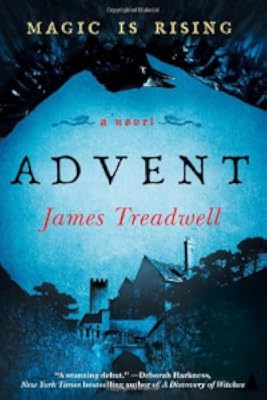
Nearly five centuries after a formidable magician flees with a small ring that contains all of the world's magic, 15-year-old Gavin is dispatched to the home of his aunt because of his ability to see things that others do not believe exist, a power he must use to stop a formidable evil from escaping into the world.Tags
Recommendations
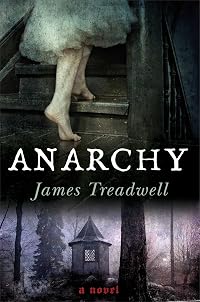


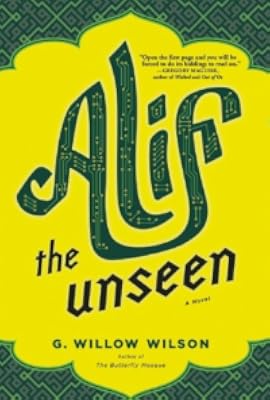

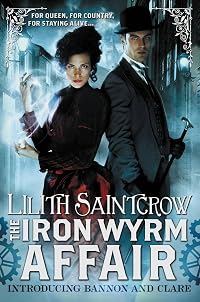
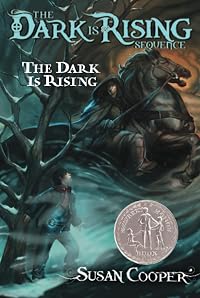
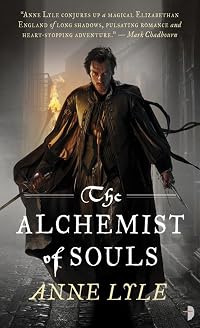

Member Recommendations
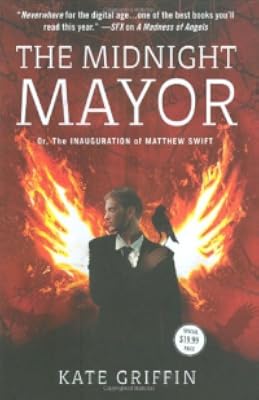
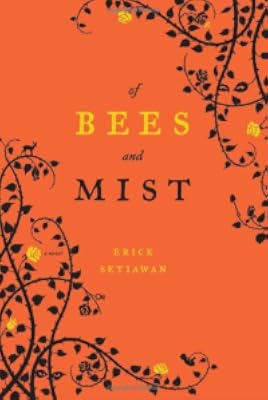
LongDogMom Similar style of writing and atmosphere.

LongDogMom Similar atmosphere

LongDogMom Similar theme, also set in Britain
Member Reviews
This novel, the first in a trilogy, introduces us to 15-year-old Gavin, a lonely and unhappy teenager who feels abandoned by everyone around him because he sees things that are invisible to others. Having been thrown out of school, his parents send him to spend a week with his eccentric aunt in Cornwall. But when he arrives in Truro there's no one there to meet him. Things then take a completely unexpected turn and set the scene for an absolutely fantastic book.
Without giving anything away, the book deals with the notion that magic was once abundant in this world but was forgotten and, as the blurb tells us, is now 'rising to the world once more'. This is a dark and eerie novel, full of mystery, more suitable for the young adult and show more adult market than the children's. It reminds me of some of the fairy-tales and legends of old, and certainly Gavin is a reluctant hero, embarking on a journey of self-discovery and destined to go on a quest. James Treadwell is a consummate and skilled storyteller, weaving a rich tapestry of words. He's got a wonderful feeling for language: his prose is hauntingly beautiful at times, his characters' speech patterns, but also his descriptions of everyday situations and places, have a very authentic ring to them, so that when he describes the arrival of mythical and monstrous creatures and spirits, and the existence of warlocks and magic in present-day Cornwall (where else?), I took everything at face value because it sounded so completely plausible in his words. Some of the plot developments are pretty intense and terrifying, with chapters ending on cliffhangers, so that I was compelled to carry on reading even though I felt as breathless and exhausted as Gavin. The long chapters build up the atmosphere and tension, posing more questions at first than answers are forthcoming, and the reader has to put their trust in the narrator for it all to come together and make sense. If you're someone who just dips in for a couple of pages at night time, this book might not work for you, but then I dare you not to be swept away by the author's flight of the imagination and read on for hours. The worst thing about this book: that I will now have to wait for about another year for the next volume to come along.
Rarely has a book entranced me as much as this one: well done and thank you, Mr Treadwell.
(This review was originally written as part of Amazon's Vine programme.) show less
Without giving anything away, the book deals with the notion that magic was once abundant in this world but was forgotten and, as the blurb tells us, is now 'rising to the world once more'. This is a dark and eerie novel, full of mystery, more suitable for the young adult and show more adult market than the children's. It reminds me of some of the fairy-tales and legends of old, and certainly Gavin is a reluctant hero, embarking on a journey of self-discovery and destined to go on a quest. James Treadwell is a consummate and skilled storyteller, weaving a rich tapestry of words. He's got a wonderful feeling for language: his prose is hauntingly beautiful at times, his characters' speech patterns, but also his descriptions of everyday situations and places, have a very authentic ring to them, so that when he describes the arrival of mythical and monstrous creatures and spirits, and the existence of warlocks and magic in present-day Cornwall (where else?), I took everything at face value because it sounded so completely plausible in his words. Some of the plot developments are pretty intense and terrifying, with chapters ending on cliffhangers, so that I was compelled to carry on reading even though I felt as breathless and exhausted as Gavin. The long chapters build up the atmosphere and tension, posing more questions at first than answers are forthcoming, and the reader has to put their trust in the narrator for it all to come together and make sense. If you're someone who just dips in for a couple of pages at night time, this book might not work for you, but then I dare you not to be swept away by the author's flight of the imagination and read on for hours. The worst thing about this book: that I will now have to wait for about another year for the next volume to come along.
Rarely has a book entranced me as much as this one: well done and thank you, Mr Treadwell.
(This review was originally written as part of Amazon's Vine programme.) show less
The sheer imaginative power of James Treadwell overwhelms me. Advent is a dark, fantastical adventure that intertwines the compelling myths of Johann Faust and Cassandra, and hurls them into the present day to collide with the life of fifteen year old Gavin Stokes. Gavin has been able to see things others can't all his life, things that don't make sense and upset his parents greatly. The blending between this world and the mystical are flawless in Advent. The story unfolds slowly, with half forgotten conversations and remarks revealed as important foreshadows of what was to come. Nothing truly makes sense until right at the end of the novel as all the plot elements come together in a thunderous conclusion.
The story unfolds in show more unpredictable ways and is told with masterful skill. There isn't a dull moment, and while sometimes I did find myself wishing for a respite between the all the eerie encounters Gavin has with the inhabitants of Pendurra, I thoroughly enjoyed being on the edge of my seat! The power in Treadwell's narration comes from invoking the reader's deep sated fear of the unknown and unseen. Since Gavin is kept in the dark about what is really going on at Pendurra, so is the reader, and one feels his desperation and terror keenly. Although marketed as a YA novel, Advent doesn't shy away from complex language and themes, which makes it perfect for audiences of any age group in my opinion.
As a fifteen year old who is disconnected in the worst ways from his parents, I had feared that Gavin would wallow in self-pity. However, he is surprisingly strong-willed and endures through conditions that would have broken many other kids his age. His father dislikes him intensely, bordering on hatred, and his mother is afraid of him. They are both desperate for Gavin to stop making up stories, as they see it, and behave like a normal person. A lifetime of ridicule and feeling unwanted wherever he goes has made Gavin reluctant to draw attention to himself, and it was great to see him develop out of this shell over the novel.
A thinking book, Advent will linger in your mind for days after you read it. It surpasses a lot of the YA I read these days and I am looking forward to the sequel.
You can read more of my reviews at Speculating on SpecFic. show less
The story unfolds in show more unpredictable ways and is told with masterful skill. There isn't a dull moment, and while sometimes I did find myself wishing for a respite between the all the eerie encounters Gavin has with the inhabitants of Pendurra, I thoroughly enjoyed being on the edge of my seat! The power in Treadwell's narration comes from invoking the reader's deep sated fear of the unknown and unseen. Since Gavin is kept in the dark about what is really going on at Pendurra, so is the reader, and one feels his desperation and terror keenly. Although marketed as a YA novel, Advent doesn't shy away from complex language and themes, which makes it perfect for audiences of any age group in my opinion.
As a fifteen year old who is disconnected in the worst ways from his parents, I had feared that Gavin would wallow in self-pity. However, he is surprisingly strong-willed and endures through conditions that would have broken many other kids his age. His father dislikes him intensely, bordering on hatred, and his mother is afraid of him. They are both desperate for Gavin to stop making up stories, as they see it, and behave like a normal person. A lifetime of ridicule and feeling unwanted wherever he goes has made Gavin reluctant to draw attention to himself, and it was great to see him develop out of this shell over the novel.
A thinking book, Advent will linger in your mind for days after you read it. It surpasses a lot of the YA I read these days and I am looking forward to the sequel.
You can read more of my reviews at Speculating on SpecFic. show less
There were some things I didn't know about certain legends before I started reading Advent. Like, I had not heard of Cassandra and her curse. And I did not know anything about Faust.
Having read Advent, I now want to read more about both of these legends. I typically do not read intros and authors notes because, frankly, they're not really relevant to me. I am reading a story and I don't really care what someone says about the author or the impact the story has one some community... or what the author wants to "extra point out" after you've taken the time to read his book.
When I DO read these extras, I know that I have enjoyed the book. I am in a place to read more ... often times, anything more I can get my hands on.
In this case, the show more author's note at the end of the book was a rewarding (and thankfully brief) read. It explained that the legend of Faust is like that of Arthur -- little solid is known, allowing for great flexibility in the telling of the story.
Advent was great. Whether you know anything about Faust / Cassandra or not, it is just great, a well-told story with vivid characters and a colorful setting.
Advent starts with a teenage Gavin who is escaping from the stifling rule of his parents' upbringing. He has a dad who seems to hate him, a mother who weakly mimics love while cowering under the heavy handed rule of her husband, and a friend - a best friend - who isn't real. As he has been told countless times by the adults in his life, who know better.
Gavin has been permitted a brief escape to his aunt's house in a small town a train-ride away, while his parents are on vacation -- largely from him. Gavin's aunt is unlike the other adults in his life - in fact, while others have assumed imaginary friends, his Auntie Gwen encouraged his visions and often asked for details -- a little too excitedly.
However, when Gavin arrives, his scatter-brained Aunt is not at the train station to pick him up. Gavin, fortunately, has made friends with Professor Hester who drives him home, around the long winding road, to his Aunt's lodge at the front of the Pandora Estate... oh, i'm sorry, Pend*ur*ra. ;)
As you can see from the above, which truly is just the very very beginning, Treadwell packs a lot into each sentence, pulling the reader into the world at Pendurra completely. The entire book occurs over the course of a weekend, or so. But rather than being weighed down with the details, Treadwell's book instead brings the world therein alive.
Treadwell is a gifted writer and I am eager to read more. I found myself often straying back to Advent, even when time did not actually permit. I savored the book and found myself with an appetite for reading again. After so many "false-starts," it was nice to find a real book-book. A book with a hearty plot, believable and endearing characters, and an intriguing story line.
It wasn't a five-star book only because it wasn't. I don't have any precise criticisms and I can't point out specific flaws. But this book wasn't the next Jonathan Strange & Mr. Norrell, though it had flavors of it. And it didn't make me rabid for more, but it almost did.
I highly recommend and I will certainly read more Treadwell. show less
Having read Advent, I now want to read more about both of these legends. I typically do not read intros and authors notes because, frankly, they're not really relevant to me. I am reading a story and I don't really care what someone says about the author or the impact the story has one some community... or what the author wants to "extra point out" after you've taken the time to read his book.
When I DO read these extras, I know that I have enjoyed the book. I am in a place to read more ... often times, anything more I can get my hands on.
In this case, the show more author's note at the end of the book was a rewarding (and thankfully brief) read. It explained that the legend of Faust is like that of Arthur -- little solid is known, allowing for great flexibility in the telling of the story.
Advent was great. Whether you know anything about Faust / Cassandra or not, it is just great, a well-told story with vivid characters and a colorful setting.
Advent starts with a teenage Gavin who is escaping from the stifling rule of his parents' upbringing. He has a dad who seems to hate him, a mother who weakly mimics love while cowering under the heavy handed rule of her husband, and a friend - a best friend - who isn't real. As he has been told countless times by the adults in his life, who know better.
Gavin has been permitted a brief escape to his aunt's house in a small town a train-ride away, while his parents are on vacation -- largely from him. Gavin's aunt is unlike the other adults in his life - in fact, while others have assumed imaginary friends, his Auntie Gwen encouraged his visions and often asked for details -- a little too excitedly.
However, when Gavin arrives, his scatter-brained Aunt is not at the train station to pick him up. Gavin, fortunately, has made friends with Professor Hester who drives him home, around the long winding road, to his Aunt's lodge at the front of the Pandora Estate... oh, i'm sorry, Pend*ur*ra. ;)
As you can see from the above, which truly is just the very very beginning, Treadwell packs a lot into each sentence, pulling the reader into the world at Pendurra completely. The entire book occurs over the course of a weekend, or so. But rather than being weighed down with the details, Treadwell's book instead brings the world therein alive.
Treadwell is a gifted writer and I am eager to read more. I found myself often straying back to Advent, even when time did not actually permit. I savored the book and found myself with an appetite for reading again. After so many "false-starts," it was nice to find a real book-book. A book with a hearty plot, believable and endearing characters, and an intriguing story line.
It wasn't a five-star book only because it wasn't. I don't have any precise criticisms and I can't point out specific flaws. But this book wasn't the next Jonathan Strange & Mr. Norrell, though it had flavors of it. And it didn't make me rabid for more, but it almost did.
I highly recommend and I will certainly read more Treadwell. show less
This is a somber book with some strengths and weaknesses. It tells the story of a teenaged boy, Gavin, who sees things. Well not things exactly. Rather he sees a woman, who he calls Miss Grey. She has appeared to him for years. Gavin knows she is not just his imaginary friend, even though his parents have tried to convince him of this. They demand he stop pretending. He is even kicked out of school for trying to tell a teacher what he is seeing. His parents ship him off to the countryside to stay with his Aunt Gwen, who is not considered to rock steady herself. This is okay with Gavin because he hopes to find in her a sympathetic ear. Paralleling this story is the tale of an ancient wizard, Johann Faust, who has made a deal with the show more spirits to live to be immortal. He intends to do this using his vast knowledge of magic and an enchanted ring that once belonged to a prophetess of ancient Troy. Gavin's arrival at the estate of Pendurra coincides with the reemergence of Faust from what should have been his watery grave. The confluence of Faust's search for his missing ring, the secrets of the inhabitants of Pendurra, and Gavin's awakening to his mystical powers merge into a tale of magical mystery. There is a lot going on in this book, perhaps too much. I didn't feel the author successfully supported all the elements and characters. This book provided for review by the well read folks at Atria Books. show less
I received this gratis electronic ARC through NetGalley.
Advent has a really cool idea. It melds a typical teenage coming-into-magic-heritage story with mythological elements of Faust and Cassandra, the prophetess. The problem is that the melding is a muddled mess.
Gavin is a fifteen-year-old boy who has always seen a strange woman he has dubbed Miss Grey. The problem? No one else sees her. He's spent the last few years pretending she doesn't exist. His relationship with his parents is extremely strained, so he's relieved when they send him off for a holiday with his wacky aunt. When he arrives on the estate of Pendurra, things go from wacky to downright bizarre, and then all hell breaks loose. Literally.
Gav's teenage voice is fabulous. I show more found him to be engaging, flawed lead. The problem is that the story doesn't follow his perspective alone.
From the very beginning, it alternates between chapters set in the 1500s with Faust. These chapters in the past are nonlinear. Therefore, they are extremely confusing. I have no idea why the publisher ordered them like that. Faust is set up as the villain, but he's a very lackluster one because his motivations are never clear... and what is made clear is through massive info dumps. It's never something that Gav is made party to, and usually the point of the novel is seeing the main character experience that enlightenment.
Starting halfway through the book, it then brings in other character perspectives. Some of them seem to have no point whatsoever. Others are a distraction. Some characters with interesting promise, like Hester, seem set up for a major role and then completely vanish.
More than once, I considered stopping the book. I made myself keep on reading. I was provided the ARC for review purposes, and I felt like I needed to give it an honest shot. Despite the scattered perspectives and timelines, the climax escalated in a wonderful way--the "sidekicks" of Faust are fantastic, such as Holly--and then it reached the end, where the story promptly fell apart because it switched to another totally new character on the other side of the planet.
Just... what?
There was beautiful writing here. The book just felt like it tried to do too much with too many characters, and the end result was a confusing mess. show less
Advent has a really cool idea. It melds a typical teenage coming-into-magic-heritage story with mythological elements of Faust and Cassandra, the prophetess. The problem is that the melding is a muddled mess.
Gavin is a fifteen-year-old boy who has always seen a strange woman he has dubbed Miss Grey. The problem? No one else sees her. He's spent the last few years pretending she doesn't exist. His relationship with his parents is extremely strained, so he's relieved when they send him off for a holiday with his wacky aunt. When he arrives on the estate of Pendurra, things go from wacky to downright bizarre, and then all hell breaks loose. Literally.
Gav's teenage voice is fabulous. I show more found him to be engaging, flawed lead. The problem is that the story doesn't follow his perspective alone.
From the very beginning, it alternates between chapters set in the 1500s with Faust. These chapters in the past are nonlinear. Therefore, they are extremely confusing. I have no idea why the publisher ordered them like that. Faust is set up as the villain, but he's a very lackluster one because his motivations are never clear... and what is made clear is through massive info dumps. It's never something that Gav is made party to, and usually the point of the novel is seeing the main character experience that enlightenment.
Starting halfway through the book, it then brings in other character perspectives. Some of them seem to have no point whatsoever. Others are a distraction. Some characters with interesting promise, like Hester, seem set up for a major role and then completely vanish.
More than once, I considered stopping the book. I made myself keep on reading. I was provided the ARC for review purposes, and I felt like I needed to give it an honest shot. Despite the scattered perspectives and timelines, the climax escalated in a wonderful way--the "sidekicks" of Faust are fantastic, such as Holly--and then it reached the end, where the story promptly fell apart because it switched to another totally new character on the other side of the planet.
Just... what?
There was beautiful writing here. The book just felt like it tried to do too much with too many characters, and the end result was a confusing mess. show less
ADVENT by James Treadwell: I love fantasy. I re-read LORD OF THE RINGS every couple of years. I excel at suspension of disbelief and immersing myself in alternate worlds. So I expected to fall in love with ADVENT, the first in a trilogy that weaves together the Faust legend, Greek mythology including the always-fascinating Cassandra, and Celtic folklore, all propelled by a confused teenager who has always conversed with people who aren't there. It may be that in the context of the entire trilogy, ADVENT makes sense, but as a novel in its own right, it was a sprawling (though often beautifully written) mess with frustrating pacing. Perhaps my expectations were too high.
Gavin, the teenaged boy sent to live with his nutty aunt at the show more mysterious estate of Pendurra, is a likable child, poised to learn more about his gifts in a classic coming-of-age fantasy arc. This part of the story was engaging. Gavin has been told his entire childhood that the people who are most real to him are imaginary, so he has a distrust of adults. When his aunt, always a favorite and the one most interested in and accepting of his strangeness, fails to pick him up at the train station, a batty professor gives him a lift to Pendurra, and she is the first person he has encountered who shares his visions. Their interactions are some of the best moments in the novel. As they approach the mysterious estate, Gavin describes it beautifully:
"Beneath them, a pair of rough stone posts flanked a driveway leading off into wooded blackness. Beside the driveway, a little way beyond the gateposts, was a house. Hester Lightfoot had cut off the engine and was getting out. Still slightly dizzy, Gavin followed. A gusting wind blew about. There was nothing to hinder it. In all directions, the land fell away gently. Gav thought he knew now what it had been like for the first man on the moon, his foot touching down on the rim of another world, suspended in empty space. He saw a word carved in the nearer gatepost: Pendurra."
This is typical of the expansive, evocative language Treadwell uses in descriptions from Gav's point of view, and one of the book's highlights. It is less successful in the sections from the sixteenth century. The "greatest magus in the world" (as he is referred to in practically every mention of him) is bombastic and not terribly interesting. Once I'd ascertained that not much essential was conveyed through his ramblings, I began skimming these parts and was happier for it. Pendurra through Gav's eyes is mysterious, magical, downright creepy. He meets the odd child who lives there, Marina, and learns odd tidbits about the estate: a river where Marina sees a woman, a chapel housing water with healing powers, and Marina herself: oddly innocent and unaware of the outside world.
Besides the annoying ramblings of "the greatest magus in the world" (early on, I began rolling my eyes whenever I read that phrase), the compelling story of Gavin discovering the truth about Pendurra and about himself is interrupted by large chunks of backstory dumped into the narrative and interrupting the action. I can only imagine that the author delighted in his world-building and couldn't bear to keep it from the reader, but glimpses of backstory worked directly into the narrative would have been far less disruptive, repetitive, and redundant. At one point, in the midst of the book's climax, the reader's interest is derailed by page after page of an internal history lesson, much of which could have been inferred with the inclusion of the few actually relevant details in the narrative. More than halfway through the novel, we begin reading passages from the point of view of Horace, a tangential character and friend to Marina, which add absolutely nothing except to distract from the story. The points of view of random people from the neighboring village, a confused priest, and a journalist staying at the inn are thrown in for good measure. But Gavin is really the only fully-formed character. Marina is vague and out of touch with reality (I wanted to smack her when she dithers as Gav is trying to save her life) and we don't learn much about the professor or Marina's father.
The less said about the ending, the better. It's no doubt the perfect set-up for book two, but when the end finally comes (and it's a long time coming - at 65% of the way through the book (according to my Kindle), the climax begins, but the endless exposition and unnecessary point of view switching bogs it down) it is abrupt and feels entirely contrived, with a previously unknown character the sudden focus. I am sure the next book centers on this girl, but I don't see myself sticking around to find out how the trilogy weaves together all these threads. I'm not sure to whom I would recommend this book. Die-hard fantasy fans with a high tolerance for exposition? Ultimately, the promise of the book's beautiful language and compelling coming-of-age story wasn't realized for me, and I was relieved to see the last page.
Source disclosure: I received an e-galley of this title from the publisher.
Allison Campbell, On My Bookshelf show less
Gavin, the teenaged boy sent to live with his nutty aunt at the show more mysterious estate of Pendurra, is a likable child, poised to learn more about his gifts in a classic coming-of-age fantasy arc. This part of the story was engaging. Gavin has been told his entire childhood that the people who are most real to him are imaginary, so he has a distrust of adults. When his aunt, always a favorite and the one most interested in and accepting of his strangeness, fails to pick him up at the train station, a batty professor gives him a lift to Pendurra, and she is the first person he has encountered who shares his visions. Their interactions are some of the best moments in the novel. As they approach the mysterious estate, Gavin describes it beautifully:
"Beneath them, a pair of rough stone posts flanked a driveway leading off into wooded blackness. Beside the driveway, a little way beyond the gateposts, was a house. Hester Lightfoot had cut off the engine and was getting out. Still slightly dizzy, Gavin followed. A gusting wind blew about. There was nothing to hinder it. In all directions, the land fell away gently. Gav thought he knew now what it had been like for the first man on the moon, his foot touching down on the rim of another world, suspended in empty space. He saw a word carved in the nearer gatepost: Pendurra."
This is typical of the expansive, evocative language Treadwell uses in descriptions from Gav's point of view, and one of the book's highlights. It is less successful in the sections from the sixteenth century. The "greatest magus in the world" (as he is referred to in practically every mention of him) is bombastic and not terribly interesting. Once I'd ascertained that not much essential was conveyed through his ramblings, I began skimming these parts and was happier for it. Pendurra through Gav's eyes is mysterious, magical, downright creepy. He meets the odd child who lives there, Marina, and learns odd tidbits about the estate: a river where Marina sees a woman, a chapel housing water with healing powers, and Marina herself: oddly innocent and unaware of the outside world.
Besides the annoying ramblings of "the greatest magus in the world" (early on, I began rolling my eyes whenever I read that phrase), the compelling story of Gavin discovering the truth about Pendurra and about himself is interrupted by large chunks of backstory dumped into the narrative and interrupting the action. I can only imagine that the author delighted in his world-building and couldn't bear to keep it from the reader, but glimpses of backstory worked directly into the narrative would have been far less disruptive, repetitive, and redundant. At one point, in the midst of the book's climax, the reader's interest is derailed by page after page of an internal history lesson, much of which could have been inferred with the inclusion of the few actually relevant details in the narrative. More than halfway through the novel, we begin reading passages from the point of view of Horace, a tangential character and friend to Marina, which add absolutely nothing except to distract from the story. The points of view of random people from the neighboring village, a confused priest, and a journalist staying at the inn are thrown in for good measure. But Gavin is really the only fully-formed character. Marina is vague and out of touch with reality (I wanted to smack her when she dithers as Gav is trying to save her life) and we don't learn much about the professor or Marina's father.
The less said about the ending, the better. It's no doubt the perfect set-up for book two, but when the end finally comes (and it's a long time coming - at 65% of the way through the book (according to my Kindle), the climax begins, but the endless exposition and unnecessary point of view switching bogs it down) it is abrupt and feels entirely contrived, with a previously unknown character the sudden focus. I am sure the next book centers on this girl, but I don't see myself sticking around to find out how the trilogy weaves together all these threads. I'm not sure to whom I would recommend this book. Die-hard fantasy fans with a high tolerance for exposition? Ultimately, the promise of the book's beautiful language and compelling coming-of-age story wasn't realized for me, and I was relieved to see the last page.
Source disclosure: I received an e-galley of this title from the publisher.
Allison Campbell, On My Bookshelf show less
Rating: 3 of 5
Ahhhh! Another book I didn't know was the first in a trilogy beforehand. It's not that I'm against trilogies (or series in general), but there are nuances involved that some writers don't have right out the gate. For instance, the first book should possess a complete story all its own and not depend on its sequels to deliver the story promised in book one. I'm not referring to a few unanswered questions or natural curiosities or a hunger for more of a story's world, either. When Advent concluded, I didn't feel like I knew much more than before I'd read all 451 pages. Could be there was too much going on for one book? Maybe the author didn't quite know where he wanted to take the story (or which babies to kill during show more revisions/edits)? Perhaps Advent was meant to serve mainly as an introduction?
Having said that, for the record, Treadwell writes beautifully. Imagery and atmosphere were spot on. But characters and plot didn't coax me forward, it was the language. Yet something was lost in all those lovely words because, more than halfway through, I really didn't care much about the characters; I just wanted to know the truth already(!) and it was turning into work to get there. Not the fun kind of work, either. It was of the tedious variety. Plus, there was a mad dash to wrap things up in the last five or six chapters and Gavin's transformation seemed to come out of nowhere. I dunno why, I just know I'm left unfulfilled and ever-so-slightly disappointed.
The premise of lost magic, people and creatures of legend and myth crossing into our time and reality, plus orphans should all add up to five stars from me. Unfortunately, in this case, it didn't. And I'm not quite sure who the target audience would be. show less
Ahhhh! Another book I didn't know was the first in a trilogy beforehand. It's not that I'm against trilogies (or series in general), but there are nuances involved that some writers don't have right out the gate. For instance, the first book should possess a complete story all its own and not depend on its sequels to deliver the story promised in book one. I'm not referring to a few unanswered questions or natural curiosities or a hunger for more of a story's world, either. When Advent concluded, I didn't feel like I knew much more than before I'd read all 451 pages. Could be there was too much going on for one book? Maybe the author didn't quite know where he wanted to take the story (or which babies to kill during show more revisions/edits)? Perhaps Advent was meant to serve mainly as an introduction?
Having said that, for the record, Treadwell writes beautifully. Imagery and atmosphere were spot on. But characters and plot didn't coax me forward, it was the language. Yet something was lost in all those lovely words because, more than halfway through, I really didn't care much about the characters; I just wanted to know the truth already(!) and it was turning into work to get there. Not the fun kind of work, either. It was of the tedious variety. Plus, there was a mad dash to wrap things up in the last five or six chapters and Gavin's transformation seemed to come out of nowhere. I dunno why, I just know I'm left unfulfilled and ever-so-slightly disappointed.
The premise of lost magic, people and creatures of legend and myth crossing into our time and reality, plus orphans should all add up to five stars from me. Unfortunately, in this case, it didn't. And I'm not quite sure who the target audience would be. show less
Members
- Recently Added By
Lists

New Books I Can't Wait to read...
55 works; 14 members
Author Information
5 Works 382 Members
James Treadwell was lecturer and junior research fellow at the University of Oxford, and assistant professor of English at McGill University.
Series

Common Knowledge
- Canonical title
- Advent
- Original title
- Advent
- Alternate titles
- Advent: A Novel
- Original publication date
- 2012
- People/Characters
- Gavin Stokes
- Important places
- Cornwall, England, UK
- Epigraph
- If a man could pass through Paradise in a dream, and have a flower presented to him as a pledge that his soul had really been there, and if he found that flower in his hand when he awoke - Aye! and what then?
-In the noteb... (show all)ooks of S. T. Coleridge - First words
- On a wild night in deep winter in the year 1537, the greatest magus in the world gathered together and dismissed his household servants, wrapped himself in his traveling cloak, took his staff in one hand and in the other a sm... (show all)all wooden box sealed with pitch and clasped with silver, and stepped out into the whirling sleet, bound for the harbor and - so he expected - immortality.
- Last words
- (Click to show. Warning: May contain spoilers.)The world's coming back! The world, the world!
- Blurbers
- Harkness, Deborah
- Original language
- English
Classifications
Statistics
- Members
- 269
- Popularity
- 120,404
- Reviews
- 22
- Rating
- (3.35)
- Languages
- English
- Media
- Paper, Ebook
- ISBNs
- 9
- ASINs
- 5