
On This Page
Description
First published over 50 years ago, The Weirdstone of Brisingamen is one of the greatest fantasy novels of all time. When Colin and Susan are pursued by eerie creatures across Alderley Edge, they are saved by the Wizard. He takes them into the caves of Fundindelve, where he watches over the enchanted sleep of one hundred and forty knights. But the heart of the magic that binds them-Firefrost, also known as the Weirdstone of Brisingamen-has been lost. The Wizard has been searching for the show more stone for more than 100 years, but the forces of evil are closing in, determined to possess and destroy its special power. Colin and Susan realise at last that they are the key to the Weirdstone's return. But how can two children defeat the Morrigan and her deadly brood. show lessTags
Recommendations






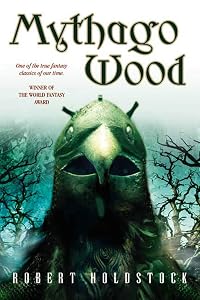
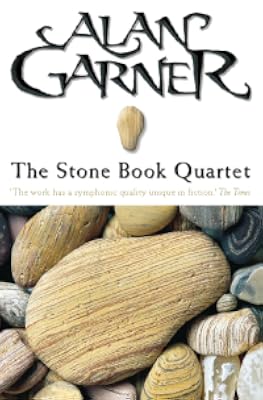
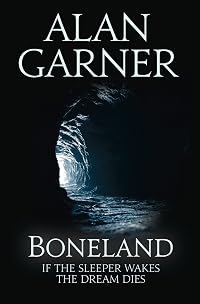
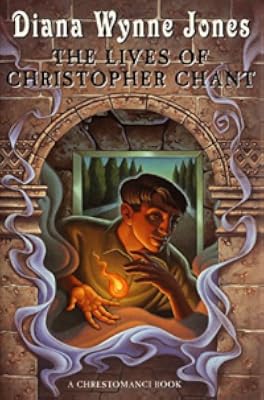
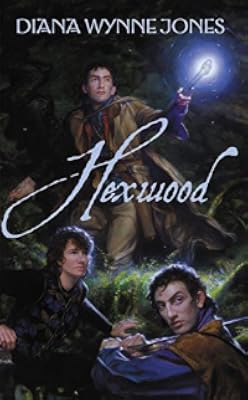
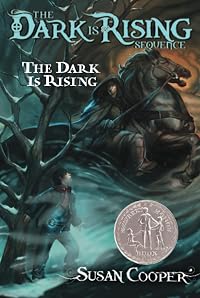
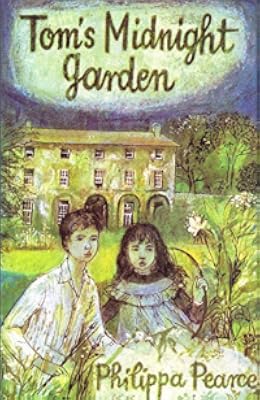

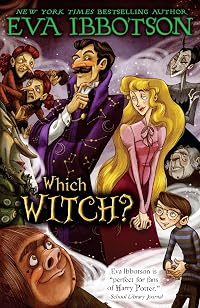






Member Recommendations
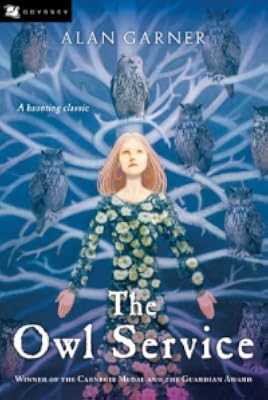
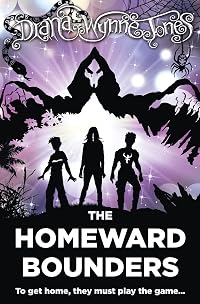
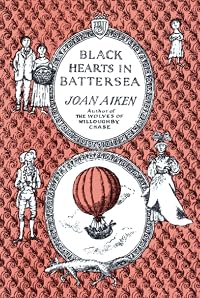
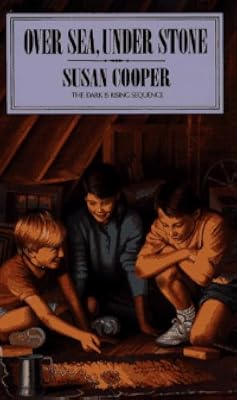
LongDogMom Another British fantasy about the Light versus the Dark and a boy who becomes involved in the battle
110
Cecrow Another classic British fantasy, good for young readers and adults.
LongDogMom A child unexpectedly caught up in old magic and good vs evil in a small village in Britain

themulhern The realistic part of the adventure in "Brisingamen" is the terror the children feel in the many underground spaces. "Escape into Daylight" is similar. Both were written a long time ago, when chores and farming were still part of an English child's life.
Member Reviews
Reading this at the end of the sixties, fresh from the enjoyment of The Lord of the Rings, I felt confused and slightly underwhelmed. Despite its nod to Arthurian legend (sleeping king, Wild Hunt, sage wizard) and genuine sense of menace I missed the complexity of Tolkien’s saga, with its multiple locations, characters and interweave of plots. Nor did it share the light touch of The Hobbit despite featuring two youngsters in their early teens. Perhaps the book’s misfortune was to be of its time, partly satisfying a hunger for epic fantasy but appearing, in contrast, as a pale imitation of The Lord of the Rings. Garner, whose first novel this was – he wrote it in his mid-twenties – recognised such weaknesses by first providing a show more revised edition for Puffin Books and later virtually disavowing it as “a fairly bad book”.
To dismiss it, especially now, would be unfair. For all the similarity of motifs – dwarfs, elves, underground mines, wizard, evil lord, powerful talisman, trolls, a final near-hopeless battle – what strikes me more on this re-reading four decades on are the differences. This is set in a corner of Garner’s native Cheshire, not in a secondary world like Middle Earth; the names and figures draw not on an invented mythology but directly from native traditions and languages, from Welsh, Manx, Irish and Norse folklore and literature (for example Angharad, Fenodyree, Morrigan and Grimnir, respectively); the main protagonists are not adult halflings but two, as it turns out, not-so-ordinary children; and the story is set not in some faraway land many millennia ago but in a here-and-now mid-twentieth century, with trains, waterproof macs, bikes, electric torches and ramblers. Even if the past is never far away, beginning with the milk-white steeds of the legendary but unnamed king…
Colin and Susan go to stay with their mother’s former nanny near Alderley Edge while their parents are abroad – the classic set-up where youngsters have a chance to mature without parental interference. Susan has inherited, via her mother, an heirloom from the nanny’s family, a teardrop crystal that we gather is the weirdstone of the title. There is something special about this stone because strangers, some very sinister, show strong interest in it, drawing the two children into a supernatural world that has little that’s fey about it. The episodes that lingered long in my memory are still in evidence – the claustrophobic journey through the old copper workings under the Edge (I’d recently read Tom Sawyer, with a similar sequence), the chilling female trolls called the Mara, the brief vision of sleeping warriors in their cavern – along with many equally terrifying incidents and arresting images that I’d somehow forgotten.
Susan and Colin’s ages are never here stipulated but they are clearly around thirteen. Their portraits have been criticised as somehow being like cardboard cut-outs, but not only are they easy for young readers to identify with (although Garner claims not to write with a young audience in mind), they’re also resourceful and courageous, especially Susan who — despite the odd scream – is often prepared to take the lead over the twin. I find it fascinating that Garner, despite never being explicit, has gone for twin siblings as his protagonists: twins are notoriously often self-contained, as these two are, requiring just each other as companions; and to outsiders they sometimes lack individuality, as these two can do, barely conforming to male and female stereotypes of activity and passivity. We are given no visual clues as to their appearance so just occasionally they come across as shadowy and interchangeable, like Tweedledum and Tweedledee.
This can’t be said for their companions. The genial but bluff Gowther Mossock, husband of Nanny Bess, comes across as a real person, not surprising as Garner acknowledges in the sequel that he’s truly drawn from life, “straight and undiluted”. The two dwarfs — Fenodyree (inexplicably portrayed on George Adamson’s cover as carrying a goblet for his first appearance) and Durathror — are more easily differentiated, one cautious, the other more reckless. Finally, Cadellin, as the legendary wizard and guardian of the sleeping king is here called, does what wizards do, which is to go their mysterious ways while still aiding and abetting the forces for good.
This is an enthralling immersive read, well paced and often un-put-down-able. The set pieces – in the Morrigan’s mansion, in the mines, the cross-country flight, the final conflict with its unexpected revelations – are thrillingly handled. The novel does, however, end rather abruptly; this revised Puffin edition (a new 50th-anniversary edition was issued in 2010 with additional material) appeared in 1963 just as The Moon of Gomrath was published, and so one has to assume that the cataclysmic climax, wrapped up in less than half a page, was deliberate, to anticipate the action continued in the sequel (which, incidentally, had never been originally planned). As we have had to wait half a century for the trilogy to be completed — Boneland was only published in 2012 – we must be thankful that Garner stayed faithful to his creations, and to his readers.
The author’s ancestor Robert Garner was a local stone mason who, we are told elsewhere, is said to have built the stone circle which puts in an appearance in this story and to have also carved the inscription below the stone face at the Wizard’s Well:
DRINK OF THIS | AND TAKE THY FILL |
FOR THE WATER FALLS | BY THE WIZHARDS WILL
Whether literally true or not, it’s in such ways that Garner establishes personal investment in the land, the people and their lore. But it’s also a area which, though I’ve never visited, is full of other resonances, like a cave full of whispered echoes. I’ve wandered through the prehistoric copper mines of Great Orme’s Head in North Wales and so have some understanding of the antiquity and conditions of the Edge’s mines. Further forward in time we encounter what this story calls Llyn Dhu, the Black Lake in Welsh, modern Lindow Moss near Wilmslow, where several bog bodies from around the Iron Age were discovered in the 1980s, probably deposited as ritual sacrifices. And even closer in time, but paradoxically looking further back into time, the area is home to Jodrell Bank observatory with its radio telescope. This confluence of vistas of different eras has all added to the cauldron of ideas from which Garner continues to draw the elements in his tight-knit and individual stories.
http://wp.me/s2oNj1-teardrop show less
To dismiss it, especially now, would be unfair. For all the similarity of motifs – dwarfs, elves, underground mines, wizard, evil lord, powerful talisman, trolls, a final near-hopeless battle – what strikes me more on this re-reading four decades on are the differences. This is set in a corner of Garner’s native Cheshire, not in a secondary world like Middle Earth; the names and figures draw not on an invented mythology but directly from native traditions and languages, from Welsh, Manx, Irish and Norse folklore and literature (for example Angharad, Fenodyree, Morrigan and Grimnir, respectively); the main protagonists are not adult halflings but two, as it turns out, not-so-ordinary children; and the story is set not in some faraway land many millennia ago but in a here-and-now mid-twentieth century, with trains, waterproof macs, bikes, electric torches and ramblers. Even if the past is never far away, beginning with the milk-white steeds of the legendary but unnamed king…
Colin and Susan go to stay with their mother’s former nanny near Alderley Edge while their parents are abroad – the classic set-up where youngsters have a chance to mature without parental interference. Susan has inherited, via her mother, an heirloom from the nanny’s family, a teardrop crystal that we gather is the weirdstone of the title. There is something special about this stone because strangers, some very sinister, show strong interest in it, drawing the two children into a supernatural world that has little that’s fey about it. The episodes that lingered long in my memory are still in evidence – the claustrophobic journey through the old copper workings under the Edge (I’d recently read Tom Sawyer, with a similar sequence), the chilling female trolls called the Mara, the brief vision of sleeping warriors in their cavern – along with many equally terrifying incidents and arresting images that I’d somehow forgotten.
Susan and Colin’s ages are never here stipulated but they are clearly around thirteen. Their portraits have been criticised as somehow being like cardboard cut-outs, but not only are they easy for young readers to identify with (although Garner claims not to write with a young audience in mind), they’re also resourceful and courageous, especially Susan who — despite the odd scream – is often prepared to take the lead over the twin. I find it fascinating that Garner, despite never being explicit, has gone for twin siblings as his protagonists: twins are notoriously often self-contained, as these two are, requiring just each other as companions; and to outsiders they sometimes lack individuality, as these two can do, barely conforming to male and female stereotypes of activity and passivity. We are given no visual clues as to their appearance so just occasionally they come across as shadowy and interchangeable, like Tweedledum and Tweedledee.
This can’t be said for their companions. The genial but bluff Gowther Mossock, husband of Nanny Bess, comes across as a real person, not surprising as Garner acknowledges in the sequel that he’s truly drawn from life, “straight and undiluted”. The two dwarfs — Fenodyree (inexplicably portrayed on George Adamson’s cover as carrying a goblet for his first appearance) and Durathror — are more easily differentiated, one cautious, the other more reckless. Finally, Cadellin, as the legendary wizard and guardian of the sleeping king is here called, does what wizards do, which is to go their mysterious ways while still aiding and abetting the forces for good.
This is an enthralling immersive read, well paced and often un-put-down-able. The set pieces – in the Morrigan’s mansion, in the mines, the cross-country flight, the final conflict with its unexpected revelations – are thrillingly handled. The novel does, however, end rather abruptly; this revised Puffin edition (a new 50th-anniversary edition was issued in 2010 with additional material) appeared in 1963 just as The Moon of Gomrath was published, and so one has to assume that the cataclysmic climax, wrapped up in less than half a page, was deliberate, to anticipate the action continued in the sequel (which, incidentally, had never been originally planned). As we have had to wait half a century for the trilogy to be completed — Boneland was only published in 2012 – we must be thankful that Garner stayed faithful to his creations, and to his readers.
The author’s ancestor Robert Garner was a local stone mason who, we are told elsewhere, is said to have built the stone circle which puts in an appearance in this story and to have also carved the inscription below the stone face at the Wizard’s Well:
DRINK OF THIS | AND TAKE THY FILL |
FOR THE WATER FALLS | BY THE WIZHARDS WILL
Whether literally true or not, it’s in such ways that Garner establishes personal investment in the land, the people and their lore. But it’s also a area which, though I’ve never visited, is full of other resonances, like a cave full of whispered echoes. I’ve wandered through the prehistoric copper mines of Great Orme’s Head in North Wales and so have some understanding of the antiquity and conditions of the Edge’s mines. Further forward in time we encounter what this story calls Llyn Dhu, the Black Lake in Welsh, modern Lindow Moss near Wilmslow, where several bog bodies from around the Iron Age were discovered in the 1980s, probably deposited as ritual sacrifices. And even closer in time, but paradoxically looking further back into time, the area is home to Jodrell Bank observatory with its radio telescope. This confluence of vistas of different eras has all added to the cauldron of ideas from which Garner continues to draw the elements in his tight-knit and individual stories.
http://wp.me/s2oNj1-teardrop show less
"bog-standard" is apt. But I find it difficult not to enjoy 1960s English children's fantasy. It is period now, the children in this book, as in so many others, do farm chores after school.
Although there is a great evil(!), the style is not as portentous as that of Susan Cooper. The whole purpose seems to have been to use cool words and ideas from Norse and Celtic mythology, and to describe in great detail the area around where the author grew up. There is a map, and a rendezvous on a hilltop, and the book is over in a flash.
"The Book of Three" is so much more coherent and interesting, but Lloyd Alexander was a mature author when he wrote that, while Alan Garner was just 22.
I also notice how entirely derivative it is, as if the author show more had decided to miniaturize "The Lord of the Rings". The journey is in the neighberhood, into which dangers are imported. The two children take the place of the hobbits. The dwarves and Gowther are the companions. There is a Galadriel and a Glorfindel in this book. There is, of course, a powerful wizard who yet makes mistakes. The great enemy is offstage, and it is smaller bad ones, who do not always agree, who pursue the fight. There are goblin-equivalents in both. And there is a vital jewel, carried by the hobbit or child, as the case may be.
The whole book, like many fantasy books, is a metaphor for a child's life. There are adults, they know better what is going on, and they impose rules, which seem absolutely arbitrary, and which the children must obey, or the world will end.
The most realistic part is the childrens' suffering; they are sometimes terrified, other times in a deal of pain, and also they suffer privations due to thirst and cold. show less
Although there is a great evil(!), the style is not as portentous as that of Susan Cooper. The whole purpose seems to have been to use cool words and ideas from Norse and Celtic mythology, and to describe in great detail the area around where the author grew up. There is a map, and a rendezvous on a hilltop, and the book is over in a flash.
"The Book of Three" is so much more coherent and interesting, but Lloyd Alexander was a mature author when he wrote that, while Alan Garner was just 22.
I also notice how entirely derivative it is, as if the author show more had decided to miniaturize "The Lord of the Rings". The journey is in the neighberhood, into which dangers are imported. The two children take the place of the hobbits. The dwarves and Gowther are the companions. There is a Galadriel and a Glorfindel in this book. There is, of course, a powerful wizard who yet makes mistakes. The great enemy is offstage, and it is smaller bad ones, who do not always agree, who pursue the fight. There are goblin-equivalents in both. And there is a vital jewel, carried by the hobbit or child, as the case may be.
The whole book, like many fantasy books, is a metaphor for a child's life. There are adults, they know better what is going on, and they impose rules, which seem absolutely arbitrary, and which the children must obey, or the world will end.
The most realistic part is the childrens' suffering; they are sometimes terrified, other times in a deal of pain, and also they suffer privations due to thirst and cold. show less
I haven't read this in a long, long time, but it was very much a favourite of mine, and I think I'm beginning to really appreciate why. Actually, it's almost shocking: I was not prepared for how Tolkeiny it is. You have dwarves, you have elves (unseen), you have orcish monsters and trolls, a piece of jewelry as plot-token and a wise old wizard in a beard and robes; there are woods and mines and lakes and aid from a mysterious lady of great beauty and power. In other words, tons of Northern European legends and folklore driving an adventure narrative; but instead of Lord Of The Ring's epic sprawl - or even The Hobbits long wayward quest, we get an astonishingly tight, short, fast paced tale that seems to deliver it all in a concentrated show more dose.
Garner has expressed a certain dislike for the books, particularly the main characters and, sadly, it's easy to see why. Colin and Susan are standard English children's book children. Most of the time they fail to differ appreciably from anyone from, say, the Famous Five or Secret Seven, only rarely showing flashes of personality, usually in brief bits of dialogue. They certainly pale in comparison to the dwarves and even Cadellin (though Cadellin proves that Ian McKellan has firmly set his stamp on the cultural image of the bearded wise wizard with both his appearance and voice), who are at least built upon sturdy heroic archetypes and through their dialogues, voices, language and cadences, Garner brings them to mythic life. Difficult enough for virtual blank slates like Colin and Susan to flourish in such company, but they also have to contend with the incomparable Gowther Mossock, in whom Garner's gift for voice and dialect show themselves in all their glory, but also his concerns with people in landscapes and embedded in the history of that landscape. Colin and Susan didn't have a chance.
The book is also notable for what may well be one of the most terrifying sequences in children's literature: the Earldelving. Nothing magical or supernatural, either; just our, ahem, fellowship squirming their way through a system of pitch-black tunnels that makes the reader squirm with horror. show less
Garner has expressed a certain dislike for the books, particularly the main characters and, sadly, it's easy to see why. Colin and Susan are standard English children's book children. Most of the time they fail to differ appreciably from anyone from, say, the Famous Five or Secret Seven, only rarely showing flashes of personality, usually in brief bits of dialogue. They certainly pale in comparison to the dwarves and even Cadellin (though Cadellin proves that Ian McKellan has firmly set his stamp on the cultural image of the bearded wise wizard with both his appearance and voice), who are at least built upon sturdy heroic archetypes and through their dialogues, voices, language and cadences, Garner brings them to mythic life. Difficult enough for virtual blank slates like Colin and Susan to flourish in such company, but they also have to contend with the incomparable Gowther Mossock, in whom Garner's gift for voice and dialect show themselves in all their glory, but also his concerns with people in landscapes and embedded in the history of that landscape. Colin and Susan didn't have a chance.
The book is also notable for what may well be one of the most terrifying sequences in children's literature: the Earldelving. Nothing magical or supernatural, either; just our, ahem, fellowship squirming their way through a system of pitch-black tunnels that makes the reader squirm with horror. show less
A classic British work of children's fantasy which owes something to Arthur Machen and something to Tolkien but has a quality all of its own. It is written for intelligent children and young adults without in any way patronising or preaching at them. This was possible in 1960.
The book layers the most uncompromising fantasy over a real place in the world - Alderley Edge in Cheshire, a dramatic red stone escarpment now under the protection of the National Trust - creating a sensibility close to that of an intelligent child's own imaginative play.
Being close to the border of Wales, it mashes up Nordic-Germanic and Celtic memes in a way that speaks to the very mythological nature of South Britain (Anglo-Wales) and pulls in almost every form show more of magical life (such as dwarves, elves, evil ones, witches and so forth) in subtly new ways.
But what is most remarkable - and something that was part of the childhood experience in the 1960s and 1970s in a way unthinkable today - Garner (his first book) refused to patronise his audience on the subject of emotional discomfort and physical terror.
It is beautifully paced in this respect with a central section of the children, led by two dwarves and chased by small evil goblin-like creatures, on a journey through a terrifying maze of increasingly narrow tunnels where we feel the possibility of being 'stuck' underground beyond any adult help.
Similarly, Garner later gives us an extended journey across the countryside (the most Tolkien-esque part of the book based on a quest with a battle in which the death of a loved character is not shied from) that is not only terrible but risks life in quasi-polar conditions.
A lot is packed into this book. It could all have been too much if Garner had not grounded it in a place and not allowed it to unfold less as 'literary' fantasy and more as imaginative play where everything can be thrown in so long as the universe it creates is internally consistent.
Nor is it shy of having a clear idea of who is good and who is evil. Evil svarts are not interrogated on the social conditions that led to their condition but are despatched into dust by Durathror's sword Dyrnwin without regret and with a warrior's enthusiasm for battle.
Garner got a bit snobby about his first book in later life, referring to it as "a fairly bad book" but that is perhaps just a man wanting to be taken more seriously by posh people. It could be argued that it is a bit over the top with a lack of characterisation and subtlety but that misses its point.
He was far too hard on himself. The book stands up well compared to most first novels by anyone else. He tapped into the excitable and playful mentality of the child or young adult whether he intended to or not. It is much better from that perspective than he seemed to realise.
Perhaps the only point of criticism is that Charles Green's hand-drawn maps to illustrate the action don't always seem to tie-in with the story and are far less useful than those used by, say, Tolkien. However, that is a small point.
Another point to bear in mind is that Garner was a genuinely working class writer from an illiterate family background, raised on the verbal lore of the territory, so the book may not be 'high literature' but it retains an imaginative authenticity that shines through the fantasy.
A sense of English 'place' (now lost in our cities most certainly and increasingly so in our towns) is also present. I, for one, welcome this as so many English towns and villages collapse into museum memorialisation and cottages for middle class city people with labradoodles and chichi tastes.
Taken in the round, I do not give a damn about the 'poor characterisation' precisely because Garner has allowed himself and us to be entranced by the imagery of local landscape, weather, folklore and traditional relationships on the land. It is popular because it is good. show less
The book layers the most uncompromising fantasy over a real place in the world - Alderley Edge in Cheshire, a dramatic red stone escarpment now under the protection of the National Trust - creating a sensibility close to that of an intelligent child's own imaginative play.
Being close to the border of Wales, it mashes up Nordic-Germanic and Celtic memes in a way that speaks to the very mythological nature of South Britain (Anglo-Wales) and pulls in almost every form show more of magical life (such as dwarves, elves, evil ones, witches and so forth) in subtly new ways.
But what is most remarkable - and something that was part of the childhood experience in the 1960s and 1970s in a way unthinkable today - Garner (his first book) refused to patronise his audience on the subject of emotional discomfort and physical terror.
It is beautifully paced in this respect with a central section of the children, led by two dwarves and chased by small evil goblin-like creatures, on a journey through a terrifying maze of increasingly narrow tunnels where we feel the possibility of being 'stuck' underground beyond any adult help.
Similarly, Garner later gives us an extended journey across the countryside (the most Tolkien-esque part of the book based on a quest with a battle in which the death of a loved character is not shied from) that is not only terrible but risks life in quasi-polar conditions.
A lot is packed into this book. It could all have been too much if Garner had not grounded it in a place and not allowed it to unfold less as 'literary' fantasy and more as imaginative play where everything can be thrown in so long as the universe it creates is internally consistent.
Nor is it shy of having a clear idea of who is good and who is evil. Evil svarts are not interrogated on the social conditions that led to their condition but are despatched into dust by Durathror's sword Dyrnwin without regret and with a warrior's enthusiasm for battle.
Garner got a bit snobby about his first book in later life, referring to it as "a fairly bad book" but that is perhaps just a man wanting to be taken more seriously by posh people. It could be argued that it is a bit over the top with a lack of characterisation and subtlety but that misses its point.
He was far too hard on himself. The book stands up well compared to most first novels by anyone else. He tapped into the excitable and playful mentality of the child or young adult whether he intended to or not. It is much better from that perspective than he seemed to realise.
Perhaps the only point of criticism is that Charles Green's hand-drawn maps to illustrate the action don't always seem to tie-in with the story and are far less useful than those used by, say, Tolkien. However, that is a small point.
Another point to bear in mind is that Garner was a genuinely working class writer from an illiterate family background, raised on the verbal lore of the territory, so the book may not be 'high literature' but it retains an imaginative authenticity that shines through the fantasy.
A sense of English 'place' (now lost in our cities most certainly and increasingly so in our towns) is also present. I, for one, welcome this as so many English towns and villages collapse into museum memorialisation and cottages for middle class city people with labradoodles and chichi tastes.
Taken in the round, I do not give a damn about the 'poor characterisation' precisely because Garner has allowed himself and us to be entranced by the imagery of local landscape, weather, folklore and traditional relationships on the land. It is popular because it is good. show less
The first hundred pages are wonderful. The description of the children arriving in Alderley Edge and discovering its strange landscape see Garner blend natural imagery with supernatural events and characters in a manner that feels highly original. The description of the darkness descending on the village and Gowther's night time brush with evil was terrifying. But from the moment that the children get lost in the tunnels, it becomes a series of largely forgettable scenes in which the children are chased and pursued through tunnels, woods and hills, always "just" getting away. I found it almost impossible to get to the end of the book. It doesn't help that more characters are introduced without being properly established and those that show more are introduced remain poorly developed. Garner has disavowed this book as being poorly done and I can see why. show less
The first half of the book is full of delightful details as it interweaves local legends and geography of Alderly Edge (a real place in England), high-fantasy elements like wizards, goblins, and dwarfs, and allusions to ancient Norse and Celtic mythology. The Earldelving chapter was a brilliantly intense and horrifying piece of descriptive writing that had me literally gasping for breath by the end.
Unfortunately, the story really drags in the latter half of the book as the protagonists undertake a slow and tedious crawl across a few miles of English countryside while trying to remain hidden. Finally they reach their destination and the intensity suddenly shoots up to 11 for a few pages in an all-out battle with the forces of evil and show more then wham, book over.
Still, flawed though it was, I enjoyed reading it. show less
Unfortunately, the story really drags in the latter half of the book as the protagonists undertake a slow and tedious crawl across a few miles of English countryside while trying to remain hidden. Finally they reach their destination and the intensity suddenly shoots up to 11 for a few pages in an all-out battle with the forces of evil and show more then wham, book over.
Still, flawed though it was, I enjoyed reading it. show less
[b:The Weirdstone of Brisingamen|694997|The Weirdstone of Brisingamen (Tales of Alderley, #1)|Alan Garner|http://d.gr-assets.com/books/1177345171s/694997.jpg|279305] by Alan Garner, is one of my all time favourite children's books, together with the sequel, [b:The Moon of Gomrath|694942|The Moon of Gomrath (Tales of Alderley, #2)|Alan Garner|http://d.gr-assets.com/books/1177344653s/694942.jpg|1219230]. They had a profound impact on me, such that when we holidayed in the Peak District, and I was an adult, I had an overwhelming desire to visit Alderley Edge (which sadly never happened). The adventures of Colin and Susan - sometimes frightening - are told at the perfect pace for younger readers. The connections to fairy tales, legends and show more the ancient "Matter of Britain" give the tales a depth that will infect the imagination. I can still read and enjoy them now, as a (very) mature adult. There are, indeed, times when these tales appear as faint echoes in my own writing.
If you're not inclined to wrap your children's imaginations in cotton wool to protect them from frights, then let them read these books - or (better still) read them to them! And no, I don't mean get audio books or radio/TV dramatisations! Part of the magic is in knowing that so many of the locations are very real, but seeing TV images of them destroys it all - the imagination has to have room to work. And the same applies to voices - let the imagination create those, not actors. A parent reading aloud is different, because the voice is familiar, and that allows free reign to the child's imagination, rather like that odd phenomenon of always remembering, or dreaming about, black and white movies in colour!
Both books are 5 star reads! (I'd give them 10 out 5 if I could.) show less
If you're not inclined to wrap your children's imaginations in cotton wool to protect them from frights, then let them read these books - or (better still) read them to them! And no, I don't mean get audio books or radio/TV dramatisations! Part of the magic is in knowing that so many of the locations are very real, but seeing TV images of them destroys it all - the imagination has to have room to work. And the same applies to voices - let the imagination create those, not actors. A parent reading aloud is different, because the voice is familiar, and that allows free reign to the child's imagination, rather like that odd phenomenon of always remembering, or dreaming about, black and white movies in colour!
Both books are 5 star reads! (I'd give them 10 out 5 if I could.) show less
Members
- Recently Added By
Lists

Favorite Childhood Books
1,646 works; 518 members

Best Arthurian Fiction
104 works; 33 members

501 Must-Read Books
529 works; 72 members
1001 Children's Books You Must Read Before You Grow Up
774 works; 101 members

Childhood Favorites
427 works; 24 members

Survey of Fantasy Classics
111 works; 23 members

Jones and Newman's Horror: Another 100 Best Books
100 works; 7 members

1960s, Best books published therein
254 works; 22 members

My Wishlist - YA
57 works; 2 members

Top Five Books of 2018
802 works; 265 members
Modern Arthurian Fiction
237 works; 16 members

Books Read in 2021
5,361 works; 113 members

Guilty Pleasures
223 works; 86 members

Books We Loved As Children
603 works; 252 members

Books Read in 2019
4,052 works; 108 members

Books We Love to Reread
688 works; 296 members

Books With the Most Memorable Titles
478 works; 158 members

Best middle grade books
130 works; 24 members

Best Horror Mega-List
342 works; 6 members
Ten Books That Have Stayed With Me
160 works; 30 members

Books Read in 2018
4,360 works; 110 members

al.vick-wishlist-YA
127 works; 3 members

The Seven-League Shelf
57 works; 3 members

Works Referenced in The League of Extraordinary Gentlemen
122 works; 6 members

Fiction With Familiar Settings
280 works; 93 members
Author Information

49+ Works 10,975 Members
Some Editions
Awards and Honors
Awards
Notable Lists
Series

Belongs to Publisher Series
Work Relationships
Common Knowledge
- Canonical title
- The Weirdstone of Brisingamen
- Original title
- The Weirdstone of Brisingamen
- Original publication date
- 1960
- People/Characters
- Colin Whisterfield; Susan Whisterfield; Gowther Mossock; Bess Mossock; Cadellin Silverbrow; Fenodyree (show all 23); Durathror; Svart-alfar; Arthog; Slinkveal; Selina Place; The Morrigan; Grimnir; Govannon; Lios-alfar; Atlendor; Angharad Goldenhand (the Lady of the Lake); Gaberlunzie; Managarm; The Mara; Rimthur; James Henry Hodgkins; Harry Wardle
- Important places
- Alderley Edge, Cheshire, England, UK; Cheshire, England, UK; Macclesfield, Cheshire, England, UK; Fundindelve; Highmost Redmanhey, Hocker Lane, Macclesfield, Cheshire, England, UK; Mottram St. Andrew, Cheshire, England, UK (show all 10); Nether Alderley, Cheshire, England, UK; Lindow Moss, Cheshire, England, UK (Llyn-Dhu); St. Mary's Clyffe, Alderley Edge, Cheshire, England, UK; Shuttlingsloe, Wildboarclough, Cheshire, England, UK
- Important events
- Ragnarok; Fimbulwinter
- Epigraph
- In every prayer I offer up, Alderley, and all belonging to it, will be ever a living thought in my heart.
Rev. Edward Stanley: 1837 - First words
- At dawn one still October day in the long ago of the world, across the hill of Alderley, a farmer from Mobberley was riding to Macclesfield fair.
- Last words
- (Click to show. Warning: May contain spoilers.)And here is an end of it.
- Original language
- English
Classifications
Statistics
- Members
- 2,081
- Popularity
- 9,940
- Reviews
- 51
- Rating
- (3.96)
- Languages
- 6 — Chinese, Dutch, English, German, Swedish, Portuguese (Portugal)
- Media
- Paper, Audiobook, Ebook
- ISBNs
- 39
- ASINs
- 44