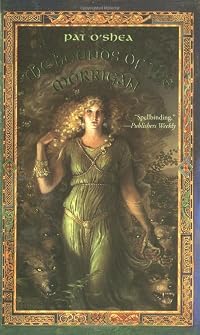
The Hounds of the Morrigan
by Pat O'Shea
On This Page
Description
When a ten-year-old boy finds an old book of magic in a bookshop in Ireland, the forces of good and evil gather to do battle over it.Tags
Recommendations




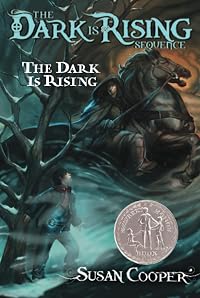
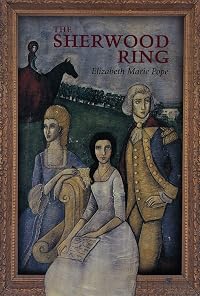
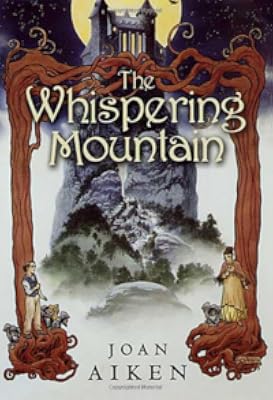
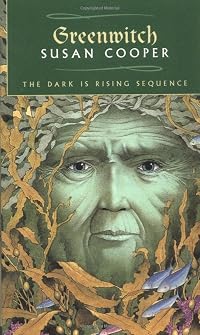
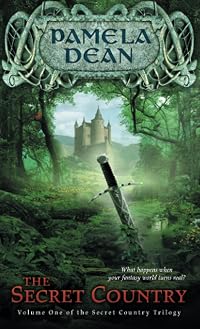
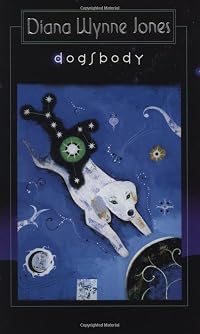
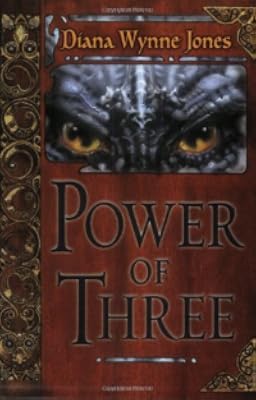
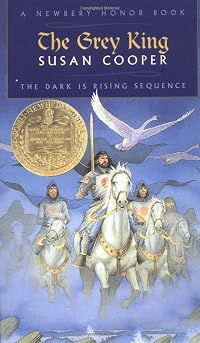

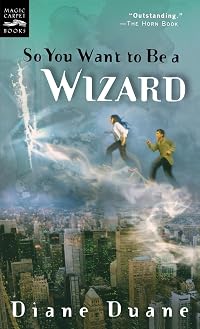
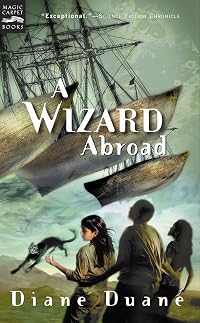



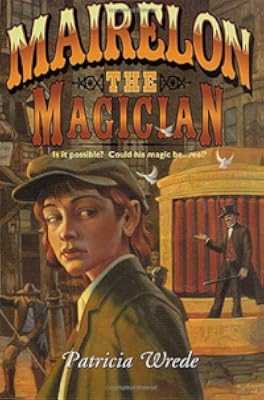


Member Recommendations
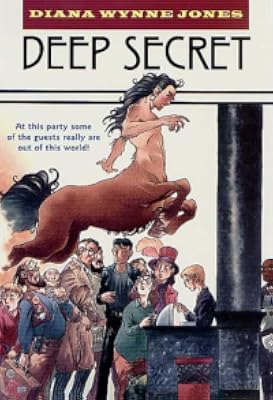
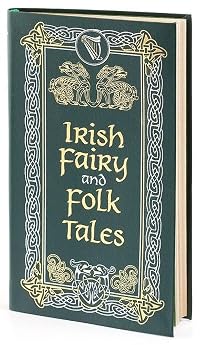
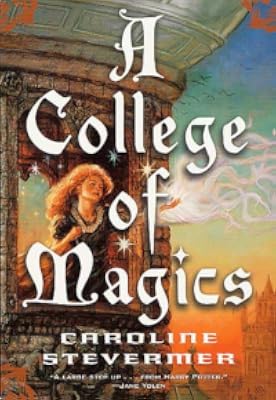
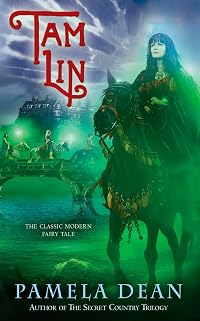
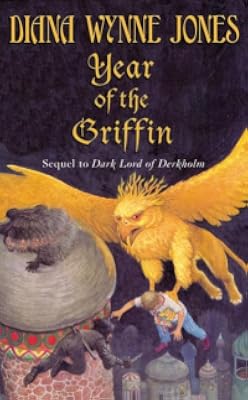
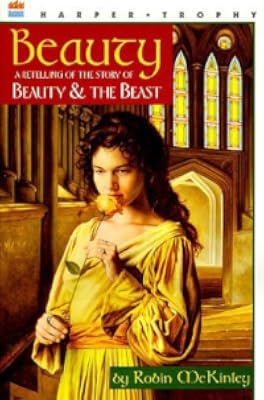
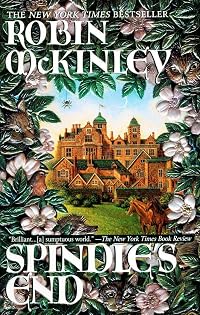
gatheringofleaves Both books deal with older Anglo mythology and feature children 'traveling' to other times/other lands
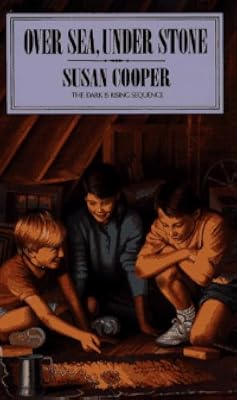
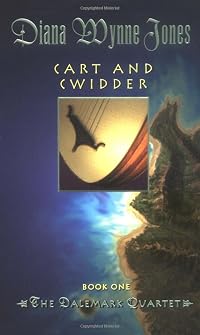
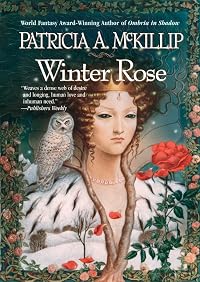
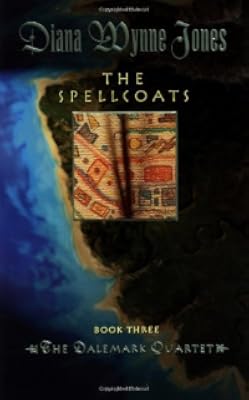
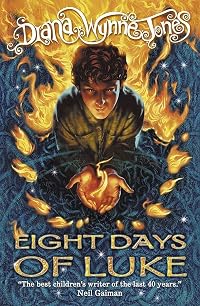
themulhern Both authors took years to write their outstanding first novel and then were prevented, by ill health and other things, from truly following up their first success.
Member Reviews
A wild epic tale of adventure and magic, as the Morrigan, the goddess of three aspects, returns to the human world, Galway, specifically, ready to wreak havoc and only Pidge and Brigit stand a hope of thwarting her, even though they were only a pair of young children and have no idea how. Nonetheless after a curious encounter in a bookshop, and a pair of strange neighbours take up residence in a nearby greenhouse, Pidge and Brigit set out on a dangerous and thrilling journey into another world in search of the one thing that can defeat the Morrigan. Hunted relentlessly by the eponymous hounds, the children are aided and assisted by a series of strange and sometimes noble and sometimes hilarious characters, many of them straight out of show more Irish myth and folklore. In fact, this may be the greatest work of Irish children's fiction to use so much folklore so well, or at least the best I've read so far. Much of it is incredibly charming and funny without being twee. Some of it is very strange and solemn and scary, and somehow the O'Shea mixes the different tones seamlessly, without ever jarring the reader, creating an evocative and unreal atmosphere where anything can happen, and probably will. show less
I adore this book! Thirteen years in the writing, and one of only three works that Galway-born author Pat O'Shea ever published - the two others being Finn Mac Cool and the Small Men Of Deeds, a slender collection of retold tales from the Fionn Cycle, and an early-reader entitled The Magic Bottle - this sprawling children's fantasy is a masterpiece, and simply a joy to read! I love pretty much everything about it, from its wealth of folkloric references to its discursive style, and included it in the course I taught in college, on the connections between folklore and children's fantasy literature. I hope, in fact, to incorporate it into my dissertation, on that distant day when I finally get myself to grad school.
The story of Pidge show more (P.J. - short for Patrick Joseph) and Bridget, a brother and sister who become involved an epic quest to prevent The Morrígan - the tripartite Irish goddess of war: "The One Who is Three" - from claiming the power of the serpent Olc-Glas, and thereby returning to ascendance, The Hounds of the Morrigan takes readers on an extraordinary journey through the world of Faery, or Tír na nÓg, introducing them to a wide range of characters from traditional Irish mythology along the way. Opening in O'Shea's native city of Galway, the book follows Pidge as he inadvertently gains possession of the ancient manuscript in which Olc-Glas (literally "wicked green" in Irish) is trapped, and finds himself almost immediately pursued by the agents - the hounds - of The Great (and sinister) Queen. Freeing the serpent by mistake, Pidge is enlisted by The Dagda, the "good god" and father-figure of Irish mythology, in an effort to track down the one thing - a pebble stained with The Morrígan's own blood, during an ancient battle with the hero Cúchulainn - that can destroy it. Accompanied by his five-year-old sister Bridget, and aided by "all true creatures," Pidge sets out to correct his mistake, and prevent the rising of a figure who can only bring death and destruction in her wake...
With its wealth of figures from traditional Irish folklore and mythology, it would be difficult to imagine a work of children's fantasy literature more perfectly suited to my taste than this. There's the eponymous Morrígan, of course, with her constituent components - Bodbh the "Scald Crow," Macha the "Queen of Phantoms," and the great Battle Goddess herself, the fair and terrifying Morrígan - there's The Dagda, or Great Lord of Knowledge, who makes the very stars dance; Aengus Óg, the god of love, with his magical daisies; Brigit, the goddess of the hearth, with her toothsome sausages; Cathbad the Druid, with his spells and enchantments; the great warrior Cúchulainn, often in disguise; Queen Maeve of Connacht, fleeing from the tragedy of her slain sons, the Seven Maines, and followed by her husband Ailill; and many more besides. Each figures comes alive in O'Shea's telling, a fascinating character in his or her own right, and an intriguing reflection on some part of the Irish tradition.
Just as compelling are the two young human heroes - the quiet Pidge, with his keen observation of the world, and his wealth of courage and fortitude waiting to be discovered; and warmhearted Bridget, with her outspoken ways, her penchant for embroidering the truth ("Me lost? I never get lost."), and her loving heart - and the animal characters they encounter on their adventure, from that comical frog, Puddeneen Whelan, to the glorious and majestic Irish Elk, petrified for millennia and brought to life again by Druid spells, in order to carry the children through a difficult stage of their journey. Serena Begley, the path-finding donkey who leads the children through the standing stones, is a gently reassuring presence, while the brilliantly named Hounds - Findepath, Lithelegs, Greymuzzle, Fowler, Silkenskin, Rushbrook, Swift, Fierce, Gnawbone - are an ever-present threat. My own personal favorite is Cú Rua the fox, by turns mischievous and mournful, who brings his own sharp wisdom to Pidge and Bridget, during the latter part of their quest. I am haunted by the scene in which Cooroo (as he is known) and Pidge debate human-fox relations:
"If you didn't take chickens, they wouldn't hunt you," Pidge ventured. Cooroo turned and looked steadily into his eyes for a long moment.
"Oh, but they would. You know it and I know it," he whispered sadly, and then he moved on."
(and later, after a debate on whether foxes harm or help farmers)....
"They begrudge me my own life - they want my death and they seem to get pleasure out of it and that's a fact."
"Why do you take chickens at all?" Pidge managed to ask.
"I like the taste."
"So do I," Bridget said, defending him, adding reprovingly: "And so do you, Pidge."
"In bad times," Cooroo continued, "I could believe that all I am is hunger with a nose."
(and finally, after relating the terrible death of his vixen, hunted for sport, and torn to pieces)...
"Ah, it is a sad and puzzling fate to share the world with man, but what can we do? My poor vixen - she could charm anything but the hounds, will I never forget it."
There are scenes of pathos here, and scenes of intense excitement, as the children flee across a magical landscape, but there are also moments (many of them!) of humor, particularly when Bridget comes out with one of her pronouncements, or becomes indignant. I always chuckle when I come to the scene in which the old angler (Cúchulainn in disguise ), admiring the man who first trapped Olc-Glas in a manuscript, says: "He must have been an elegant, powerful Druid, that Patrick," and is informed by a shocked Bridget that "He was a Saint, not a Druid; I thought everyone knew that! I can't imagine how you didn't know it." His reply - Ah well! Sometimes we miss the latest news. I'm a bit behind the times and I never did go to school." - is just priceless! Sly humor and clever wordplay abound here - the droll "warning signs" put up by The Hounds, to 'sniggle" Pidge, at the beginning of the book; the aptly named Castle Durance; Cú Rua's amazed appreciation of sausages, and inquiries about their source: "When a sausage is alive, does it have hair, fur or feathers?" Cooroo asked, sounding highly interested."; The Morrígan's impatience at being hounded herself, by the befuddled but determined Garda (police) sergeant, whom they refer to as a "small dark thing that follows us like a chronicle" - and the result is a reading experience that is every bit as rewarding, intellectually, as it is involving, emotionally.
Finally (because I have to end somewhere, or I could go on raving indefinitely), this is just a beautifully written book, overflowing with deftly drawn characters, lovely descriptions of the natural world, moments of great pathos and terror, and most of all - a keen appreciation for the magical. The scene in which the Lonely One - the great Irish Elk brought back to life, in order to carry Pidge and Bridget on his back - flies through the night with his passengers, singing them the song of his life, is simply breathtaking:
"On landing, the Elk picked up his stride right away and they flew faster and faster over the earth, while he sang the song of his life to them. It told of the days spent with his own people as they ranged over the land, of the softness of his mother, of young being born, and the old ones dying. It celebrated the taste of sweet grasses and herbs and praised the mercy of water that washed away the scent of those who were hunted. His song was about freedom and being, and the joy he had in these two things; it praised the sweet night air as they flew along. And then the song was about the coming of the ice and the long slow dyings; of the springing up of thick forests where many died, trapped by their antlers in the meshing branches; of being near to death himself; and of being found by men who pitied him and took him to a secret and holy place, where they covered him with sweet earth and sang him to sleep with magic. He sang of the whiteness of their robes and the beauty of their chanting and he ran thus through the rest of the night, leaving them when light came delicately to the rim of the world."
Just as beautiful is the moment when the very elements rise up against the evil of The Morrígan, offering a thought-provoking defense of humanity, and our connection to the natural world, despite our lack of care for it:
At this the waters of the lake murmured against her. They went in angry ripples to the lake shore and formed little eddies there that spoke to the earth in low whispers. "Listen to us," they said. "What were the words of the ancient scribe? What did he say? - Man's flesh is of the earth, his blood of the sea, his breath of the wind, his bones of the stones, his soul of the spirit. - Thus he said, did he not?"
"Yes," the earth agreed.
"Is he not my child, your child, the child of the wind and of the fire? Is he not born of us and nurtured by us, as is everything that lives on this bright ball? Of them all, he is our brightest child. In the hopes that one day he will truly remember and love us as he once did - give me your strength."
I won't say that this book is perfect. I could argue that The Morrígan is a far more complex figure - and not necessarily an evil one - than depicted here. I could complain that, at the end of the story, Pidge and Bridgetforget all of their adventures , a plot resolution that I truly dislike. But the truth is, whilst not perfect, The Hounds of the Morrigan is, for me, a perfectly engaging book. It has everything I could want: intellectual stimulation, emotional engagement, beautiful writing, and lovable characters. Truly, an outstanding book! show less
The story of Pidge show more (P.J. - short for Patrick Joseph) and Bridget, a brother and sister who become involved an epic quest to prevent The Morrígan - the tripartite Irish goddess of war: "The One Who is Three" - from claiming the power of the serpent Olc-Glas, and thereby returning to ascendance, The Hounds of the Morrigan takes readers on an extraordinary journey through the world of Faery, or Tír na nÓg, introducing them to a wide range of characters from traditional Irish mythology along the way. Opening in O'Shea's native city of Galway, the book follows Pidge as he inadvertently gains possession of the ancient manuscript in which Olc-Glas (literally "wicked green" in Irish) is trapped, and finds himself almost immediately pursued by the agents - the hounds - of The Great (and sinister) Queen. Freeing the serpent by mistake, Pidge is enlisted by The Dagda, the "good god" and father-figure of Irish mythology, in an effort to track down the one thing - a pebble stained with The Morrígan's own blood, during an ancient battle with the hero Cúchulainn - that can destroy it. Accompanied by his five-year-old sister Bridget, and aided by "all true creatures," Pidge sets out to correct his mistake, and prevent the rising of a figure who can only bring death and destruction in her wake...
With its wealth of figures from traditional Irish folklore and mythology, it would be difficult to imagine a work of children's fantasy literature more perfectly suited to my taste than this. There's the eponymous Morrígan, of course, with her constituent components - Bodbh the "Scald Crow," Macha the "Queen of Phantoms," and the great Battle Goddess herself, the fair and terrifying Morrígan - there's The Dagda, or Great Lord of Knowledge, who makes the very stars dance; Aengus Óg, the god of love, with his magical daisies; Brigit, the goddess of the hearth, with her toothsome sausages; Cathbad the Druid, with his spells and enchantments; the great warrior Cúchulainn, often in disguise; Queen Maeve of Connacht, fleeing from the tragedy of her slain sons, the Seven Maines, and followed by her husband Ailill; and many more besides. Each figures comes alive in O'Shea's telling, a fascinating character in his or her own right, and an intriguing reflection on some part of the Irish tradition.
Just as compelling are the two young human heroes - the quiet Pidge, with his keen observation of the world, and his wealth of courage and fortitude waiting to be discovered; and warmhearted Bridget, with her outspoken ways, her penchant for embroidering the truth ("Me lost? I never get lost."), and her loving heart - and the animal characters they encounter on their adventure, from that comical frog, Puddeneen Whelan, to the glorious and majestic Irish Elk, petrified for millennia and brought to life again by Druid spells, in order to carry the children through a difficult stage of their journey. Serena Begley, the path-finding donkey who leads the children through the standing stones, is a gently reassuring presence, while the brilliantly named Hounds - Findepath, Lithelegs, Greymuzzle, Fowler, Silkenskin, Rushbrook, Swift, Fierce, Gnawbone - are an ever-present threat. My own personal favorite is Cú Rua the fox, by turns mischievous and mournful, who brings his own sharp wisdom to Pidge and Bridget, during the latter part of their quest. I am haunted by the scene in which Cooroo (as he is known) and Pidge debate human-fox relations:
"If you didn't take chickens, they wouldn't hunt you," Pidge ventured. Cooroo turned and looked steadily into his eyes for a long moment.
"Oh, but they would. You know it and I know it," he whispered sadly, and then he moved on."
(and later, after a debate on whether foxes harm or help farmers)....
"They begrudge me my own life - they want my death and they seem to get pleasure out of it and that's a fact."
"Why do you take chickens at all?" Pidge managed to ask.
"I like the taste."
"So do I," Bridget said, defending him, adding reprovingly: "And so do you, Pidge."
"In bad times," Cooroo continued, "I could believe that all I am is hunger with a nose."
(and finally, after relating the terrible death of his vixen, hunted for sport, and torn to pieces)...
"Ah, it is a sad and puzzling fate to share the world with man, but what can we do? My poor vixen - she could charm anything but the hounds, will I never forget it."
There are scenes of pathos here, and scenes of intense excitement, as the children flee across a magical landscape, but there are also moments (many of them!) of humor, particularly when Bridget comes out with one of her pronouncements, or becomes indignant. I always chuckle when I come to the scene in which the old angler (
Finally (because I have to end somewhere, or I could go on raving indefinitely), this is just a beautifully written book, overflowing with deftly drawn characters, lovely descriptions of the natural world, moments of great pathos and terror, and most of all - a keen appreciation for the magical. The scene in which the Lonely One - the great Irish Elk brought back to life, in order to carry Pidge and Bridget on his back - flies through the night with his passengers, singing them the song of his life, is simply breathtaking:
"On landing, the Elk picked up his stride right away and they flew faster and faster over the earth, while he sang the song of his life to them. It told of the days spent with his own people as they ranged over the land, of the softness of his mother, of young being born, and the old ones dying. It celebrated the taste of sweet grasses and herbs and praised the mercy of water that washed away the scent of those who were hunted. His song was about freedom and being, and the joy he had in these two things; it praised the sweet night air as they flew along. And then the song was about the coming of the ice and the long slow dyings; of the springing up of thick forests where many died, trapped by their antlers in the meshing branches; of being near to death himself; and of being found by men who pitied him and took him to a secret and holy place, where they covered him with sweet earth and sang him to sleep with magic. He sang of the whiteness of their robes and the beauty of their chanting and he ran thus through the rest of the night, leaving them when light came delicately to the rim of the world."
Just as beautiful is the moment when the very elements rise up against the evil of The Morrígan, offering a thought-provoking defense of humanity, and our connection to the natural world, despite our lack of care for it:
At this the waters of the lake murmured against her. They went in angry ripples to the lake shore and formed little eddies there that spoke to the earth in low whispers. "Listen to us," they said. "What were the words of the ancient scribe? What did he say? - Man's flesh is of the earth, his blood of the sea, his breath of the wind, his bones of the stones, his soul of the spirit. - Thus he said, did he not?"
"Yes," the earth agreed.
"Is he not my child, your child, the child of the wind and of the fire? Is he not born of us and nurtured by us, as is everything that lives on this bright ball? Of them all, he is our brightest child. In the hopes that one day he will truly remember and love us as he once did - give me your strength."
I won't say that this book is perfect. I could argue that The Morrígan is a far more complex figure - and not necessarily an evil one - than depicted here. I could complain that, at the end of the story, Pidge and Bridget
My new favourite book.
Well, almost. There's one other ([Peace is Every Step] by [[Thich Nhat Hanh]]) that is never likely to be displaced. But it is Buddhist mindfulness teachings and this is fantastic fiction, so they aren't really in competition.
So why do I like this book so much? Well, to begin with, there's the writing. O'Shea is a deft and able writer, with that bit extra that makes her prose yet more vivid. I open the book to grab a random example and get this, "In a moment, there was the creaking of wings in the sky and everyone looked up at a string of wild geese flying in a broad V in from the lake and across the sky above them."
This is not the most poetic of her sentences, but I like it because of that one word. "Creaking." show more Not flapping--these wings are too vast to flap, these birds so large they need the stiffness of long feathers. And there are so many of them above that even though they aren't calling, everyone hears them as they approach. This is one of the strengths of her writing. Nearly every moment of it takes place in the outdoors, and always there is the clear sense that the author knows intimately the domain that she describes.
I am a great fan of Irish mythology. Rarely (if ever) have I read a novel written by someone who knows and understands Irish myth. O'Shea does. She also knows and values the modern Irish world, and she knits the two together playfully, beautifully, and frighteningly.
The book is a quest novel, and after several decades of quest novels I've grown tired of them. Much as I enjoyed each meeting in the book, the characters, the actions, the settings and so much more, I thought I might get tired of them--it is 465 pages. But I didn't. In fact, the gradual unfolding of the different meetings and how they changed the children's trajectory through both this and the Other world began to slowly shift my plot-focussed reading style to one where I was free to simply engage with what was happening before me in each chapter and fully appreciate it. I don't know how long it took me--quite a while!--to realise that this was a much preferable type of quest for me. It wasn't obsessed with great clashes and thudding hearts (though there was clashing and thudding in places).
Funnily enough, the book that comes to mind when I look back at The Hounds of the Morrigan, which I finished reading a month ago, is [Middlemarch] by [[George Eliot]]. Of course, they are nothing like each other. But there are certain echoes. The enjoyment I took in the wordcraft, pausing now and then to savour a line or an image. The realisation that the plot was not so terribly important, that much more relevant was the time spent with the characters in their particular worlds. The sense that not one moment of this book was padding, despite their both being on the long side. And the sense that I had learned something in reading them. Perhaps the authors didn't intend that I learn anything, or at least not what I did--no one was preaching to me, or if they were they were awfully subtle. But in spending time with them my perspective on reading was in some way changed. show less
Well, almost. There's one other ([Peace is Every Step] by [[Thich Nhat Hanh]]) that is never likely to be displaced. But it is Buddhist mindfulness teachings and this is fantastic fiction, so they aren't really in competition.
So why do I like this book so much? Well, to begin with, there's the writing. O'Shea is a deft and able writer, with that bit extra that makes her prose yet more vivid. I open the book to grab a random example and get this, "In a moment, there was the creaking of wings in the sky and everyone looked up at a string of wild geese flying in a broad V in from the lake and across the sky above them."
This is not the most poetic of her sentences, but I like it because of that one word. "Creaking." show more Not flapping--these wings are too vast to flap, these birds so large they need the stiffness of long feathers. And there are so many of them above that even though they aren't calling, everyone hears them as they approach. This is one of the strengths of her writing. Nearly every moment of it takes place in the outdoors, and always there is the clear sense that the author knows intimately the domain that she describes.
I am a great fan of Irish mythology. Rarely (if ever) have I read a novel written by someone who knows and understands Irish myth. O'Shea does. She also knows and values the modern Irish world, and she knits the two together playfully, beautifully, and frighteningly.
The book is a quest novel, and after several decades of quest novels I've grown tired of them. Much as I enjoyed each meeting in the book, the characters, the actions, the settings and so much more, I thought I might get tired of them--it is 465 pages. But I didn't. In fact, the gradual unfolding of the different meetings and how they changed the children's trajectory through both this and the Other world began to slowly shift my plot-focussed reading style to one where I was free to simply engage with what was happening before me in each chapter and fully appreciate it. I don't know how long it took me--quite a while!--to realise that this was a much preferable type of quest for me. It wasn't obsessed with great clashes and thudding hearts (though there was clashing and thudding in places).
Funnily enough, the book that comes to mind when I look back at The Hounds of the Morrigan, which I finished reading a month ago, is [Middlemarch] by [[George Eliot]]. Of course, they are nothing like each other. But there are certain echoes. The enjoyment I took in the wordcraft, pausing now and then to savour a line or an image. The realisation that the plot was not so terribly important, that much more relevant was the time spent with the characters in their particular worlds. The sense that not one moment of this book was padding, despite their both being on the long side. And the sense that I had learned something in reading them. Perhaps the authors didn't intend that I learn anything, or at least not what I did--no one was preaching to me, or if they were they were awfully subtle. But in spending time with them my perspective on reading was in some way changed. show less
Lots to like in this tale of brother and younger sister in rural Ireland, caught up in the conflict between the Dagda (the good God) and the triple goddess, the Morrigan. She wants to regain her full power over death and war, by retrieving a lost pebble, splashed long ago with a drop of her blood, and absorb the poisonous power of a serpent, Oc Glas. The story starts when Pidge is given the writings of (Saint) Patrick in a bookshop and two aspects of the Morrigan come after him, and eventually turns into a quest to find the stone, on which he and his sister Bridget, are trailed by the Morrigan's Hounds, and meet a lot of interesting characters on the way, many of them insects and other animals, or else famous figures from Irish show more mythology.
I liked the portrayal of the insects and spiders and the elements of comedy around those, though the brogue used by the frogs is a bit tricky to make out at times. I also loved Cooroo, the fox who joined them about halfway through the quest and helped them thwart their pursuers. However, the book does drag in places, with some of the incidents coming across as padding, and there is rather an obsession with the details of what everyone eats. The book is well written, with vivid descriptions of nature, and some of the characters are well developed, though I found quite a lot of the adults rather unsatisfactory.
The main aspect which falls down for me is the lack of tension: for example, the Morrigan imprisons the children at one point, but you know they will soon escape because she needs to follow them to the pebble. Also, due to magical rules, the Hounds can only trail the children rather than hunt them, as long as the children don't run in their sight. It does pick up towards the end, with a terrible battle and the children in real danger from a giant who doesn't work for the Morrigan, but the status quo is soon reinstated and they are off again, trying to take the pebble to where Oc Glas is imprisoned, to destroy it with the blood on the pebble.
I also don't like the ending wherea) despite the carnage of the battle, everyone comes to say goodbye, so somehow none of them actually died, and b) Pidge and Brigit are made to forget their adventures. This means that when Cooroo keeps turning up, they are puzzled by the tameness of this fox that will even eat out of their hands, and of course, being back in the real world rather than Tir na Og, where the quest happened, can no longer understand what he might be trying to communicate. This is almost the "it was all a dream" ending of John Masefield's Box of Delights, which I totally rejected as a child, having loved the book, so l'm sure I would've found the ending of Hounds just as much of a letdown if I had read this book as a child. show less
I liked the portrayal of the insects and spiders and the elements of comedy around those, though the brogue used by the frogs is a bit tricky to make out at times. I also loved Cooroo, the fox who joined them about halfway through the quest and helped them thwart their pursuers. However, the book does drag in places, with some of the incidents coming across as padding, and there is rather an obsession with the details of what everyone eats. The book is well written, with vivid descriptions of nature, and some of the characters are well developed, though I found quite a lot of the adults rather unsatisfactory.
The main aspect which falls down for me is the lack of tension: for example, the Morrigan imprisons the children at one point, but you know they will soon escape because she needs to follow them to the pebble. Also, due to magical rules, the Hounds can only trail the children rather than hunt them, as long as the children don't run in their sight. It does pick up towards the end, with a terrible battle and the children in real danger from a giant who doesn't work for the Morrigan, but the status quo is soon reinstated and they are off again, trying to take the pebble to where Oc Glas is imprisoned, to destroy it with the blood on the pebble.
I also don't like the ending where
There are many books I read as a child that I've thought to pass on to my own children, but only rarely have I discovered the same sort of books as an adult. The Hounds of the Morrigan absolutely fits into this category. It's longer than many of those favorite childhood books, but it contains just the right amounts of adventure, humor, and sweetness. And if it proves too long for the children in my life to read themselves, I think it'd be tremendous fun to read aloud. If you enjoy fond memories of Lloyd Alexander, Frances Hodgson Burnett, Roald Dahl, J.R.R. Tolkien, or C.S. Lewis, give Pat O'Shea a read.
Have you ever read a book that is so good, the characters so interesting that you wish it would go on and on? That's how I felt about this book and fortunately for me it DID go on and on! This book is 674 pages long and quite rambling, countless times introducing characters that last for a few pages and are never seen again. The wonderful Irish story-telling powers of Pat O'Shea make this work somehow. This book is hard to pidgeon-hole as to which readership it was intended for. It is certainly the longest Young Adult title I've seen. The main characters Pidge and Brigit are only 10 and 5 years old but they act a lot older than that, especialy 5 year old Brigit. There are more mature concepts about the Old Magics that definitely appeal show more to the adult reader. There are childish characters like talking earwigs and clairvoyant spiders, and outlandish and silly aspects of the triple goddess, The Morrigan, that like to ride motorcycles and torture their own shadows. This is a mish-mash of styles but once again, somehow it works. Maybe if the reader has a mish-mash of tastes as I do, the inconsistencies don't matter. This book is well written and full, I mean brimming, with Irish humor. It has great characters out of Celtic mythology like the Dagda "the Good God", the Morrigan, goddess of death and decay, the Great Queen of Phantoms, embodied as three eccentric and wicked women, Queen Maeve's sons, (the original Talking Heads, if you know what I mean) the Seven Maines, and many others. The plot is the classic good versus evil and spins into motion when 10 year old Pidge discovers a tattered old manuscript in a second hand book shop. The book causes him to accidentally release the Olc Glas, an evil serpent and that in turn causes the race to be on! The Morrigan wants the powers of Olc Glas so that she will have full control of evil and vastly multiply her own evil powers. The Dagda wants Pidge and Brigit to find magical bloodstones that will thwart this awful scheme. In order to get the stones Pidge and Brigit go on a complicated, long and magical quest with many a twist and turn. They are pursued by the hounds of the Morrigan, ravening hunters with a keen sense of smell and tracking abilities, and an insatiable hunger for the chase. All true creatures and friends of the Dagda help the children along their way. The writing is colorful, whitty, exciting, even scary at times and always thoroughly entertaining. This book is in a class by itself and should not be missed by any true lover of fantasy, young or old. show less
I really enjoyed this, although the Harry Potter recommendation on the cover is completely misleading and annoying. Hounds is nothing like Harry Potter! It is an adventure fantasy set in Ireland and it draws on elements of Irish myth - in fact it made me wish I knew more about Irish myth. A boy unwittingly releases an ancient evil, and he and his sister must then choose whether to undertake the dangerous quest to prevent it falling into the hands of the Morrigan whose only purpose is destruction. Along the way they meet a wide variety of people and creatures - some frightening and some very funny. The book has been criticised for being a mish-mash of styles, but in the best tradition of tale-telling encounters with the truly aweful are show more ameliorated by more homely meetings, and the children's courage is strengthened by laughter. The descriptive writing is sensitive and beautiful and the story exciting. show less
Members
- Recently Added By
Lists

Best Fantasy Novels
821 works; 357 members

1001 Children's Books You Must Read Before You Grow Up
774 works; 101 members

Celtic Fiction
26 works; 10 members

Favorite Animal Fiction
359 works; 156 members

Mythical Monsters of the World
199 works; 79 members

EU Fiction: 1950-2022
223 works; 70 members

Best Mythic Fiction
35 works; 6 members

1980s
356 works; 23 members

Myth (Reuse and Retelling)
188 works; 24 members

BingoDOG - Books With Mythical Creatures
57 works; 16 members

al.vick-wishlist-scifi-fant
181 works; 2 members

A Child's Book Tour of Ireland
62 works; 3 members

Modern Books for Young Adults
87 works; 11 members

Tour of Ireland
40 works; 11 members
Book Worlds We'd Like To Visit
322 works; 158 members
Author Information
6 Works 1,237 Members
Some Editions
Awards and Honors
Series
Belongs to Publisher Series
Fischer Taschenbuch (13446)
Common Knowledge
- Canonical title
- The Hounds of the Morrigan
- Original title
- The Hounds of the Morrigan
- Original publication date
- 1985
- People/Characters
- Pidge; Brigit; Olc-Glas; The Morrigan
- Important places
- Galway, County Galway, Ireland
- Dedication
- To Jimmy
and Sheena
and Geoff. - First words
- Rising up into the air, they took to the sky and flew.
- Last words*
- (Click to show. Warning: May contain spoilers.)"Ich glaube, ich nenne sie meinen Engel", sagte der Wachtmeister schüchtern und errötete.
- Original language
- English
*Some information comes from Common Knowledge in other languages. Click "Edit" for more information.
Classifications
Statistics
- Members
- 1,199
- Popularity
- 20,778
- Reviews
- 28
- Rating
- (4.12)
- Languages
- 5 — English, French, German, Italian, Spanish
- Media
- Paper, Audiobook, Ebook
- ISBNs
- 28
- ASINs
- 10
