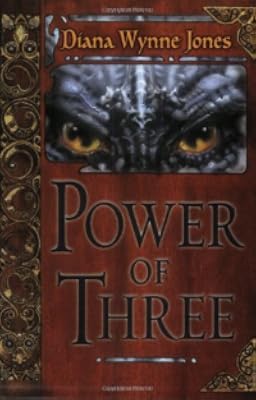
Power of Three
by Diana Wynne Jones
On This Page
Description
The curse on Orban spreads bad luck to the rest of the Otmounders, the Giants, and the Dorig until three Otmounder children are born with Gifts.Tags
Recommendations
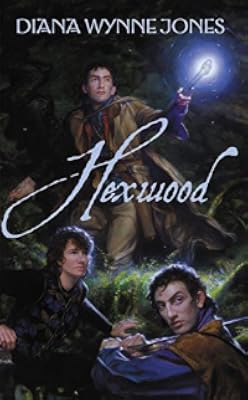









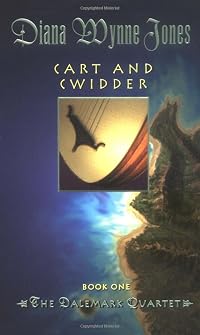
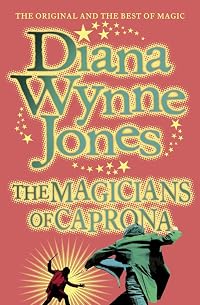
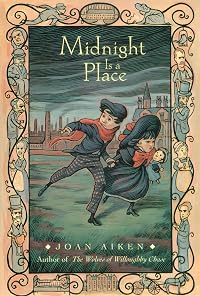
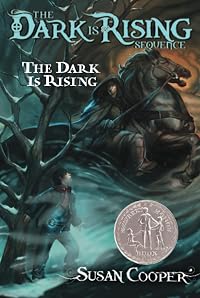
Member Recommendations



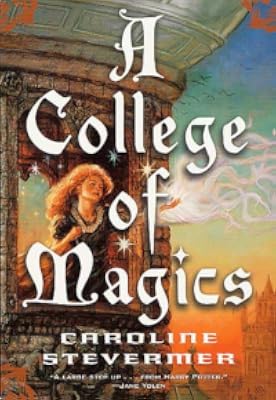
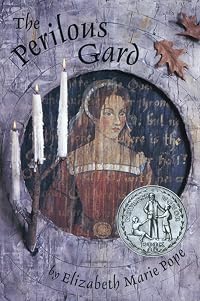
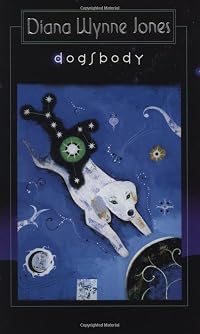
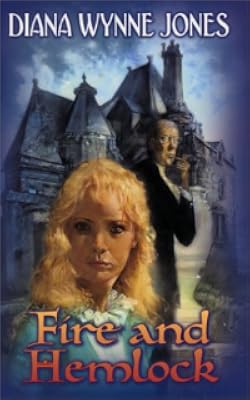
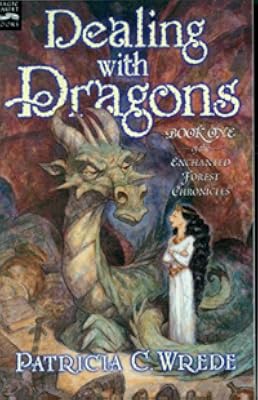
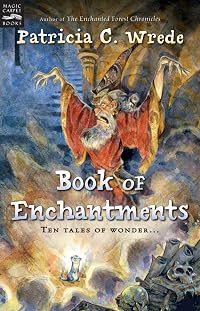
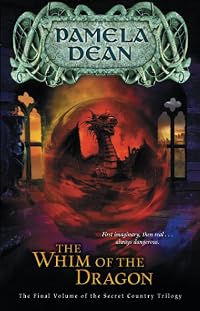
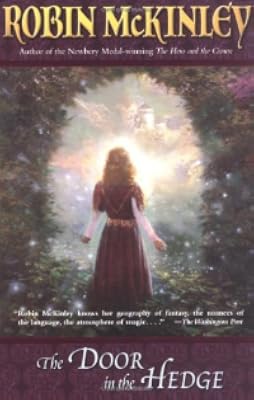
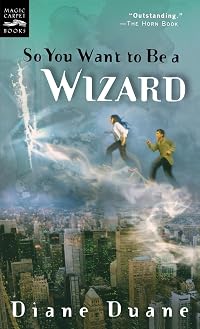
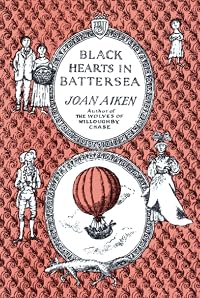
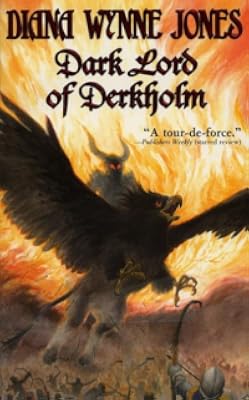
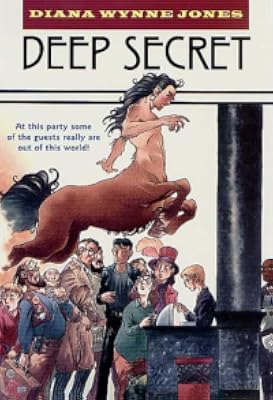
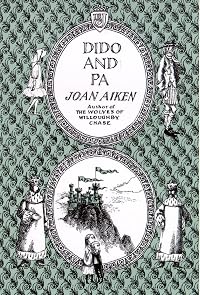
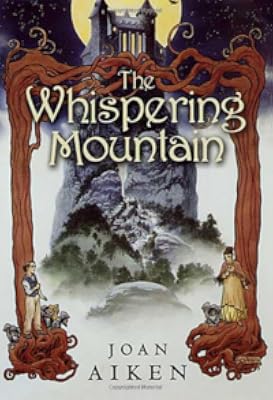
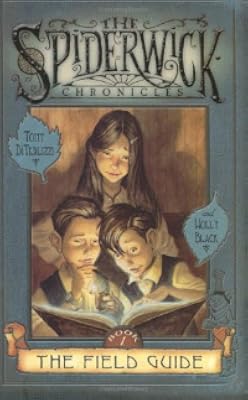
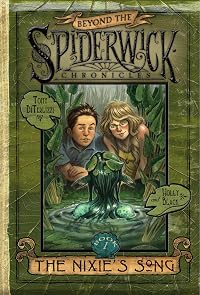
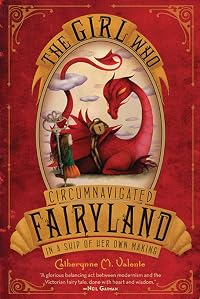
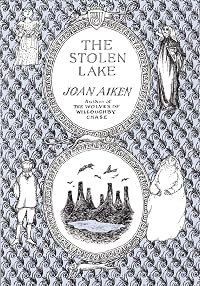
nessreader Ashton has Jones' dry wit and skill at characterisation. Both are humourous dark-ages-type quests.
Member Reviews
I can’t believe this Jones book isn’t as popular as Howl’s Moving Castle, because it is just as good and is easily one of my favorite fantasy reads this year. I came across it just by browsing books by Jones — I was in the mood for a decent young adult fantasy and I’m so glad I came across this gem.
The Power of Three is about Gair, the oldest son of of Chief Gest, a hero, and Adara the Wise. His siblings both have extraordinary gifts, so he thinks he’s ordinary, even though everyone else looks up to him and seeks counsel from him because of his wisdom. However, he gets stuck in a feud between his people and the Dorig, little knowing that he and his siblings are being drawn into a war that started when his parents were show more children.
This is my favorite kind of fantasy book. Everything is set up to seem a certain way, but then it turns on its head halfway through and you find out you’re reading a completely different book than what you thought you were. I absolutely loved that, it added an entirely new dimension to the story and the twist is really what makes this book so spectacular. Aside from that, however, the concepts at the heart of this novel are incredibly important; essentially, this story shows how prejudices and assumptions color our perceptions and serve to keep those prejudices and assumptions alive, even if there are facts and truths that are showing us something completely different. I love how brave Gair and his siblings are in exploring new things and being willing to accept new truths, mirroring the hope many of us have for our young people to have open minds and be brave enough to point out the flaws in the adults’ ways of thinking.
The worldbuilding is absolutely fantastic, but I expected nothing less from the queen of young adult fantasy, and the storytelling is just exquisite. I love how the internal struggle with Gair and his ordinariness is coupled with external struggles like Dorigs attacking or being on a dangerous hunt. I feel like Jones included everything about regular life in this book so that it feels perfectly complete and whole. There’s adventure, familial tension, internal struggle, and unlikely friendships, and it really is just perfect.
I highly recommend this book to any fantasy fans, especially those who love young adult fantasy. It’s wonderful.
Also posted at Purple People Readers. show less
The Power of Three is about Gair, the oldest son of of Chief Gest, a hero, and Adara the Wise. His siblings both have extraordinary gifts, so he thinks he’s ordinary, even though everyone else looks up to him and seeks counsel from him because of his wisdom. However, he gets stuck in a feud between his people and the Dorig, little knowing that he and his siblings are being drawn into a war that started when his parents were show more children.
This is my favorite kind of fantasy book. Everything is set up to seem a certain way, but then it turns on its head halfway through and you find out you’re reading a completely different book than what you thought you were. I absolutely loved that, it added an entirely new dimension to the story and the twist is really what makes this book so spectacular. Aside from that, however, the concepts at the heart of this novel are incredibly important; essentially, this story shows how prejudices and assumptions color our perceptions and serve to keep those prejudices and assumptions alive, even if there are facts and truths that are showing us something completely different. I love how brave Gair and his siblings are in exploring new things and being willing to accept new truths, mirroring the hope many of us have for our young people to have open minds and be brave enough to point out the flaws in the adults’ ways of thinking.
The worldbuilding is absolutely fantastic, but I expected nothing less from the queen of young adult fantasy, and the storytelling is just exquisite. I love how the internal struggle with Gair and his ordinariness is coupled with external struggles like Dorigs attacking or being on a dangerous hunt. I feel like Jones included everything about regular life in this book so that it feels perfectly complete and whole. There’s adventure, familial tension, internal struggle, and unlikely friendships, and it really is just perfect.
I highly recommend this book to any fantasy fans, especially those who love young adult fantasy. It’s wonderful.
Also posted at Purple People Readers. show less
DWJ is so, so, so good at emotional development and family dynamics. The only sour note was a minor but persistent thread of fatphobia. Brenda even gets development and a heroic arc of her own, but for some reason (I guess: being published almost 50 years ago) we can't have that without the narrative constantly making vicious little jabs about her every time I thought it had finally been dropped.
A little harder to get into than most Diana Wynne Jones books, but once you figure out all the names and happenings you're hooked.
This book did have a fair amount of one of the few problems I have with the author, she has issues writing fat characters. There are a fair number of sympathetic and likable fat characters in Diana's stories, but the way they are pysically described is quite critical and off putting to read sometimes.
This book did have a fair amount of one of the few problems I have with the author, she has issues writing fat characters. There are a fair number of sympathetic and likable fat characters in Diana's stories, but the way they are pysically described is quite critical and off putting to read sometimes.
There were a lot of interesting twists in this novel, but [Spoiler!!] I disliked that it starts off with the senseless bullying and death of one of the people of the marsh. These children are part of a people who struggle to survive in a shrinking ecosystem and cope with the adult prejudices of folk who are 'different'. The characterizations are quintessential DWJ (very good) but I could never quite overcome my dislike of the opening chapter.
Complex magical setting which is slow to unravel? Winsome and “untalented” boy protagonist? Allegorical plot solved via several unveilings of reality? There are not really any elements that separate The Power of Three from some of my absolute favorite Diana Wynne Jones novels (the Chrestomanci novels, among many others come immediately to mind). And with that in mind, it is really amazing how consistently enjoyable I find her work when The Power of Three shows how easily such disparate parts can fail to cohere.
For one, I find Gair’s world (and his personality) to be a bit on the generic side and thus what is intended as a slow burn tends toward instead aimlessness. That the nature of this magic in his world and the personality of show more Gair himself don’t particularly tie into the resolution of the central conflict result in me feeling like it’s all a little bit of useless set up. Also, as plot-twists-that-unveil-the-allegorical-meaning go, it’s a little transparent and straightforward. From such a frequently subversive writer, it’s almost didactically simple and unbearably cheesy that the resolution requires intervention from a third party (unnecessarily introduced about at around the two thirds mark).
I’m not sure how I might have received this as a child, but frankly, one of her few entries in which I see very limited appeal beyond its marketed audience.
*Also, this is one of the few times I find her treatment of gender actively suspicious. show less
For one, I find Gair’s world (and his personality) to be a bit on the generic side and thus what is intended as a slow burn tends toward instead aimlessness. That the nature of this magic in his world and the personality of show more Gair himself don’t particularly tie into the resolution of the central conflict result in me feeling like it’s all a little bit of useless set up. Also, as plot-twists-that-unveil-the-allegorical-meaning go, it’s a little transparent and straightforward. From such a frequently subversive writer, it’s almost didactically simple and unbearably cheesy that the resolution requires intervention from a third party (unnecessarily introduced about at around the two thirds mark).
I’m not sure how I might have received this as a child, but frankly, one of her few entries in which I see very limited appeal beyond its marketed audience.
*Also, this is one of the few times I find her treatment of gender actively suspicious. show less
This book by DWJ was surprisingly more complicated in terms of the characters' maturity's evolution process and provides the young reader with much to think about. It deals with differences in 'race' in a different but effective way, without touching on any sensitivities relating to 'colour'. In here, three types of 'race' are portrayed as initially having many differences at the onset of the story, when the main characters are still ignorant and still held on to the belief that the other races were nasty creatures, better off dead. The story continues to grow the main characters maturity levels by having them experience situations in which they have had to face the actual surprising reality that, in fact, the other races think the same show more of their own race, and that actually, all the races were all 'people' really, with ten fingers on two hands, ten toes on two feet.. the story told in this book, albeit still within the fantasy genre, was more serious and darker compared to most of DWJ's books, which, on the whole, read very similar to Enid Blyton books but with the magical aspect much more enhanced. Regardless of the serious notes in the book, i still enjoyed reading it, as i do with all DWJ's books, and i understood that children/young adults must, after all, learn these important things somehow, so why not in fantasy books, once in a while. show less
I originally reviewed this book on my blog - The Cosy Dragon. For more recent reviews by me, please hop over there.
There is a powerful curse at work on the moor. The giants, the people and the Dorig are all suffering from one ill-advised deed. Although the reader may think they know what to expect - they really don't. It is up to Gair, the ordinary son of a hero, to save the day.
The plot of this book builds up slowly. Although the reader will know from the beginning that things are not right, and where the curse has come from, it is not clear how things can be set right, or even if they can be.
There are a variety of characters which is nice, with the majority of focalisation through Gair. Children will find them likeable, and not too show more confronting. The ending is a bit of a chair edged one, but it's certainly not too scary!
I guess this book was a little disappointing for me. I thought I had never read it before, but after getting into it, I realised that it had. It meant that even with all of Gair's bad feelings, I knew what was going to happen, and I couldn't dread it properly.
This was a fast read for me, but no doubt will be a little more challenging for its target audience. It did read aloud well though, probably a mark of its author's craftmanship. It's a good book, just not for me any more. I somewhat regret buying this one, except that I am sure I will share it with my children eventually!
This book is for children. The storyline is simple, and emphasises the need to look after your friends, and also the importance of words. For a writer, words are all you have to get the message accross, so of course they are important! show less
There is a powerful curse at work on the moor. The giants, the people and the Dorig are all suffering from one ill-advised deed. Although the reader may think they know what to expect - they really don't. It is up to Gair, the ordinary son of a hero, to save the day.
The plot of this book builds up slowly. Although the reader will know from the beginning that things are not right, and where the curse has come from, it is not clear how things can be set right, or even if they can be.
There are a variety of characters which is nice, with the majority of focalisation through Gair. Children will find them likeable, and not too show more confronting. The ending is a bit of a chair edged one, but it's certainly not too scary!
I guess this book was a little disappointing for me. I thought I had never read it before, but after getting into it, I realised that it had. It meant that even with all of Gair's bad feelings, I knew what was going to happen, and I couldn't dread it properly.
This was a fast read for me, but no doubt will be a little more challenging for its target audience. It did read aloud well though, probably a mark of its author's craftmanship. It's a good book, just not for me any more. I somewhat regret buying this one, except that I am sure I will share it with my children eventually!
This book is for children. The storyline is simple, and emphasises the need to look after your friends, and also the importance of words. For a writer, words are all you have to get the message accross, so of course they are important! show less
Members
- Recently Added By
Lists

Favourite books by Diana Wynne Jones
35 works; 3 members

1970s
657 works; 23 members

COMFORT READS. ~ Feelgood fic
13 works; 1 member

Books Read in 2017
4,249 works; 130 members

Books Read in 2018
4,360 works; 110 members

Books Read in 2011
684 works; 19 members

Books With Numbers in the Title
308 works; 13 members

Main Character is aged 10-19
361 works; 6 members
Author Information

112+ Works 80,343 Members
Diana Wynne Jones was born in London on August 16, 1934. In 1953, she began school at St. Anne's College Oxford and attended lectures by J. R. R. Tolkien and C. S. Lewis. After graduation, she created plays for children that were performed at the London Arts Theatre. Her first book was published in 1973. She wrote over 40 books during her lifetime show more including Dark Lord of Derkholm, Earwig and the Witch, and the Chrestomanci series. She won numerous awards including the Guardian Award for Children's Books in 1977 for Charmed Life, the Boston Globe-Horn Book Award in 1984 for Archer's Goon, the Mythopeic Award in 1999, the Karl Edward Wagner Award in 1999, and the Life Achievement Award from the World Fantasy Organization in 2007. Her book Howl's Moving Castle was adapted into an animated film by director Hayao Miyazaki, and the film was nominated for an Academy Award for Best Animated Feature. She died from lung cancer on March 26, 2011 at the age of 76. (Bowker Author Biography) show less
Some Editions
Awards and Honors
Series
Belongs to Publisher Series
Magic Quest (9)
Work Relationships
Common Knowledge
- Original publication date
- 1976
- People/Characters
- Gest; Adara; Ayna; Gair; Ceri; Og (show all 15); Ondo; Scodo; Orban; Kasta; Hathil; Halla; Hafny; Gerald Masterfield; Brenda
- Important places
- Garholt; Otmound; The Moor
- Dedication
- For Kit and Jannie
- First words
- This is the story of the children of Adara--of Ayna and Ceri who both had Gifts, and of Gair, who thought he was ordinary.
- Last words
- (Click to show. Warning: May contain spoilers.)Mr. Masterfield would warn you off for trespassing--it is part of his agreement with the Dorig--and if you did happen to stumble across Garholt, the bees would give you a very unpleasant time.
Classifications
- Genres
- Fiction and Literature, Fantasy, Kids, Tween
- DDC/MDS
- 823.914 — Literature & rhetoric English & Old English literatures English fiction 1900- 1901-1999 1945-1999
- LCC
- PZ7 .J684 .P — Language and Literature Fiction and juvenile belles lettres Fiction and juvenile belles lettres Juvenile belles lettres
- BISAC
Statistics
- Members
- 1,047
- Popularity
- 24,594
- Reviews
- 17
- Rating
- (3.89)
- Languages
- English, German, Swedish
- Media
- Paper, Ebook
- ISBNs
- 18
- ASINs
- 6