
God Bless You, Dr. Kevorkian
by Kurt Vonnegut
On This Page
Description
From Slapstick's "Turkey Farm" to Slaughterhouse-Five's eternity in a Tralfamadorean zoo cage with Montana Wildhack, the question of the afterlife never left Kurt Vonnegut's mind. In God Bless You, Dr. Kevorkian, Vonnegut skips back and forth between life and the Afterlife as if the difference between them were rather slight. In thirty odd "interviews," Vonnegut trips down "the blue tunnel to the pearly gates" in the guise of a roving reporter for public radio, conducting interviews: with show more Salvatore Biagini, a retired construction worker who died of a heart attack while rescuing his schnauzer from a pit bull, with John Brown, still smoldering 140 years after his death by hanging, with William Shakespeare, who rubs Vonnegut the wrong way, and with socialist and labor leader Eugene Victor Debs, one of Vonnegut's personal heroes. What began as a series of ninety-second radio interludes for WNYC, New York City's public radio station, evolved into this provocative collection of musings about who and what we live for, and how much it all matters in the end. From the original portrait by his friend Jules Feiffer that graces the cover, to a final entry from Kilgore Trout, God Bless You, Dr. Kevorkian remains a joy. show lessTags
Recommendations


















Member Recommendations
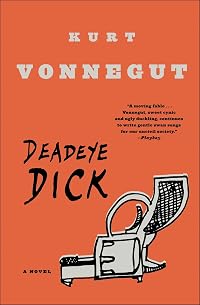
markusnenadovus Might as well check the ORIGINAL tale that inspired the title of this one.
Member Reviews
A fast and often brilliant novella from a master story-teller, GOD BLESS YOU, DR. KEVORKIAN unfolds in a series of vignettes. The subject matter is life, death, and what comes before and after each, delivered to the narrator -- Vonnegut himself -- by deceased historical figures. Like other Vonnegut work, this book is poignant, elegant, and bursting with wise humor. Vonnegut is never one to waste words, and his compactness here is more pronounced than usual, allowing for rapid-fire bursts of philosophy. Sometimes this compression works against the material, making interactions seem fleeting and occasionally negating their impact. Fortunately, these detractions occur infrequently, making GOD BLESS YOU, DR. KEVORKIAN a fast, excellent read.
This book, a measly 80 pages, is such a quick read (25 minutes for me) that it's hard to resist, especially as it's one of the late, great Kurt Vonnegut's last published works.
This book highlights what is so wonderful about Vonnegut's style: there's no pretense, no flash, no fanciness; just prose that's plain-spoken, clear, and remarkably incisive.
The 21 "mock interviews" contained herein use a variety of personalities -- living and dead, common and famous -- to astutely show the complexity of what Vonnegut called his "disgust with civilization." But rather than feeling bitter or resentful, it's a rather beautiful exposition on life and existence.
Surely worth reading over and over again.
This book highlights what is so wonderful about Vonnegut's style: there's no pretense, no flash, no fanciness; just prose that's plain-spoken, clear, and remarkably incisive.
The 21 "mock interviews" contained herein use a variety of personalities -- living and dead, common and famous -- to astutely show the complexity of what Vonnegut called his "disgust with civilization." But rather than feeling bitter or resentful, it's a rather beautiful exposition on life and existence.
Surely worth reading over and over again.
I recently re-watched You Don't Know Jack (2010), one of my favorite Al Pacino portrayals. It got me Googling about on Dr. Jack Kevorkian who hear appears as a sort of Virgil-like enabler of 'controlled NDEs' ("Kevorkian has just unstrapped me from the gurney after yet another controlled near-death experience.") allowing Vonnegut to interview dead people of Public Radio station WNYC from the "end of the blue tunnel of the Afterlife." interview with dead historical figures are witty and brief, such as this one about a personage he personally admired:
Also present are historical villains like a trite but remorseful Hitler who Vonnegut suggests deserves a statue and "James Earl Ray, confessed assassin of Martin Luther
King" spewing racism. I wonder how many complaints went into the formidable WNYC about these...
I actually like more -- and due to the longer length it appears he did, too -- the ones on fellow writers like Shakespeare:
Also, there is a lauding piece on Mary Wollstonecraft Shelley:
During what has been almost a year of interviewing completely dead people, whileshow more
only half dead myself, I asked Saint Peter again and again if I could meet a particular hero of mine. He is my
fellow Hoosier, the late Eugene Victor Debs of Terre Haute, Indiana. He was five times the Socialist Party's candidate for president back when this country still had a strong Socialist Party.
And then, guess what, yesterday afternoon none other than Eugene Victor Debs, organizer and leader of the first successful strike against a major American industry, the railroads, was waiting for me at the far end of the blue tunnel. We hadn't met before. This great American died in 1926 at the age of seventy-one when I was only four years old.
I thanked him for words of his, which I quote again and again in lectures: "As long as there is a lower class, I am in it. As long as there is a criminal element, I am of it. As long as there is a soul in prison, I am not free."
He asked me how those words were received here on Earth in America nowadays. I said they were ridiculed. "People snicker and snort," I said. He asked what our fastest growing industry was. "The building of prisons," I said.
"What a shame," he said. And then he asked me how the Sermon on the Mount was going over these days.
And then he spread his wings and flew away.
Also present are historical villains like a trite but remorseful Hitler who Vonnegut suggests deserves a statue and "James Earl Ray, confessed assassin of Martin Luther
King" spewing racism. I wonder how many complaints went into the formidable WNYC about these...
I actually like more -- and due to the longer length it appears he did, too -- the ones on fellow writers like Shakespeare:
We did not hit it off. He said the dialect I spoke was the ugliest English he had ever heard, "fit to split the ears of groundlings."
...I congratulated him on all the Oscars the movie
Shakespeare in Love had won...
He said of the Oscars, and of the movie itself, "A tale told by an idiot, full of sound and fury, signifying nothing."
Also, there is a lauding piece on Mary Wollstonecraft Shelley:
...author, again before she was twenty, of the most prescient and influential scienceand similar praise for Isaac Asimov. Vonnegut uses Kevorkian's then contemporary murder conviction as the excuse to end this series, done about a decode before his own death. show less
fiction novel of all times...
It's an excellent collection of fictional interviews that end as soon as they begin. Vonnegut's trademark humor seeps through every word and it's a very fun, although short, read. Can't recommend enough, especially if you're a Humanist (oops... humanist).
Vonnegut becomes a "reporter on the afterlife" and works with Dr. Kevorkiaan to have "controlled near death experiences." He straps himself to a gurney and lets Dr. Kevorkian work his magic in order to go to the pearly gates and interview people. While in the "blue tunnel" Vonnegut befriends Saint Peter and gets to interview dozens of people such as: John Brown, Hitler, Eugene Debs, William Shakespeare, Isaac Asimov, Sir Isaac Newton, and many more. The interviews are quite short and humorous ranging from one to four pages in length. Each story imparts some sort of moral or irreverent value and shows what a genius Kurt Vonnegut really is. It's an insanely quick read and showcases Vonnegut's zany and brilliant writing style.
My love for Kurt Vonnegut is unstinting. The way he managed to make such cutting, insightful observations into the human state with such a minimum of words will never cease to amaze me. Read this book if you want something that makes you think.
This is the third, and so far, best Vonnegut book I have read. I genuinely enjoyed many of the chapters and found this a quick, fun read. The only one I did not like was the Hitler one. Not because it was Hitler, but how the author portrayed him. Would have been interesting to see more of these sketches from the author, as this is quite a slim read.
Members
- Recently Added By
Lists

Short and Sweet
246 works; 24 members

Books Read in 2016
4,666 works; 199 members
Author Information

296+ Works 201,778 Members
The appeal of Kurt Vonnegut, especially to bright younger readers of the past few decades, may be attributed partly to the fact that he is one of the few writers who have successfully straddled the imaginary line between science-fiction/fantasy and "real literature." He was born in Indianapolis and attended Cornell University, but his college show more education was interrupted by World War II. Captured during the Battle of the Bulge and imprisoned in Dresden, he received a Purple Heart for what he calls a "ludicrously negligible wound." After the war he returned to Cornell and then earned his M.A. at the University of Chicago.He worked as a police reporter and in public relations before placing several short stories in the popular magazines and beginning his career as a novelist. His first novel, Player Piano (1952), is a highly credible account of a future mechanistic society in which people count for little and machines for much. The Sirens of Titan (1959), is the story of a playboy whisked off to Mars and outer space in order to learn some humbling lessons about Earth's modest function in the total scheme of things. Mother Night (1962) satirizes the Nazi mentality in its narrative about an American writer who broadcasts propaganda in Germany during the war as an Allied agent. Cat's Cradle (1963) makes use of some of Vonnegut's experiences in General Electric laboratories in its story about the discovery of a special kind of ice that destroys the world. God Bless You, Mr. Rosewater (1965) satirizes a benevolent foundation set up to foster the salvation of the world through love, an endeavor with, of course, disastrous results. Slaughterhouse-Five; or The Children's Crusade (1969) is the book that marked a turning point in Vonnegut's career. Based on his experiences in Dresden, it is the story of another Vonnegut surrogate named Billy Pilgrim who travels back and forth in time and becomes a kind of modern-day Everyman. The novel was something of a cult book during the Vietnam era for its antiwar sentiments. Breakfast of Champions (1973), the story of a Pontiac dealer who goes crazy after reading a science fiction novel by "Kilgore Trout," received generally unfavorable reviews but was a commercial success. Slapstick (1976), dedicated to the memory of Laurel and Hardy, is the somewhat wacky memoir of a 100-year-old ex-president who thinks he can solve society's problems by giving everyone a new middle name. In addition to his fiction, Vonnegut has published nonfiction on social problems and other topics, some of which is collected in Wampeters, Foma and Granfalloons (1974). He died from head injuries sustained in a fall on April 11, 2007. (Bowker Author Biography) show less
Some Editions
Common Knowledge
- Canonical title
- God Bless You, Dr. Kevorkian
- Original title
- God Bless You, Dr. Kevorkian
- Original publication date
- 1999
- People/Characters
- Kurt Vonnegut; Jack Kevorkian; Adolf Hitler; Kilgore Trout; William Shakespeare; Isaac Asimov (show all 11); John Brown, abolitionist; Clarence Darrow; Simon Peter; Isaac Newton; James Earl Ray
- Important places
- Heaven
- First words
- My first near-death experience was an accident, a botched anesthesia during a triple bypass.
- Last words
- (Click to show. Warning: May contain spoilers.)And then he appended a famous statement by the similarly prolific French writer Jean-Paul Sartre: "Hell is other people."
- Blurbers
- Irving, John
- Original language
- English
Classifications
Statistics
- Members
- 1,912
- Popularity
- 11,234
- Reviews
- 36
- Rating
- (3.67)
- Languages
- 7 — Czech, Dutch, English, German, Hungarian, Italian, Portuguese
- Media
- Paper, Audiobook, Ebook
- ISBNs
- 17
- ASINs
- 10