On This Page
Description
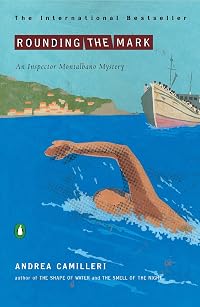
While swimming along the Sicilian shore, Inspector Montalbano discovers a corpse. His pursuit of the cause of death intersects with the inquiry into a hit-and-run accident that claimed the life of a young boy who may have been victimized by human traffickers. The buying and selling of immigrant children, for slave labor, sex, and as a source of illegal organ transplants, is part of the evil underside of the opening of Europe's borders. That, combined with frustration with his department's show more repressive handling of security for the G-8 summit in Genoa and the corruption among his superiors and the politicians behind them, makes setting anything right seem like an exercise in futility. Montalbano alternates between despair and steely resolve. When he realizes that he may have inadvertently aided the boy's victimizers, his internal turmoil intensifies. show lessTags
Recommendations






























Member Reviews
First Line: Stinking, treacherous night.
Salvo Montalbano is going through a rough patch at work. He wants to quit, even though he loves his job. One night he can't sleep and since he lives right on the beach, he goes for a swim. Unfortunately he bumps into a dead body while he's out there and has to haul it back to shore. In his quest for the cause of death, Montalbano realizes that this death coincides with the hit-and-run death of a young boy who may have been victimized by human traffickers. When Montalbano realizes that he may have inadvertently helped the boy's abusers, he is sickened and even more determined to get to the bottom of this mystery.
This (and the entire series) is far from a run-of-the-mill police procedural. There show more aren't many authors like Camilleri who can turn a creepy scene like finding a badly decomposed body at sea into a scene that can make a reader laugh out loud. (I refuse to tell you how. That should be part of your fun.)
The ingredients that make this series so special are Camilleri's gallows humor and his cast of characters-- Montalbano's "soldiers". They are a wonderful bunch of very different personalities, and even though they may drive each other to distraction on a regular basis, I don't think they'd want to work with anyone else-- especially when they have a boss who allows them to tell him when he's being the southbound end of a northbound horse.
The characterizations are brilliant; there is such a sense of Sicily as you read; the humor is often laugh-out-loud funny; and there are the unexpected jewels. Rounding the Mark had one of those gems: the grouchy Montalbano being genuinely heartbroken at being an unknowing accomplice in that young boy's death can bring a tear to the eye.
In roughly 250 pages, Camilleri can deliver a masterful piece of work that many other authors would take 400 pages to accomplish. Each book is a gem, and I intend to savor every single one.
For any of you who may be hesitant to read a translated book, don't be. Sartarelli has won awards for his translations, and those awards are deserved. He manages to imply dialects in a way that isn't confusing, and for anyone who needs a little extra information, the back of each book contains a few pages of notes that deal with any historical references, language, food, and previous books in the series.
If at all possible, this is one mystery series that you should sample. If I had four thumbs, they'd all be pointing at the sky. (I'm sure Camilleri would have something pithy to say about that....) show less
Salvo Montalbano is going through a rough patch at work. He wants to quit, even though he loves his job. One night he can't sleep and since he lives right on the beach, he goes for a swim. Unfortunately he bumps into a dead body while he's out there and has to haul it back to shore. In his quest for the cause of death, Montalbano realizes that this death coincides with the hit-and-run death of a young boy who may have been victimized by human traffickers. When Montalbano realizes that he may have inadvertently helped the boy's abusers, he is sickened and even more determined to get to the bottom of this mystery.
This (and the entire series) is far from a run-of-the-mill police procedural. There show more aren't many authors like Camilleri who can turn a creepy scene like finding a badly decomposed body at sea into a scene that can make a reader laugh out loud. (I refuse to tell you how. That should be part of your fun.)
The ingredients that make this series so special are Camilleri's gallows humor and his cast of characters-- Montalbano's "soldiers". They are a wonderful bunch of very different personalities, and even though they may drive each other to distraction on a regular basis, I don't think they'd want to work with anyone else-- especially when they have a boss who allows them to tell him when he's being the southbound end of a northbound horse.
The characterizations are brilliant; there is such a sense of Sicily as you read; the humor is often laugh-out-loud funny; and there are the unexpected jewels. Rounding the Mark had one of those gems: the grouchy Montalbano being genuinely heartbroken at being an unknowing accomplice in that young boy's death can bring a tear to the eye.
In roughly 250 pages, Camilleri can deliver a masterful piece of work that many other authors would take 400 pages to accomplish. Each book is a gem, and I intend to savor every single one.
For any of you who may be hesitant to read a translated book, don't be. Sartarelli has won awards for his translations, and those awards are deserved. He manages to imply dialects in a way that isn't confusing, and for anyone who needs a little extra information, the back of each book contains a few pages of notes that deal with any historical references, language, food, and previous books in the series.
If at all possible, this is one mystery series that you should sample. If I had four thumbs, they'd all be pointing at the sky. (I'm sure Camilleri would have something pithy to say about that....) show less
The Book Report: Montalbano, over fifty and not liking it One Little Bit, decides to take an early-morning, out-of-season swim...and runs smack-dab into a dead guy who's clearly been in the water for a long time. He improvises a tow rope out of his swimsuit for the poor bastard, and begins a long, tiring naked swim in the cold water to bring him to shore. He's exhausted and feeling very lightheaded after his exertions and collapses on the sand...where he is attacked and vilified by a crazy old couple from the North who're renting a neighbor's house, photographed au naturel by the paparazzi they've summoned, and generally made a figure of fun...fifty yards from his own home. Thus begins Montalbano's misadventure into the seamiest-yet show more part of Sicily's underbelly. The dead guy proves to be a murder victim, identified in an extremely surprising way by an extremely unexpected source; Montalbano's interference into an illegal-immigrant bust results in the death of a young child; and in the end, both are revealed to be major pieces in a puzzle that bedevils Italy, with its immense amounts of coastline and huge population of coastal islands, most among European nations: How can you prevent a flood-tide of economic migrants from sheltering the vilest, most despicable members of our species from profiting off the misery of their masses? True to life itself, the question is posed, the answer left unknown. But Montalbano, now, he solves his piece of the puzzle, and a few...not many, just a few...of the scumbags meet a just end.
My Review: Well, in the sixth book of the series, there is a bit of sagging to report: A few promising threads are left dangling here, especially the whole North-vs-South cultural divide so present in every facet of Italian life. Camilleri fails to exploit some delightful possibilities, and I think that it's inevitable to do so in a long-for-him book crammed with major plot points and huge moral questions. Part of the charm of these books is their conciseness: seldom over 230pp in translation, they are models of taut storytelling. Then along comes a story like this one, replete with opportunities to explore Italy and Italianness, and it's too much for the format of the series. It's unwise to change formats mid-series, so some things will fall off the radar a little too quickly.
Well, you still give the book four stars...what's that about, fanboy? asks a sarcastic member of the public. Not just about being a fanboy, though I admit that I am just that. It's about the layers of well-executed prose, conveying piece by piece the existence of and resolution to a problem previously hidden, in concert with a storyteller's greatest gift or lack: The ability to create, in a few deft verbal strokes, a sense of a character as a real person. The ability to evoke in the reader a new response to an old situation. The ability to bring a place to life using nothing more than a few lighting effects and your own sense of smell.
These qualities, mes vieux, are amply on display in this book and deployed in service of a story that, even though it's resolved, isn't in any way over. And that should keep you awake nights. show less
My Review: Well, in the sixth book of the series, there is a bit of sagging to report: A few promising threads are left dangling here, especially the whole North-vs-South cultural divide so present in every facet of Italian life. Camilleri fails to exploit some delightful possibilities, and I think that it's inevitable to do so in a long-for-him book crammed with major plot points and huge moral questions. Part of the charm of these books is their conciseness: seldom over 230pp in translation, they are models of taut storytelling. Then along comes a story like this one, replete with opportunities to explore Italy and Italianness, and it's too much for the format of the series. It's unwise to change formats mid-series, so some things will fall off the radar a little too quickly.
Well, you still give the book four stars...what's that about, fanboy? asks a sarcastic member of the public. Not just about being a fanboy, though I admit that I am just that. It's about the layers of well-executed prose, conveying piece by piece the existence of and resolution to a problem previously hidden, in concert with a storyteller's greatest gift or lack: The ability to create, in a few deft verbal strokes, a sense of a character as a real person. The ability to evoke in the reader a new response to an old situation. The ability to bring a place to life using nothing more than a few lighting effects and your own sense of smell.
These qualities, mes vieux, are amply on display in this book and deployed in service of a story that, even though it's resolved, isn't in any way over. And that should keep you awake nights. show less
Yet again, Andrea Camilleri hits the bullseye with Inspector Montalbano. In this case, poor Montalbano is down in the dumps, determined to resign as he no longer respects the Italian justice system. But chance encounters draw him into two mysteries: a body floating off his beloved beach and a small refugee boy who wants to run away.
Featuring his trademark humor, Camilleri weaves these two strands together as Montalbano's sense of justice sweeps away his doldrums. As usual, the book is full of humor from the way Catarella mangles logic, language and names to Montalbano's obsession with a really good lunch. Although I cannot read Cavalleri in the original (too much dialect), Stephen Sartarelli's translation captures both the humor and show more the horror of the situations Montalbano finds himself in.
Want to escape the pandemic? Go to beautiful Sicily with Camilleri and his Inspector Montalbano. show less
Featuring his trademark humor, Camilleri weaves these two strands together as Montalbano's sense of justice sweeps away his doldrums. As usual, the book is full of humor from the way Catarella mangles logic, language and names to Montalbano's obsession with a really good lunch. Although I cannot read Cavalleri in the original (too much dialect), Stephen Sartarelli's translation captures both the humor and show more the horror of the situations Montalbano finds himself in.
Want to escape the pandemic? Go to beautiful Sicily with Camilleri and his Inspector Montalbano. show less
Once again I found myself flying through an Inspector Montalbano mystery. Camilleri manages to get the perfect blend of mystery, social commentary and personal life in these books. I love the way Montalbano eats & the loving care Camilleri puts into the descriptions of the food! But even better is that in each of these mysteries, I learn something about Sicily & Italy in general with the help of the marvellous endnotes by translator Stephen Sartarelli. I look forward to continuing this series.
In this entry, Camilleri tackles an issue that is upsetting to both Montalbano & myself: illegal smuggling of young children into the country. While some of these children are being reunited with one or both parents already present illegally in show more Italy, most of them are sadly brought over for less savory reasons. Montalbano gets involved with this situation when he helps retrieve a young boy whom he thinks is running away from his mother. A day or two later, the boy is found dead. Montalbano feels compelled to investigate even though it happened outside his jurisdiction. show less
In this entry, Camilleri tackles an issue that is upsetting to both Montalbano & myself: illegal smuggling of young children into the country. While some of these children are being reunited with one or both parents already present illegally in show more Italy, most of them are sadly brought over for less savory reasons. Montalbano gets involved with this situation when he helps retrieve a young boy whom he thinks is running away from his mother. A day or two later, the boy is found dead. Montalbano feels compelled to investigate even though it happened outside his jurisdiction. show less
In this seventh book in the Inspector Montalbano series, the Sicilian Inspector has become disillusioned with his job, and suspicious of the ethics of those he works for. He is worried that he is past his best, and seriously considers resigning. So his mood is not improved when he is out for an early morning swim one day, and suddenly finds himself sharing the sea with the corpse of a man who has clearly been dead for some time. Trying to discover the identity of the deceased proves an arduous task.
Montalbano also finds himself getting involved in the plight of a young immigrant boy, which leads him into the murky world of illegal immigrant trafficking, and putting his plans for resignation on hold.
As in the previous books in this show more extremely entertaining series, the Salvo Montalbano is grumpy, sarcastic and sometimes just plain rude, but still manages to endear himself to the reader, with his strong morals and eagerness to do the right thing (and love of good food!). The usual supporting cast are all in evidence, from the steadfast Fazio, to the showy (and now married with a child on the way) Augello, and the bumbling, but frequently hilarious Catarella. The book is filled with the series' trademark mouthwatering descriptions of Montalbano's beloved local cuisine, and the Sicilian atmosphere almost leaps off the page.
This book however, is somewhat darker in tone than those which precede it. Questions are raised not only about Montalbano's ability to do his job, but also whether his health is all it should be. The nature of the enquiry - into the illegal trafficking of immigrants, and specifically children - takes the reader into an uncomfortable area. None of this is a critcism however; this series tends to get better with every book, and this is possibly my favourite so far.
An excellent read, but I would urge anyone wanting to read any of the Montalbano series, to start at the first book and read through them in order. show less
Montalbano also finds himself getting involved in the plight of a young immigrant boy, which leads him into the murky world of illegal immigrant trafficking, and putting his plans for resignation on hold.
As in the previous books in this show more extremely entertaining series, the Salvo Montalbano is grumpy, sarcastic and sometimes just plain rude, but still manages to endear himself to the reader, with his strong morals and eagerness to do the right thing (and love of good food!). The usual supporting cast are all in evidence, from the steadfast Fazio, to the showy (and now married with a child on the way) Augello, and the bumbling, but frequently hilarious Catarella. The book is filled with the series' trademark mouthwatering descriptions of Montalbano's beloved local cuisine, and the Sicilian atmosphere almost leaps off the page.
This book however, is somewhat darker in tone than those which precede it. Questions are raised not only about Montalbano's ability to do his job, but also whether his health is all it should be. The nature of the enquiry - into the illegal trafficking of immigrants, and specifically children - takes the reader into an uncomfortable area. None of this is a critcism however; this series tends to get better with every book, and this is possibly my favourite so far.
An excellent read, but I would urge anyone wanting to read any of the Montalbano series, to start at the first book and read through them in order. show less
Of course, this book begins with a corpse. It's swimming this time, and turns out to have something in with a little boy running away from a boatload of refugees that have landed on Sicily's shores. Camilleri uses this novel to highlight the tragic business of human trafficking in the Mediterranean, and is, in my opinion, the most engaging and touching Montalbano novel.
7th in the Inspector Montalbano series.
Just after the G8 meeting in Genoa, where the right-wing government of Berlusconi has at a minimum countenanced unprovoked and unjustified attacks by police on protesters, Montalbanois filled with disgust at what Italy has become in general and how the Genoan police have betrayed their mandate to serve and protect the people in particular. He is not sure whether or not he wants to continue in his profession; he seriously considers resigning.
In the midst of this angst, taking his usual swim, he accidentally and literally bumps into a corpse. (This scene deserves mention in that it is absolutely hilarious, a wonderful example of Camilleri’s wit and sense of the ridiculous that so enlivens these show more books.) Examination of the body reveals that while the man died by drowning, he definitely had help in his passing.
In a separate and seemingly unrelated incident, a boat filled with illegal immigrants from Africa is rounded up by the Italian Coast Guard and herded into Vigáta. A young boy escapes, runs down the dock, eluding pursuers, and hides. Montalbano, thinking that the boy is frightened and wanting to restore him to his mother, manages to quietly talk the boy into coming out of hiding and returning with him. But shortly after, the boy is killed in on the road in what is clearly not an accident. Much disturbed, Montalbano tries to solve the case of the murdered man on the one hand, and continues to puzzle over and mourn the death of the young boy on the other.
This is the context for what is one of the best installments in this utterly superb series set in Sicily. All of Camilleri’s great strengths are here: taut writing, authenticity, excellent dialogue lovingly preserved by Sartarelli’s translation, and both recurring and non-recurring sets of very strong, believable characters. In addition, this is one of Camilleri’s more disturbing plots, addressing as it does the trafficking in illegal aliens, especially young children, for utterly cold-blooded purposes. Camilleri knows how to drive a plot, and this book is no exception, racing along to a highly dramatic denouement.
Highly recommended. show less
Just after the G8 meeting in Genoa, where the right-wing government of Berlusconi has at a minimum countenanced unprovoked and unjustified attacks by police on protesters, Montalbanois filled with disgust at what Italy has become in general and how the Genoan police have betrayed their mandate to serve and protect the people in particular. He is not sure whether or not he wants to continue in his profession; he seriously considers resigning.
In the midst of this angst, taking his usual swim, he accidentally and literally bumps into a corpse. (This scene deserves mention in that it is absolutely hilarious, a wonderful example of Camilleri’s wit and sense of the ridiculous that so enlivens these show more books.) Examination of the body reveals that while the man died by drowning, he definitely had help in his passing.
In a separate and seemingly unrelated incident, a boat filled with illegal immigrants from Africa is rounded up by the Italian Coast Guard and herded into Vigáta. A young boy escapes, runs down the dock, eluding pursuers, and hides. Montalbano, thinking that the boy is frightened and wanting to restore him to his mother, manages to quietly talk the boy into coming out of hiding and returning with him. But shortly after, the boy is killed in on the road in what is clearly not an accident. Much disturbed, Montalbano tries to solve the case of the murdered man on the one hand, and continues to puzzle over and mourn the death of the young boy on the other.
This is the context for what is one of the best installments in this utterly superb series set in Sicily. All of Camilleri’s great strengths are here: taut writing, authenticity, excellent dialogue lovingly preserved by Sartarelli’s translation, and both recurring and non-recurring sets of very strong, believable characters. In addition, this is one of Camilleri’s more disturbing plots, addressing as it does the trafficking in illegal aliens, especially young children, for utterly cold-blooded purposes. Camilleri knows how to drive a plot, and this book is no exception, racing along to a highly dramatic denouement.
Highly recommended. show less
Members
- Recently Added By
Lists

Italian Literature
558 works; 43 members
Author Information

425+ Works 42,024 Members
Andrea Camilleri lives in Italy. Andrea Camilleri was born in Porto Empedocle, Sicily on September 6, 1925. He began his studies at Faculty of Literature in 1944 but never finished. He started to publish poems and short stories. He studied stage and film direction at the Silvio D'Amico Academy of Dramatic Arts from 1948 to 1950 and soon began work show more as a director and screen writer. Andrea Camilleri worked on several TV productions such as Inspector Maigret wirh Gino Cervi. In 1971 he returned to the Academy of Dramatic Arts holding the chair of Movie Direction and keeping it for 20 years. In 1978 he wrote his first novel - The Way Things Go which was followed by A Thread of Smoke in 1980. In 1992 he published The Hunting Season which turned out to be a best seller. In 1994 Andrea Camilleri published the first in a long series of novels - The Shape of Water which features the character Inspector Montalbano - a ficticious Sicilian detective in the police force of Vigata, an imaginary Sicilian town. The TV adaption of this book took off in popularity and Andrea Camilleri's home town was renamed Porto Empedocle Vigata. In 1998 he won the Nino Mortoglio International Book Award. He received an honorary degree from the University of Pisa in 2005. Camilleri has worked as a television and theater director, as well as a screenwriter. In 1978 he wrote his first novel, Il Corso delle Cose. The Montalbano series, featuring the Sicilian detective Inspector Montalbano, is Camilleri's most famous work of fiction, and it has been adapted into a television series. Camilleri had written a few historical novels when, in 1994, he wrote The Shape of Water, the first book starring a Sicilian detective based in the fictional town of Vigata. Camilleri won the Nino Martoglio International Book Award in 1998. He is considered to be one of Italy's greatest contemporary writers. Andrea Camilleri passed away on July 17, 2019 at the age of 93. (Bowker Author Biography) show less
Some Editions
Series

Belongs to Publisher Series
Common Knowledge
- Canonical title
- Rounding the Mark
- Original title
- Il giro di boa
- Original publication date
- 2003; 2006 (English: Sartarelli) (English: Sartarelli)
- People/Characters
- Salvo Montalbano; Mimi Augello; Livia; Catarella; Fazio; Gallo (show all 7); Ingrid
- Important places
- Vigàta, Sicilia, Italia
- First words
- Stinking, treacherous night.
Nuttata fitusa,’nfami, tutta un arramazzarsi, un votati e rivotati, un addrummisciti e un arrisbigliati, un susiti e un curcati. - Quotations
- [...] la sira avanti aviva avuto lo stomaco accussì stritto che non ci sarebbe passato manco un filo d’erba. Si era trattato dei pinsèri nìvuri che l’avevano assugliato doppo avere sentito una notizia del telegiornale... (show all) nazionale. «All’annigatu, petri di ’ncoddru» era il detto popolare che veniva esclamato quando una insopportabile serie di disgrazie s’abbatteva su qualche sbinturato. E per lui, che già da qualche mese nuotava alla disperata in mezzo a un mare in timpesta, e si sentiva a tratti perso come un annegato, quella notizia era stata uguale a una vera e propria pitrata tiratagli addosso, anzi una pitrata che l’aviva pigliato preciso ’n testa, tramortendolo e facendogli perdere le ultime, debolissime forze.
Con un’ariata assolutamente indifferente, la giornalista del tg aveva detto che la procura di Genova, in merito all’irruzione della polizia alla scuola Diaz nel corso del G8, si era fatta pirsuasa che le due bombe molotov, trovate nella scuola, erano state portate lì dagli stessi poliziotti per giustificare l’irruzione. Questo faceva seguito – aveva continuato la giornalista – alla scoperta che l’agente il quale aveva dichiarato di essere stato vittima di un tentativo di accoltellamento da parte di un no-global, sempre nel corso di quell’irruzione, aveva in realtà mentito: il taglio alla divisa se l’era fatto lui stesso per dimostrare la pericolosità di quei ragazzi che invece, a quanto si andava via via svelando, nella scuola Diaz stavano pacificamente dormendo. Ascutata la notizia, per una mezzorata Montalbano era restato assittato sulla poltrona davanti al televisore, privo della capacità di pinsari, scosso da un misto di raggia e di vrigogna, assammarato di sudore. Non aveva manco trovato la forza di susirisi per rispondere al telefono che stette a squillare a longo. Bastava ragionare tanticchia supra quelle notizie che venivano date col contagocce e con governativa osservanza dalla stampa e dalla televisione per farsi preciso concetto: i suoi compagni e colleghi, a Genova, avevano compiuto un illegale atto di violenza alla scordatina, una specie di vendetta fatta a friddo e per di più fabbricando prove false. Cose che facevano tornare a mente episodi seppelluti della polizia fascista o di quella di Scelba. - Last words
- (Click to show. Warning: May contain spoilers.)'Come on, for Chrissakes, step on it! Can't you see the Chief's not right in the head?'
(trans. Sartarelli, 2006) - Original language
- Italienisch; Italiano
Classifications
- Genres
- Fiction and Literature, Mystery
- DDC/MDS
- 853.914 — Literature & rhetoric Italian, Romanian & related literatures Italian fiction 1900- 20th Century 1945-1999
- LCC
- PQ4863 .A3894 .G36813 — Language and Literature French, Italian, Spanish and Portuguese literatures Italian literature Individual authors, 1961-2000
- BISAC
Statistics
- Members
- 1,422
- Popularity
- 16,634
- Reviews
- 46
- Rating
- (3.81)
- Languages
- 12 — Catalan, Danish, Dutch, English, Finnish, French, German, Greek, Italian, Polish, Portuguese, Spanish
- Media
- Paper, Audiobook, Ebook
- ISBNs
- 58
- UPCs
- 1
- ASINs
- 17