On This Page
Description
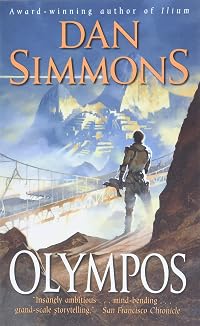
Beneath the gaze of the gods, the mighty armies of Greece and Troy met in fierce and glorious combat, scrupulously following the text set forth in Homer's timeless narrative. But that was before twenty-first-century scholar Thomas Hockenberry stirred the bloody brew, causing an enraged Achilles to join forces with his archenemy Hector and turn his murderous wrath on Zeus and the entire pantheon of divine manipulators; before the swift and terrible mechanical creatures that catered for show more centuries to the pitiful idle remnants of Earth's human race began massing in the millions, to exterminate rather than serve. And now all bets are off. show lessTags
Recommendations

Member Reviews
I wish there was less; I wish there was more
”Helen of Troy awakes just before dawn to the sound of air raid sirens.” This is a good first sentence, you have to admit. It’s been eight months since the war between Greeks, Trojans, their moravec allies from outer space and gods of Olympus had started.
This sequel is just as ambitious as Ilium, and just as packed with literary references, ideas, storylines, details. I got an explanation for some things from the first book. Some things still made me want to facepalm and say “but why, but why, what was this?”. There were also awesome world building details that were only there so that the author could describe them and have fun doing that.
I enjoyed following the plot for almost 900 show more pages, but I was not always immersed in the storytelling. There was something there that prevented me from thinking “I am reading such a good book!”, as when there is a tiny stone in your shoe that you can’t get out and can’t enjoy your walk.
I really liked following the Greeks and the Trojans freed from the plot of the Iliad. Note to self: never trust Helen of Troy; she’s been through hell and will not hesitate to put you through hell as well, if it suits her needs. I wish there was more of that, with more moravecs. Humans on Earth, despite all the adventures, danger, tragedy and sacrifice the author put them through, were very boring to me and I wish that story line had been cut in half. There was also a very disturbing and problematic scene that took place on Earth – the book acknowledged it as such – yet there was no legitimate reason for it to be there, except for a number of supposedly titillating pages. They were not. Gaah.
And just like in the first book, the female characters were awesome and badass when they had page time. Yet they were always described in male-gazey way: breasts and lips and nipples and thighs and buttocks all over the place. So weird, and there seemed to be more of that here than in Ilium. It pulled me out of the book every time.
Overall, this book needed an editor brave enough to tell a famous author to cut this, shorten that, please.
The ending, or rather, the endings, since all the plot lines had to be tied neatly with a bow – were satisfying.
I am a bit grumpy about giving this 3.5 stars, but I am nonetheless pleased with this particular reading project. When would I have decided to re-read the Iliad otherwise? (Still on it, still on it!)
Fun quotes:
”Oh, no,” said Mahnmut, ”you’ve been reading that French person again.”
”Proust,” said Orphu. ”That French person’s name is Proust.”
”There’s a forcefield here, son of Peleus.”
”Achilles is considering the possibility that he made a mistake in manoeuvring Zeus into banishing him to the deepest, darkest pit in the hell-world of Tartarus, even though it had seemed like a good idea at the time.” show less
”Helen of Troy awakes just before dawn to the sound of air raid sirens.” This is a good first sentence, you have to admit. It’s been eight months since the war between Greeks, Trojans, their moravec allies from outer space and gods of Olympus had started.
This sequel is just as ambitious as Ilium, and just as packed with literary references, ideas, storylines, details. I got an explanation for some things from the first book. Some things still made me want to facepalm and say “but why, but why, what was this?”. There were also awesome world building details that were only there so that the author could describe them and have fun doing that.
I enjoyed following the plot for almost 900 show more pages, but I was not always immersed in the storytelling. There was something there that prevented me from thinking “I am reading such a good book!”, as when there is a tiny stone in your shoe that you can’t get out and can’t enjoy your walk.
I really liked following the Greeks and the Trojans freed from the plot of the Iliad. Note to self: never trust Helen of Troy; she’s been through hell and will not hesitate to put you through hell as well, if it suits her needs. I wish there was more of that, with more moravecs. Humans on Earth, despite all the adventures, danger, tragedy and sacrifice the author put them through, were very boring to me and I wish that story line had been cut in half. There was also a very disturbing and problematic scene that took place on Earth – the book acknowledged it as such – yet there was no legitimate reason for it to be there, except for a number of supposedly titillating pages. They were not. Gaah.
And just like in the first book, the female characters were awesome and badass when they had page time. Yet they were always described in male-gazey way: breasts and lips and nipples and thighs and buttocks all over the place. So weird, and there seemed to be more of that here than in Ilium. It pulled me out of the book every time.
Overall, this book needed an editor brave enough to tell a famous author to cut this, shorten that, please.
The ending, or rather, the endings, since all the plot lines had to be tied neatly with a bow – were satisfying.
I am a bit grumpy about giving this 3.5 stars, but I am nonetheless pleased with this particular reading project. When would I have decided to re-read the Iliad otherwise? (Still on it, still on it!)
Fun quotes:
”Oh, no,” said Mahnmut, ”you’ve been reading that French person again.”
”Proust,” said Orphu. ”That French person’s name is Proust.”
”There’s a forcefield here, son of Peleus.”
”Achilles is considering the possibility that he made a mistake in manoeuvring Zeus into banishing him to the deepest, darkest pit in the hell-world of Tartarus, even though it had seemed like a good idea at the time.” show less
Ilium was a thrilling return to form for Simmons, better in many respects than even Hyperion. However, Olympos is every bit the sloppy landing people complain about (in my opinion, somewhat unfairly) in Endymion. The engaging characters lost dimension, the dialogue was of noticably lower quality, and the digressions in the plot seemed to be rushing to preordained set pieces with fairly flimsy justification.
Simmons is one of the greats, but Olympos is not his best.
Simmons is one of the greats, but Olympos is not his best.
I was struck beforehand by the number of surprisingly negative reviews for Olympos. It seemed almost as though the general opinion was that this duology comes off the rails in its second half. I thought the previous book (Ilium) was fantastic, admiring its craftsmanship, so I stubbornly forged ahead. But I decided to outline in advance the questions I would use to decide for myself whether this really was a sequel worth pursuing. Now that I've finished reading it, I can answer those (while trying to remain spoiler-free):
Does Olympos maintain the same pacing and style as Ilium?
Yes, very similar to Ilium. Once it gets moving, the cliff-hanger style for chapter endings kicks in again. Some of the Greek and Trojan characters get to tell show more their point-of-view, which they didn't in Ilium, and it serves the story. Dan Simmons primarily writes horror novels and this was evident in Ilium. It's evident again here, so be ready for that. One cautionary note is that Olympos is arguably more fantasy-esque than the first book; everything still develops very logically and remains consistent (the series doesn't suddenly become Alice in Wonderland), but if you're big on sci-fi while not so much on fantasy then you might find this a turn-off. There's the occasional scene that's rather surreal, yet it's always explicable.
Does it answer the questions left by Ilium?
Yes. It was clear to me in the first volume that there were more great beings than the Greek Gods at work in this universe, and that these would have to be further explored. You may recall in Ilium we met Prospero briefly, and heard of Setebos. This novel reveals considerably more about them. Along the way we get several minor revelations that tie together the different elements and answer the mysteries set up in Ilium. Just as I'd hoped for, Olympos reveals "the strings behind the puppet show". You'll end this duology with an excellent grasp on how this universe came to be and how it operates, who all these players are, and what they want.
Are Ilium's storylines resolved, with satisfying conclusions?
Yes. I'm thinking here of the three stories from Ilium: the old-style humans on Earth, the moravecs from Jupiter, and Hockenberry. When I say satisfying conclusions, I mean adequate coverage and wrap-up for each of them. You're made to wait a while at first regarding what the old-style humans have been up to, but things pick up right where they left off with Hockenberry and the moravecs. Then Hockenberry takes a back seat for a while. But when it's all said and done, you're provided an ending that will satisfy for each thread.
Does Olympos model itself on Homer's Odyssey, like the first book did with the Iliad?
I asked this one as a matter of curiosity. The answer is, yes and no; arguably not as directly. That's nothing that should determine whether you read it or not, unless you were especially looking forward to a closer retelling. Odysseus does play a very key role in the story.
Were there any unusual indications of prejudice on the part of the author?
No. This question was triggered by some particularly curious reviews decrying the author's portrayal of Muslims. This must stem from instances in Olympos where, as facts about this future Earth's history emerge [warning: a very small spoiler here], much wrongdoing and prejudice is attributed to a defunct political entity identified as the Global Caliphate. Nowhere does Simmons' narrative paint all Muslims with one brush or attribute folly to their religion in a general way. Rather, the theme is that humanity is destined to travel dangerous paths in repetition under one religion, ideology, etc. or another, and that such a disaster might as easily occur in one instance as another.
My opinion: you should read Olympos if Ilium was a great ride for you and you liked its mix of sci-fi with fantasy overtones, nothing especially rubbed you the wrong way, and you want to see how things turn out. Doesn't that go for every series? I think a comparison with Steven Erikson's handling of fantasy is apt: Ilium/Olympos isn't something you'd use to introduce someone to sci-fi, but after you're comfortable with the genre and open to trying something unusual that reads a bit like fantasy, this is it. This was as good a ride as the first book, if not better: one wild cliff-hanger after another, several moments of horror, and a liberal sprinkling of 'stand up and cheer' episodes. I honestly can't find what's lacking that everyone else seems to be complaining about, unless it's that sense of the story drifting increasingly far from hard sci-fi. Maybe you need a fantasy-fan streak?
Skip Olympos if Ilium was confusing or unsatisfying for you, or you're just plain tired of all the Greek/Trojan stuff, because this is more of the same. If the most compelling characters for you in Ilium were the old-style Earthlings, you may be frustrated with how long it takes to return to them here (although there's plenty enough about them, once returned to). If you were irritated by Ilium's cliff-hanger chapter endings that sent you off to pursue events in another storyline before returning to see how things turn out in this one, then beware because that same style is used here too. I guess you might also skip Olympos if you thought Ilium sufficiently 'resolved' the story (although I can't imagine why you would).
Bottom line: a consistent, logical, very satisfying 2nd half and conclusion to the story begun in Ilium.
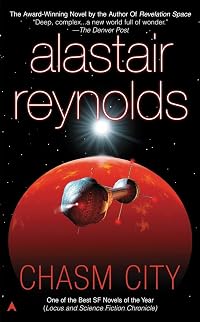
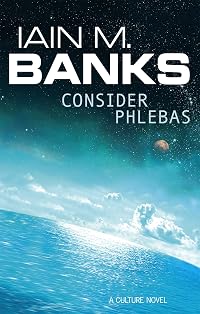
PS: I wanted to read more about moravecs, and found a rough equivalent in Banks' Culture series. show less
Does Olympos maintain the same pacing and style as Ilium?
Yes, very similar to Ilium. Once it gets moving, the cliff-hanger style for chapter endings kicks in again. Some of the Greek and Trojan characters get to tell show more their point-of-view, which they didn't in Ilium, and it serves the story. Dan Simmons primarily writes horror novels and this was evident in Ilium. It's evident again here, so be ready for that. One cautionary note is that Olympos is arguably more fantasy-esque than the first book; everything still develops very logically and remains consistent (the series doesn't suddenly become Alice in Wonderland), but if you're big on sci-fi while not so much on fantasy then you might find this a turn-off. There's the occasional scene that's rather surreal, yet it's always explicable.
Does it answer the questions left by Ilium?
Yes. It was clear to me in the first volume that there were more great beings than the Greek Gods at work in this universe, and that these would have to be further explored. You may recall in Ilium we met Prospero briefly, and heard of Setebos. This novel reveals considerably more about them. Along the way we get several minor revelations that tie together the different elements and answer the mysteries set up in Ilium. Just as I'd hoped for, Olympos reveals "the strings behind the puppet show". You'll end this duology with an excellent grasp on how this universe came to be and how it operates, who all these players are, and what they want.
Are Ilium's storylines resolved, with satisfying conclusions?
Yes. I'm thinking here of the three stories from Ilium: the old-style humans on Earth, the moravecs from Jupiter, and Hockenberry. When I say satisfying conclusions, I mean adequate coverage and wrap-up for each of them. You're made to wait a while at first regarding what the old-style humans have been up to, but things pick up right where they left off with Hockenberry and the moravecs. Then Hockenberry takes a back seat for a while. But when it's all said and done, you're provided an ending that will satisfy for each thread.
Does Olympos model itself on Homer's Odyssey, like the first book did with the Iliad?
I asked this one as a matter of curiosity. The answer is, yes and no; arguably not as directly. That's nothing that should determine whether you read it or not, unless you were especially looking forward to a closer retelling. Odysseus does play a very key role in the story.
Were there any unusual indications of prejudice on the part of the author?
No. This question was triggered by some particularly curious reviews decrying the author's portrayal of Muslims. This must stem from instances in Olympos where, as facts about this future Earth's history emerge [warning: a very small spoiler here], much wrongdoing and prejudice is attributed to a defunct political entity identified as the Global Caliphate. Nowhere does Simmons' narrative paint all Muslims with one brush or attribute folly to their religion in a general way. Rather, the theme is that humanity is destined to travel dangerous paths in repetition under one religion, ideology, etc. or another, and that such a disaster might as easily occur in one instance as another.
My opinion: you should read Olympos if Ilium was a great ride for you and you liked its mix of sci-fi with fantasy overtones, nothing especially rubbed you the wrong way, and you want to see how things turn out. Doesn't that go for every series? I think a comparison with Steven Erikson's handling of fantasy is apt: Ilium/Olympos isn't something you'd use to introduce someone to sci-fi, but after you're comfortable with the genre and open to trying something unusual that reads a bit like fantasy, this is it. This was as good a ride as the first book, if not better: one wild cliff-hanger after another, several moments of horror, and a liberal sprinkling of 'stand up and cheer' episodes. I honestly can't find what's lacking that everyone else seems to be complaining about, unless it's that sense of the story drifting increasingly far from hard sci-fi. Maybe you need a fantasy-fan streak?
Skip Olympos if Ilium was confusing or unsatisfying for you, or you're just plain tired of all the Greek/Trojan stuff, because this is more of the same. If the most compelling characters for you in Ilium were the old-style Earthlings, you may be frustrated with how long it takes to return to them here (although there's plenty enough about them, once returned to). If you were irritated by Ilium's cliff-hanger chapter endings that sent you off to pursue events in another storyline before returning to see how things turn out in this one, then beware because that same style is used here too. I guess you might also skip Olympos if you thought Ilium sufficiently 'resolved' the story (although I can't imagine why you would).
Bottom line: a consistent, logical, very satisfying 2nd half and conclusion to the story begun in Ilium.
PS: I wanted to read more about moravecs, and found a rough equivalent in Banks' Culture series. show less
Thick, heavy and to most probably intimidating. Civil War amongst the Greek Gods, War both with the heroes of the Iliad and the Odyssey, robots bent on destruction, space cults, love, lust, retribution and the list goes on and on.
Olympos is the conclusion to the epic Dan Simmons Sci Fi opera Ilium. This volume offers many things to the reader, but the length can be daunting. Quite simply it is a book that you have to look at and tell yourself "it is time to go to war." You can fight the book and everything that is packed in it and win…or you can admit to yourself that it is going to be a long ride and just strap yourself in for the duration.
If this and Ilium are your first Simmons books then you are in for a treat. Reading the first show more book is a must before embarking on the ride that is Olympos.
One thing about Simmons for the newcomers to his catalogue. ANY Simmons book you read is going to be 100% unapologetic. Simmons is always going to give you his vision and extend the olive branch to the reader. But he is not going to hold it out for very long. You are either there or are going to be left behind. After reading Olympos it will be come clear that you are dealing with not only a writer but an artist, a seeker and a guide to a literary world in which few other authors can lay claim to.
Highly intelligent and leaving no stone unturned, Olympos is pure genius. Be warned though….the content of the book revolves around several interweaving groups of people. From Greek Gods, Demi-Gods, confused humans, inquisitive and quite capable sentient beings, (Moravecs). To put it mildly… anything you can imagine is in this story. Be prepared to ride along with Sonnet loving robots, and love smitten Greek Heroes. The pacing of Olympos can throw you for a loop, be warned. Once the wheels start turning it takes formidable fortitude to keep up with back and forth of the players involved. Fret not…once you see the pattern it is smooth sailing. show less
Olympos is the conclusion to the epic Dan Simmons Sci Fi opera Ilium. This volume offers many things to the reader, but the length can be daunting. Quite simply it is a book that you have to look at and tell yourself "it is time to go to war." You can fight the book and everything that is packed in it and win…or you can admit to yourself that it is going to be a long ride and just strap yourself in for the duration.
If this and Ilium are your first Simmons books then you are in for a treat. Reading the first show more book is a must before embarking on the ride that is Olympos.
One thing about Simmons for the newcomers to his catalogue. ANY Simmons book you read is going to be 100% unapologetic. Simmons is always going to give you his vision and extend the olive branch to the reader. But he is not going to hold it out for very long. You are either there or are going to be left behind. After reading Olympos it will be come clear that you are dealing with not only a writer but an artist, a seeker and a guide to a literary world in which few other authors can lay claim to.
Highly intelligent and leaving no stone unturned, Olympos is pure genius. Be warned though….the content of the book revolves around several interweaving groups of people. From Greek Gods, Demi-Gods, confused humans, inquisitive and quite capable sentient beings, (Moravecs). To put it mildly… anything you can imagine is in this story. Be prepared to ride along with Sonnet loving robots, and love smitten Greek Heroes. The pacing of Olympos can throw you for a loop, be warned. Once the wheels start turning it takes formidable fortitude to keep up with back and forth of the players involved. Fret not…once you see the pattern it is smooth sailing. show less
Ilium was weird, Olympos is even weirder.
It's a diverting romp though the Iliad and Aeneid but I have to say that if my scholarly Greek history was an awful lot better then I might have gotten more from this book. I'm not sure I would though as it's not written in a "knowing" way, although if you have no clue who the Greek and Trojan heroes were you might struggle.
The book is pretty hefty and that works against it a little as although the pace can be decent, the complexities are ever-present and the remaining pages can seem daunting. However, the tale is decent enough and although there are some aspects that seem unbelievable, such as Hockenberry and Helen, the Sci-Fi is decently constructed with a number of good ideas that I think will show more stay with the reader. show less
It's a diverting romp though the Iliad and Aeneid but I have to say that if my scholarly Greek history was an awful lot better then I might have gotten more from this book. I'm not sure I would though as it's not written in a "knowing" way, although if you have no clue who the Greek and Trojan heroes were you might struggle.
The book is pretty hefty and that works against it a little as although the pace can be decent, the complexities are ever-present and the remaining pages can seem daunting. However, the tale is decent enough and although there are some aspects that seem unbelievable, such as Hockenberry and Helen, the Sci-Fi is decently constructed with a number of good ideas that I think will show more stay with the reader. show less
I thought Dan Simmons had written himself into a corner with "Ilium," his mind-bending, classic literature sampling, time hopping saga of future Earth and Mars, genetically improved humans, post-humans, cyborgs, and alternative universes.
Luckily, it turns out that Mr. Simmons is a nimble author, and he knew what he was doing when he spun himself a narrative web this complicated.
While "Olympos" was in itself an engaging read, with plenty of action, emotion, and tragedy, I was especially pleased to find that the story went beyond these surface pleasures, and the author had a deeper point to make about the power of human creativity and history and consciousness.
I will probably add these two books to my permanent collection.
Luckily, it turns out that Mr. Simmons is a nimble author, and he knew what he was doing when he spun himself a narrative web this complicated.
While "Olympos" was in itself an engaging read, with plenty of action, emotion, and tragedy, I was especially pleased to find that the story went beyond these surface pleasures, and the author had a deeper point to make about the power of human creativity and history and consciousness.
I will probably add these two books to my permanent collection.
Ilium and Olympos are hardly seperate books, so I have included my review for Ilium below since it applies just as much to Olympos as it did to Ilium.
You'd think, that after Ilium, the "magic" would be kind of gone. We have explored Ilium, Mars and Earth a bit, so Olympos should give us some answers. Except, Simmons doesn't seem to care for that at all and starts to throw all kinds of crazy at the reader in this one. If someone should tell me that they hated the book for doing this to them and then even at the end given them no real satisfaction, I would understand completely. However, it didn't bother me at all. I was content just being dragged through this ludicrous story and being left in just as much confusion as I was at the start. show more I don't really know why, but I feel that that's ok.
(Review for Ilium)
Clearly, Dan Simmons must be insane.
I read the back of the book, I read Simmons before, I should have been prepared.
Seriously though, I loved this book. I read the Iliad during my last year of high school, so a lot of it came back to me reading this, which was nice. I have no knowledge whatsoever about Shakespeare (or Proust) which made some of the more poetically inclined chapters a bit abstract to me. This is of course not Simmons fault, but it did make me feel that I missed out on a piece of the grander story. Also, it did genuinely make me want to know about the plays by Shakespeare, how about that.
There is something about Simmons writing that makes me lose any concept of "sensible". Simmons goes: "Trojan war on parralel universe earth and gods on Mars" and I go: "Okay, go on". Simmons goes: "Robots reflecting on Shakespeare and Proust on the moons of Jupiter" and I go: "Fine". Simmons goes: "Quantum Teleportation, Brane Holes, Little Green Men, Invisibility Hat" and I don't even blink an eye. Any other writer would have got me shouting at the book "Get it together man! This is just getting too much too fast, where in gods name are you going with this?", but for some reason Simmons makes me go: "Sure". This is some kind of magic I thourougly enjoy, and I will be reading much more of Dan Simmons from now on. show less
You'd think, that after Ilium, the "magic" would be kind of gone. We have explored Ilium, Mars and Earth a bit, so Olympos should give us some answers. Except, Simmons doesn't seem to care for that at all and starts to throw all kinds of crazy at the reader in this one. If someone should tell me that they hated the book for doing this to them and then even at the end given them no real satisfaction, I would understand completely. However, it didn't bother me at all. I was content just being dragged through this ludicrous story and being left in just as much confusion as I was at the start. show more I don't really know why, but I feel that that's ok.
(Review for Ilium)
Clearly, Dan Simmons must be insane.
I read the back of the book, I read Simmons before, I should have been prepared.
Seriously though, I loved this book. I read the Iliad during my last year of high school, so a lot of it came back to me reading this, which was nice. I have no knowledge whatsoever about Shakespeare (or Proust) which made some of the more poetically inclined chapters a bit abstract to me. This is of course not Simmons fault, but it did make me feel that I missed out on a piece of the grander story. Also, it did genuinely make me want to know about the plays by Shakespeare, how about that.
There is something about Simmons writing that makes me lose any concept of "sensible". Simmons goes: "Trojan war on parralel universe earth and gods on Mars" and I go: "Okay, go on". Simmons goes: "Robots reflecting on Shakespeare and Proust on the moons of Jupiter" and I go: "Fine". Simmons goes: "Quantum Teleportation, Brane Holes, Little Green Men, Invisibility Hat" and I don't even blink an eye. Any other writer would have got me shouting at the book "Get it together man! This is just getting too much too fast, where in gods name are you going with this?", but for some reason Simmons makes me go: "Sure". This is some kind of magic I thourougly enjoy, and I will be reading much more of Dan Simmons from now on. show less
Members
- Recently Added By
Lists

Top Five Books of 2013
1,562 works; 721 members

Sword & Planet / Futuristic Fantasy
16 works; 5 members

Myth (Reuse and Retelling)
188 works; 24 members

Solar System
12 works; 3 members

Books Read in 2016
4,666 works; 198 members

Favorite Science Fiction
456 works; 218 members
Author Information

133+ Works 69,653 Members
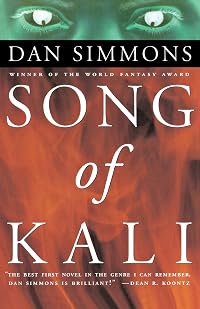
Science fiction writer Dan Simmons was born in East Peoria, Illinois in 1948. He graduated from Wabash College in 1970 and received an M. A. from Washington University the following year. Simmons was an elementary school teacher and worked in the education field for a decade, including working to develop a gifted education program. His first show more successful short story was won a contest and was published in 1982. His first novel, Song of Kali, won a World Fantasy Award, and Simmons has also won a Theodore Sturgeon Award for short fiction, four Bram Stoker Awards, and eight Locus Awards. He is also the author of the Hyperion series, and Simmons and his work have been compared to Herbert's Dune and Asimov's Foundation series. (Bowker Author Biography) show less
Some Editions
Awards and Honors
Awards
Distinctions
Notable Lists
Series

Belongs to Publisher Series
Artefakty (33)
Work Relationships
Contains
Was inspired by
Common Knowledge
- Canonical title
- Olympos
- Original title
- Olympus
- Original publication date
- 2005-06
- People/Characters
- Thomas Hockenberry; Achilles
- Dedication
- This novel is for Harold Bloom, who---in his refusal to collaborate in this Age of Resentment---has given me great pleasure.
- First words
- Helen of Troy awakes just before dawn to the sound of air raid sirens.
- Quotations*
- Hoe had Homerus al die dingen kunnen weten?
Toen dit alles zich afspeelde was hij een kameel in Bactria!
LUCIANUS, De droom
...de werkelijke geschiedenis van de aarde is in laatste instantie een verhaal over medogenloze oorlogvoering.
Noch zijn medemensen, noch zijn goden, noch zijn hartstochten laten een mens met rust.
JOSEPH CONRAD, No... (show all)tes on Lifes and Letters
Ach, schrijf niet langer over Troje
Waar de Dood zijn stempel achterliet -
En verwar niet koning Laios' woede
Met de vreugde die de vrijheid biedt:
Al spreekt een sfinx met nieuwe monden
Van de dood die Thebe ... (show all)nooit doorgrondde.
Een nieuw Athene zal verrijzen,
En schenkt het verre nageslacht
Zoals het zonlicht aan de hemel,
de bloeitijd van haar praal en pracht;
Of laat, als niets van schoonheid leeft,
Wat de aarde neemt, de hemel geeft.
PERCY BYSSHE SHELLEY, Hellas - Last words*
- (Click to show. Warning: May contain spoilers.)Zing vanaf het begin, vanaf de twist die tweespalt bracht
Tussen Areus' zoon, koning van het volk, en de nobele
Achilles. '
*Some information comes from Common Knowledge in other languages. Click "Edit" for more information.
Classifications
Statistics
- Members
- 3,175
- Popularity
- 5,455
- Reviews
- 45
- Rating
- (3.80)
- Languages
- 7 — Czech, Dutch, English, French, German, Hungarian, Spanish
- Media
- Paper, Audiobook, Ebook
- ISBNs
- 28
- ASINs
- 15