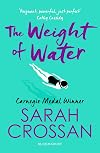
The Weight of Water
by Sarah Crossan
On This Page
Description
Twelve-year-old Kasienka and her mother have immigrated to Coventry, England from Poland, searching for Kasienka's father, but everyone is unfriendly except for an African neighbor and a boy Kasienka meets at the swimming pool, which is her only refuge from an alien society.Tags
Recommendations
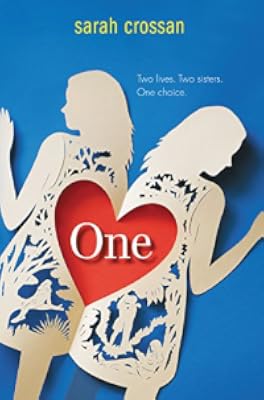
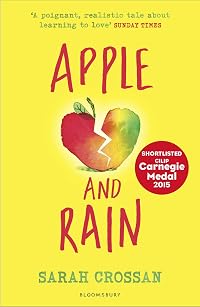


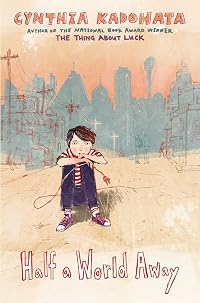
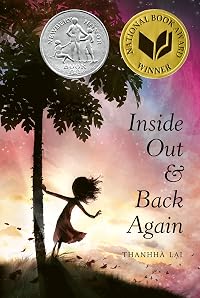












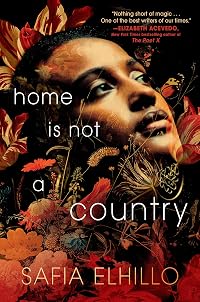
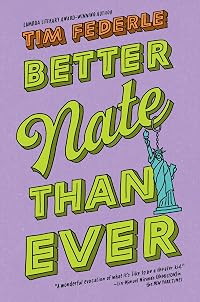

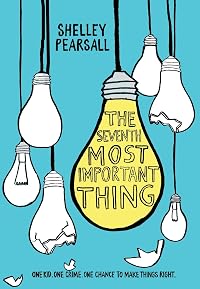
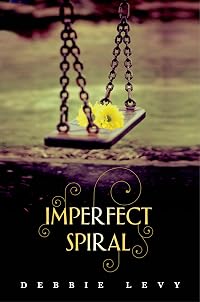

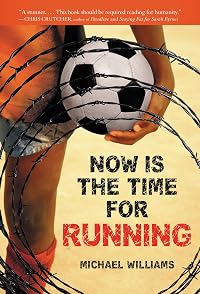


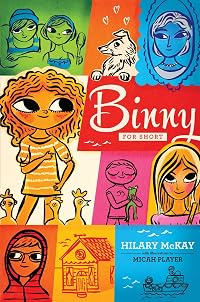
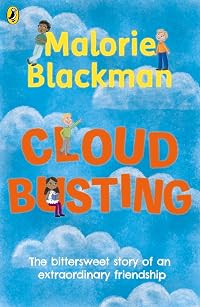
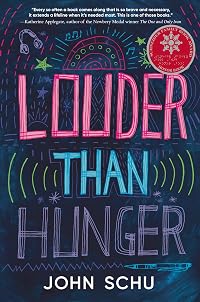






Member Recommendations
celerydog novel-in-verse with teenage protagonist. Equally satisfying.
Member Reviews
I'm not reviewing this one for the library children's department because, as it turns out, it's much more fit for young adults.
Kasienka and her mother have just moved to Coventry (in England) from Poland to look for Kasienka's father, who left them a few years ago. At school, she is placed a grade too low because she doesn't yet read English well, even though she is plenty smart. And most of the other students either ignore her or make fun of her, especially a particularly Mean Girl (think Rachael McAdams) named Clair. Meanwhile, Kasienka's increasingly depressive mother makes her come along on nightly door-to-door quests for her dad.
But not everything stinks in Coventry. A kind-hearted man who lives in the same apartments befriends the show more two Polish immigrants. Kasienka falls for a boy named William, whose casual confidence and kindness to her allow Kasienka to grow into herself. She shines on the swim team, outperforming Clair and everyone else.
There are elements parents may want to be careful of with younger readers - William smokes (with no sign of condemnation from the author or reliable characters), there is some fairly detailed description of William's and Kasienka's kiss-capades, and the situation with Kasienka's parents involves a lot of gray areas that immature readers may misinterpret. But overall, it's a great story - written in compact but loaded free verse - about finding confidence from the well of your own character rather than in the fickle tides of how others react to you. show less
Kasienka and her mother have just moved to Coventry (in England) from Poland to look for Kasienka's father, who left them a few years ago. At school, she is placed a grade too low because she doesn't yet read English well, even though she is plenty smart. And most of the other students either ignore her or make fun of her, especially a particularly Mean Girl (think Rachael McAdams) named Clair. Meanwhile, Kasienka's increasingly depressive mother makes her come along on nightly door-to-door quests for her dad.
But not everything stinks in Coventry. A kind-hearted man who lives in the same apartments befriends the show more two Polish immigrants. Kasienka falls for a boy named William, whose casual confidence and kindness to her allow Kasienka to grow into herself. She shines on the swim team, outperforming Clair and everyone else.
There are elements parents may want to be careful of with younger readers - William smokes (with no sign of condemnation from the author or reliable characters), there is some fairly detailed description of William's and Kasienka's kiss-capades, and the situation with Kasienka's parents involves a lot of gray areas that immature readers may misinterpret. But overall, it's a great story - written in compact but loaded free verse - about finding confidence from the well of your own character rather than in the fickle tides of how others react to you. show less
On the tide of her mother's hopes, carrying nothing more than the pieces of her family and her belongings in a laundry bag, Kasienka is washed up in Britain searching for the father that left them so abruptly when he left their home in Poland with no more than a brief note and much less than a suitable explanation. So begins this beautifully recounted tale of a young girl coming of age in a strange country amongst the shattered pieces of the family life she once knew.
The Weight of Water is an unusual book. Told entirely in verse, there is the expectation that it will read like a series of poems or an exercise in literary styling. Instead, Crossan seamlessly crafts a story where Kasienka and the cast of supporting characters come alive show more from the outset, the verse making access to the characters more immediate and direct than a prose novel. Within a page or two, the verse disappears, replaced by Kasienka's voice as she tells of the painful journey she takes to become accepted in her new home and to accept her family with all their limitations.
The Weight of Water is a book of differences. It is an immigrant's perspective of their adopted land and of the myriad of people who share it with them. However, it is also a book of similarities, as Kasienka slowly understands that beneath the diversity, the common desire for acceptance binds even enemies tightly. It is a story of the discomfort of adolescence, one that transcends international boundaries, and it is here that Crossan's empathy for her protagonist stands out in a perfect portrait of the painful journey Kasienka makes to unearth herself from beneath the layers of expectation placed on her. It is a story of loss, not just of her native land but of the childhood image she has of her parents as she discovers they are flawed and yet both less and more than the people she though them to be. Ultimately, it is a story of freedom though, which for Kasienka comes in the waters of the local pool as she finds her grace and strength in the furrows she cleaves as she swims. The water is not cleansing but nourishing, and as Kasienka carves the water with a singular purpose, we are left with a sense that a stronger girl will emerge with a sense of purpose as she carves a place for herself in the complicated world of adulthood.
This was an innovative book and it is wonderful to see a young adult novel that is unafraid of experimenting with textual form. While Crossan does not always get the 'Polishness' of Kasienka and her family quite right, with the occasional jarring note that would only really be noticeable to someone who has had close contact with Poles, it is vastly out-weighed by her ability to realistically convey the acute agony of adolescence and a child's view of the pain of a family break-up. It is a daring but quiet novel, in the best sense of the word and comes highly recommended. show less
The Weight of Water is an unusual book. Told entirely in verse, there is the expectation that it will read like a series of poems or an exercise in literary styling. Instead, Crossan seamlessly crafts a story where Kasienka and the cast of supporting characters come alive show more from the outset, the verse making access to the characters more immediate and direct than a prose novel. Within a page or two, the verse disappears, replaced by Kasienka's voice as she tells of the painful journey she takes to become accepted in her new home and to accept her family with all their limitations.
The Weight of Water is a book of differences. It is an immigrant's perspective of their adopted land and of the myriad of people who share it with them. However, it is also a book of similarities, as Kasienka slowly understands that beneath the diversity, the common desire for acceptance binds even enemies tightly. It is a story of the discomfort of adolescence, one that transcends international boundaries, and it is here that Crossan's empathy for her protagonist stands out in a perfect portrait of the painful journey Kasienka makes to unearth herself from beneath the layers of expectation placed on her. It is a story of loss, not just of her native land but of the childhood image she has of her parents as she discovers they are flawed and yet both less and more than the people she though them to be. Ultimately, it is a story of freedom though, which for Kasienka comes in the waters of the local pool as she finds her grace and strength in the furrows she cleaves as she swims. The water is not cleansing but nourishing, and as Kasienka carves the water with a singular purpose, we are left with a sense that a stronger girl will emerge with a sense of purpose as she carves a place for herself in the complicated world of adulthood.
This was an innovative book and it is wonderful to see a young adult novel that is unafraid of experimenting with textual form. While Crossan does not always get the 'Polishness' of Kasienka and her family quite right, with the occasional jarring note that would only really be noticeable to someone who has had close contact with Poles, it is vastly out-weighed by her ability to realistically convey the acute agony of adolescence and a child's view of the pain of a family break-up. It is a daring but quiet novel, in the best sense of the word and comes highly recommended. show less
At first I thought this was going to be just another 'issues' book about an immigrant fitting in, written in free verse because that's kinda trendy right now (re' Inside Out and Back Again), and much of it is simply that. ?áIt's probably a pretty good book anyway.
?áBut the thing that gets me is that Mother dragged this little girl away from a happy life with her grandmother, to a new country with a new language, on a cockamamie scheme to find the father who skipped out on them. ?áAnd while hunting up and down the streets of London she drags the girl along as interpreter, and when tired she drinks. ?áAnd the girl blames herself for not being a good enough help-meet to mom?! ?áI'm sorry, our children are not our possessions. show more ?áWe need to be less selfish and do what's right for them, not what we just want. ?áAnd children should do what's right for them, and not be loyal to an adult who is acting like a child.
?á(And yes, I do know about this from personal experience, so don't preach at me in the comments if you disagree.) show less
?áBut the thing that gets me is that Mother dragged this little girl away from a happy life with her grandmother, to a new country with a new language, on a cockamamie scheme to find the father who skipped out on them. ?áAnd while hunting up and down the streets of London she drags the girl along as interpreter, and when tired she drinks. ?áAnd the girl blames herself for not being a good enough help-meet to mom?! ?áI'm sorry, our children are not our possessions. show more ?áWe need to be less selfish and do what's right for them, not what we just want. ?áAnd children should do what's right for them, and not be loyal to an adult who is acting like a child.
?á(And yes, I do know about this from personal experience, so don't preach at me in the comments if you disagree.) show less
I need to finally brush off my prejudice against books that are written in verse. Every single time I raise a sceptical eyebrow in their direction - completely unable to believe that this is anything more than just lazy storytelling - and every single time I find myself impressed. [b:The Weight of Water|11409124|The Weight of Water|Sarah Crossan|http://d.gr-assets.com/books/1317905594s/11409124.jpg|16341936] was no exception. This is a delightful, if somewhat heartbreaking, little story that took me just over an hour to read.
I've noticed some people shelving this as "middle grade" and I understand why because the protagonist is young and it is an easy enough read for a younger audience to enjoy also. However, I feel the need to say show more something about this because I am usually put off by the "middle grade" label and sometimes assume it will lack depth or just be written in a style that is too young for me. Basically, I don't feel that is the case with [b:The Weight of Water|11409124|The Weight of Water|Sarah Crossan|http://d.gr-assets.com/books/1317905594s/11409124.jpg|16341936]. I find myself comparing it to books like [b:Wonder|11387515|Wonder|R.J. Palacio|http://d.gr-assets.com/books/1309285027s/11387515.jpg|16319487] - one which I did feel was a touch too young for me - and I think an older audience will appreciate the brutal honesty of this story. Nothing is sugar-coated, the story doesn't evolve through an ideal cycle of peace-problem-happyending. The issues are handled in a much more mature and realistic way.
The story is about Kasienka and her mother, two Polish migrants that have arrived in England searching for the father that left them. Kasienka's mother is obsessed with the idea that she can bring her husband back home to Poland if she can only talk things through with him. Kasienka, being the one with better English language skills, is made to walk down the streets of London, knocking on doors and asking whether people have seen her father. With every failed attempt to find her father, her mother's heart breaks a little bit more. But that is not the only problem Kasienka faces. She must deal with the other students at her school every day; students who hate her for being different, for wearing the wrong thing, for saying the wrong thing, or just because they can.
Swimming is just about the only thing Kasienka can do right; in the water, she is too much of a winner to be a loser. It's the one place she is untouchable. And while the idea of young teens turning to their passion to escape from reality has been explored to death, Kasienka's story still feels fresh. I think it is all the other things that make this story stand out from the crowd - Kasienka's relationship with her mother, the difficult choices she has to make at such a young age, and the exploration of the alienation that many immigrants face. For such a short book, I was blown away by how powerful and moving it was.
I only hope the author writes more novels in verse because I shall certainly be picking them up. show less
First dipped into the poems in the charity shop without realising it was a novel. Then read it cover to cover trying to go slowly. The narrative thread drives you on through the book so that it is really hard to stop reading one poem after another and the book is finished far too quickly. I loved the voice of the girl combined with the maturity of the author. Both shine through together similar to that of other favourite teenage girl characters (Dido, Emma Graham). And since finishing I have been dipping back into individual poems. Shall have to keep this book or give it away to someone special.
YA (middle grade) Very thoughtful story told in verse from the point of 12-yr-0ld Kasienka who immigrates from Poland to England. The story is partly about the culture shock of that and navigating a new country in a new language, but it is also a family story about her parents - her Dad (Tata) left them and headed to Coventry, and after her mother cooled her anger, she and Kasienka followed to try to find him - partly out of worry and partly out of a sense of 'justice' - they now live in a one room apartment, share a bed, and her mother works cleaning a hospital. Also, her mother still loves him. Kasienka has her own set of problems - she becomes Cassie at school, not by her own choice, but by a teacher's designation and she is put in show more with the 11-yr-olds to start. She become frenemies with Claire, who bullies her, and she has a crush on William, an older boy she has met at the pool. Plus the normal rush of pre-teen hormones and self-doubt and anguish. Mama makes Kasienka go door to door with her to speak English as they look for Tata who definitely does not want to be found. So insightful and tender and an authentic voice for a young girl. show less
When I first requested this book, I didn’t realize was a novel in verse. I love novels in verse, so I was even more excited when I found out that this book is written in that format. Crossan told a moving story about an immigrant’s experience using simple but powerful language. While this book only took about an hour to read, Kasienka’s story will stay with me for much longer. Her voice was strong, and I could really feel her loneliness and alienation as well as her courage and determination.The plot was engaging, and it explored issues with bullying and complicated family relationships. Despite some of the sad subject matter, I finished the book feeling hopeful and inspired.
I know a lot of other readers are hesitant to pick up show more novels in verse, but don’t let the format deter you from picking up this beautifully written book! I can see why this debut novel ended up on the Carnegie Medal shortlist. show less
I know a lot of other readers are hesitant to pick up show more novels in verse, but don’t let the format deter you from picking up this beautifully written book! I can see why this debut novel ended up on the Carnegie Medal shortlist. show less
Members
- Recently Added By
Lists

Novels in verse -- children's/young adult fiction
28 works; 7 members

Top Five Books of 2013
1,562 works; 715 members

Recommend the 20 best books you've read in the last five years
2,168 works; 606 members

Carnegie Medal books I've read (shortlist and winners)
86 works; 17 members
Author Information

19 Works 2,992 Members
Sarah Crossan grew up in Ireland and England. She graduated with a degree in philosophy and literature before training as an English and drama teacher at Cambridge University. She also completed her Masters in creative writing at the University of Warwick. In 2010, she received an Edward Albee Fellowship for writing. She taught English for many show more years before deciding to writing fulltime. Her teen novels include Breathe, The Weight of Water, Resist: Breathe 2, Apple and Rain, and One. She was awarded The Bookseller's 2016 YA Book Prize as well as the CILIP Carnegie Medal for her novel, One. (Bowker Author Biography) show less
Awards and Honors
Awards
Common Knowledge
- Original title
- The weight of water
- Original publication date
- 2012
- Dedication
- For Mum and Dad
- First words
- The wheels on the suitcase break / Before we've even left Gdansk Glowny. / Mama knocks them on some steps and / Bang, crack, rattle - / No more use. / There are / plastic bits / Everywhere.
- Blurbers
- Cassidy, Cathy
Classifications
Statistics
- Members
- 414
- Popularity
- 74,856
- Reviews
- 22
- Rating
- (3.83)
- Languages
- 5 — Dutch, English, French, German, Slovenian
- Media
- Paper, Audiobook, Ebook
- ISBNs
- 17
- ASINs
- 3