
Rebecca Rupp
Author of The Dragon of Lonely Island
About the Author
Rebecca Rupp and her husband, Randy, homeschooled their three sons from preschool through high school, and all grew up to be creative, kindhearted people with large vocabularies. Rebecca has published over 300 articles in national magazines and nearly two dozen books, both for children and for show more adults. She maintains an educational resources blog at rebeccaruppresources.com. She lives on Lake Champlain in northern Vermont. show less
Series
Works by Rebecca Rupp
Home Learning Year by Year: How to Design a Homeschool Curriculum from Preschool Through High School (2000) 635 copies, 5 reviews
How Carrots Won the Trojan War: Curious (but True) Stories of Common Vegetables (2011) 192 copies, 5 reviews
The Complete Home Learning Source Book: The Essential Resource Guide for Homeschoolers, Parents, and Educators Covering Every Subject from Arithmetic to Zoology (1998) 117 copies
Tagged
Common Knowledge
- Gender
- female
- Nationality
- USA
- Places of residence
- Vermont, USA
- Associated Place (for map)
- Vermont, USA
Members
Reviews
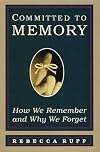
A very effective survey of the history, theories, and current status of our knowledge about memory. More than that, it is an interesting read because the author keeps it moving along from one topic to another in many short chapters that are sprinkled with quotes and anecdotes. Per one of the major findings, I'm sure I've already forgotten much of what I read, as the decay in recall is 80% within a month and begins immediately. The ancients and the current non-technical cultures are much show more better at remembering becaue they do not use the crutch of written text. Memory has been shown to be strengthened through exercise, either in the form of intentional practice or mentally stimulating activities (the Great Books, crosswords, etc). While our elderly are perceived as becoming forgetful, those that stay active have the same recall as younger people, though they are not as quick. Elders who are venerated by their culture do not experience the same memory decay. The mechanics of how memory works is still a mystery, though there is evidence that the brain can regenerate the neurons and that the process involves the whole brain's network of neurons. show less
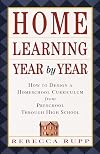
Home Learning Year by Year: How to Design a Homeschool Curriculum from Preschool Through High School by Rebecca Rupp
Originally appeared in a homeschool support group newsletter in May 2008.
==========
“In the spring a young man’s fancy lightly turns to thoughts of love” (Locksley Hall. Line 19 by Alfred Lord Tennyson). And in spring, a homeschooling mom's thoughts turn to next year's lesson plans—and catalogs, curriculum fairs, and homeschool conferences. Unlike the pioneering homeschoolers who had few resources available to them, we have a vast sea of choices when selecting school books and show more supplies for our children. How do we know what to teach and when to teach it? What should we cover at each stage of our children's education?
One of my favorite planning resources is Rebecca Rupp's Home Learning Year by Year: How to Design a Homeschool Curriculum from Preschool Through High School. She opens her book by stating, “There is no effective one-size-fits-all mode of education.” Every child is an individual, and homeschooling allows parents to custom-fit their lessons to their children's individual skills and interests.
All homeschooling parents know this and yet fret over whether their children are learning the basics and don't have holes in their education. This is where Rupp's book can help. She explains that while a standardized classroom curriculum may not work for your children, it can serve as a reference point and guide. Her book synthesizes the public school curricula of all fifty states and draws from various private sources and innovative educational organizations. Each chapter enumerates the standard goals for each grade and suggests resources to help parents achieve these academic goals.
The preschool chapter lists books, catalogs, magazines, software, and websites for both parents and children. For each of the school grades, the author covers Language Arts, Mathematics, History and Geography, Science, Foreign Language, Art, Music, and Health and Physical Education. The core subjects are broken down into subcategories. For instance, Language Arts includes Reading, Writing, Listening and Speaking Skills, and Study Skills. Mathematics, Science, and History are also divided into subtopics.
The fourth-grade chapter, for example, starts with the Language Arts section. Under the subtitle Reading, the author begins with an introduction paragraph and suggests three literature curricula. Next, she states specific goals, such as “3. Define elements of figurative language.” Below this, she lists five types of figurative language and descriptions of different types of poetry. Then, she offers two books and two websites about poetry as resources.
To avoid repetition, Rupp references previous entries for some subjects. For instance, under fourth grade Foreign Language, she refers the reader to the kindergarten chapter where foreign language resources are listed.
This book contains five appendices: Technology, Textbooks and Resources, Lesson Plans, Book Lists, and Distance Learning. These appendices direct you to various resources, many having websites. An index concludes the book.
To use this book, you simply turn to the grade you want to study. For instance, my son will be in fourth grade next year. So, I will begin my planning by reading the fourth-grade chapter. I will also review some sections in the previous chapters to check for any areas that we've missed. As I consider these goals, I keep in mind that they are only guidelines and reflect the objectives of the public schools and might not coincide with my educational plans for my son. Yet, I often find the skill lists helpful in knowing what my son should know at a given level.
When you need assistance in navigating through the educational ocean, use this book as your compass. show less
==========
“In the spring a young man’s fancy lightly turns to thoughts of love” (Locksley Hall. Line 19 by Alfred Lord Tennyson). And in spring, a homeschooling mom's thoughts turn to next year's lesson plans—and catalogs, curriculum fairs, and homeschool conferences. Unlike the pioneering homeschoolers who had few resources available to them, we have a vast sea of choices when selecting school books and show more supplies for our children. How do we know what to teach and when to teach it? What should we cover at each stage of our children's education?
One of my favorite planning resources is Rebecca Rupp's Home Learning Year by Year: How to Design a Homeschool Curriculum from Preschool Through High School. She opens her book by stating, “There is no effective one-size-fits-all mode of education.” Every child is an individual, and homeschooling allows parents to custom-fit their lessons to their children's individual skills and interests.
All homeschooling parents know this and yet fret over whether their children are learning the basics and don't have holes in their education. This is where Rupp's book can help. She explains that while a standardized classroom curriculum may not work for your children, it can serve as a reference point and guide. Her book synthesizes the public school curricula of all fifty states and draws from various private sources and innovative educational organizations. Each chapter enumerates the standard goals for each grade and suggests resources to help parents achieve these academic goals.
The preschool chapter lists books, catalogs, magazines, software, and websites for both parents and children. For each of the school grades, the author covers Language Arts, Mathematics, History and Geography, Science, Foreign Language, Art, Music, and Health and Physical Education. The core subjects are broken down into subcategories. For instance, Language Arts includes Reading, Writing, Listening and Speaking Skills, and Study Skills. Mathematics, Science, and History are also divided into subtopics.
The fourth-grade chapter, for example, starts with the Language Arts section. Under the subtitle Reading, the author begins with an introduction paragraph and suggests three literature curricula. Next, she states specific goals, such as “3. Define elements of figurative language.” Below this, she lists five types of figurative language and descriptions of different types of poetry. Then, she offers two books and two websites about poetry as resources.
To avoid repetition, Rupp references previous entries for some subjects. For instance, under fourth grade Foreign Language, she refers the reader to the kindergarten chapter where foreign language resources are listed.
This book contains five appendices: Technology, Textbooks and Resources, Lesson Plans, Book Lists, and Distance Learning. These appendices direct you to various resources, many having websites. An index concludes the book.
To use this book, you simply turn to the grade you want to study. For instance, my son will be in fourth grade next year. So, I will begin my planning by reading the fourth-grade chapter. I will also review some sections in the previous chapters to check for any areas that we've missed. As I consider these goals, I keep in mind that they are only guidelines and reflect the objectives of the public schools and might not coincide with my educational plans for my son. Yet, I often find the skill lists helpful in knowing what my son should know at a given level.
When you need assistance in navigating through the educational ocean, use this book as your compass. show less
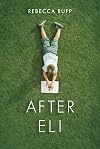
When Danny's brother, Eli, is killed in Afghanistan, his world begins to crumble. Losing someone you love, especially when it's unexpected, is never easy. Imagine having to process this grief when you are a middle-schooler, dealing with hormones, social status and just trying to make sense of life in general. As a coping mechanism, Danny puts together a "book of the dead", filling the pages with pictures of stories of people who died and what their life purpose was.
Told over the course of a show more single summer, After Eli is a deeply moving, insightful look at how a young boy deals with his grief. When I picked up the book, I was aware of the subject matter, but I think I expected it to be somewhat lighter in tone. I was surprised at the emotional depth of both the voice and the writing. It's not too heavy, or dark, it's just...real.
The plot isn't overly complex. In fact, it's fairly basic, but the complexity of the characters, the compelling voice of Danny and the need to understand the loss of his brother are enough to drive the story forward at a descent pace. I was surprised at how much this book affected me. It completely sucked me in from the first page and I didn't put the book down until I finished it a few hours later.
Emotional, complex, and endearing, After Eli is a well-crafted story and one I highly recommend to fans of contemporary YA. show less
Told over the course of a show more single summer, After Eli is a deeply moving, insightful look at how a young boy deals with his grief. When I picked up the book, I was aware of the subject matter, but I think I expected it to be somewhat lighter in tone. I was surprised at the emotional depth of both the voice and the writing. It's not too heavy, or dark, it's just...real.
The plot isn't overly complex. In fact, it's fairly basic, but the complexity of the characters, the compelling voice of Danny and the need to understand the loss of his brother are enough to drive the story forward at a descent pace. I was surprised at how much this book affected me. It completely sucked me in from the first page and I didn't put the book down until I finished it a few hours later.
Emotional, complex, and endearing, After Eli is a well-crafted story and one I highly recommend to fans of contemporary YA. show less
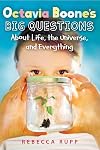
Vermont, seventh-grader, Octavia O'Keeffe Boone has lots of questions:
"Why is there Braille at the drive-up ATM?
Is there a purpose to life?
Why is there algebra?"
She lives with her dad, Boone, an artist, and her mother Ray, an environmental lawyer, always seeking a purpose in life. With her best friend Andrew, and caring neighbors, Octavia has a good life, At least she did, until her mother joins The Redeemers, a conservative Christian group that believes in strict obedience and a ban on the show more worldly influences of the Internet, television, public school and modern clothes.
At first, Octavia and Boone assume it’s another of Ray’s passing fancies. But when it doesn’t pass, Octavia is forced to attend the Redeemers’ School. When the teacher asks the students to share stories about how God has helped them in their daily lives, Octavia is still asking the big questions,
"Ronnie said that last Saturday he lost the money his mother had given him to go to the movies, but he asked God for help and then he found a five-dollar bill under a bush.
Marjean told how she’d lost her math homework and couldn’t find it anywhere, but she prayed and then she heard a voice in her head telling her where to look for it and she did and it was there.
What a waste of God’s time, I thought. What if he was supposed to be off taking care of starving people in Africa and instead he has to turn around and help some whiny kids find stuff?"
If you're not the type to question authority, both earthly and otherwise, then this is not the book for you - for that is precisely what Octavia Boone does best. In the end, it may be that some questions just don’t have answers. And for Octavia, that just may be OK.
##
Far from a rebuke of any type of belief or religion, Rupp shows that opposing belief systems can coexist, even side by side. Octavia's friend Andrew is Buddhist and most members of their small town are Catholic. As for the Redeemers, Octavia may not like them, but Rupp takes care to humanize them and Octavia even manages to find some good in members of the Redeemers . One area of the book that was not thoroughly explored was Octavia's synesthesia. In her case, Octavia sees colors and textures in letters and words and is particularly fond of the letter O. Perhaps her synesthesia is just another of life's unanswered questions.
A thought-provoking book that will not be for everyone, but will be just perfect for some.
www.shelf-employed.blogspot.com show less
"Why is there Braille at the drive-up ATM?
Is there a purpose to life?
Why is there algebra?"
She lives with her dad, Boone, an artist, and her mother Ray, an environmental lawyer, always seeking a purpose in life. With her best friend Andrew, and caring neighbors, Octavia has a good life, At least she did, until her mother joins The Redeemers, a conservative Christian group that believes in strict obedience and a ban on the show more worldly influences of the Internet, television, public school and modern clothes.
At first, Octavia and Boone assume it’s another of Ray’s passing fancies. But when it doesn’t pass, Octavia is forced to attend the Redeemers’ School. When the teacher asks the students to share stories about how God has helped them in their daily lives, Octavia is still asking the big questions,
"Ronnie said that last Saturday he lost the money his mother had given him to go to the movies, but he asked God for help and then he found a five-dollar bill under a bush.
Marjean told how she’d lost her math homework and couldn’t find it anywhere, but she prayed and then she heard a voice in her head telling her where to look for it and she did and it was there.
What a waste of God’s time, I thought. What if he was supposed to be off taking care of starving people in Africa and instead he has to turn around and help some whiny kids find stuff?"
If you're not the type to question authority, both earthly and otherwise, then this is not the book for you - for that is precisely what Octavia Boone does best. In the end, it may be that some questions just don’t have answers. And for Octavia, that just may be OK.
##
Far from a rebuke of any type of belief or religion, Rupp shows that opposing belief systems can coexist, even side by side. Octavia's friend Andrew is Buddhist and most members of their small town are Catholic. As for the Redeemers, Octavia may not like them, but Rupp takes care to humanize them and Octavia even manages to find some good in members of the Redeemers . One area of the book that was not thoroughly explored was Octavia's synesthesia. In her case, Octavia sees colors and textures in letters and words and is particularly fond of the letter O. Perhaps her synesthesia is just another of life's unanswered questions.
A thought-provoking book that will not be for everyone, but will be just perfect for some.
www.shelf-employed.blogspot.com show less
Lists
Awards


You May Also Like


Statistics
- Works
- 18
- Members
- 2,887
- Popularity
- #8,874
- Rating
- 3.8
- Reviews
- 42
- ISBNs
- 86
- Languages
- 4