On This Page
Description
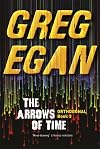
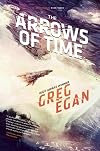
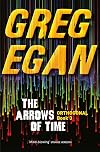
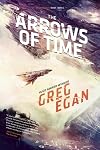
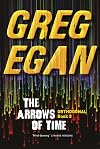
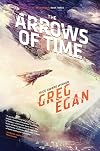
In an alien universe where space and time play by different rules, interstellar voyages last longer for the travellers than for those they left behind. After six generations in flight, the inhabitants of the mountain-sized spacecraft the Peerless have used their borrowed time to develop advanced technology that could save their home world from annihilation. But not every traveller feels allegiance to a world they have never seen, and as tensions mount over the risks of turning the ship show more around and starting the long voyage home, a new complication arises: the prospect of constructing a messaging system that will give the Peerless news of its own future. While some of the crew welcome the opportunity to be warned of impending dangers - and perhaps even hear reports of the ship's triumphant return - others are convinced that knowing what lies ahead will be oppressive, and that the system will be abused. Agata longs for a chance to hear a message from the ancestors back on the home world, proving that the sacrifices of the travellers have not been in vain, but her most outspoken rival, Ramiro, fears that the system will undermine every decision the travellers make. When a vote fails to settle the matter and dissent erupts into violence, Ramiro, Agata and their allies must seek a new way to bring peace to the Peerless - by traveling to a world where time runs in reverse. The Arrows of Time is the final volume of the Orthogonal trilogy, bringing a powerful and surprising conclusion to the epic story of the Peerless that began with The Clockwork Rocket and The Eternal Flame. show lessTags
Recommendations











Member Reviews
I'm still in awe of this trilogy, and only for one reason: the math.
Oh, god, no, please, no, no more math, right? Well, Egan took math and built a universe for us and then populated it with interesting aliens discovering their universe from step to step. You could call this a mystery, or you could call it the basic drive to KNOW, but either way, we're taking this ride and Egan is taking us FAR off the charts of normal SF.
Say what you will about the characters or the basic plots. The fact that he has twirled them and us around a VERY different kind of universe is amazing.
And our generational mountain-ship aliens are caught in a very determination/non-determination story loop. Which is very a familiar territory for SF fans. So even if show more you don't quite GET the math which kinda inverts the whole space-effect and inverts the whole light effect. Where life forms and rocks emit light, where gravity is curved on the other side, where there is no light-speed, but rotation can take you to infinite energies and space-like loops in time.
Oh, hell-yes.
Our generational mountain-ship is caught in something akin to a civil-war between those who want to see into the fixed future and deal with the effects of knowing--on the resulting changes in the future because they knew, versus those who choose to just DO WHAT THEY WERE GOING TO DO ANYWAY. :)
And while there's a bit less math in this one than the first two books, thank goodness, it does resolve a few of the more interesting feminist issues regarding DYING just because you gave birth. I'm quite happy with the result. :)
Bottom-line: Do I recommend this for all SF readers? No. But for anyone who wants to be challenged, to have something really super-number-juicy to sink your brain into? Definitely. Read this trilogy. :) show less
Oh, god, no, please, no, no more math, right? Well, Egan took math and built a universe for us and then populated it with interesting aliens discovering their universe from step to step. You could call this a mystery, or you could call it the basic drive to KNOW, but either way, we're taking this ride and Egan is taking us FAR off the charts of normal SF.
Say what you will about the characters or the basic plots. The fact that he has twirled them and us around a VERY different kind of universe is amazing.
And our generational mountain-ship aliens are caught in a very determination/non-determination story loop. Which is very a familiar territory for SF fans. So even if show more you don't quite GET the math which kinda inverts the whole space-effect and inverts the whole light effect. Where life forms and rocks emit light, where gravity is curved on the other side, where there is no light-speed, but rotation can take you to infinite energies and space-like loops in time.
Oh, hell-yes.
Our generational mountain-ship is caught in something akin to a civil-war between those who want to see into the fixed future and deal with the effects of knowing--on the resulting changes in the future because they knew, versus those who choose to just DO WHAT THEY WERE GOING TO DO ANYWAY. :)
And while there's a bit less math in this one than the first two books, thank goodness, it does resolve a few of the more interesting feminist issues regarding DYING just because you gave birth. I'm quite happy with the result. :)
Bottom-line: Do I recommend this for all SF readers? No. But for anyone who wants to be challenged, to have something really super-number-juicy to sink your brain into? Definitely. Read this trilogy. :) show less
In this final novel (sequel to _The Clockwork Rocket_ and _The Eternal Flame_) of Egan's _Orthogonal_ trilogy, yet more generations have passed for the alternate-universe spacetime voyagers seeking a means of saving their home world from an existential threat. The concepts of backward-flowing time and backward-in-time messaging (possibly to the senders' earlier selves), and the physical, psychological, biological and divisively political effects connected with them, are central to the story. Some readers may find much of the narrative in the book's second half to be too intricate and confusing (abnormal temporality is like that) to completely process mentally. I'd urge them to press on regardless, because awaiting them is a highly show more contrasting and wonderfully satisfying final chapter. show less
Although it plodded along a little slowly near the middle, the implications of clashing arrows of time on everyday life were interestingly done, and the last part of the physics reveal was an unexpected surprise. I would also have to say I enjoyed the viewpoint in the final chapter on the ultimate resolution of the sex and gender question that was raised in the previous novels, although not much time was spent on it in the final stretch.
This is the concluding book in the Orthogonal trilogy , preceded by The clockwork rocket and The Eternal Flame. The name of the trilogy comes from its setting in a universe that is not ours, but is never the less consistent in the way its physics works. Not surprisingly, there is intelligent life there which is very different in nature from humanity but has the same drive to understand its environment.
To save their home planet, which is menaced by a stream of ever-larger meteorites, an audacious plan is proposed by a famous scientist called Yalda, to send the Peerless, a hollowed-out mountain, re-purposed as a space ship, backwards in time to find an answer to this threat of extinction. This is not passed on the nod, but provokes show more opposition, some from alternative plans, and some from those simply opposed, who use public pressure and sometimes violence to try and get their way. These aliens are alien though, as the females burst apart to create offspring , who are then nurtured by males. They have flexible bodies with eyes front and back and can create pictures on their skin.
Six generations pass after the Peerless sets off, and things have moved on. Again, the story portrays life aboard the ship – now with new controversies raging over a slow move towards a new reproductive cycle, caused by the privations of the mission. Some question the plan laid down for them by Yalda. An alternative to saving the "ancestors" is to find a new and habitable planet. The desire to find a place to settle leads to a landing on a time-reversed planet where things are work backwards. And the main ship itself now uses networking, and male/female couples have become more acceptable.
Finally, a new complication arises: the prospect of constructing a messaging system that will give the Peerless news of its own future. While some see this as a chance to learn of their mission’s ultimate success, others are convinced that the knowledge will be oppressive or worse. The conflict over this proposed communication system again threaten the travellers’ world.
This really is a remarkable trilogy. Unlike most which hark back to some past, mythical Eden, this one looks forward, to a transformation of society based on conceptual breakthroughs both in theoretical science and in the more mundane, but no less important, social domain. This is the first example of a real science fiction trilogy, which gives a vision of how different science can be and how that might affect living creatures. Considering that this is such a radical departure from the norm in science fiction, it is a shame that no prizes or even nominations have been forthcoming. show less
To save their home planet, which is menaced by a stream of ever-larger meteorites, an audacious plan is proposed by a famous scientist called Yalda, to send the Peerless, a hollowed-out mountain, re-purposed as a space ship, backwards in time to find an answer to this threat of extinction. This is not passed on the nod, but provokes show more opposition, some from alternative plans, and some from those simply opposed, who use public pressure and sometimes violence to try and get their way. These aliens are alien though, as the females burst apart to create offspring , who are then nurtured by males. They have flexible bodies with eyes front and back and can create pictures on their skin.
Six generations pass after the Peerless sets off, and things have moved on. Again, the story portrays life aboard the ship – now with new controversies raging over a slow move towards a new reproductive cycle, caused by the privations of the mission. Some question the plan laid down for them by Yalda. An alternative to saving the "ancestors" is to find a new and habitable planet. The desire to find a place to settle leads to a landing on a time-reversed planet where things are work backwards. And the main ship itself now uses networking, and male/female couples have become more acceptable.
Finally, a new complication arises: the prospect of constructing a messaging system that will give the Peerless news of its own future. While some see this as a chance to learn of their mission’s ultimate success, others are convinced that the knowledge will be oppressive or worse. The conflict over this proposed communication system again threaten the travellers’ world.
This really is a remarkable trilogy. Unlike most which hark back to some past, mythical Eden, this one looks forward, to a transformation of society based on conceptual breakthroughs both in theoretical science and in the more mundane, but no less important, social domain. This is the first example of a real science fiction trilogy, which gives a vision of how different science can be and how that might affect living creatures. Considering that this is such a radical departure from the norm in science fiction, it is a shame that no prizes or even nominations have been forthcoming. show less
This is science fiction that really is about fictional science. To fully enjoy it, it helps to have some mathematical understanding of relativity theory. This is the third book of a trilogy, and the trilogy as a whole is a bit of a tour de force.
The story is interesting enough but the science is up to the minute physics which I found fairly daunting even with the diagrams. The physics is hard to follow being up to date and yet being for a fictional universe.
Ratings
Members
- Recently Added By
Author Information

129+ Works 13,911 Members
Some Editions
Series

Work Relationships
Is contained in
Common Knowledge
- Canonical title
- The Arrows of Time
- Original publication date
- 2013
- People/Characters
- Agata; Ramiro; Tarquinia
- First words
- From her hilltop post, Valeria swept the telescope's field of view methodically across the barren plain.
- Last words
- (Click to show. Warning: May contain spoilers.)Clara said, "If that's what you want, then I believe you'll find a way."
Classifications
Statistics
- Members
- 157
- Popularity
- 208,712
- Reviews
- 6
- Rating
- (3.85)
- Languages
- English
- Media
- Paper, Audiobook, Ebook
- ISBNs
- 7
- ASINs
- 4