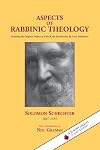
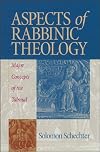
Aspects of Rabbinic Theology: Major Concepts of the Talmud
by Solomon Schechter
On This Page
Description
The classic statement of the ideas which form the religious consciousness of the Jewish people at large, by one of the great minds of Jewish scholarship of our century. His creative scholarship, compelling English style, and warm personality have given this book lasting influence on Jew and non-Jew alike. Includes the original preface of 1909 and the introduction by Louis Finkelstein.Tags
Recommendations



















Member Recommendations

Member Reviews
NO OF PAGES: 384 SUB CAT I: Talmud SUB CAT II: Rabbinics SUB CAT III: DESCRIPTION: One of the most succinct distillations of rabbinic teaching written in the last 100 years! Enormous learning has been concentrated on the election of Israel, the joy of the law, sin as rebellion, repentance as reconciliation. . . . Though imbued with the Talmud and Midrash, Schechter's style is grace itself. ""Aspects of Rabbinic Theology"" distills for the uninitiated the basic principles, concepts, and ideas of Judaism, particularly as they are found in the Talmud and Midrash. Key aspects of Jewish theology, such as the election of Israel, God's relationship to Israel, and the place of the Law, receive careful examination and vivid explanation. The show more notion of sin as rebellion and the nature of forgiveness and reconciliation with God, under Schechter's steady hand, likewise are disclosed in fresh and thought-provoking ways. Moreover, since ""There is hardly any miracle recorded in the Bible for which a parallel might not be found in the Rabbinic literature"" (from the introduction), any student of Judaism or Christianity readily recognizes the tremendous potential for increased understanding. Though written nearly ninety years ago, ""Aspects of Rabbinic Theology"" remains a clear and useful distillation of the essence of rabbinic Judaism.NOTES: Purchased from CBD. SUBTITLE: Major Concepts of the Talmud show less
Ratings
Members
- Recently Added By
Author Information

36+ Works 470 Members
Common Knowledge
- Quotations
- In short, it is not slaves, heaven-born though they may be, that can make the kingdom glorious. God wants to reign over free agents, and it is their obedience which he desires to obtain. Man becomes thus the centre of creat... (show all)ion, for he is the only object in which the kingship could come into full expression. Hence it is, as it would seem, that on the sixth day, after God had finished all his work, including man, that God became king over the world.
Classifications
Statistics
- Members
- 189
- Popularity
- 173,634
- Reviews
- 1
- Rating
- (4.00)
- Languages
- English
- Media
- Paper, Ebook
- ISBNs
- 7
- ASINs
- 7