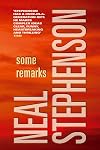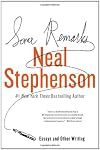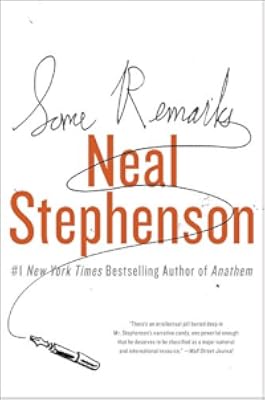
Some Remarks: Essays and Other Writing
by Neal Stephenson
On This Page
Description
"A collection of essays from #1 New York Times bestselling author Neal Stephenson"--Tags
Recommendations


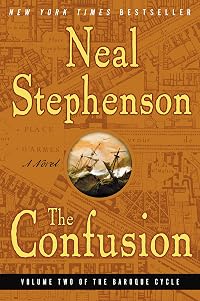





Member Recommendations

themulhern Both contain essays about David Foster Wallace's writing on math. Neal Stephenson and Ben Orlin are a bit at odds; Neal Stephenson's essay is much longer.

themulhern One of the essays in "Some Remarks" is about the popular reception of the move "300" which is about the defense of the pass of Thermopylae. I have started to feel that, while "300" is not truly historical, it is pretty faithful to Herodotus's "researches". And the viewers that Stephenson describes seem to have, subconsciously, grasped that.
themulhern The same sort of rollicking verve about science in "A Short History of Nearly Everything" as in the essay 'Mother Earth; Mother Board".
Member Reviews
Stephenson is brilliant and interesting but gets stuff wrong in a way that horrifies me more than if somebody awful did. Only a couple of chapters in but here is what is sticking in my craw this time. He is dismissive of those criticizing the movie 300 as unfairly portraying Greeks as white heros and Persians as bad guy PoC. He kind of contends well that's just the actual history of it. But if you look at depictions from around 300 of Alexander the Great and Xerxes I, they are not greatly distinguishable in phenotype. However, in 300 the Greeks are all ethnically very Anglo speaking with a British accent, the Persians are ethnically Subsaharan African with the exception of Xerxes, who is Brazilian who instead of a curly hair and beard show more is bald, bronzed, and pierced everywhere, speaking with what is meant to be a Persian accent. That is not purely factual history, that is a creative choice. I don't understand when people like Stephenson who I would assume values logic and fact seem to choose not to see it when it interferes with their world view, entertainment, or enjoyment. There are people who are willfully awful that do this, I in no way think Stephenson is one of them, which makes it so much more frustrating. show less
I've been a big Neal Stephenson fan since high school; his particular blend of sci-fi, history, politics, and action - all classic nerd interests - is right up my alley, even if I haven't always agreed with him on every particular pronouncement or ideological point. I used to hunt down his non-novel writings, and this particular collection of 18 odds and ends - a mix of his short fiction, magazine articles, interviews, essays, and rants all together - should just about do it for the hardcore Stephensoniac. There's some minor omissions, as well as some retroactive editing, but I doubt most will miss stuff like the questionable short story "Jipi and the Paranoid Chip", or the more dated parts of "In the Kingdom of Mao Bell" that got show more excised.
One irritating feature of Short Remarks (a deliberately ironic title as several of these pieces are fairly lengthy) is that the pieces have no discernible organizing principle, either chronologically, stylistically, or typologically. Thus a 2004 interview with Salon runs right before a 1993 meditation on the relationship between believers and secular folk, a 2012 Time magazine bit about attention span and Anathem, his 2003 Foreword to David Foster Wallace's math book Everything and More, a 1995 short story, and so on. This being a collection of miscellany, it's not like there's a narrative to miss, but it would have been helpful to organize this a little; even in scrapbooks one picture usually comes before another.
The pieces that are here fall into a few categories for me: thought-provoking history (like "Metaphysics in the Royal Society", a great outline of some of the modern implications of the still-fascinating Newton-Leibniz debate about the nature of space and time), questionable rants (I agree with "It's All Geek to Me" that there were a lot of dumb articles about the movie "300", but I also didn't think it was that interesting of a movie), and forgettable short stories (the cryptography/micro-advertising "Spew", for instance). Stephenson is unapologetically nerdy in his tastes, and uncommonly eloquent in his defense of the merits of sci-fi literature, as in his Gresham College Lecture, which has a lot of good insights on the nature of genres, and how some lend themselves to some mediums and some don't (as in the gravitation of the crime genre to TV, whereas romance is more of a movie genre). He's at his best when discussing the appeal of ideas, whether delivered through books, childhood experimentation, or self-discovery, and if you had to try and come up with a "theme" for most of the works here, it would be "respect and encourage new ideas".
The only places where he loses me are the times where his minor reactionary streak gets the better of him, like when he goes off on postmodernism. He certainly has more experience with that sort of thing than I do, and I would probably agree with him that overall literary deconstructionism and things like that are not helpful or useful; I just don't think articles on what postmodernism does or doesn't do to literature are very interesting in general. Also, it's sometimes hard to tell if his interest in religion is sincere admiration, simple contrarianism, honest experimentation, or what - pieces like "Blind Secularism" have weird Straussian overtones that don't mesh well with his better moments.
In any case, while only a few of these pieces are truly outstanding ("Metaphysics in the Royal Society", "Mother Earth, Mother Board", "Gresham College Lecture", "Innovation Starvation"), there's enough good stuff to make this a worthwhile stop for the Stephenson fan. show less
One irritating feature of Short Remarks (a deliberately ironic title as several of these pieces are fairly lengthy) is that the pieces have no discernible organizing principle, either chronologically, stylistically, or typologically. Thus a 2004 interview with Salon runs right before a 1993 meditation on the relationship between believers and secular folk, a 2012 Time magazine bit about attention span and Anathem, his 2003 Foreword to David Foster Wallace's math book Everything and More, a 1995 short story, and so on. This being a collection of miscellany, it's not like there's a narrative to miss, but it would have been helpful to organize this a little; even in scrapbooks one picture usually comes before another.
The pieces that are here fall into a few categories for me: thought-provoking history (like "Metaphysics in the Royal Society", a great outline of some of the modern implications of the still-fascinating Newton-Leibniz debate about the nature of space and time), questionable rants (I agree with "It's All Geek to Me" that there were a lot of dumb articles about the movie "300", but I also didn't think it was that interesting of a movie), and forgettable short stories (the cryptography/micro-advertising "Spew", for instance). Stephenson is unapologetically nerdy in his tastes, and uncommonly eloquent in his defense of the merits of sci-fi literature, as in his Gresham College Lecture, which has a lot of good insights on the nature of genres, and how some lend themselves to some mediums and some don't (as in the gravitation of the crime genre to TV, whereas romance is more of a movie genre). He's at his best when discussing the appeal of ideas, whether delivered through books, childhood experimentation, or self-discovery, and if you had to try and come up with a "theme" for most of the works here, it would be "respect and encourage new ideas".
The only places where he loses me are the times where his minor reactionary streak gets the better of him, like when he goes off on postmodernism. He certainly has more experience with that sort of thing than I do, and I would probably agree with him that overall literary deconstructionism and things like that are not helpful or useful; I just don't think articles on what postmodernism does or doesn't do to literature are very interesting in general. Also, it's sometimes hard to tell if his interest in religion is sincere admiration, simple contrarianism, honest experimentation, or what - pieces like "Blind Secularism" have weird Straussian overtones that don't mesh well with his better moments.
In any case, while only a few of these pieces are truly outstanding ("Metaphysics in the Royal Society", "Mother Earth, Mother Board", "Gresham College Lecture", "Innovation Starvation"), there's enough good stuff to make this a worthwhile stop for the Stephenson fan. show less
If you haven't already figured out from my favorites shelf, I lurve Neal Stephenson. I think there's nobody like him except maybe Terry Pratchett. (Someone once told me I had it in me to become "the new Neal Stephenson" and I still think it's the highest praise I've ever received. Granted, I am pretty sure they were mad drunk at the time but I like to think that it still counts.)
Given this, I was a bit worried when Reamde dropped, as it seemed his sure hand was starting to slip. I bought Anathem, but it's been sitting under a bunch of other books. When I blew through B&N while waiting for the family to finish shopping (as always), I saw this and paused for a moment. Yeah, I thought, it's new Neal Stephenson, but what about that show more collection of William Gibson essays that you bought? What about that Malcolm Gladwell collection?
It took me a few seconds to say "screw it, it's Neal Stephenson," and I am glad that I did. Stephenson seems to have a better focus in this compared to Gibson and Gladwell - granted, he does have his preferred dead horses for beating (where Gibson has Japan/otaku and the Internet, Stephenson has literary vs genre fiction and space travel), but that doesn't detract from the overall quality here. "Mother Earth Mother Board" is the crown jewel, a fascinating, long piece about transocean cabling. "Arsebestos" is a fresh take on the sitting-is-bad-for-you situation, something I thought I had long since grown tired of. I felt pretty guilty that I couldn't keep up with the piece on metaphyiscs, Newton, and Leibniz; however, this was assuaged by the short fiction studded throughout. "Spew" is sort of forgettable and feels like it's missing a real ending; however, this is more than made up for by "The Great Simoleon Caper" which seems to nicely bridge the gap between Cryptonomicon and Snow Crash (which you better go read right now, since this review's over). show less
Given this, I was a bit worried when Reamde dropped, as it seemed his sure hand was starting to slip. I bought Anathem, but it's been sitting under a bunch of other books. When I blew through B&N while waiting for the family to finish shopping (as always), I saw this and paused for a moment. Yeah, I thought, it's new Neal Stephenson, but what about that show more collection of William Gibson essays that you bought? What about that Malcolm Gladwell collection?
It took me a few seconds to say "screw it, it's Neal Stephenson," and I am glad that I did. Stephenson seems to have a better focus in this compared to Gibson and Gladwell - granted, he does have his preferred dead horses for beating (where Gibson has Japan/otaku and the Internet, Stephenson has literary vs genre fiction and space travel), but that doesn't detract from the overall quality here. "Mother Earth Mother Board" is the crown jewel, a fascinating, long piece about transocean cabling. "Arsebestos" is a fresh take on the sitting-is-bad-for-you situation, something I thought I had long since grown tired of. I felt pretty guilty that I couldn't keep up with the piece on metaphyiscs, Newton, and Leibniz; however, this was assuaged by the short fiction studded throughout. "Spew" is sort of forgettable and feels like it's missing a real ending; however, this is more than made up for by "The Great Simoleon Caper" which seems to nicely bridge the gap between Cryptonomicon and Snow Crash (which you better go read right now, since this review's over). show less
This is Stephenson at his best and worst.
"Mother Earth, Mother Board"--a mammoth essay he wrote for Wired in the '90s about ocean-spanning data connections--takes up the bulk of this collection, and it is worth the price of entry. It's a fascinating piece that is, for the most part, a breezy read despite its focus on dorky tech stuff. (And, it's interesting as a tech time capsule of sorts.)
There are some other standouts as well, like his Slate interview and the forward he wrote for a David Foster Wallace book reprint. Also amazing: the throwaway, one-sentence early draft of a Middle Earth story he really worked on. It's joyously goofy.
The rest is all over the place, especially the two short stories here.
"Mother Earth, Mother Board"--a mammoth essay he wrote for Wired in the '90s about ocean-spanning data connections--takes up the bulk of this collection, and it is worth the price of entry. It's a fascinating piece that is, for the most part, a breezy read despite its focus on dorky tech stuff. (And, it's interesting as a tech time capsule of sorts.)
There are some other standouts as well, like his Slate interview and the forward he wrote for a David Foster Wallace book reprint. Also amazing: the throwaway, one-sentence early draft of a Middle Earth story he really worked on. It's joyously goofy.
The rest is all over the place, especially the two short stories here.
What would your reaction be if you have seen Riemann zeta function on page 10 of a novel? Mine was along the lines of "we've got some interesting sci-fi author here, let's go on!". Or something close to that, as far as I can remember my first encounter with Neal Stepheson more than twelve years ago that started with Cryptonomicon and continued with titles such as Snow Crash (Bantam Spectra Book) and Anathem.
Stephenson never failed to satisfy and he has always delivered more than I expected as a curious reader. His latest book, "Some Remarks: Essays and Other Writing", a compilation of his short, and some not so short, essays and stories, is full of little surprises and a lot of depth. For the reader, it is quite a remarkable experience show more to see how Stephenson's style has developed throughout the years, the author of Anathem has notable differences compared to the author Cryptonomicon.
As with any other Stephenson book, it is not easy to recommend this book to many people because even among Stephenson fans, I believe there are some differences: some like his more action packed techno thrillers, whereas some find the juicy stuff in his books where he does not refrain to step into the darker and heavier areas of metaphysics and quantum mechanics. Luckily, this compilation of essays and short stories has enough diversity to satisfy any kind of Stephenson fan. As for the `outsiders', I would suggest the very short essay titled "Time Magazine Article About Anathem". In less than 4 pages, Stephenson accomplishes his feat by portraying the very core idea of one of his major works by using a striking analogy and then very gently forcing the reader to think about the consequences of some disturbing trends.
If you consider yourself a nerd, a geek, or someone with insatiable curiosity towards technology, modern world and how it came to be, philosophy, Newton, Leibniz, history, pop culture and why some writers who think the only way to exist is to have a source of income by lecturing at the universities cannot understand other writers who sell enough books to make a decent living, then I bet a bottle of champagne that you'll have a lot of good time reading this book. show less
Stephenson never failed to satisfy and he has always delivered more than I expected as a curious reader. His latest book, "Some Remarks: Essays and Other Writing", a compilation of his short, and some not so short, essays and stories, is full of little surprises and a lot of depth. For the reader, it is quite a remarkable experience show more to see how Stephenson's style has developed throughout the years, the author of Anathem has notable differences compared to the author Cryptonomicon.
As with any other Stephenson book, it is not easy to recommend this book to many people because even among Stephenson fans, I believe there are some differences: some like his more action packed techno thrillers, whereas some find the juicy stuff in his books where he does not refrain to step into the darker and heavier areas of metaphysics and quantum mechanics. Luckily, this compilation of essays and short stories has enough diversity to satisfy any kind of Stephenson fan. As for the `outsiders', I would suggest the very short essay titled "Time Magazine Article About Anathem". In less than 4 pages, Stephenson accomplishes his feat by portraying the very core idea of one of his major works by using a striking analogy and then very gently forcing the reader to think about the consequences of some disturbing trends.
If you consider yourself a nerd, a geek, or someone with insatiable curiosity towards technology, modern world and how it came to be, philosophy, Newton, Leibniz, history, pop culture and why some writers who think the only way to exist is to have a source of income by lecturing at the universities cannot understand other writers who sell enough books to make a decent living, then I bet a bottle of champagne that you'll have a lot of good time reading this book. show less
Stephenson is brilliant and interesting but gets stuff wrong in a way that horrifies me more than if somebody awful did. Only a couple of chapters in but here is what is sticking in my craw this time. He is dismissive of those criticizing the movie 300 as unfairly portraying Greeks as white heros and Persians as bad guy PoC. He kind of contends well that's just the actual history of it. But if you look at depictions from around 300 of Alexander the Great and Xerxes I, they are not greatly distinguishable in phenotype. However, in 300 the Greeks are all ethnically very Anglo speaking with a British accent, the Persians are ethnically Subsaharan African with the exception of Xerxes, who is Brazilian who instead of a curly hair and beard show more is bald, bronzed, and pierced everywhere, speaking with what is meant to be a Persian accent. That is not purely factual history, that is a creative choice. I don't understand when people like Stephenson who I would assume values logic and fact seem to choose not to see it when it interferes with their world view, entertainment, or enjoyment. There are people who are willfully awful that do this, I in no way think Stephenson is one of them, which makes it so much more frustrating. show less
A collection of essays, magazine interviews, the text (or transcripts) of a couple invited lectures, and the foreword to a book by David Foster Wallace. The two short fiction stories are funny and quite good, dealing with themes of virtual reality and cryptocurrency respectively. An essay, or lecture, discussing Gottfried Leibniz and Isaac Newton is also very interesting. The writer argues that the real dispute between these two giants of mathematics and science isn't who was first in discovering calculus, but their personal metaphysics. He shows that Leibniz's is more relevant today, especially for modern physics. The topic was too advanced for me, but now I would like to learn something about cellular automata. The foreword to David show more Foster Wallace's, “Everything and More” describes an interesting parallel between Wallace and Stephenson in that they were both products of mid-western university town childhoods during the 1960's and 70s. It is a very uplifting tribute to the late Wallace. And it is good to have another positive account of his tragic life, to balance (or negate) material like the movie, “The End of the Tour”. I skipped around the book, and finished with the 118 pager: “Mother Earth, Mother Board” which is about the laying of transoceanic cables – both the first cables and the present day fiber-optics cables. As I was midway grinding through this highly detailed article, I was determined just to finish it. But when I did finish, I found that the author had managed to provide original insights into a strange and unique technology, and most surprisingly, relate the “digital” nature of early the telegram technology to modern digital technology. Digital of communication technology was only temporarily interrupted by Alexander Graham Bell's analog telephone technology. It is an article worth reading, only I wish that he could have spared some of the details of the process of researching the article. Overall, the book is well worth reading. show less
Members
- Recently Added By
Lists

Books Read in 2022
5,166 works; 114 members

Pleasant Surprises: Books That Exceeded Our Expectations
418 works; 143 members
Author Information

80+ Works 118,845 Members
Neal Stephenson, the science fiction author, was born on October 31, 1959 in Maryland. He graduated from Boston University in 1981 with a B.A. in Geography with a minor in physics. His first novel, The Big U, was published in 1984. It received little attention and stayed out of print until Stephenson allowed it to be reprinted in 2001. His second show more novel was Zodiac: The Eco-Thriller was published in 1988, but it was his novel Snow Crash (1992) that brought him popularity. It fused memetics, computer viruses, and other high-tech themes with Sumerian mythology. Neal Stephenson has won several awards: Hugo for Best Novel for The Diamond Age (1996), the Arthur C. Clarke for Best Novel for Quicksilver (2004), and the Prometheus Award for Best Novel for The System of the World (2005). He recently completed the The Baroque Cycle Trilogy, a series of historical novels. It consists of eight books and was originally published in three volumes and Reamde. His latest novel is entitled The Rise and Fall of D. O. D. O. Stephenson also writes under the pseudonym Stephen Bury. (Bowker Author Biography) show less
Awards and Honors
Awards
Work Relationships
Contains
Common Knowledge
- Original title
- Some Remarks: Essays and Other Writing
- Original publication date
- 2012
- Original language
- English
Classifications
Statistics
- Members
- 567
- Popularity
- 51,969
- Reviews
- 32
- Rating
- (3.71)
- Languages
- English
- Media
- Paper, Audiobook, Ebook
- ISBNs
- 11
- ASINs
- 6