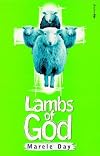
Lambs of God
by Marele Day
On This Page
Description
The flock of nuns and the flock of sheep had been together for so long that the sheep, if they had enough brains to consider the matter at all, thought of the nuns as part of the flock rather than shepherds. For Iphigenia, Margarita and Carla, the crumbling monastery they live in is their whole world. They have their daily routines and at their nightly knitting circle, they tell stories - stitching into their work fairytales and myth. Whatever exists beyond their island home is forgotten. show more That is until the day Father Ignatius arrives, intent on transforming their forgotten paradise into a luxury resort, complete with a helipad and marina. In an attempt to protect their peaceful existence, the Sisters find themselves willing to do almost anything to save their beloved home... show lessTags
Recommendations































Member Reviews
Lambs of God gifts its readers with lush imagery, memorable characters, and a pervading undercurrent of myth and magic.
It wasn't a story I was expecting to like, not only because of its religious setting, but because once I started, it took about 50 pages before I was fully settled into its world. It's slow-paced, full of vivid descriptions, slightly contrived...yet Iphigenia, Margarita, Carla, and even Father Ignatius (who I found hypocritical and didn't like much at all) were too strange to ignore, too different to dismiss outright. I'm glad I kept reading.
Recommended if you want a story about three nuns, a priest and a dilapidated monastery, tempered with magical realism.
3.5 stars
It wasn't a story I was expecting to like, not only because of its religious setting, but because once I started, it took about 50 pages before I was fully settled into its world. It's slow-paced, full of vivid descriptions, slightly contrived...yet Iphigenia, Margarita, Carla, and even Father Ignatius (who I found hypocritical and didn't like much at all) were too strange to ignore, too different to dismiss outright. I'm glad I kept reading.
Recommended if you want a story about three nuns, a priest and a dilapidated monastery, tempered with magical realism.
3.5 stars
The story is a little unlikely at the start: three nuns in a forgotten, overgrown, crumbling monastery who are happy in a life of seclusion, living their simple lives, tending and living with the sheep that give them clothing and food. Two of the nuns, Iphigenia and Margarita have lived in the outside world, in their youth, and retain pleasant (for the former) and painful (for the latter) memories of it. The third, Carla, was a foundling, left at the door of the monastery raised entirely by the nuns, and has never known the outside world. The three of them have a well-ordered, structured existence: regular prayers and the continual work of gardening, shearing, cleaning the wool, making yarn, knitting, bread-making, meals. They have a show more harmony among themselves and very much with nature; the work they do is not extraneous to them; it is the pattern and cycle of their lives; they do not tend the sheep as much as they have become part of the nature's natural rhythms of birth, life, sustenance, and death.
This self-contained, self-sustaining world is upset by the appearance of a priest: Father Ignatius, secretary to the Bishop, a "high flyer", an ambitious young man, and one with an idea of turning the monastery into a high-priced retirement complex complete with swimming pools, condos, golf courses. He gets lost trying to find the monastery, which he has only learned about from old documents, and he is astonished to find it inhabited by the three lost nuns.
The nuns do not welcome the instrusion, and hope they can simply get beyond it with a brief visit, but they become alarmed when they discover the priest's real intentions. And so the conflict is set. The nuns conspire to keep him in the monestary, and after he tries to escape one night, they take the more drastic step of immoblizing the priest, first by drugging him with a herbal tea that knocks him out, and when he awakes it is to find himself incased in plaster from the hips down with his hands tied. The nuns go out of the monestary grounds, find the priest's abandoned vehicle which had run slightly off the road, take whatever is valuable in in it, and destroy the evidence by pushing it over a cliff into the sea. So the priest, who didn't really tell anyone where he was going, is quite alone. The nuns begin to try to bring him into their world, and he plays at the game while continuing to scheme on how to get out. Physically it is impossible, so he begins to play mind-games with Carla, in particular, in the hope that she will give him his cell phone so that he can call for help and rescue.
But Iphigenia, the eldest and the leader of the nuns, realizes that the situation cannot continue indefinitely, and uses the cell phone (after the priest shows her how to use it, and some humorous attempts at telephone conversations) to re-establish long lost contact with a group of solicitors who served her grandmother. This is where the deus ex machina enters: it turns out the Iphigenia is a wealthy woman from a trust set up by her wealthy grandmother that has been maturing and growing over many years. She uses this to purchase the monestary and all its land, thus preserving their way of life, and allowing them to set the priest free. Father Ignatius, by this time, has come to appreciate the simplicity and honesty of their lives and has no desire to disrupt it, and so concotes a story about an accident and being nursed back to health in an isolated fishing district.
This bare-bones summary does not do justice to the book. It is well-written, with well-drawn characters, and a searching by each of them that leads to new understandings of themselves, their pasts, and their relationships with the world. It sets up the fundamental conflict between the trappings of the material world and harmony with nature and belief in something larger, recognizing that the fomer may be a fact of life in the modern world, but also recognizing that it is at a certain cost.
More broadly the story of the life of the nuns is about how lives fit together like pieces in a puzzle where each life has crooked, uneven edges but the pieces fit because the sharpness of the edges that might not allow an interlocking have become blunted through accomodation and custom. In fact, these accommodations are essential if there is to be a harmony between or among any number of people (such as the three nuns), to smooth over differences and potential clashes so that while individuality remains (as it does in the private worlds of each of the nuns), on another level, that individuality is subsumed into the broader picture that the puzzle presents. This is all very well until the pieces are jarred, as if someone bumped the table and set the pieces out of kilter. This is the role of the priest. The jarring does not completely disrupt the picture, but it creates spaces, openings, differences, and (to use an electrical metaphor) disrupts the current of harmony that flowed across the individual pieces. What emerges is discordance and a pushing foward of personalities, or individual wants, dislikes, needs, and fears. This is the underlying tension in the book which Day brings out well. I honestly thought the solution might be the death and disappearance of the priest, and it is a tribute to Day's writing that she leads the reader to that, but also makes the alternative plausible. Margarita is the most damaged by her early experience in the world and for a while it seemed that she would transfer that fear and hatred and action to the priest. But, in the end, it is Iphigenia's strength of character and resourcefulness, plus the strength of Margarita's faith that leads them to a solution. The effect is not a simple restoration of what was before: it is a new harmony, based on a wider understanding and a more conscious choosing. And even the priest, who may never return to see them again, is now part of that harmony or pattern, just as the nuns are always weaving patterns and different elements of their lives into the cloaks and garments that they knit. The book is rich in imagery. A good read and one to be recommended. show less
This self-contained, self-sustaining world is upset by the appearance of a priest: Father Ignatius, secretary to the Bishop, a "high flyer", an ambitious young man, and one with an idea of turning the monastery into a high-priced retirement complex complete with swimming pools, condos, golf courses. He gets lost trying to find the monastery, which he has only learned about from old documents, and he is astonished to find it inhabited by the three lost nuns.
The nuns do not welcome the instrusion, and hope they can simply get beyond it with a brief visit, but they become alarmed when they discover the priest's real intentions. And so the conflict is set. The nuns conspire to keep him in the monestary, and after he tries to escape one night, they take the more drastic step of immoblizing the priest, first by drugging him with a herbal tea that knocks him out, and when he awakes it is to find himself incased in plaster from the hips down with his hands tied. The nuns go out of the monestary grounds, find the priest's abandoned vehicle which had run slightly off the road, take whatever is valuable in in it, and destroy the evidence by pushing it over a cliff into the sea. So the priest, who didn't really tell anyone where he was going, is quite alone. The nuns begin to try to bring him into their world, and he plays at the game while continuing to scheme on how to get out. Physically it is impossible, so he begins to play mind-games with Carla, in particular, in the hope that she will give him his cell phone so that he can call for help and rescue.
But Iphigenia, the eldest and the leader of the nuns, realizes that the situation cannot continue indefinitely, and uses the cell phone (after the priest shows her how to use it, and some humorous attempts at telephone conversations) to re-establish long lost contact with a group of solicitors who served her grandmother. This is where the deus ex machina enters: it turns out the Iphigenia is a wealthy woman from a trust set up by her wealthy grandmother that has been maturing and growing over many years. She uses this to purchase the monestary and all its land, thus preserving their way of life, and allowing them to set the priest free. Father Ignatius, by this time, has come to appreciate the simplicity and honesty of their lives and has no desire to disrupt it, and so concotes a story about an accident and being nursed back to health in an isolated fishing district.
This bare-bones summary does not do justice to the book. It is well-written, with well-drawn characters, and a searching by each of them that leads to new understandings of themselves, their pasts, and their relationships with the world. It sets up the fundamental conflict between the trappings of the material world and harmony with nature and belief in something larger, recognizing that the fomer may be a fact of life in the modern world, but also recognizing that it is at a certain cost.
More broadly the story of the life of the nuns is about how lives fit together like pieces in a puzzle where each life has crooked, uneven edges but the pieces fit because the sharpness of the edges that might not allow an interlocking have become blunted through accomodation and custom. In fact, these accommodations are essential if there is to be a harmony between or among any number of people (such as the three nuns), to smooth over differences and potential clashes so that while individuality remains (as it does in the private worlds of each of the nuns), on another level, that individuality is subsumed into the broader picture that the puzzle presents. This is all very well until the pieces are jarred, as if someone bumped the table and set the pieces out of kilter. This is the role of the priest. The jarring does not completely disrupt the picture, but it creates spaces, openings, differences, and (to use an electrical metaphor) disrupts the current of harmony that flowed across the individual pieces. What emerges is discordance and a pushing foward of personalities, or individual wants, dislikes, needs, and fears. This is the underlying tension in the book which Day brings out well. I honestly thought the solution might be the death and disappearance of the priest, and it is a tribute to Day's writing that she leads the reader to that, but also makes the alternative plausible. Margarita is the most damaged by her early experience in the world and for a while it seemed that she would transfer that fear and hatred and action to the priest. But, in the end, it is Iphigenia's strength of character and resourcefulness, plus the strength of Margarita's faith that leads them to a solution. The effect is not a simple restoration of what was before: it is a new harmony, based on a wider understanding and a more conscious choosing. And even the priest, who may never return to see them again, is now part of that harmony or pattern, just as the nuns are always weaving patterns and different elements of their lives into the cloaks and garments that they knit. The book is rich in imagery. A good read and one to be recommended. show less
I picked this up accidentally at the library. What a pleasant surprise by this Aussie author! This is the story of three nuns living in solitary in a run-down monastery on an island. A priest, not knowing the ruins are inhabited, comes to assess the property. What follows is bordering on fantasy. Funny and touching with a good ending.
I had never heard of Marele Day before hearing of this novel on the knitting community Ravelry.
It was mentioned in one discussion of novels with knitting as a theme. Many participants recommended this novel, so I got curious.
It´s a very weird novel and difficult to describe. Three nuns live peacefully on a remote and deserted island together with their sheep. They breed sheep for food, wool and company. They live in a closed community dependent only of themselves, the sheep and God.
Something happens which changes their way of living and one part of the novel is quite suspenseful
The story is of course about much more than what is happening in the monastery. It´s about life and and faith and how we deal with both of those things. It´s show more sometimes very funny and sometimes deeply sad.I liked her language a lot. Poetic and vivid.It´s a wonderful and thought provoking novel which will stay in my mind for a long time. show less
It was mentioned in one discussion of novels with knitting as a theme. Many participants recommended this novel, so I got curious.
It´s a very weird novel and difficult to describe. Three nuns live peacefully on a remote and deserted island together with their sheep. They breed sheep for food, wool and company. They live in a closed community dependent only of themselves, the sheep and God.
Something happens which changes their way of living and one part of the novel is quite suspenseful
The story is of course about much more than what is happening in the monastery. It´s about life and and faith and how we deal with both of those things. It´s show more sometimes very funny and sometimes deeply sad.I liked her language a lot. Poetic and vivid.It´s a wonderful and thought provoking novel which will stay in my mind for a long time. show less
Fun, whimsical, but tosses its bucolic atmosphere at the end. Feels as if the author tried to "just bring it together" rather than let the tale takes its pace to the end.
Unlike anything else - amazing.
Members
- Recently Added By
Lists

Books featuring monks and/or nuns
166 works; 33 members

CONVENTional novels
19 works; 1 member

Myth (Reuse and Retelling)
188 works; 24 members
Author Information

19+ Works 631 Members
Awards and Honors
Awards
Notable Lists
Common Knowledge
- Original title
- Lambs of God
- Original publication date
- 1997
- Important places
- Australia
Classifications
Statistics
- Members
- 314
- Popularity
- 101,293
- Reviews
- 7
- Rating
- (3.65)
- Languages
- 5 — Dutch, English, German, Italian, Spanish
- Media
- Paper, Audiobook, Ebook
- ISBNs
- 23