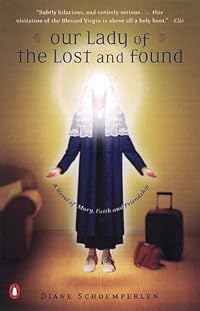
Our Lady of the Lost and Found
by Diane Schoemperlen
On This Page
Description
One Monday morning in April, a middle-aged writer walks into her living room to water the plants and finds a woman standing beside her potted fig tree. Dressed in a navy blue trench coat and white Nikes, the woman introduces herself as "Mary. Mother of God.... You know. Mary." Instead of a golden robe or a crown, she arrives bearing a practical wheeled suitcase. Weary after two thousand years of adoration and petition, Mary is looking for a little R & R. She's asked in for lunch, and decides show more to stay a week. As the story of their visit unfolds, so does the story of Mary-one of the most complex and powerful female figures of our time-and her changing image in culture, art, history, as well as the thousands of recorded sightings that have placed her everywhere from a privet hedge to the dented bumper of a Camaro. As this Everywoman and Mary become friends, their conversations, both profound and intimate, touch upon Mary's significance and enduring relevance. Told with humor and grace, Our Lady of the Lost and Found is an absorbing tour through Mary's history and a thoughtful meditation on spirituality, our need for faith, and our desire to believe in something larger than ourselves. show lessTags
Recommendations











Member Recommendations
Member Reviews
Unlike other Canadian novels of its genre, Our Lady of the Lost and Found is a profound and quietly affecting gem that does not produce ennui or restlessness. Despite her critics, Schoemperlen produces an entrancing tale which begins with a window to a writer’s solitary yet comfortable life and routine in Anyville, North America (although the author betrays her Canadian roots at the outset of the novel) and leads to a series of spiritually sumptuous moments that begin with the arrival of the Virgin Mary at the narrator’s doorstep (rather at the foot of the fig tree in the living room).
In Our Lady of the Lost and Found, Schoemperlen juxtaposes the nameless narrator’s ordinary life and daily preoccupations with a brief albeit show more rousing history of the Virgin Mary and her apparitions throughout the past two millenniums. Indeed, Schoemperlen’s gem of a novel is not riddled with a defining plot or particularly thrilling or resonating events in the course of its denouement. Then again, this bookworm does not object to a slow paced book that unfurls a delightful narrative which interweaves faith, science, and the frailty of the human mind and psyche with amazing attention to detail, pathos and humour.
Schoemperlen displays an effacing and quasi-self-deprecating sense of humour which makes the dreariness of a quiet existence come alive in vivid shapes and colours. In reading Our Lady of the Lost and Found, one is drawn in quietly towards the germination of the story of the protagonist’s life which rings surprisingly true to the quiet existence of this particular reader’s reality. In some way, one cannot help feel a slight forbearing of things to come which was oddly comforting to me. Schoemperlen’s protagonist recognizes romantic (dis)entanglements in her youth as foolish mistakes and ruminates over yesterdays and used-to-bes yet all the while being fully appreciative of the current of her life with some dignity.
Some readers and critics admonish Schoemperlen for the ambivalent role that religion and faith play throughout Our Lady of the Lost and Found. Is it a work of fiction, a compilation of historical narratives, or a tentative recollection of the writer’s hallucinatory visions of the Virgin Mary? In my opinion - it does not matter. As an agnostic who struggles with her wavering faith, the narrative was blissful in that it enabled the character of Mary to intersperse humourous anecdotes with wry intelligence and field questions on the conflicting role that religious fervour and spiritual apathy have in modern society. Millions of people across the globe firmly believe in their faith and hold true to their tales of apparitions and miracles. After all, these fascinating debates on the role of unwavering faith is sorely lacking nowadays despite the rising influence of spiritual gurus and their teachings. show less
In Our Lady of the Lost and Found, Schoemperlen juxtaposes the nameless narrator’s ordinary life and daily preoccupations with a brief albeit show more rousing history of the Virgin Mary and her apparitions throughout the past two millenniums. Indeed, Schoemperlen’s gem of a novel is not riddled with a defining plot or particularly thrilling or resonating events in the course of its denouement. Then again, this bookworm does not object to a slow paced book that unfurls a delightful narrative which interweaves faith, science, and the frailty of the human mind and psyche with amazing attention to detail, pathos and humour.
Schoemperlen displays an effacing and quasi-self-deprecating sense of humour which makes the dreariness of a quiet existence come alive in vivid shapes and colours. In reading Our Lady of the Lost and Found, one is drawn in quietly towards the germination of the story of the protagonist’s life which rings surprisingly true to the quiet existence of this particular reader’s reality. In some way, one cannot help feel a slight forbearing of things to come which was oddly comforting to me. Schoemperlen’s protagonist recognizes romantic (dis)entanglements in her youth as foolish mistakes and ruminates over yesterdays and used-to-bes yet all the while being fully appreciative of the current of her life with some dignity.
Some readers and critics admonish Schoemperlen for the ambivalent role that religion and faith play throughout Our Lady of the Lost and Found. Is it a work of fiction, a compilation of historical narratives, or a tentative recollection of the writer’s hallucinatory visions of the Virgin Mary? In my opinion - it does not matter. As an agnostic who struggles with her wavering faith, the narrative was blissful in that it enabled the character of Mary to intersperse humourous anecdotes with wry intelligence and field questions on the conflicting role that religious fervour and spiritual apathy have in modern society. Millions of people across the globe firmly believe in their faith and hold true to their tales of apparitions and miracles. After all, these fascinating debates on the role of unwavering faith is sorely lacking nowadays despite the rising influence of spiritual gurus and their teachings. show less
Subtly hilarious and entirely serious, this visitation of the Blessed Virgin is above all a holy hoot.
"In retrospect, I can see that the most important think I learned from Dr. Sloan and Ancient History 101 was there is more to history than facts, more to truth than reality.
In retrospect, I can see that this is a piece of knowledge that will change your life if you let it. But once upon a time, I thought that history was carved in stone. "(p.118)
I learned this same lesson at the University of California, Davis, in a literature class which included reading Milton. I remember how it struck me, reading Milton aloud to myself in the art building stair well, where it was always empty and one’s voice resonated with the poetry, that this was the truth. It changed my life.
I love the little clues in a novel as to where the title came from. show more It’s on p.54 in this book, tucked away, referred to just once, but the idea seeps through every page.
The author’s fascination with time, truth, story, belief: I trust these insights. They are also my experience. (p.161, 170)
And I have a whole wonderful story about Our Lady of Prompt Succor, mentioned on p.239…so someday I’ll tell you.
Ms. Schoemperlen gets to the grit of it, in reflecting on evil. “I am suggesting that it is evil that throws the meaning of life into question.” (p. 246) How do we trust God in the face of evil? And she is led into a similar maze in thinking about truth. (p. 287)
And yet. And yet. We hope. We trust. It’s called faith, the substance of things hoped for, the evidence of things unseen. show less
In retrospect, I can see that this is a piece of knowledge that will change your life if you let it. But once upon a time, I thought that history was carved in stone. "(p.118)
I learned this same lesson at the University of California, Davis, in a literature class which included reading Milton. I remember how it struck me, reading Milton aloud to myself in the art building stair well, where it was always empty and one’s voice resonated with the poetry, that this was the truth. It changed my life.
I love the little clues in a novel as to where the title came from. show more It’s on p.54 in this book, tucked away, referred to just once, but the idea seeps through every page.
The author’s fascination with time, truth, story, belief: I trust these insights. They are also my experience. (p.161, 170)
And I have a whole wonderful story about Our Lady of Prompt Succor, mentioned on p.239…so someday I’ll tell you.
Ms. Schoemperlen gets to the grit of it, in reflecting on evil. “I am suggesting that it is evil that throws the meaning of life into question.” (p. 246) How do we trust God in the face of evil? And she is led into a similar maze in thinking about truth. (p. 287)
And yet. And yet. We hope. We trust. It’s called faith, the substance of things hoped for, the evidence of things unseen. show less
I am not sure how to characterize this book. Billed as a novel, not much happens and much of the book is either retellings of appearances of Mary, at Lourdes, Fatima and less well-known places, or reflections on life, faith and the visit of Mary to the narrator of the book, who is an author who repeatedly asserts "This is a work of fiction". Iwas fascinated, in the best way. This is both a joyful and a meditative read.
I skipped pages in this novel when it became heavy into pontification of faith. Novel is also filled with stories of sightings through the ages of Our Lady. These were quite interesting. However, it didn’t inspire me to great religious intensity or even interest.
Our Lady of the Lost and Found is an absorbing tour through Mary's history and a thoughtful meditation on spirituality, our need for faith, and our desire to believe in something larger than ourselves.
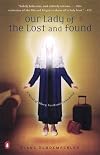
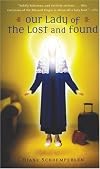
"On an apparently typical Monday morning in April, a middle-aged writer goes into her living room to water the plants and finds a woman standing in front of the fig tree. The woman is wearing a navy blue trench coat and white Nikes. She has a white shawl draped over her hair and she is holding a large leather purse and a small black suitcase on wheels. She is the Virgin Mary. Invited to stay for lunch, Mary explains that, after two thousand years of petition, adoration, and traveling, she is tired and needs some R and R. She ends up staying for one extraordinary and illuminating week." "So begins Diane Schoemperlen's novel. What follows is a magical tale in which Mary becomes much more than an icon. She becomes a kind and thoughtful and show more funny friend, a woman we can understand, not just one who is revered. As their time together unfolds and their wonderful friendship develops, the narrator learns the remarkable history of one of the most influential and complex women of all time. Along the way, she is propelled into a vibrant examination of life's big questions and begins to discover her own capacity for faith." show less
Members
- Recently Added By
Author Information

19+ Works 1,071 Members
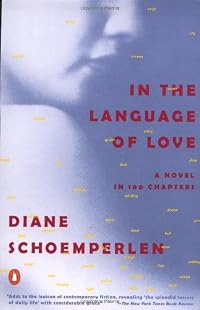
Diane Schoemperlen is the author of the acclaimed novel "In the Language of Love", & of five short story collections including "Forms of Devotion" (Viking) & "The Man of My Dreams", which was nominated for Canada's Governor General's Award for fiction. Her work has appeared widely in anthologies & magazines, including Ms. & Story. She lives in show more Kingston, Ontario. (Publisher Provided) Writer and editor Diane Schoemperlen was born in Thunder Bay, Ontario, Canada on July 9, 1954. She graduated from Lakehead University and has been working as a writer since 1986. Her works include In the Language of Love, which uses the 100 stimulus words of the standard psychological Word Association Test to tell the story of one woman from childhood to motherhood, and Forms of Devotion, which won the Governor General's Award. She has also edited such works as Vital Signs: New Women Writers in Canada, Coming Attractions, and The Journey Prize Anthology. (Bowker Author Biography) show less
Some Editions
Common Knowledge
- Canonical title
- Our Lady of the Lost and Found
- Original publication date
- 2001
- People/Characters
- Mary, mother of Jesus (Luke 2)
- Epigraph
- Then I saw the Virgin Mary. I didn't know it was her at first, because she was dressed in the usual blue or white and gold, but in black. She didn't have a crown. Her head was bowed, her face in shadow, her hands held out ... (show all)open at the sides. Around her feet were stubs of candles, and all over her black dress were pinned what I though at first were stars, but which were instead little brass or tin ams, legs, hands, sheep, donkeys. chickens, and hearts. I could see what these were for: she was a Virgin of lost things, one who restored what was lost. She was the onloy one of these wood or marble or plaster Virgins who had ever seemed at all real to me. There could be some point in praying to her, kneeling down, lighting a candle. But I didn't do it, because I didn't know what to pray for. What was lost, what I could pin on her dress.
I paint the Virgin Mary descending to the earth, which is covered with snow and slush. She is wearing a winter coat over her blue robe, and has a purse slung over her shoulder. She's carrying two brown paper bags full of groceries. Several things have fallen from the bags: an egg, an onion, apple. She looks tired.
-Margaret Atwood, Cat's Eye
The irony of writing about such an exerience in the modern era is such that, if I say to people, "This really happened," not unreasonably, they will be inclined to doubt me. They might suspect me of boasting, or assume that I have lost my mind. If I say, "Imagined it, I made it up, it's fiction-only then are they free to believe it. -Kathleen Norris, Amazing Grace
Ultimately, I have found it is meaningless to hold the yardstick of fact against the complexities of the human heart., Reality simply isn't large enougn to hold us. -A. Manette Ansay, River Angel - Dedication
- For Merilyn. She [is] in a class by herself. It is not often that someone comes along who is a true friend and a good writer. - E.B. White, Charlotte's Web
- First words
- Looking back on it now, I can see there were signs.
- Last words
- (Click to show. Warning: May contain spoilers.)That, in itself, is an unspeakable gift.
- Blurbers
- Livesey, Margot
Classifications
Statistics
- Members
- 595
- Popularity
- 49,033
- Reviews
- 22
- Rating
- (3.71)
- Languages
- English
- Media
- Paper, Audiobook, Ebook
- ISBNs
- 9
- ASINs
- 4