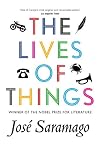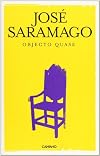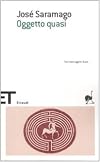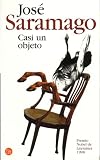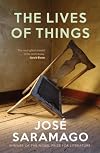
The Lives of Things
by José Saramago
On This Page
Description
Collects the author's early short stories, infused with satire and fantastical elements and showcasing his efforts to expose the tyranny of the Salazar regime in his native Portugal.Tags
Recommendations



















Member Reviews
A collection of six short pieces in the classic Saramago mode, dominated by the opening story, "The Chair", a heavily-ironic woodworm's eye view of the death of an unnamed, elderly dictator (presumably Salazar) fatally injured when a chair collapses under him. "Reflux" and "Things" are both allegorical fantasies, one about a king allergic to the sight of death and another about a dystopia in which inanimate objects rise in revolution against the men who are prepared to treat their fellow men as inanimate objects. "Embargo" is a twisted look at the oil crisis and car-dependance, and "The centaur" explores what the world looks like to the last surviving horse/man — Saramago is surely the first person to ask himself how a centaur could show more turn over in bed... show less
Saramago's stories are like modern fairy tales, mysterious, magical and drawing together elements of contemporary life with a liberal dose of mythology and impossibilities. Even when his meaning is obscure (or lost in translation, as may easily be the case) his short stories in The Life of Things feel beautiful. They conjure up a world that rivals the imagery of Pan's Labyrinth or Mirrormask, familiar yet strange and a bit intimidating for all its slow, quiet mundanity.
The first of the stories in this book addresses the absurdly random, seemilgly arbitrary death of Antonio de Oliveira Salazar, the dictator who controlled Portugal until 1968. Salazar suffered a brain hemorrhage after falling and hitting his head, and while there is now show more evidence to suggest he was in a bathtub when he hit his head, the popular story is that he fell from his chair. Saramago's story explores the fated inevitability of his fall, from his chair, and thus from power.
The rest of the stories in this collection are a bit easier to follow than "The Chair", but all of these stories offer interesting, clever, or beautiful twists to our perception of the world around us. I still prefer Saramago's longer fiction, where he has more space to set up his characters and scenes, but these shorter pieces are still excellent. show less
The first of the stories in this book addresses the absurdly random, seemilgly arbitrary death of Antonio de Oliveira Salazar, the dictator who controlled Portugal until 1968. Salazar suffered a brain hemorrhage after falling and hitting his head, and while there is now show more evidence to suggest he was in a bathtub when he hit his head, the popular story is that he fell from his chair. Saramago's story explores the fated inevitability of his fall, from his chair, and thus from power.
The rest of the stories in this collection are a bit easier to follow than "The Chair", but all of these stories offer interesting, clever, or beautiful twists to our perception of the world around us. I still prefer Saramago's longer fiction, where he has more space to set up his characters and scenes, but these shorter pieces are still excellent. show less
This was my first Saramago foray, and I had very high expectations going in. I started with this one because sometimes life only gives you time enough to read short stories, ya know? "The Lives of Things" was first published in Portuguese in 1978, and this nice paperback edition was translated in 2012.
The title announces the theme. In each of the 7 short stories, Saramago doesn't explore the mere existence of things, but supposes worlds where things assert themselves as unreifiable objects. In "Things," a futuristic caste society experiences the revolution of OUMIs (objects, utensils, machines or installations). At first small objects disappear and then whole city blocks. In "Reflux," a King, haunted by death, chooses to rid his show more kingdom of it, digging up all prior remains for deposition in a vast common (but distant) cemetery. Eventually, a new economy grows around the cemetery, and then new towns, etc. Death, the ultimate (and most frightening) Thing, wends its way back to the center of life.
In "Embargo," a man dependent on fuel in a rationed economy, spends an unusual day stuck in various lines for petrol, as his car apparently (and mysteriously) breaks down. I won't spoil it, but suffice it to say that the distinction between man and machine is challenged. Similarly, Saramago challenges the distinction between man and chattel by considering the haunted existence of the last remaining centaur, supposing man and beast are "stuck" in analogous ways to Embargo's main character. Saramago evokes a Kafka vibe, which is to say his worlds are by and large bureaucratic and bewildering. It’s not hard to see from these stories why he is so taken by Goncalo Tavares’s work.
Pride of place really needs to go to the first story, "The Chair," which makes much more sense if you understand the unannounced context of the story. In 1968, the authoritarian Portuguese dictator Antonio de Oliveira was sunbathing on his deck chair when it broke and he tumbled backwards, causing the brain hemorrhage which would remove him from power and eventually kill him. Saramago begins the chair’s story mere seconds before the chair snaps, and it ends with Oliveira’s head making contact with the ground. So, all told the 25 page story describes about 2 seconds in time. And it is just marvelous. show less
The title announces the theme. In each of the 7 short stories, Saramago doesn't explore the mere existence of things, but supposes worlds where things assert themselves as unreifiable objects. In "Things," a futuristic caste society experiences the revolution of OUMIs (objects, utensils, machines or installations). At first small objects disappear and then whole city blocks. In "Reflux," a King, haunted by death, chooses to rid his show more kingdom of it, digging up all prior remains for deposition in a vast common (but distant) cemetery. Eventually, a new economy grows around the cemetery, and then new towns, etc. Death, the ultimate (and most frightening) Thing, wends its way back to the center of life.
In "Embargo," a man dependent on fuel in a rationed economy, spends an unusual day stuck in various lines for petrol, as his car apparently (and mysteriously) breaks down. I won't spoil it, but suffice it to say that the distinction between man and machine is challenged. Similarly, Saramago challenges the distinction between man and chattel by considering the haunted existence of the last remaining centaur, supposing man and beast are "stuck" in analogous ways to Embargo's main character. Saramago evokes a Kafka vibe, which is to say his worlds are by and large bureaucratic and bewildering. It’s not hard to see from these stories why he is so taken by Goncalo Tavares’s work.
Pride of place really needs to go to the first story, "The Chair," which makes much more sense if you understand the unannounced context of the story. In 1968, the authoritarian Portuguese dictator Antonio de Oliveira was sunbathing on his deck chair when it broke and he tumbled backwards, causing the brain hemorrhage which would remove him from power and eventually kill him. Saramago begins the chair’s story mere seconds before the chair snaps, and it ends with Oliveira’s head making contact with the ground. So, all told the 25 page story describes about 2 seconds in time. And it is just marvelous. show less
'The Lives of Things' is a collection of six short stories originally published as 'Objecto Quase' in 1978. The epigraph by Marx marks, uninhibitedly, themes political and social which the author essentially elaborated upon in his later fiction, especially in 'The Stone Raft', 'The Cave' and the tour de force, 'Blindness'.
'The Chair' opens the book, in the stream of consciousness narration, and obliquely reflects on the political state of affairs under the Salazar regime. The subject of the fall of the chair takes the reader on a trip to imagine, understand and question the conceptual contours of this fall which, in the case, was inevitable. Still, the approach of presenting the manifestation of the rot, the behind-the-scenes work of show more an essential and yet seemingly inadvertent opposition set up by the too much-ness of one's proclaimed authority, is tongue in cheek to say the least.
'Reflux' and 'Things' basically construct the Oppressor-Oppressed dialectic. Yet, Saramago's expression holds the bite, early fiction as it is:
"All kings are great, by definition and birth:
any king who might wish otherwise will wish in vain...".
The surreal premise of 'Things' discloses how everyday objects like doors and stairs are up in rebellion against the authoritarian state and its comfortable and safe 'class' representatives. It is 'things', here, which question the one thing which is at grave and hopeless danger of being overrun by death: the humane in humans; what is it to be human? Do they need to care?
'Embargo', another political allegory, alludes to the fears and apprehensions instilled in human mind through control over resources which depend upon technology to get realized. Fear turns into a device of power, while authority exploits the vicious circle set in and maintained over time; the result being a nightmare situation for the vulnerable human subject.
With 'The Centaur', allegory moves away from connotations underlying the first four stories within the socio-political discourse. A parable enthused with philosophical enquiry into the being of man, the tale presents a lone-surviving centaur, banished from the realms of gods and driven out to roam endlessly on Earth. The tale is charged with existential situations, talks about the horse, the man and the centaur; characters with individual selves and also a common self (or neither of the two): "Half a man. A man."
The final story, 'Revenge' is more of an image-story, portrayed with not more than a double stroke of a narrative-brush; captivating and disturbing it is nonetheless. show less
'The Chair' opens the book, in the stream of consciousness narration, and obliquely reflects on the political state of affairs under the Salazar regime. The subject of the fall of the chair takes the reader on a trip to imagine, understand and question the conceptual contours of this fall which, in the case, was inevitable. Still, the approach of presenting the manifestation of the rot, the behind-the-scenes work of show more an essential and yet seemingly inadvertent opposition set up by the too much-ness of one's proclaimed authority, is tongue in cheek to say the least.
'Reflux' and 'Things' basically construct the Oppressor-Oppressed dialectic. Yet, Saramago's expression holds the bite, early fiction as it is:
"All kings are great, by definition and birth:
any king who might wish otherwise will wish in vain...".
The surreal premise of 'Things' discloses how everyday objects like doors and stairs are up in rebellion against the authoritarian state and its comfortable and safe 'class' representatives. It is 'things', here, which question the one thing which is at grave and hopeless danger of being overrun by death: the humane in humans; what is it to be human? Do they need to care?
'Embargo', another political allegory, alludes to the fears and apprehensions instilled in human mind through control over resources which depend upon technology to get realized. Fear turns into a device of power, while authority exploits the vicious circle set in and maintained over time; the result being a nightmare situation for the vulnerable human subject.
With 'The Centaur', allegory moves away from connotations underlying the first four stories within the socio-political discourse. A parable enthused with philosophical enquiry into the being of man, the tale presents a lone-surviving centaur, banished from the realms of gods and driven out to roam endlessly on Earth. The tale is charged with existential situations, talks about the horse, the man and the centaur; characters with individual selves and also a common self (or neither of the two): "Half a man. A man."
The final story, 'Revenge' is more of an image-story, portrayed with not more than a double stroke of a narrative-brush; captivating and disturbing it is nonetheless. show less
3.5, más bien.
Definitivamente el mejor formato para el buen Saramago es la novela.
Considerando que estos cuentos conforman el tercer libro que escribió el autor en su juventud las cosas se aclaran un poco. Se nota que Saramago aun no encuentra su propia voz, pero hay en sus textos ya una identidad propia, un no se qué que no está presente en ningún otro autor.
Los cuentos en este libro son geniales, sobre todo el primero y los últimos dos. Ya se encuentra lo fabulesco, la prosa hipnótica y fluida, la obsesión. Todos los cuentos tienen una temática en común: el ser humano que se funde con las cosas, los objetos, el entorno. Cada cuento muestra un estado diferente de inmersión en la materia cruda del mundo.
Los cuentos son show more geniales, pero no alcanzan todavía la perfección de estilo que podríamos encontrar, por ejemplo, en El evangelio según Jesucristo. Tal vez no sea el mejor libro para comenzar a leer al nobel portugués, pero sí es excelente para leer cuando ya te chutaste unos cuantos del buen José.
Autor magistral en sus años de gestación. show less
Definitivamente el mejor formato para el buen Saramago es la novela.
Considerando que estos cuentos conforman el tercer libro que escribió el autor en su juventud las cosas se aclaran un poco. Se nota que Saramago aun no encuentra su propia voz, pero hay en sus textos ya una identidad propia, un no se qué que no está presente en ningún otro autor.
Los cuentos en este libro son geniales, sobre todo el primero y los últimos dos. Ya se encuentra lo fabulesco, la prosa hipnótica y fluida, la obsesión. Todos los cuentos tienen una temática en común: el ser humano que se funde con las cosas, los objetos, el entorno. Cada cuento muestra un estado diferente de inmersión en la materia cruda del mundo.
Los cuentos son show more geniales, pero no alcanzan todavía la perfección de estilo que podríamos encontrar, por ejemplo, en El evangelio según Jesucristo. Tal vez no sea el mejor libro para comenzar a leer al nobel portugués, pero sí es excelente para leer cuando ya te chutaste unos cuantos del buen José.
Autor magistral en sus años de gestación. show less
After reading Cain, I decided to read something else by Jose Saramago. I picked up this book of short stories. They were interesting and disturbing. According to the introduction, many of the stories are symbolic of life under the Portuguese dictator Salazar. I realized I had no idea that Portugal had been under a dictatorship and I then realized that I know nothing about Portugal. I have decided to read up on that country's history.
The first story, The Chair, is 25 pages devoted to the act of a chair falling apart. It's a very significant chair, as it's the chair Salazar sat in that collapsed and is blamed for his eventual death. Looking at the Internet, it appears Salazar may have fallen in the bathtub but that doesn't take away from show more a very unusual story.
I enjoyed Embargo. Although it is, like all the stories, fairly distressing, it is also amusing. A man's car takes control and he is powerless behind the wheel. Not so thinly-disguised allegory, but entertaining.
Things was a story about life in an oppressive, highly regulated city where the government is basically "big brother" and THINGS have a life of their own. Sometimes amusing, sometimes sad. One thing that struck me about this story is when the main character mentions that he can't smoke at work - it is forbidden. (As are a lot of other things.) Hmm, smoking at work in this totalitarian regime is prohibited? I'll have to think about that one. . . .
I would recommend this book if you're reading Saramago's work. It's not a lighthearted collection of short stories by any means, but I'm glad I read them. They provided food for thought. show less
The first story, The Chair, is 25 pages devoted to the act of a chair falling apart. It's a very significant chair, as it's the chair Salazar sat in that collapsed and is blamed for his eventual death. Looking at the Internet, it appears Salazar may have fallen in the bathtub but that doesn't take away from show more a very unusual story.
I enjoyed Embargo. Although it is, like all the stories, fairly distressing, it is also amusing. A man's car takes control and he is powerless behind the wheel. Not so thinly-disguised allegory, but entertaining.
Things was a story about life in an oppressive, highly regulated city where the government is basically "big brother" and THINGS have a life of their own. Sometimes amusing, sometimes sad. One thing that struck me about this story is when the main character mentions that he can't smoke at work - it is forbidden. (As are a lot of other things.) Hmm, smoking at work in this totalitarian regime is prohibited? I'll have to think about that one. . . .
I would recommend this book if you're reading Saramago's work. It's not a lighthearted collection of short stories by any means, but I'm glad I read them. They provided food for thought. show less
Saramago é um escritor de histórias inverossímeis, a realidade anda de mãos dadas com a ficção e a forma como descreve as situações por ele imaginadas é muito boa.
Este livro contém 6 contos (A Cadeira, Embargo, Refluxo, Coisas, Centauro, Desforra), o último foi o que gostei menos, parece-me que foi colocado ali como antítese dos restantes (já que começa com alguma violência e termina com a imagem de um amor puro e águas calmas), uma espécie de conclusão do livro. Gostei bastante de “As Coisas”, o “Embargo” e o “Refluxo”.
Mais pormenores no blog: https://ideiasdeleitora.blogspot.pt/2018/03/opinioes-objecto-quase-de-jose-saram...
Este livro contém 6 contos (A Cadeira, Embargo, Refluxo, Coisas, Centauro, Desforra), o último foi o que gostei menos, parece-me que foi colocado ali como antítese dos restantes (já que começa com alguma violência e termina com a imagem de um amor puro e águas calmas), uma espécie de conclusão do livro. Gostei bastante de “As Coisas”, o “Embargo” e o “Refluxo”.
Mais pormenores no blog: https://ideiasdeleitora.blogspot.pt/2018/03/opinioes-objecto-quase-de-jose-saram...
Members
- Recently Added By
Lists

Books Read in 2023
5,547 works; 144 members
Author Information

235+ Works 53,042 Members
José Saramago was born on November 16, 1922. He spent most of his childhood on his parent's farm, except while attending school in Lisbon. Before devoting himself exclusively to writing novels in 1976, he worked as a draftsman, a publisher's reader, an editor, translator, and political commentator for Diario de Lisboa. He is indisputably show more Portugal's best-known literary figure and his books have been translated into more than 25 languages. Although he wrote his first novel in 1947, he waited some 35 years before winning critical acclaim for work such as the Memorial do Convento. His works include The Year of the Death of Ricardo Reis, The Stone Raft, Baltasar and Blimunda, The History of the Siege of Lisbon, The Gospel According to Jesus Christ, and Blindness. At age 75, he was awarded the Nobel Prize for Literature in 1998 for his work in which "parables sustained by imagination, compassion and irony, continually enables us to apprehend an elusory reality." He died from a prolonged illness that caused multiple organ failure on June 18, 2010 at the age of 87. (Bowker Author Biography) show less
Some Editions
Series
Belongs to Publisher Series
A tot vent (389)
Work Relationships
Common Knowledge
- Canonical title
- The Lives of Things
- Original title
- Objecto Quase : Contos
- Original publication date
- 1978
- Original language
- Portuguese
Classifications
- Genres
- Fiction and Literature, General Fiction
- DDC/MDS
- 869.3 — Literature & rhetoric Spanish Literature Literatures of Portuguese and Galician languages Portuguese fiction
- LCC
- PQ9281 .A66 .O2513 — Language and Literature French, Italian, Spanish and Portuguese literatures Portuguese literature Individual authors, 1961-2000
- BISAC
Statistics
- Members
- 445
- Popularity
- 68,524
- Reviews
- 12
- Rating
- (3.84)
- Languages
- 7 — English, French, German, Italian, Portuguese, Spanish, Turkish
- Media
- Paper, Ebook
- ISBNs
- 29
- ASINs
- 6