On This Page
Description
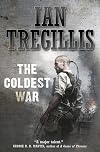
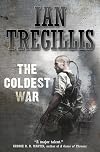
A tale set in an alternate-universe, post-World War II era finds precarious peace agreements between England and the USSR threatened by the murders of warlocks responsible for safeguarding British national security, a situation that falls into the hands of two supernaturally enhanced siblings and a former spy who would protect the queen.Tags
Recommendations








Member Reviews
Downstairs you have locked up a man who can walk through walls like a ghost. And his sister, who can read the future as easily as you and I read the god-damned newspaper. Now, you tell me something. Do you honestly believe it took them twenty-odd years to escape?" (pg. 114).
The Coldest War sees Ian Tregillis continuing the fine work he did with Bitter Seeds, the first book in this so-called 'Milkweed Triptych'. After the Eidolon-induced VE Day, this book sees a new status quo in Europe (hint: there's a 'Paris Wall'). Set roughly twenty years after the war of book one, Tregillis' alternative-history world convinces as it remains grounded in historical plausibility (you know, aside from the blood magic and supermen). At first, I was show more confused as to why the United States does not have a larger role in Tregillis' world, but realised that as the war ended early with British victory, the USA never usurped a war-weary British Empire as the dominant superpower, never pulled herself out of economic depression by becoming the 'arsenal of democracy'. Consequently, in Tregillis' Cold War, the American Depression has entered its fourth decade (pg. 252) and the two superpowers facing-off are the Soviet Union with its legion of supermen and the British Empire with its warlocks. As Tregillis suggests, time is a cruel alchemist (pg. 37), both for the world he has built and the characters he has created; the decision to mess with dark forces beyond the control of men has begun to reap terrible and ominous consequences. (But, on page 36, we discover that the Beatles still exist in this alternate history, so maybe Tregillis' crapsack world is not so bad after all!)
Into this chaos and strife steps Gretel, up to her old tricks, and this second instalment of the Milkweed trilogy revolves predominantly around the various interested parties trying to understand her, control her, and avoid her wake. This means it is less action-packed than Bitter Seeds - after all, this one is set in the Cold War rather than a 'hot' war - but the reader's interest is maintained by Gretel's constant scheming and manipulations, as gradually and tantalisingly her plans are revealed. And this is The Coldest War's main strength - Tregillis' mastery of plotting. It is a very clever book - I don't want to spoil what happens but even minor events from earlier in the book (as well as from Bitter Seeds) are shown to be of grand importance, from Heike's suicide in the first book (pg. 19) to the scenes recounted in this book's epilogue (it brilliantly tweaks part of Chapter 5 from Bitter Seeds). Gretel even has time to toy with Reinhardt (pg. 373) along the way. Gretel, this "remorseless... chess player sacrificing pieces according to her grand strategy" (pg. 148) is a truly fantastic character, and it says a lot for Tregillis' storytelling ability that even at the reveal-all ending she still remains somewhat of an enigma.
The Coldest War also builds on Bitter Seeds' great start by fleshing out the threat posed by the Eidolons. Frustratingly, I can't really say much on this without spoiling the plot for would-be readers, but suffice to say that the malice detected by Marsh and the others in the Bitter Seeds negotiations is bolder and more chilling than ever.
Ian Tregillis is proving himself an exceptional writer, adept at weaving the complex strands of the plot together across three books, switching seamlessly between the perspectives of multiple characters and providing strong characterisation (particularly of Marsh). His language is less dense than the first book, retaining the lyrical dexterity shown off in Bitter Seeds but finding a better balance with a thriller-like pacing that allowed me to read through The Coldest War much quicker than I did the first. Above all, it is always invigorating when you see a writer take on with a high-concept story and pull it off with aplomb. Tregillis is crafting something really special here, and the third book in the series, Necessary Evil, may well prove to be the best Milkweed book yet." show less
The Coldest War sees Ian Tregillis continuing the fine work he did with Bitter Seeds, the first book in this so-called 'Milkweed Triptych'. After the Eidolon-induced VE Day, this book sees a new status quo in Europe (hint: there's a 'Paris Wall'). Set roughly twenty years after the war of book one, Tregillis' alternative-history world convinces as it remains grounded in historical plausibility (you know, aside from the blood magic and supermen). At first, I was show more confused as to why the United States does not have a larger role in Tregillis' world, but realised that as the war ended early with British victory, the USA never usurped a war-weary British Empire as the dominant superpower, never pulled herself out of economic depression by becoming the 'arsenal of democracy'. Consequently, in Tregillis' Cold War, the American Depression has entered its fourth decade (pg. 252) and the two superpowers facing-off are the Soviet Union with its legion of supermen and the British Empire with its warlocks. As Tregillis suggests, time is a cruel alchemist (pg. 37), both for the world he has built and the characters he has created; the decision to mess with dark forces beyond the control of men has begun to reap terrible and ominous consequences. (But, on page 36, we discover that the Beatles still exist in this alternate history, so maybe Tregillis' crapsack world is not so bad after all!)
Into this chaos and strife steps Gretel, up to her old tricks, and this second instalment of the Milkweed trilogy revolves predominantly around the various interested parties trying to understand her, control her, and avoid her wake. This means it is less action-packed than Bitter Seeds - after all, this one is set in the Cold War rather than a 'hot' war - but the reader's interest is maintained by Gretel's constant scheming and manipulations, as gradually and tantalisingly her plans are revealed. And this is The Coldest War's main strength - Tregillis' mastery of plotting. It is a very clever book - I don't want to spoil what happens but even minor events from earlier in the book (as well as from Bitter Seeds) are shown to be of grand importance, from Heike's suicide in the first book (pg. 19) to the scenes recounted in this book's epilogue (it brilliantly tweaks part of Chapter 5 from Bitter Seeds). Gretel even has time to toy with Reinhardt (pg. 373) along the way. Gretel, this "remorseless... chess player sacrificing pieces according to her grand strategy" (pg. 148) is a truly fantastic character, and it says a lot for Tregillis' storytelling ability that even at the reveal-all ending she still remains somewhat of an enigma.
The Coldest War also builds on Bitter Seeds' great start by fleshing out the threat posed by the Eidolons. Frustratingly, I can't really say much on this without spoiling the plot for would-be readers, but suffice to say that the malice detected by Marsh and the others in the Bitter Seeds negotiations is bolder and more chilling than ever.
Ian Tregillis is proving himself an exceptional writer, adept at weaving the complex strands of the plot together across three books, switching seamlessly between the perspectives of multiple characters and providing strong characterisation (particularly of Marsh). His language is less dense than the first book, retaining the lyrical dexterity shown off in Bitter Seeds but finding a better balance with a thriller-like pacing that allowed me to read through The Coldest War much quicker than I did the first. Above all, it is always invigorating when you see a writer take on with a high-concept story and pull it off with aplomb. Tregillis is crafting something really special here, and the third book in the series, Necessary Evil, may well prove to be the best Milkweed book yet." show less
The story is getting more impressive. We're moving away from traditional hero types and we're getting a lot more flip-sides. Sure, we've scooted a couple of decades into the future and everyone has gotten a little flabby, but what can you expect in an upside-down world where England is pretty darn evil, the Soviet Union saved the day from the Nazis, and Cthulhu is knock knock knockin on heaven's door. I've still got that image of Greta with pigtails, and she's just as charming and as odd as ever, for a raving lunatic hell-bent on destroying the world. (Or so we're lead to believe.)
I'm enjoying these stories so much that I'm prepared to risk wetting myself because I can't be bothered to put the book down a moment. Shame on you, Mr. show more Tregillis. It's ok, perhaps I'll rearrange my entire life so that when I was 17 I got into such a large car accident that I had to be fitted with a permanent catheter just so when I finally get around to reading this novel I'll have found that I don't actually need to get up to use the restroom and so therefore all things are copacetic again.
Did I really expect a time travel novel? No, but I'm thinking it works in a hell-ya kinda way.
Maybe I should get some sleep? Nah, it's time to start the third novel. show less
I'm enjoying these stories so much that I'm prepared to risk wetting myself because I can't be bothered to put the book down a moment. Shame on you, Mr. show more Tregillis. It's ok, perhaps I'll rearrange my entire life so that when I was 17 I got into such a large car accident that I had to be fitted with a permanent catheter just so when I finally get around to reading this novel I'll have found that I don't actually need to get up to use the restroom and so therefore all things are copacetic again.
Did I really expect a time travel novel? No, but I'm thinking it works in a hell-ya kinda way.
Maybe I should get some sleep? Nah, it's time to start the third novel. show less
This is the second book in the Milkweed Triptych and picks up 20-odd years after the events of Bitter Seeds. With the help otherworldly powers summoned by British warlocks the German Reich was plunged in to harshest winter. Its armies frozen and cities starving it was easy prey for the armoured might of the Russian armies and so the Second World War was won. But now the two victorious powers, Britain and the USSR are locked in a cold war. The European continent is mostly under Soviet control with Paris a divided city and the iron curtain having fallen across all but its western-most fringes. The Soviets having captured most of the Nazi experimental technology and personal have developed their own psionic super-soldiers but the presence show more of the British warlocks in hiding in Britain act as a deterrent to Soviet expansionism and so an uneasy stalemate is achieved. But for how long?
Again what makes this book a winner are the characters, the great atmosphere of menace and careful, ominous unfolding of the plot as it becomes clearer and clearer that the Cold War competition between the two powers is propelling the entire world towards a greater catastrophe than anyone can imagine. Great stuff and I look forward to reading the third and final book in the series. show less
Again what makes this book a winner are the characters, the great atmosphere of menace and careful, ominous unfolding of the plot as it becomes clearer and clearer that the Cold War competition between the two powers is propelling the entire world towards a greater catastrophe than anyone can imagine. Great stuff and I look forward to reading the third and final book in the series. show less
The Coldest War is definitely a step-up from Bitter Seeds. Although I am apprehensive about books that dismiss 20 years of the story as unimportant and then picks it up 20 years later exactly where it was left off, some authors, Ian Tregillis included, do it masterfully and purposefully. And the fact that you do not get that purpose until the cliffhanger in the end only adds to the reading experience.
If Bitter Seeds seemed like one big grey area for me, The Coldest War made more sense.
There are no good guys or bad guys, because reading different points of view makes you understand where this or that character is coming from.
In The Coldest War two enemies unite against a third, and past mistakes are trying to be fixed, making that line show more between good and bad less blurred. But then at some other moments the line becomes so blurred it is ridiculous. And it feels like a good thing, because that makes the characters seem more realistic, especially Klaus and Gretel, given how odd their upbringing and their powers are and making it less hard to relate to them. In this book they seemed less like someone's puppets and more like their own people. At first it was Klaus with his ordinary need to be free from his sister, to take up a hobby, to be responsible for himself only; and then Gretel with her brilliant mind and plans put in motion decades ago.
Cannot wait to see where the story takes all the characters next. show less
If Bitter Seeds seemed like one big grey area for me, The Coldest War made more sense.
There are no good guys or bad guys, because reading different points of view makes you understand where this or that character is coming from.
In The Coldest War two enemies unite against a third, and past mistakes are trying to be fixed, making that line show more between good and bad less blurred. But then at some other moments the line becomes so blurred it is ridiculous. And it feels like a good thing, because that makes the characters seem more realistic, especially Klaus and Gretel, given how odd their upbringing and their powers are and making it less hard to relate to them. In this book they seemed less like someone's puppets and more like their own people. At first it was Klaus with his ordinary need to be free from his sister, to take up a hobby, to be responsible for himself only; and then Gretel with her brilliant mind and plans put in motion decades ago.
Cannot wait to see where the story takes all the characters next. show less
Wow, did that seriously just happen?! Those were the words running through my head when I reached the very end of this book. Just when I thought this series couldn't get any crazier with its genre-bending goodness, it decides to throw me for another loop (which in the context of talking about this book is a rather clever pun, now that I think about it. I'm just a little miffed now because I can't explain it without spoiling anything!) The way I see it, as far as those shocking "I-NEED-to-know-what-happens-next" cliffhangers go, Ian Tregillis just raised the freakin' bar.
If I had to go back and talk about the first book of the Milkweed Triptych, Bitter Seeds, I'd probably describe it as an alternate history World War II novel with both show more fantasy and science fiction elements, mostly due to its main premise involving Nazi Germany's lab-raised soldiers with superpowers versus the British's warlocks and their demons. This second book still has all of that, except it takes place some twenty years later, and even though the war is over, Great Britain now finds itself locked in a precarious power struggle with the USSR.
Now Project Milkweed is threatened when they find out that Britain's warlocks, the country's greatest defense in keeping their enemy at bay, are being killed off by an unknown assassin. Meanwhile, a pair of super-soldier siblings who fought for the Nazis in WWII escape their Soviet prison and make their way to England. One of them is Gretel, the psychopath pre-cog who is still obsessed with manipulating the life of British agent Raybould Marsh. Even after more than two decades, she is still pulling the strings, nudging the future towards her own mysterious agenda.
By all accounts, I should have liked this book more, and I think I would have if it weren't so utterly bleak. I know "Super soldiers vs. Warlocks" sounds like an interesting and unbelievably fun premise -- which it most certainly is, don't get me wrong -- but part of me is still having trouble getting over how dark this series can be sometimes. While I'm no stranger to dark fiction with dreary themes, there's just something about these books that unsettle the heck out of me and chill me to the bone.
I suppose depending on who you are, that can be seen as a good or bad thing. For example, in Bitter Seeds, I found that the disturbing ideas in the first book really worked in giving the story the hard edge it needed. I was able to transform those feelings of dread into suspenseful anticipation which kept me turning the pages, and also because I felt pity for the poor characters who have had such terrible things happen to them or are forced to make these awful decisions.
Unfortunately, my sympathy for the characters ran out and was largely absent for the most part in The Coldest War. The main players were mostly the same, but in the twenty-two years since the events of the last book, many things have happened to turn even the "good guys" into pretty despicable people in my eyes. While the main antagonist Gretel is still as evil as ever, I nevertheless had a difficult time bringing myself to muster up any enthusiasm to root for Marsh or Will this time around. There are no truly upstanding characters in this book, which normally isn't a problem for me; I find I can be drawn to even the most morally corrupted of characters if they are written well, but I honestly couldn't find anyone particularly likeable in this book, with the possible exception of Klaus, Gretel's brother.
Story-wise, though, I am absolutely floored. The ending alone was probably worth all the frustrating moments the characters put me through, not to mention the next book presents the perfect opportunity for many of them to redeem themselves. That last line in the epilogue has got to be the most effective two words in the history of book endings. I can't wait to pick up the third book for the finale, I MUST find out how it all ends. show less
If I had to go back and talk about the first book of the Milkweed Triptych, Bitter Seeds, I'd probably describe it as an alternate history World War II novel with both show more fantasy and science fiction elements, mostly due to its main premise involving Nazi Germany's lab-raised soldiers with superpowers versus the British's warlocks and their demons. This second book still has all of that, except it takes place some twenty years later, and even though the war is over, Great Britain now finds itself locked in a precarious power struggle with the USSR.
Now Project Milkweed is threatened when they find out that Britain's warlocks, the country's greatest defense in keeping their enemy at bay, are being killed off by an unknown assassin. Meanwhile, a pair of super-soldier siblings who fought for the Nazis in WWII escape their Soviet prison and make their way to England. One of them is Gretel, the psychopath pre-cog who is still obsessed with manipulating the life of British agent Raybould Marsh. Even after more than two decades, she is still pulling the strings, nudging the future towards her own mysterious agenda.
By all accounts, I should have liked this book more, and I think I would have if it weren't so utterly bleak. I know "Super soldiers vs. Warlocks" sounds like an interesting and unbelievably fun premise -- which it most certainly is, don't get me wrong -- but part of me is still having trouble getting over how dark this series can be sometimes. While I'm no stranger to dark fiction with dreary themes, there's just something about these books that unsettle the heck out of me and chill me to the bone.
I suppose depending on who you are, that can be seen as a good or bad thing. For example, in Bitter Seeds, I found that the disturbing ideas in the first book really worked in giving the story the hard edge it needed. I was able to transform those feelings of dread into suspenseful anticipation which kept me turning the pages, and also because I felt pity for the poor characters who have had such terrible things happen to them or are forced to make these awful decisions.
Unfortunately, my sympathy for the characters ran out and was largely absent for the most part in The Coldest War. The main players were mostly the same, but in the twenty-two years since the events of the last book, many things have happened to turn even the "good guys" into pretty despicable people in my eyes. While the main antagonist Gretel is still as evil as ever, I nevertheless had a difficult time bringing myself to muster up any enthusiasm to root for Marsh or Will this time around. There are no truly upstanding characters in this book, which normally isn't a problem for me; I find I can be drawn to even the most morally corrupted of characters if they are written well, but I honestly couldn't find anyone particularly likeable in this book, with the possible exception of Klaus, Gretel's brother.
Story-wise, though, I am absolutely floored. The ending alone was probably worth all the frustrating moments the characters put me through, not to mention the next book presents the perfect opportunity for many of them to redeem themselves. That last line in the epilogue has got to be the most effective two words in the history of book endings. I can't wait to pick up the third book for the finale, I MUST find out how it all ends. show less
...The Coldest War is a strong sequel to a very interesting debut. I have a thing for alternative history, although not necessarily for the period Tegillis chooses to change, but even taking that into account, it is a strong book. Tregillis has written an action-packed novel, following a number of very human but twisted characters in a conflict that is much larger than they can handle. It's a shame the publication of this book was delayed, had it come a bit sooner, the series might have been able to keep the momentum gained from the fist book and attract a bit more attention. Do not let that lack hold you back from trying this series. Tregills is an author worth checking out. The final book in the Milkweed Triptych has moved up a few show more places on my to read list.
Full Random Comments review show less
Full Random Comments review show less
I'm blown away. Although I read the first book a couple years ago, the story was so urgent and surely written that I hadn't forgotten the questions I'd had at the end of it. This has been a long, slow reveal that really hit in the last few chapters of this book. The feeling of dread is present at all times, a hopelessness increased by the scariest villain I've read in a long time, made even scarier by how she's kept in 3rd person and only viewed through other character's eyes. But! The dread is like, like...you're removing a giant gauze bandage to dress a wound. You start peeling back the tape carefully, trying not to agitate the raw wound that's below. As the edge is slowly turned back, you see inflamed red skin. You brace for a view show more of a bloody mess, half-wincing in sympathy. Slowly, slowly,...and then you see what looks like the inked drawing of a gun barrel. In surprise, you rip off the rest of the bandage to see that it was covering the tattoo of a muscled unicorn with a lazer strapped to its horn, holding machine guns with a rainbow coming out of its butt and a plate of bacon next to it. Awesome! Not as tacky as I've presented! I'm eager to see how the story pulls out of this!
My one guff is that the female characters seem near useless, mere props for the men. Besides the one scary woman, the others are supporting accessories. They're presented in brief sketches and are just reactions to the acts of the men.
This book has one of the sexiest applications of math ever. Damn. I hope it's as good for everyone as it was for me.
After spending much of my teen years reading SF&F series, I think my impatience with them now is mainly the wait between books. Back when I was gleaning from library shelves, for series that had long been written, it wasn't too bad because the next book was generally readily available. The cliffhangers and dangling threads from the previous book were immediately picked up again. However, now that I tend to read series that are currently being written, the pause to wait for the next is unacceptable. I get impatient. I lose interest. But this one! The long wait due to some dumb behind-the-printing-press stuff didn't matter. The story picks up years later, long enough that the characters have changed, their lives have settled into a rut, and there's a sense that your wait matches theirs. You rejoin them for the next flurry of action and wow does this deliver. Daniel Abraham's superb fantasy series, The Long Price Quartet, had a similar feel between books. I think I love that. show less
My one guff is that the female characters seem near useless, mere props for the men. Besides the one scary woman, the others are supporting accessories. They're presented in brief sketches and are just reactions to the acts of the men.
This book has one of the sexiest applications of math ever. Damn. I hope it's as good for everyone as it was for me.
After spending much of my teen years reading SF&F series, I think my impatience with them now is mainly the wait between books. Back when I was gleaning from library shelves, for series that had long been written, it wasn't too bad because the next book was generally readily available. The cliffhangers and dangling threads from the previous book were immediately picked up again. However, now that I tend to read series that are currently being written, the pause to wait for the next is unacceptable. I get impatient. I lose interest. But this one! The long wait due to some dumb behind-the-printing-press stuff didn't matter. The story picks up years later, long enough that the characters have changed, their lives have settled into a rut, and there's a sense that your wait matches theirs. You rejoin them for the next flurry of action and wow does this deliver. Daniel Abraham's superb fantasy series, The Long Price Quartet, had a similar feel between books. I think I love that. show less
Members
- Recently Added By
Published Reviews
ThingScore 100
There were scenes here that were simply stunning. There were cool ideas and wonderful moments backed up with excellent prose. But that’s not what kept me going back for more again and again (sometimes when I really didn’t have the time to read but I just had to read a few pages more anyway). It was the character interaction. It was the way the story wove in and out of various show more viewpoints and crisscrossed each other. Every time I thought I knew where the story was going, a new twist would be added. Gretel’s character in particular was a favorite. We never get her as a viewpoint character, instead focusing more on her brother Klaus (who was really fascinating to read about as well). Throughout the last book and this one it’s seen that Gretel has a plan for this grand future ahead and every action she takes is helping her get to that foreseen future. Some of the actions appear meaningless and others confusing. I loved reading about her and seeing her scheme her way towards her goal. The ultimate payoff of that work at the end of this book was great. The book tied up well while at the same time leaving me salivating for more.
Age Recommendation: 16+ nothing especially egregious
Language: Not a ton, but there.
Violence: A bit. Fascinating and cool, but a bit.
Sex: Mentioned but not shown. show less
Age Recommendation: 16+ nothing especially egregious
Language: Not a ton, but there.
Violence: A bit. Fascinating and cool, but a bit.
Sex: Mentioned but not shown. show less
added by feeling.is.first
Author Information

27+ Works 3,120 Members
Some Editions
Awards and Honors
Distinctions
Series

Work Relationships
Common Knowledge
- Canonical title
- The Coldest War
- Original title
- The Coldest War
- Original publication date
- 2012-07-17
- People/Characters
- Raybould Marsh; Gretel von Westarp; William Edward Guthrie Beauclerk; Klaus von Westarp; Reinhardt; Aubrey, Duke of Aelred (Aubrey Beauclerk) (show all 27); Viola, Duchess of Aelred (Viola Beauclerk); Gwendolyn Beauclerk (Gwendolyn Wellesley); Olivia Turnbull (Olivia Marsh); John Marsh [The Milkwood Triptych]; Viktor Sokolov; Shapley; Kostya; Sacha; Constable Lorimer; Ambassador Fedotov; Yevgeny Cherkashin; Samuel Pethick; Leslie Pembroke; Angela; Minister Kalugin; Benjamin Fitch; Madeleine; Anthony; Roger; Twin 1; Twin 2
- Important places
- Forest of Dean, Gloucestershire, England, UK; East Ham, London, England, UK; Arzamas-16, Nizhny Novgorod Oblast, USSR; Walworth, London, England, UK; Lambeth, London, England, UK; Soviet Embassy, London, England, UK (show all 13); Westminster, London, England, UK; Knightsbridge, London, England, UK; St. Pancras, London, England, UK; Milkweed Headquarters, London, England, UK; Croydon, London, England, UK; Mayfair, London, England, UK; Aylesbury, Buckinghamshire, England, UK
- Important events
- Cold War
- Epigraph
- Man is a rope tied between beast and superman—a rope over an abyss.
—Friedrich Nietzsche
Live with your century but do not be its creature.
—Friedrich Schiller
Thou shalt not suffer a witch to live.
—Exodus 22:18 (KJV) - Dedication
- For Melinda, confidant and co-conspirator
- First words
- Warlocks do not age gracefully.
- Last words
- (Click to show. Warning: May contain spoilers.)"It worked."
- Blurbers
- Doctorow, Cory; Martin, George R.R.
Classifications
Statistics
- Members
- 336
- Popularity
- 94,803
- Reviews
- 28
- Rating
- (4.09)
- Languages
- English, Spanish
- Media
- Paper, Ebook
- ISBNs
- 7
- ASINs
- 2