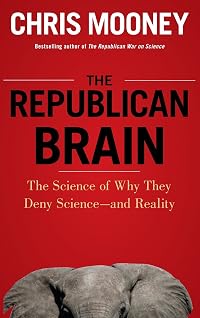
The Republican Brain: The Science of Why They Deny Science and Reality
by Chris Mooney
On This Page
Description
Bestselling author Chris Mooney uses cutting-edge research to explain the psychology behind why today's Republicans reject reality—it's just part of who they are. From climate change to evolution, the rejection of mainstream science among Republicans is growing, as is the denial of expert consensus on the economy, American history, foreign policy, and much more. Why won't Republicans accept things that most experts agree on? Why are they constantly fighting against the facts? Science show more writer Chris Mooney explores brain scans, polls, and psychology experiments to explain why conservatives today believe more wrong things, appear more likely than Democrats to oppose new ideas and less likely to change their beliefs in the face of new facts, and sometimes respond to compelling evidence by doubling down on their current beliefs.Certain to spark discussion and debate, The Republican Brain also promises to add to the lengthy list of persuasive scientific findings that Republicans reject and deny.
. show less
Tags
Recommendations

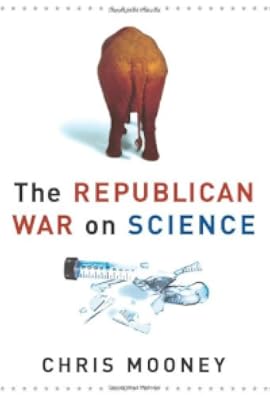







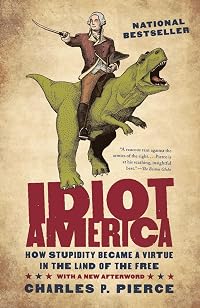
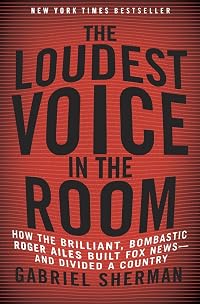
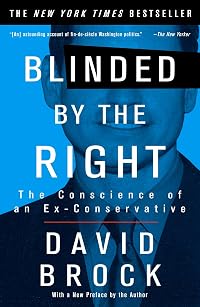

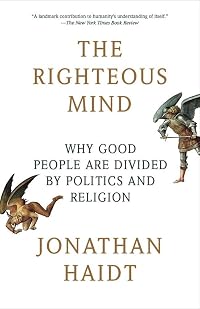



Member Reviews
This is a nice companion work to The Authoritarians. Employing meta-analysis of studies classifiable as "neurological political science", the admittedly liberal author finds conservative Republicans to be adverse to nuance and science, with liberals often being "right" while lacking in leadership, decisiveness, and cohesion. The studies referenced support an idea of the amygdala, a critical brain region for emotional fear, and the anterior cingulate cortex (ACC) contributing to the differences in world views. Echoing Thinking, Fast and Slow, the book explores a politically relevant dichotomy between two modes of thought: "System 1" is the fast, instinctive and emotional (Republican); "System 2" is slower, more deliberative, and more show more logical (Liberal).
The author bends over backwards trying to strategically praise conservatives and criticize liberals while not able to obscure the book's deconstruction of the worse elements of the "The Republican Brain". show less
The author bends over backwards trying to strategically praise conservatives and criticize liberals while not able to obscure the book's deconstruction of the worse elements of the "The Republican Brain". show less
Considering the title of this book, you can't help but consider this to be an anti-Republican, anti-Conservative and pro-Democratic, pro-Progressive book. Mooney claims that not to be the case. Rather, he writes that his point is simply to point out that people on the left and people on the right are simply two very different types of people, with two differing types of brains and personalities.
The book offers a different way of looking at people on the right and on the left. Through various studies of how the mind works and psychological studies, Mooney tries to demonstrate that underlying personal traits are often keys to one's political outlook.
Mooney characterizes those more authoritarian as tending to the right, and those being show more more egalitarian as tending to the left. That alone may not be much of a revelation, but other personality traits also are keys to understanding political leanings. Mooney characterizes those who have a low tolerance of uncertainty, who have more need for closure, for rules, for strong sense of group and belonging, as the type of person who will favor conservative / Republican philosophy. Those individual, he states, are much more resistant to change, desire to manage uncertainty and fear, and can accept or rationalize inequality. The need for something stable, something unchanging to believe in, who like order in their lives (e.g., military and corporate America), will favor conservative ways of thinking. A strong sense of belonging to a group, of order, accounts for a much more unified philosophy by Conservatives. As an example, he contrasts the orderly and consistent dogma of the Tea Party as contrasted to a political opposite movement such as the Occupy Wall Street movement. Other positive characteristics Mooney finds more dominant in conservatives include decisiveness, patriotism, loyalty to friends and allies. On the other hand, they may have more of a tendency toward "group think", and be much quicker to dismiss scientific information which contrasts with their deeply held beliefs. He supports this, of course, with a variety of studies which he shares with the readers.
On the other hand, the more "open" a person is, the more willing to bend or compromise, someone who sees shades of gray in things, who is tolerant of various perspectives and values, will be someone who will drift toward Democratic philosophy. Liberals as a group tend to be more nuanced, more empathetic, open to travel and new ideas, etc. This makes them more likely the agents of change (and accepting and interested in new science), vs. the conservative trait of holding onto existing ideas and ways of life (and more dismissive of new science).
Family members often can have very different make-up, personalities, intuitions and responses, and those traits can often account for differences in political philosophy. But while Mooney states that these two groups exhibit complimentary strengths and weaknesses, and they're simply two different types of people, he clearly does favor the type of person most like himself, i.e., a liberal, open to science type of individual. Interestingly, he concludes by stating that he believes he's correct in his conclusions, but is open to change if further studies demonstrate otherwise.
One good point which he makes is he discussion of confirmation bias in our reading and sources of information, as well as other tendencies which can make us more like our group. If you're unwilling to challenge yourself, and seek contrary information in your beliefs (things he feels the more "open" type of person will do but a more "conservative" may not tend to do), you'll only become more close minded and set in your ways.
At any rate, Mooney offers new ways of looking at differences between those on the right and the left, and has a wealth of data and studies which he offers to make his point(s). It's a little different look at things, and he points out that it's not necessarily the facts of an argument which sways people to one belief system or the other, but more just part of their make-up, and facts can simply just get in the way (for some). show less
The book offers a different way of looking at people on the right and on the left. Through various studies of how the mind works and psychological studies, Mooney tries to demonstrate that underlying personal traits are often keys to one's political outlook.
Mooney characterizes those more authoritarian as tending to the right, and those being show more more egalitarian as tending to the left. That alone may not be much of a revelation, but other personality traits also are keys to understanding political leanings. Mooney characterizes those who have a low tolerance of uncertainty, who have more need for closure, for rules, for strong sense of group and belonging, as the type of person who will favor conservative / Republican philosophy. Those individual, he states, are much more resistant to change, desire to manage uncertainty and fear, and can accept or rationalize inequality. The need for something stable, something unchanging to believe in, who like order in their lives (e.g., military and corporate America), will favor conservative ways of thinking. A strong sense of belonging to a group, of order, accounts for a much more unified philosophy by Conservatives. As an example, he contrasts the orderly and consistent dogma of the Tea Party as contrasted to a political opposite movement such as the Occupy Wall Street movement. Other positive characteristics Mooney finds more dominant in conservatives include decisiveness, patriotism, loyalty to friends and allies. On the other hand, they may have more of a tendency toward "group think", and be much quicker to dismiss scientific information which contrasts with their deeply held beliefs. He supports this, of course, with a variety of studies which he shares with the readers.
On the other hand, the more "open" a person is, the more willing to bend or compromise, someone who sees shades of gray in things, who is tolerant of various perspectives and values, will be someone who will drift toward Democratic philosophy. Liberals as a group tend to be more nuanced, more empathetic, open to travel and new ideas, etc. This makes them more likely the agents of change (and accepting and interested in new science), vs. the conservative trait of holding onto existing ideas and ways of life (and more dismissive of new science).
Family members often can have very different make-up, personalities, intuitions and responses, and those traits can often account for differences in political philosophy. But while Mooney states that these two groups exhibit complimentary strengths and weaknesses, and they're simply two different types of people, he clearly does favor the type of person most like himself, i.e., a liberal, open to science type of individual. Interestingly, he concludes by stating that he believes he's correct in his conclusions, but is open to change if further studies demonstrate otherwise.
One good point which he makes is he discussion of confirmation bias in our reading and sources of information, as well as other tendencies which can make us more like our group. If you're unwilling to challenge yourself, and seek contrary information in your beliefs (things he feels the more "open" type of person will do but a more "conservative" may not tend to do), you'll only become more close minded and set in your ways.
At any rate, Mooney offers new ways of looking at differences between those on the right and the left, and has a wealth of data and studies which he offers to make his point(s). It's a little different look at things, and he points out that it's not necessarily the facts of an argument which sways people to one belief system or the other, but more just part of their make-up, and facts can simply just get in the way (for some). show less
This book was part of a little trend -- maybe past tense isn't appropriate; the trend may still be happening -- of looking at political choices and beliefs through the lens of psychology. While interesting, I'm not yet persuaded of the utility of this approach -- maybe because it all just seems so circular. "A has this political idea, because A is authoritarian and this political idea is authoritarian." Sure, but what does it add?
It certainly helps with identity-building -- a book talking about "The Republican Brain" is going to make non-Republicans (Democrats and others) feel good about themselves, and vice versa. I'm not sure it will help build dialog, or help people work together.
Within that genre, Mooney's book is a reasonable show more summary, but it doesn't break particular new ground. His writing is appealing and readable enough, but sometimes feels ... young, or self-important to me -- as if he thinks he has made a really novel discovery.
For this reason, I read what he writes, but get frustrated and find myself skimming parts.
Anyway, recommended as an introduction to the topic. show less
It certainly helps with identity-building -- a book talking about "The Republican Brain" is going to make non-Republicans (Democrats and others) feel good about themselves, and vice versa. I'm not sure it will help build dialog, or help people work together.
Within that genre, Mooney's book is a reasonable show more summary, but it doesn't break particular new ground. His writing is appealing and readable enough, but sometimes feels ... young, or self-important to me -- as if he thinks he has made a really novel discovery.
For this reason, I read what he writes, but get frustrated and find myself skimming parts.
Anyway, recommended as an introduction to the topic. show less
The book is basically a review of the scientific research concerning the relationship between personality and political beliefs ( and somewhat tangentially, religious belief ). There are various traits evaluated that correlate strongly with political beliefs. For example, being open to new experiences and intellectual curiosity correlates with being a liberal. If you are not, you tend to be conservative. There are a whole cluster of such traits.
The title implies that the book will come down hard on conservatives, but the author tries his best not to do this and points to the valuable traits conservatives have ( loyalty seems to be one ) that would be beneficial for liberals to have and vice versa. Overall, though, liberals come out show more looking better than conservatives especially since liberals are more open to revising their beliefs and opinions if scientific findings contradict them. This is a trait most people value and conservatives claim to value but rarely practice.
The book is an easy read and may perhaps personally challenge your self image.
If you liked this, you may want to also investigate The Authoritarians available for free as a pdf at the authors website. show less
The title implies that the book will come down hard on conservatives, but the author tries his best not to do this and points to the valuable traits conservatives have ( loyalty seems to be one ) that would be beneficial for liberals to have and vice versa. Overall, though, liberals come out show more looking better than conservatives especially since liberals are more open to revising their beliefs and opinions if scientific findings contradict them. This is a trait most people value and conservatives claim to value but rarely practice.
The book is an easy read and may perhaps personally challenge your self image.
If you liked this, you may want to also investigate The Authoritarians available for free as a pdf at the authors website. show less
Very American and, hence, somewhat irrelevant to me (I'm Canadian). But it's the first fusion of psychology and politics I've seen, and it's very readable, and informative.
In this book Chris Mooney backs up his assertion that Republicans/conservatives think differently than Democrats/liberals with a deluge of data from scientific tests and psychological studies. At times it was very slow going for me, not that I'm a fast reader to begin with, which is a telling indicator of my political leanings.
Two things I wish there'd been more about - or that I hope Chris will cover in a future book: the undecided voter (in this political climate how does anyone remain undecided?), and how can you be sure that Republicans/conservatives are not simply faster readers?
Two things I wish there'd been more about - or that I hope Chris will cover in a future book: the undecided voter (in this political climate how does anyone remain undecided?), and how can you be sure that Republicans/conservatives are not simply faster readers?
An excellent book that deserves more comments (to come later). I took off a half star for the maddening end notes - you discover them after you've read the chapter... I don't know what style that is, but if there are notes, I like to know about them when I am reading...not after I move on...Page number, sentence fragment to indicate the reference tie...I guess you have to flp back after the fact. Irritating.
Still, I gave back that half star because the book was so well sourced.
Another book that wont be read by those who need to (and Mooney explains why.)
Still, I gave back that half star because the book was so well sourced.
Another book that wont be read by those who need to (and Mooney explains why.)
Members
- Recently Added By
Author Information

6+ Works 1,283 Members
Chris Mooney lives in Boston, where he is at work on his second novel. (Bowker Author Biography)
Common Knowledge
- Canonical title
- The Republican Brain: The Science of Why They Deny Science and Reality
- Original publication date
- 2012
- First words
- We all know that many American conservatives have issues with Charles Darwin, and the theory of evolution.
- Last words
- (Click to show. Warning: May contain spoilers.)And uncertainty is something I know I’ll never fully dispel.
Classifications
- Genres
- Nonfiction, Politics and Government, Science & Nature, General Nonfiction
- DDC/MDS
- 320.520973 — Society, government, & culture Political science Types of Government Political ideologies Conservatism Standard subdivisions History, geographic treatment, biography North America United States
- LCC
- JC573.2 .U6 .M66 — Political Science Political theory Political theory. The state. Theories of the state Purpose, functions, and relations of the state
- BISAC
Statistics
- Members
- 198
- Popularity
- 165,266
- Reviews
- 9
- Rating
- (3.92)
- Languages
- English
- Media
- Paper, Audiobook, Ebook
- ISBNs
- 11
- ASINs
- 3