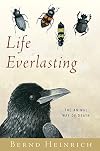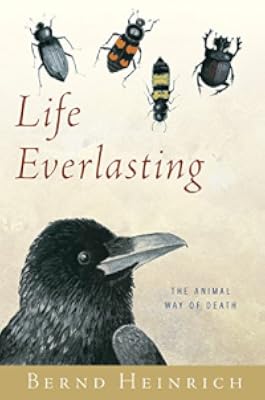
Life Everlasting: The Animal Way of Death
by Bernd Heinrich
On This Page
Description
"When a good friend with a severe illness wrote, asking if he might have his "green burial" at Bernd Heinrich's hunting camp in Maine, it inspired the acclaimed biologist/author to investigate a subject that had long fascinated him. How exactly does the animal world deal with the flip side of the life cycle? And what are the lessons, ecological to spiritual, raised by a close look at how the animal world renews itself? Heinrich focuses his wholly original gaze on the fascinating doings of show more creatures most of us would otherwise turn away from--field mouse burials conducted by carrion beetles; the communication strategies ravens, "the premier northern undertakers," use to do their work; and the "inadvertent teamwork" among wolves and large cats, foxes and weasels, bald eagles and nuthatches in cold-weather dispersal of killed prey. Heinrich reveals, too, how and where humans still play our ancient and important role as scavengers, thereby turning--not dust to dust--but life to life"-- "Bernd Heinrich receives a letter from a severely ill friend asking if he might have a "green burial" at Heinrich's hunting camp, and the acclaimed biologist/author sets out to explore exactly how the animal world deals with the death-to-life cycle and what we can learn from the process, both ecologically and spiritually" -- show lessTags
Recommendations


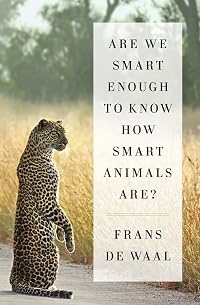
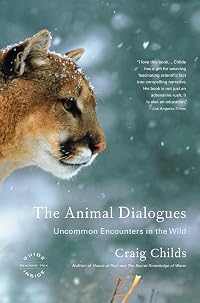
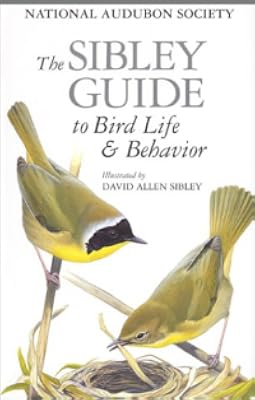
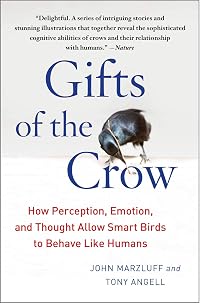

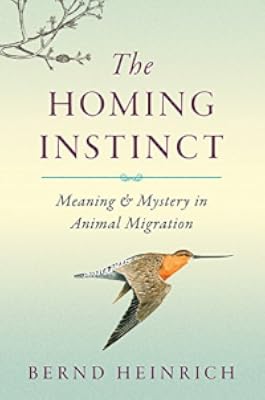




Member Reviews
Life Everlasting: The Animal Way of Death opens with a letter Heinrich receives from an ill friend, requesting that he allow him a “green burial -- not any burial at all” on Heinrich’s forest land in Maine. The friend, an ecologist, deplores both the waste of nutrients when remains are sealed in a casket and the waste of fuel when they’re cremated. It gets biologist Heinrich to thinking about the cycle of life and death, and the result is this wonderful collection of essays about “the specialized undertakers that ease all organisms to their resurrections into others’ lives.”
With a walk-in-the-woods tone and pace, he explores the recycling of remains in species from tiny to huge, animals and plants, in warm and cold show more climates, on land and in water -- by scavenger mammals, birds, insects and bacteria (or often fungi, in plants). A behavioral biologist, Heinrich describes the competition for food among larger scavenging species and the tendency of smaller species to consider remains a place to meet-up, mate and stow larvae. Here and in other books, I love his profound sense of curiosity and awe; I don’t recall the material being gruesome. At times, he digresses to more about the scavenger than its scavenging, but he mostly sticks to the topic and it’s all good stuff.
He concludes with comments about the metamorphosis we know in certain species in this life, and the aspects of it that we don't fully understand (that it's nearly a species change; a new life) lead him to wonderings about a metaphysical sort in the afterlife:
What better opportunity than death, not to sanctify an end but to celebrate a new beginning? {…} We deny that we are animals and part of the wheel of life, part of the food chain {…and} seek to remove ourselves from it. {…} My highest aspirations, when I thought about belonging to something greater than myself, used to be an ecosystem. {…Now} I see the whole world as an organism with no truly separate parts {and} I want to join in the party of the greatest show on earth, life everlasting.
(Review based on an advance reading copy provided by the publisher.) show less
With a walk-in-the-woods tone and pace, he explores the recycling of remains in species from tiny to huge, animals and plants, in warm and cold show more climates, on land and in water -- by scavenger mammals, birds, insects and bacteria (or often fungi, in plants). A behavioral biologist, Heinrich describes the competition for food among larger scavenging species and the tendency of smaller species to consider remains a place to meet-up, mate and stow larvae. Here and in other books, I love his profound sense of curiosity and awe; I don’t recall the material being gruesome. At times, he digresses to more about the scavenger than its scavenging, but he mostly sticks to the topic and it’s all good stuff.
He concludes with comments about the metamorphosis we know in certain species in this life, and the aspects of it that we don't fully understand (that it's nearly a species change; a new life) lead him to wonderings about a metaphysical sort in the afterlife:
What better opportunity than death, not to sanctify an end but to celebrate a new beginning? {…} We deny that we are animals and part of the wheel of life, part of the food chain {…and} seek to remove ourselves from it. {…} My highest aspirations, when I thought about belonging to something greater than myself, used to be an ecosystem. {…Now} I see the whole world as an organism with no truly separate parts {and} I want to join in the party of the greatest show on earth, life everlasting.
(Review based on an advance reading copy provided by the publisher.) show less
Bernd Heinrich has written a fascinating book about the cycle of life and death. The reader will likely come away from "Life Everlasting" with a new perspective on death. Rather than something to be feared, death is a conduit into other life. At the end of the book, Heinrich challenges us to rethink how we dispose of our own remains so that we once again enter into the life cycle. Before that, though, the author explores how animals and plants are naturally disposed of after life. This is not a book for the squeamish. Heinrich describes in vivid detail the decomposition of animals. However, his child-like curiosity draws the reader into his insatiable search for knowledge. This is a book that is hard to put down and evokes one’s own show more curiosity about the genius of natural ecosystems. The reader will gain an appreciation for nature’s undertakers. Heinrich reveals the important role these usually despised scavengers play in the cycle of life. Heinrich’s book on the animal way of death is actually an exuberant celebration of life. show less
An interesting exploration of how nature converts energy. I can understand how some people might find some of the stories upsetting… the author is an avid hunter and most animal lovers probably wince at the combination of the word slingshot with the word hummingbird. Still, there is a lot to learn here, from the contributions of birds and beetles to the role of man himself in the recycling of life on earth
Bernd Heinrich is one of those writers who almost never disappoints, and Life Everlasting: The Animal Way of Death (Houghton Mifflin Harcourt, 2012) is another excellent contribution. From burying beetles to ravens to brown bears and polychete worms, Heinrich takes us on a tour of nature's life-disposal systems. Heinrich combines thorough research with anecdotal stories for an idiosyncratic but thoroughly enjoyable romp through the life cycle, mostly concentrating on examples from his Maine woods but also ranging far afield, to the African grasslands and the bottom of the oceans.
Heinrich concludes the book with a much-needed call to humanity to reevaluate how we deal with death in our own species.
Heinrich concludes the book with a much-needed call to humanity to reevaluate how we deal with death in our own species.
An easy read about the flow of life into death at every level of the food chain through history. Very much a screed for population growth. Interesting, convincing. He's forced me to think about humans destruction of the chain of life and more prosaically why cremation is unnatural and destructive to the environment.
I liked the book and learned a few new things about creatures and their nature, but I'm still wondering about what part of the book was about "The Animal Way of Death".
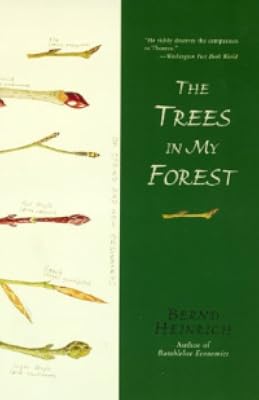
This is my second Bernd Heinrich book, the other being 'The Trees in My Forest'.
Both of them are collections of essays that are relatively loosely bound together with a theme. And as any collection, some are better than others.
A few of the sections of this book were fantastic, while others were just so-so to good.
Both of them are collections of essays that are relatively loosely bound together with a theme. And as any collection, some are better than others.
A few of the sections of this book were fantastic, while others were just so-so to good.
Members
- Recently Added By
Lists

Recommended Nature Writing
346 works; 180 members
Author Information

24+ Works 6,337 Members
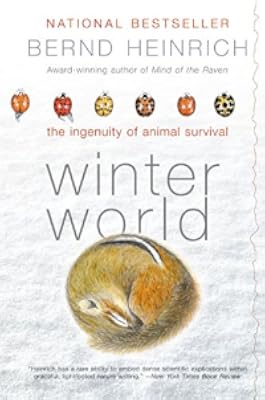
Bernd Heinrich is an acclaimed scientist and the author of numerous books, including the best-selling Winter World, Mind of the Raven, and Why We Run. He writes for numerous periodicals, including the New York Times, the Los Angeles Times, Scientific American, Outside, and Audubon. Among Heinrich's many honors is the 2013 PEN New England Award for show more nonfiction, for Life Everlasting. show less
Awards and Honors
Awards
Common Knowledge
- Original publication date
- 2012
- Epigraph
- If you would know the secret of death you mush seek it in the heart of life. -- Kahlil Gibran, The Prophet
.... Earth's the right place for love; I don't know where it's likely to go better. -- Robert Frost, "Birches" - First words
- Size is an important aspect of the way an organism can live and the form it can have.
- Last words
- (Click to show. Warning: May contain spoilers.)I want to join in the party of the greatest show on earth, life everlasting.
Classifications
Statistics
- Members
- 300
- Popularity
- 106,983
- Reviews
- 9
- Rating
- (4.04)
- Languages
- English, Polish
- Media
- Paper, Audiobook, Ebook
- ISBNs
- 10
- ASINs
- 2