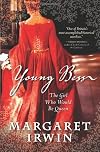
On This Page
Description
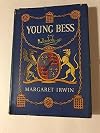
Growing up in the shadow of her dead mother, the infamous Anne Boleyn, young Princess Elizabeth has learnt to be continuously on the watch for the political games played out around her. It is never certain when one might rise in, or precariously fall out of, royal favour.When her distant father, Henry VIII, dies, the future brightens for Elizabeth. She is able to set up a home with Henry's last wife, Katherine Parr, who now has a new husband, Tom Seymour. Tom, however, is playing a risky show more game. Marrying a widowed queen is one thing, flirting with the King's daughter and second in line to the throne is another. As the adolescent Elizabeth finds herself dangerously attracted to him, danger encroaches upon herself and the kingdom ... show lessTags
Recommendations













Member Reviews
Elizabeth Tudor is well-known as one of the strongest monarchs in English history - but young Bess had a difficult childhood. Elizabeth was by turns a favorite of her father's for her cleverness and disinherited, ignored and despised for any perceived likeness to her infamous mother. But always, men saw Elizabeth as a pawn to get closer to the throne. Foremost among these men was Elizabeth's (step)stepfather Lord Admiral Thomas Seymour.
Margaret Irwin doesn't shrink back from the difficulties of the relationship between Elizabeth and Thomas Seymour - as well as the strains this put on her relationship with his wife and her favorite stepmother Katherine Parr. I found Elizabeth's portrayal very realistic - she is a teenager trying out her show more burgeoning sexual awareness and enjoying the attention she gets from the much-older but still attractive Thomas Seymour. But Elizabeth is shrewd enough to realize that she is being used as a means to greater power - though the realization is hard on her emotionally. Their relationship is without a doubt uncomfortable to the modern reader - the age difference and his role as a father figure make it even more so. But I believe Elizabeth's disappointment with Seymour and the grief he caused her was channeled into her ambitions and that made theirs a very formative relationship indeed.
Elizabeth is certainly an interesting characters - she seemed older than her early teens, but given the political subterfuge surrounding her (as well as her intelligence), I had no trouble believing that. I found Elizabeth's quicksilver changes in mood and temper very teenaged - as was her revelling in what little power she could seize over those who hurt her. To my mind, Irwin did a remarkable job of piecing together the circumstances surrounding Elizabeth's childhood and putting together a credible explanation of how they influenced the queen she would become.
Personally, I would have liked to see more interaction between Elizabeth and her father and siblings - I thought the portrayal of Mary showed a distinct lack of the same understanding and finesse Irwin showed Elizabeth, and young Edward was nothing but a prissy royal pain. I would also have liked to see Bess meet Robin Dudley - though that may be in one of the next books in this intriguing trilogy.
Margaret Irwin's Young Bess showed an extraordinarily relatable portrait of Elizabeth, and one that was sympathetic but not fawning. I was definitely impressed.
Also posted at A Hoyden's Look at Literature. show less
Margaret Irwin doesn't shrink back from the difficulties of the relationship between Elizabeth and Thomas Seymour - as well as the strains this put on her relationship with his wife and her favorite stepmother Katherine Parr. I found Elizabeth's portrayal very realistic - she is a teenager trying out her show more burgeoning sexual awareness and enjoying the attention she gets from the much-older but still attractive Thomas Seymour. But Elizabeth is shrewd enough to realize that she is being used as a means to greater power - though the realization is hard on her emotionally. Their relationship is without a doubt uncomfortable to the modern reader - the age difference and his role as a father figure make it even more so. But I believe Elizabeth's disappointment with Seymour and the grief he caused her was channeled into her ambitions and that made theirs a very formative relationship indeed.
Elizabeth is certainly an interesting characters - she seemed older than her early teens, but given the political subterfuge surrounding her (as well as her intelligence), I had no trouble believing that. I found Elizabeth's quicksilver changes in mood and temper very teenaged - as was her revelling in what little power she could seize over those who hurt her. To my mind, Irwin did a remarkable job of piecing together the circumstances surrounding Elizabeth's childhood and putting together a credible explanation of how they influenced the queen she would become.
Personally, I would have liked to see more interaction between Elizabeth and her father and siblings - I thought the portrayal of Mary showed a distinct lack of the same understanding and finesse Irwin showed Elizabeth, and young Edward was nothing but a prissy royal pain. I would also have liked to see Bess meet Robin Dudley - though that may be in one of the next books in this intriguing trilogy.
Margaret Irwin's Young Bess showed an extraordinarily relatable portrait of Elizabeth, and one that was sympathetic but not fawning. I was definitely impressed.
Also posted at A Hoyden's Look at Literature. show less
This is the story of young Elizabeth Tudor, staring shorly after her father's death, and ending shortly after her brother's. I love it, for the style - ornately erudite, seamlessly weaving together primary sources and history and fiction; for the deft touch with characterization that empathizes with the passions and frustrations of every character; for the moral foundation where good people do evil things for good reasons and bad people do go things for sheer joy; and I love it because in the end it is the story of the great love-affair between Elizabeth and England.
Elizabeth's portrayal in Irwin's YA novels about her made me fall in love when I was in middle school, and still captivates me now: a young woman who is learning, as she is show more growing into herself, that in the womanly arts she is a natural, that she can twist any man around her finger, and love them as they will ove her - but that if she chooses those methods, she is limiting herself to a woman's sphere forever. And she wants more than that - she wants *England*.
I read "Elizabeth, Captive Princess", the second in the trilogy, many years ago, and fell in love with it; and with Mary, and Roger, and Robin, and Bess, and most of all, with that England; I only recently found Young Bess, and found the Lord High Admiral as wonderful as the few glimpses I'd gotten promised. Now I need to find a copy of Elizabeth and the King of Spain, for I can't imagine it would be any less captivating than the first two. show less
Elizabeth's portrayal in Irwin's YA novels about her made me fall in love when I was in middle school, and still captivates me now: a young woman who is learning, as she is show more growing into herself, that in the womanly arts she is a natural, that she can twist any man around her finger, and love them as they will ove her - but that if she chooses those methods, she is limiting herself to a woman's sphere forever. And she wants more than that - she wants *England*.
I read "Elizabeth, Captive Princess", the second in the trilogy, many years ago, and fell in love with it; and with Mary, and Roger, and Robin, and Bess, and most of all, with that England; I only recently found Young Bess, and found the Lord High Admiral as wonderful as the few glimpses I'd gotten promised. Now I need to find a copy of Elizabeth and the King of Spain, for I can't imagine it would be any less captivating than the first two. show less
Review
Elizabeth’s age in book one is somewhere between twelve and fifteen. In Young Bess, the story surrounds the court of Edward, and his relationship with his two uncles, Edward Seymour, The Protector and Tom Seymour, The Admiral. Without causing spoilers, Edward is portrayed as annoying and greedy, Tom is a shameless flirt and clueless about his brother’s ambition. Edward, the young king is a pawn on a chess board, easily manipulated by black and white to suit their own position. I truly loved Elizabeth in this novel, but I am biased as my adoration for her is high. Comparisons are often made to her mother, the infamous Nan Bullen (Anne Boleyn). Irwin shows her naivete as a young girl and then her shocking revelation as she show more envisions her own destiny. Does she love Tom Seymour? Is she a tempting vixen, or an innocent young girl infatuated by the attention paid to her by an attractive man? A significant moment occurs for Elizabeth when she is told by Katherine that her fate may someday be Queen of England. That she never expected or imagined herself as Queen of England until her teens is surprising to me and an interesting twist in this story. I naturally felt sorry for Elizabeth as I always do because she was brought up by four different stepmothers, and didn’t know her own mother. The fact that she was compared to her mother so often, couldn’t have been good for her self esteem, yet she is determined to triumph.
The story is excellent, the characters are fully realized and who wouldn’t like reading about Young Bess. My only complaint is there was not enough attention given to Elizabeth. The story was somewhat wordy and too much time and detail was given to the Seymour brothers. The book didn’t really turn around for me until almost half way through. The fact that I love reading about Queen Elizabeth and I plan on reading the entire trilogy, saved me from abandoning this one early.
What were they thinking.....
Elizabeth on marriage, speaking to Tom Seymour
“I won’t marry you, or anyone. I’ll not be tied and bound. A wedding ring is a yoke ring.”
(271)
“...I have not the slightest intention of being married, and if ever I should think of it (which I do not believe is possible) you would be the first to whom I should make known my resolution.” (275)
“I’ve learnt about marriage from my stepmothers,’ she said, sliding a look at him.”
“Seriously, my Lord, my first stepmother, Jane, died in childbed, and so was the only past wife he spoke of with respect; my second, big Anne Cleves, he shoved out of the way for my pretty cousin Cat Howard, whom he beheaded-and my last one gave me a step-stepfather,’ she finished, and this time she did not look at him.”(275)
King Henry VIII about Elizabeth:
“He blinked down the table at the girl, as lithe and whippy as a greyhound puppy, and the light glinting on her red-gold hair. ‘Nan Bullen’s brat!’ he muttered to himself, ‘a wheyfaced scrap of a thing like her mother, a green apple, a codling,’ he drooled on, regarding her with a fixed and menacing eye.” (50)
© [Wisteria Leigh] and [Bookworm's Dinner], [2008-2011]. show less
Elizabeth’s age in book one is somewhere between twelve and fifteen. In Young Bess, the story surrounds the court of Edward, and his relationship with his two uncles, Edward Seymour, The Protector and Tom Seymour, The Admiral. Without causing spoilers, Edward is portrayed as annoying and greedy, Tom is a shameless flirt and clueless about his brother’s ambition. Edward, the young king is a pawn on a chess board, easily manipulated by black and white to suit their own position. I truly loved Elizabeth in this novel, but I am biased as my adoration for her is high. Comparisons are often made to her mother, the infamous Nan Bullen (Anne Boleyn). Irwin shows her naivete as a young girl and then her shocking revelation as she show more envisions her own destiny. Does she love Tom Seymour? Is she a tempting vixen, or an innocent young girl infatuated by the attention paid to her by an attractive man? A significant moment occurs for Elizabeth when she is told by Katherine that her fate may someday be Queen of England. That she never expected or imagined herself as Queen of England until her teens is surprising to me and an interesting twist in this story. I naturally felt sorry for Elizabeth as I always do because she was brought up by four different stepmothers, and didn’t know her own mother. The fact that she was compared to her mother so often, couldn’t have been good for her self esteem, yet she is determined to triumph.
The story is excellent, the characters are fully realized and who wouldn’t like reading about Young Bess. My only complaint is there was not enough attention given to Elizabeth. The story was somewhat wordy and too much time and detail was given to the Seymour brothers. The book didn’t really turn around for me until almost half way through. The fact that I love reading about Queen Elizabeth and I plan on reading the entire trilogy, saved me from abandoning this one early.
What were they thinking.....
Elizabeth on marriage, speaking to Tom Seymour
“I won’t marry you, or anyone. I’ll not be tied and bound. A wedding ring is a yoke ring.”
(271)
“...I have not the slightest intention of being married, and if ever I should think of it (which I do not believe is possible) you would be the first to whom I should make known my resolution.” (275)
“I’ve learnt about marriage from my stepmothers,’ she said, sliding a look at him.”
“Seriously, my Lord, my first stepmother, Jane, died in childbed, and so was the only past wife he spoke of with respect; my second, big Anne Cleves, he shoved out of the way for my pretty cousin Cat Howard, whom he beheaded-and my last one gave me a step-stepfather,’ she finished, and this time she did not look at him.”(275)
King Henry VIII about Elizabeth:
“He blinked down the table at the girl, as lithe and whippy as a greyhound puppy, and the light glinting on her red-gold hair. ‘Nan Bullen’s brat!’ he muttered to himself, ‘a wheyfaced scrap of a thing like her mother, a green apple, a codling,’ he drooled on, regarding her with a fixed and menacing eye.” (50)
© [Wisteria Leigh] and [Bookworm's Dinner], [2008-2011]. show less
This is a reprint; the book was originally written in 1944. Elizabeth I is one of my favorite historical figures and I have done quite a bit of reading about her - but most of it is from the time after she ascended to the throne. It was very interesting to read a book that takes you back to the time when she was still a child. Before she became the political genius and great Queen of England.
The book was easy to read and is very detailed as to its period and time. My only issue is that at time it seems that the book switches tone from historical novel to history book in trying to put forth the necessary information to move the story forward. This was, of course, a very challenging time in England's history and there was much intrigue show more going on as Henry VIII faded away. After his death the short reign of Edward was fraught with strife due to his guardians. Elizabeth's position was precarious and she had many lessons to learn.
Yet it is often forgotten that she was still very young.
The book is an excellent starting point for someone wanting to learn about Elizabeth and this period in history. It is part of a trilogy and the other books are also due to be reprinted. I will eagerly await their publication. I thoroughly enjoyed reading Young Bess. show less
The book was easy to read and is very detailed as to its period and time. My only issue is that at time it seems that the book switches tone from historical novel to history book in trying to put forth the necessary information to move the story forward. This was, of course, a very challenging time in England's history and there was much intrigue show more going on as Henry VIII faded away. After his death the short reign of Edward was fraught with strife due to his guardians. Elizabeth's position was precarious and she had many lessons to learn.
Yet it is often forgotten that she was still very young.
The book is an excellent starting point for someone wanting to learn about Elizabeth and this period in history. It is part of a trilogy and the other books are also due to be reprinted. I will eagerly await their publication. I thoroughly enjoyed reading Young Bess. show less
Originally published in 1944, historical novelist Margaret Irwin’s Young Bess is slated for republication in early March through the Sourcebooks Landmark imprint which resurrects notable vintage titles. Having been reprinted several times since its original publication,Young Bess remains an exquisitely captivating look into the life of the young Princess Elizabeth.
Since my first viewing of Cate Blanchett’s moving portrayal of the young Queen in Elizabeth (2001) I have been unable to shake a growing interest in the life of this incredibly memorable woman. Young Bess gives readers an immaculate researched look into the life of this unforgettable woman from her young childhood through to the age of 19, when her brother, King Edward, show more died. This first installment in Irwin’s trilogy focuses mainly upon Elizabeth’s life between the ages of 13 and 16, highlighting the many political and romantic tensions that shaped her coming of age.
From the first few pages of Young Bess it immediately becomes apparent that this is not a contemporary novel – I’ve never read historical fiction like this from a modern author. Readers are plunged into an intricate cast of characters from nobility through to tutors, governesses, and whipping boys. Those not intimately familiar with the time period will need some time to adjust to the cast, and indeed, a second read-through may be in order once everything is sorted from the first time through.
Irwin clearly delights in the nuances of the not-yet stabilized English language of the 1500s, and is quick to include quotations from period songs, poetry, and selections of actual correspondence between the historical characters as appropriate. Though I’m no Elizabethan historican, Young Bess bears all the markings of a faithful portrayal of girl who would be queen.
Irwin’s desire to include the political and religious conflicts, alliances, and issues of the day also leads her to do much expository ‘telling’ rather than the ever-vaunted ‘showing’ that is so valued in contemporary fiction. There can be pages of these explanations, and yet, she also captures the imagination and sweeps readers into the intimate world of Elizabeth’s very nature, and those whose lives most affected her own young one.
With growing inclusions of explicit sensuality and occult references in general market historical fiction, some readers may be leery of the genre in general. While romantic tension (some kissing), and some small amount of period-appropriate cursing and oaths are included in the text, this is a clean but passionately written novel. Parents looking for an Elizabeth novel for their children should be aware that much of the content revolves around the budding love between the young Princess and the Lord Admiral, Tom Seymour – an older (mid-thirties to her mid-teens), and at times married man.
I’m thankful to Sourcebooks Landmark for keeping Irwin’s work in print; her portrayal of this complicated, old-before-her-time girl child is striking and unforgettable.
Reviewed at quiverfullfamily.com show less
Since my first viewing of Cate Blanchett’s moving portrayal of the young Queen in Elizabeth (2001) I have been unable to shake a growing interest in the life of this incredibly memorable woman. Young Bess gives readers an immaculate researched look into the life of this unforgettable woman from her young childhood through to the age of 19, when her brother, King Edward, show more died. This first installment in Irwin’s trilogy focuses mainly upon Elizabeth’s life between the ages of 13 and 16, highlighting the many political and romantic tensions that shaped her coming of age.
From the first few pages of Young Bess it immediately becomes apparent that this is not a contemporary novel – I’ve never read historical fiction like this from a modern author. Readers are plunged into an intricate cast of characters from nobility through to tutors, governesses, and whipping boys. Those not intimately familiar with the time period will need some time to adjust to the cast, and indeed, a second read-through may be in order once everything is sorted from the first time through.
Irwin clearly delights in the nuances of the not-yet stabilized English language of the 1500s, and is quick to include quotations from period songs, poetry, and selections of actual correspondence between the historical characters as appropriate. Though I’m no Elizabethan historican, Young Bess bears all the markings of a faithful portrayal of girl who would be queen.
Irwin’s desire to include the political and religious conflicts, alliances, and issues of the day also leads her to do much expository ‘telling’ rather than the ever-vaunted ‘showing’ that is so valued in contemporary fiction. There can be pages of these explanations, and yet, she also captures the imagination and sweeps readers into the intimate world of Elizabeth’s very nature, and those whose lives most affected her own young one.
With growing inclusions of explicit sensuality and occult references in general market historical fiction, some readers may be leery of the genre in general. While romantic tension (some kissing), and some small amount of period-appropriate cursing and oaths are included in the text, this is a clean but passionately written novel. Parents looking for an Elizabeth novel for their children should be aware that much of the content revolves around the budding love between the young Princess and the Lord Admiral, Tom Seymour – an older (mid-thirties to her mid-teens), and at times married man.
I’m thankful to Sourcebooks Landmark for keeping Irwin’s work in print; her portrayal of this complicated, old-before-her-time girl child is striking and unforgettable.
Reviewed at quiverfullfamily.com show less
Young Elizabeth Tudor lives in the shadow of her infamous mother, Anne Boleyn. Declared a bastard and banished from her father's court, young princess Elizabeth has become adept at dodging the constant political games and royal whims that ensure her situation is never secure.
After Henry VIII's death, Elizabeth is taken in by the king's last wife, Katherine Parr, and Katherine's new husband, Tom Seymour. But handsome Tom is playing for higher stakes. Marrying a widowed queen is one thing, but courting the King's daughter and second in line to the throne is another. Seymor pursues the adolescent Elizabeth, as she finds herself dangerously attracted to him. And with her brother's death, Elizabeth faces a perilous and uncertain future with show more danger encroaching from all sides... show less
After Henry VIII's death, Elizabeth is taken in by the king's last wife, Katherine Parr, and Katherine's new husband, Tom Seymour. But handsome Tom is playing for higher stakes. Marrying a widowed queen is one thing, but courting the King's daughter and second in line to the throne is another. Seymor pursues the adolescent Elizabeth, as she finds herself dangerously attracted to him. And with her brother's death, Elizabeth faces a perilous and uncertain future with show more danger encroaching from all sides... show less
A superb novel, full of insight and wry humor, about the young Elizabeth I before she became queen, during the reign of her brother Edward VI. Elizabeth was a teenager during those years and lived with Henry VIII's widow Catherine Parr and her husband Thomas Seymour, who attempted to exploit Elizabeth for political power. I've posted a longer review at www.HistoricalNovels.info.
Members
- Recently Added By
Author Information

24+ Works 1,387 Members
Awards and Honors
Distinctions
Series

Belongs to Publisher Series
Work Relationships
Is contained in
Has the adaptation
Common Knowledge
- Original publication date
- 1944
- People/Characters
- Elizabeth I, Queen of England; Henry VIII, King of England; Anne Boleyn; Edward VI, King of England; Thomas Seymour; Katherine Parr (show all 10); Edward Seymour, Duke of Somerset; Mary I, Queen of England; Catherine "Cat" Ashley; Thomas Parry
- Related movies
- Young Bess (1953 | IMDb)
- Epigraph
- Such incredible fierce desire
--Nan Bullen [Anne Boleyn] - Dedication
- To Lucy Bell
- First words
- She had been allowed to come out to the royal flagship, and had been eating cherries and strawberries dipped in wine.
- Last words
- (Click to show. Warning: May contain spoilers.)Now at last again, when at any moment she might lose it,she knew how sweet life was, and hope; yes, and fear too, since it had made her want to keep that life, want passionately, with all the wild excitement of a young lover's desire, to live, and to be Queen.
Classifications
- Genres
- Fiction and Literature, General Fiction, Historical Fiction
- DDC/MDS
- 823.912 — Literature & rhetoric English & Old English literatures English fiction 1900- 1901-1999 1901-1945
- LCC
- PZ3 .I736 — Language and Literature Fiction and juvenile belles lettres Fiction and juvenile belles lettres Fiction in English
- BISAC
Statistics
- Members
- 409
- Popularity
- 75,437
- Reviews
- 12
- Rating
- (3.62)
- Languages
- English, French
- Media
- Paper, Audiobook, Ebook
- ISBNs
- 15
- UPCs
- 1
- ASINs
- 15