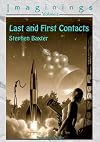
Last and First Contacts
by Stephen Baxter
On This Page
Description
a collection of recent short stories combined with a few brand new talesTags
Recommendations



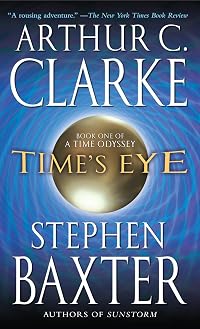
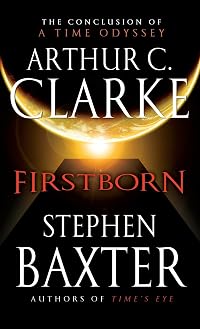

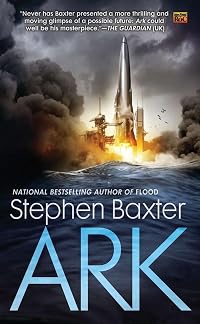
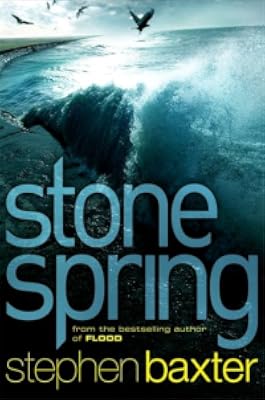












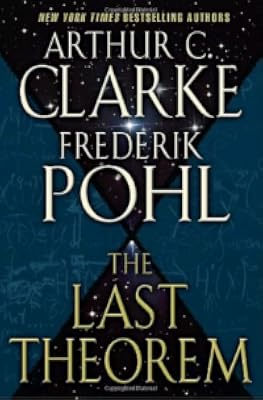
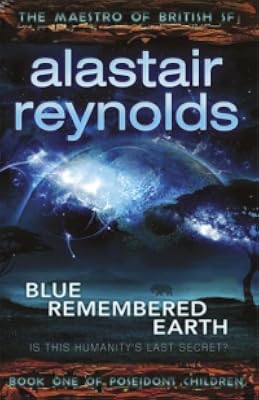

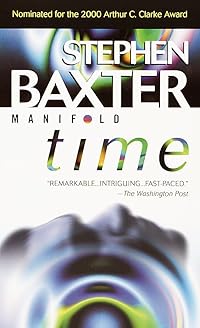

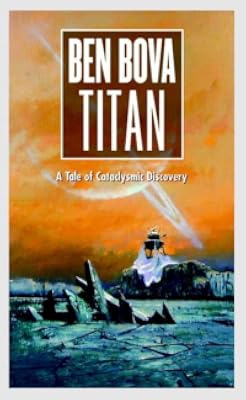


Member Recommendations
Wool by Hugh Howey
slagolas Well written, fascinating characters, and a nice blend of short fiction and novel.
Member Reviews
Sci-fi confession: I was not entirely swept away by Olaf Stapledon’s classic work, Last and First Men, which seemed several billion years too long. However, I have a warmer response to Stephen Baxter's Last and First Contacts, a collection of recent short stories combined with a few brand new tales. I have read a number of Baxter's full length novels but I think I prefer his efforts at shorter forms, where numerous ideas can burst forth without the reader having to work through them in intricate but sometimes gruelling detail.
Like the Stapledon classic his title nods toward, many of the stories reach into the far flung future; most of them feature world's ending, the human race being extinguished and the universe rolling on (although show more even the matter of time and space comes a cropper in a couple of the tales). There is a good deal of variety though, including alternative history and another one that acts as a perspective on solipsism. Overall, I think it is an excellent example of what a sci-fi anthology can be, so 5/5 show less
Like the Stapledon classic his title nods toward, many of the stories reach into the far flung future; most of them feature world's ending, the human race being extinguished and the universe rolling on (although show more even the matter of time and space comes a cropper in a couple of the tales). There is a good deal of variety though, including alternative history and another one that acts as a perspective on solipsism. Overall, I think it is an excellent example of what a sci-fi anthology can be, so 5/5 show less
 This review was written for LibraryThing Early Reviewers.
The title Last and First Contacts is a play on Olaf Stapledon's Last and First Men and Stapledon's influence is evident in several of the stories in this collection. I enjoyed the sweeping cosmological scale against which pieces like "In the Abyss of Time" are set, but also the more intimate atmosphere of some of the other stories.
I hadn't read anything by Baxter before, but his style here struck me as something of a throwback to an earlier, classical (?) form of "situational" sci-fi, where the emphasis lies more on the exploration of a core concept than on the resolution of the action ... very much along the lines of Arthur C. Clarke's Odyssey or Rama books. That's not necessarily a bad thing in itself; I quite enjoy that style. In show more this collection, however, several of the stories ended with me thinking, "Yes, and ...?" There seemed to be a final beat missing. This was more of a problem in the first half of the book, notably in "Erstkontakt" and "Halo Ghosts".
Several elements and concepts surfaced repeatedly across different stories: (inhuman) consciousness and intelligence, indistinctly seen aliens, journeying, Nazis, stromatolites, and religion (specifically, Catholicism). I was pleased to see the latter treated gently, given how religious belief is so frequently ridiculed in modern science fiction.
All in all, this collection was a bit of a mixed bag. My favorites were "Last Contact" and "The Pacific Mystery", while "No More Stories" hit the other end of the spectrum. show less
I hadn't read anything by Baxter before, but his style here struck me as something of a throwback to an earlier, classical (?) form of "situational" sci-fi, where the emphasis lies more on the exploration of a core concept than on the resolution of the action ... very much along the lines of Arthur C. Clarke's Odyssey or Rama books. That's not necessarily a bad thing in itself; I quite enjoy that style. In show more this collection, however, several of the stories ended with me thinking, "Yes, and ...?" There seemed to be a final beat missing. This was more of a problem in the first half of the book, notably in "Erstkontakt" and "Halo Ghosts".
Several elements and concepts surfaced repeatedly across different stories: (inhuman) consciousness and intelligence, indistinctly seen aliens, journeying, Nazis, stromatolites, and religion (specifically, Catholicism). I was pleased to see the latter treated gently, given how religious belief is so frequently ridiculed in modern science fiction.
All in all, this collection was a bit of a mixed bag. My favorites were "Last Contact" and "The Pacific Mystery", while "No More Stories" hit the other end of the spectrum. show less
This review was written for LibraryThing Early Reviewers.When I received my ARC copy of Stephen Baxter's collection of short stories I thought his novels are very good, so his short fiction should be good too. To my surprise his short fiction is actually BETTER. Somehow he infuses these shorter works with a sense of the hugeness of time and space - in more than one instance bringing us to the end of our Universe. He writes equally well with male and female lead characters and makes the stories too engaging to put down until completed.
On a personal note - I do not recommend reading these stories if you have recently lost your mother. Other than that I suggest everyone else go out and get a copy right away - you'll be glad you did.
On a personal note - I do not recommend reading these stories if you have recently lost your mother. Other than that I suggest everyone else go out and get a copy right away - you'll be glad you did.
This review was written for LibraryThing Early Reviewers.To me, Last and First Contacts epitomizes why I consider myself a sci-fi fan and yet tend to not read a whole lot of it. That is, I found the stories and characters compelling, but also depressing. This collection of stories seems to follow the path of contemporary sci-fi, which no longer believes man capable of taming the stars, and instead sees humanity as doomed to an existence shortened by lack of foresight in conserving and protecting the only planet we will ever have.
I find it interesting that apocalyptic fiction has become so popular, while grandiose visions of a triumphant human future, to my limited exploration, have become fewer.
I give this book four stars, first and foremost, because it is well written and absorbing, and an show more excellent example of good short fiction. Nice to see great short fiction. I withhold a fifth star because, frankly, most of the stories made me sad. What made me fall in love with sci-fi is partly the wonder of human triumph, which is nearly absent in this collection, reasonably so, but absent nonetheless. show less
I find it interesting that apocalyptic fiction has become so popular, while grandiose visions of a triumphant human future, to my limited exploration, have become fewer.
I give this book four stars, first and foremost, because it is well written and absorbing, and an show more excellent example of good short fiction. Nice to see great short fiction. I withhold a fifth star because, frankly, most of the stories made me sad. What made me fall in love with sci-fi is partly the wonder of human triumph, which is nearly absent in this collection, reasonably so, but absent nonetheless. show less
This review was written for LibraryThing Early Reviewers.lasting contact (?)
there's a sense of urgency in these stories, not limited to the stapledonian (cf. the title of this collection) leaps in temporality nor to the conciseness of baxter's writing (though it accounts - in each story - for a great and welcome narrative drive) but which is motivated (as in his recent "flood" and "ark" novels) by an awareness of and a restlessness, an eagerness even to explore the boundaries of experience, the experience of boundaries, ultimately the boundary of utter simplicity ...
one of the six-word sf stories on his website - written in the same timeframe as the stories in this volume - 'simply' goes: " Big Bang. No God. Fadeout. End. "
in the (dying) light of this the question begs: why bother ? why show more bother if there ain't no future, no time nor place for us ?
what drives or motivates us if not the sense of wonder and sheer power of imagination that motivates - in turn - each of these stories, the complexity of their thinking, their caring also and ultimately - in the words of the title - their hope for "contact" - or as the movie song goes:
"There's a place for us,
Somewhere a place for us. [...]
There's a time for us,
Some day a time for us,
Time together with time to spare,
Time to look, time to care,
Someday!
Somewhere."
it's hippy sf in the best tradition (james blish's "cities in flight" springs to mind) and though indeed you should never trust a hippy, there's - arguably - one in all of us ... certainly now urban gardens in detroit parking lots paint a grimmer picture than even voltaire ever imagined ...
"it's just that the time [is all] wrong"
... and though tending one's garden may be laudable or necessary even, it's - so baxter seems to suggest - in no way as important as tending or holding on to one's loved ones. call me a hippy, but i got no argument with that - "i'd do the stars with you any time !"
this is (not) a love song
goodbye !
(and if the time is just wrong there might indeed be no need to countdown but still i find myself silently counting down to the next one ... by baxter and/or newcon press, thanks for a great read !) show less
there's a sense of urgency in these stories, not limited to the stapledonian (cf. the title of this collection) leaps in temporality nor to the conciseness of baxter's writing (though it accounts - in each story - for a great and welcome narrative drive) but which is motivated (as in his recent "flood" and "ark" novels) by an awareness of and a restlessness, an eagerness even to explore the boundaries of experience, the experience of boundaries, ultimately the boundary of utter simplicity ...
one of the six-word sf stories on his website - written in the same timeframe as the stories in this volume - 'simply' goes: " Big Bang. No God. Fadeout. End. "
in the (dying) light of this the question begs: why bother ? why show more bother if there ain't no future, no time nor place for us ?
what drives or motivates us if not the sense of wonder and sheer power of imagination that motivates - in turn - each of these stories, the complexity of their thinking, their caring also and ultimately - in the words of the title - their hope for "contact" - or as the movie song goes:
"There's a place for us,
Somewhere a place for us. [...]
There's a time for us,
Some day a time for us,
Time together with time to spare,
Time to look, time to care,
Someday!
Somewhere."
it's hippy sf in the best tradition (james blish's "cities in flight" springs to mind) and though indeed you should never trust a hippy, there's - arguably - one in all of us ... certainly now urban gardens in detroit parking lots paint a grimmer picture than even voltaire ever imagined ...
"it's just that the time [is all] wrong"
... and though tending one's garden may be laudable or necessary even, it's - so baxter seems to suggest - in no way as important as tending or holding on to one's loved ones. call me a hippy, but i got no argument with that - "i'd do the stars with you any time !"
this is (not) a love song
goodbye !
(and if the time is just wrong there might indeed be no need to countdown but still i find myself silently counting down to the next one ... by baxter and/or newcon press, thanks for a great read !) show less
This review was written for LibraryThing Early Reviewers.This is an excellent collection of Baxter short stories; note however most are not new to this collection and have been published elsewhere before, albeit not collected. A large range of Baxter's story writing chops are on display here, everything from deep pondering on the nature of reality to a rather rollicking alt-history. Most of the stories focus on the nature and passage of time, albeit in very different ways; you will not feel like you are reading repeats of the same story over and over again. Three stories which really jumped out at me, and I would consider highlights of the collection are "Children of Time" - which has some similarities to Baxter's excellent novel "Evolution", "Pacific Mystery" - which is the alt-history story show more I noted earlier, and "No More Stories" which invokes a son visiting his dying mother in a world where things are not what they seem.
Highly recommended for anyone who is a Baxter fan in particular or a fan of hard science fiction in general. show less
Highly recommended for anyone who is a Baxter fan in particular or a fan of hard science fiction in general. show less
This review was written for LibraryThing Early Reviewers.Stephen Baxter's Last and First Contacts is a collection of short stories that to me, have the common theme of scale.
There are stories about dark matter ripping the universe apart, and about alien consciousness that is propagated by gravity waves, and story after story of life continuing without people, or with radically changed people. It was a collection of big stories and I liked that.
Strangely, the first story in the book, and the only new story, is the smallest scale, about an amateur German astronomer working on Von Braun's rockets. I also really liked the pulpy alternate history exploration story about a world where the Pacific was uncrossable, not because of storms, but distance-wise. On a Nazi air-city they fly the distance show more from the Earth to the Moon over the ocean but never get to the Americas because of a fold in space that hides remnants of the past, mammoths and Neanderthals and dinosaurs. It was very neat. show less
There are stories about dark matter ripping the universe apart, and about alien consciousness that is propagated by gravity waves, and story after story of life continuing without people, or with radically changed people. It was a collection of big stories and I liked that.
Strangely, the first story in the book, and the only new story, is the smallest scale, about an amateur German astronomer working on Von Braun's rockets. I also really liked the pulpy alternate history exploration story about a world where the Pacific was uncrossable, not because of storms, but distance-wise. On a Nazi air-city they fly the distance show more from the Earth to the Moon over the ocean but never get to the Americas because of a fold in space that hides remnants of the past, mammoths and Neanderthals and dinosaurs. It was very neat. show less
This review was written for LibraryThing Early Reviewers.Members
- Recently Added By
Author Information

260+ Works 43,820 Members
All Editions
Series
Belongs to Publisher Series
Imaginings (2)
Work Relationships
Contains
Common Knowledge
- Canonical title
- Last and First Contacts
Classifications
Statistics
- Members
- 69
- Popularity
- 453,465
- Reviews
- 24
- Rating
- (3.76)
- Languages
- English
- Media
- Paper, Ebook
- ISBNs
- 1
- ASINs
- 1