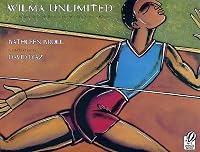
Wilma Unlimited: How Wilma Rudolph Became the World's Fastest Woman
by Kathleen Krull
On This Page
Description
A biography of the African-American woman who overcame crippling polio as a child to become the first woman to win three gold medals in track in a single Olympics.Tags
Recommendations



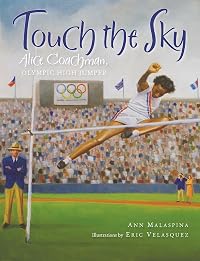
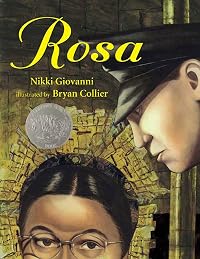
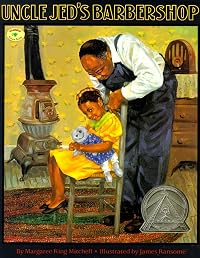
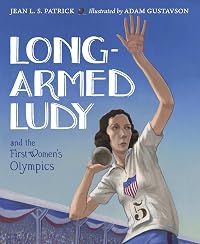
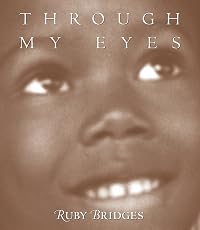
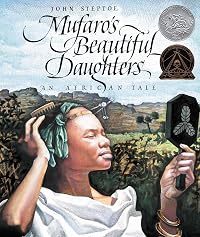
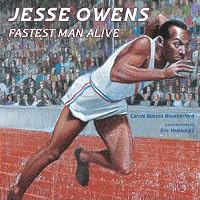
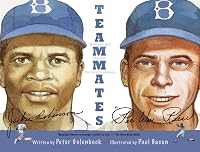
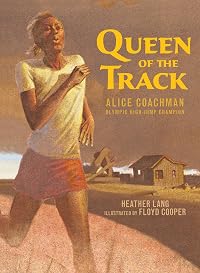
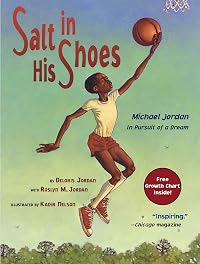
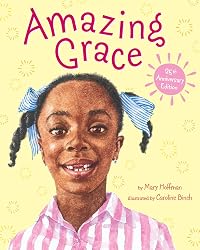
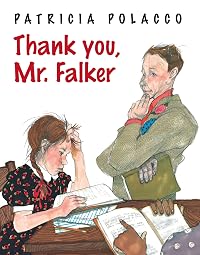



Member Recommendations
Member Reviews
Only after reading this book does the subtitle—``How Wilma Rudolph Became the World's Fastest Woman''—appear rife with understatement. In spite of a low birth weight and childhood bouts with scarlet fever and polio (the doctor said Wilma would never walk again) and after years of painful, relentless exercise, she not only walked, she ran: to college on scholarship, and to the Olympics, where she became the first American woman to win three gold medals in the same games. Krull (Lives of the Artists, 1995, etc.) tells the inspiring tale in rolling, oratorical prose; Diaz, coming off his Caldecott-winning work for Eve Bunting's Smoky Night (1994) again lays stylized painted scenes over textured background photos—here, sepia-toned show more close-ups of fences, ivy, and bare footprints in loose dirt. Though a mannered, blotchy typeface (also Diaz's creation) gives the pages an overly designed look, the book as a whole is a dramatic commemoration of quite a heroic life. Rudolph died in 1994; her post-Olympic accomplishments are described in an afterword. (Picture book/biography. 6-9) show less
Only after reading this book does the subtitle—``How Wilma Rudolph Became the World's Fastest Woman''—appear rife with understatement. In spite of a low birth weight and childhood bouts with scarlet fever and polio (the doctor said Wilma would never walk again) and after years of painful, relentless exercise, she not only walked, she ran: to college on scholarship, and to the Olympics, where she became the first American woman to win three gold medals in the same games. Krull (Lives of the Artists, 1995, etc.) tells the inspiring tale in rolling, oratorical prose; Diaz, coming off his Caldecott-winning work for Eve Bunting's Smoky Night (1994) again lays stylized painted scenes over textured background photos—here, sepia-toned show more close-ups of fences, ivy, and bare footprints in loose dirt. Though a mannered, blotchy typeface (also Diaz's creation) gives the pages an overly designed look, the book as a whole is a dramatic commemoration of quite a heroic life. Rudolph died in 1994; her post-Olympic accomplishments are described in an afterword. (Picture book/biography. 6-9) show less
Author Kathleen Krull has the ability to capture her audience and intertwine them into the story of Wilma. Readers experience a winding road of emotions as Wilma deals with the challenges of living with polio. Her survival and ability to thrive is even more impressive being in the 1940s, where limited health care benefits and medical cures were available. Excitement and energy bounces from page to page. Anticipation haunted me until the very end of Wilma’s roller coaster of experiences. Illustrator, David Diaz, had the ability to pair his action-packed illustrations perfectly with the text. As exhilarating as this text may be, it is also contains meaningful themes; racism, sexism, and prejudice of people with disabilities.
LOVE this book about Wilma Rudolph. This is such a great book because it outlines the life of the famous athlete who overcame polio to win three Olympic gold medals. She is such an inspiration to others to never give up and to always believe in yourself. This book portrays that very well. I would read this book to second or third graders.
Life for a child weighing just 4 pounds at birth, being 19th (eventually out of 22 siblings) in her family and contracting polio at age 5 was sure to be 'limited' ... but is this the story of Wilma Rudolph, who overcame prejudice, loss and countless other obstacles to lead a most 'unlimited' life.
After combating polio, doctors to told her and her mother that she might never walk again without use of a clunky metal brace to support her left leg, which had turned inward. Wilma did painful exercises daily and endured all kinds of teasing and bullying at school but with the support of her family and her own sheer determination, Wilma gained the use of leg again ... eventually becoming a star basketball and track athlete ... becoming the show more first in her family to attend college.
Her running skills took her all the way to the 1960 Olympics in Rome, where again, her chances of winning were 'limited' ... yet she persevered again, winning 3 gold medals, each in a very dramatic fashion. Wilma's life story teaches us the only limits on our ability to achieve great things are those we set on ourselves. show less
After combating polio, doctors to told her and her mother that she might never walk again without use of a clunky metal brace to support her left leg, which had turned inward. Wilma did painful exercises daily and endured all kinds of teasing and bullying at school but with the support of her family and her own sheer determination, Wilma gained the use of leg again ... eventually becoming a star basketball and track athlete ... becoming the show more first in her family to attend college.
Her running skills took her all the way to the 1960 Olympics in Rome, where again, her chances of winning were 'limited' ... yet she persevered again, winning 3 gold medals, each in a very dramatic fashion. Wilma's life story teaches us the only limits on our ability to achieve great things are those we set on ourselves. show less
This is a highly inspirational book and an incredible story (one of those stories where if you didn't know that it was in fact a true story you wouldn't believe anyone could overcome so many obstacles.)
From being a premature baby, to sickly youth, to polio-stricken child denied access to school and dealing with racism, to finally being a triple Gold-medal winner in the Olympics (with a swollen ankle), well, you get the idea.
The illustrations are rich and colorful and dynamic. And I like the clever way that body copy was place over images reflective of the text on that page (a visual of the finish line when talking of winning an event, or a visual of a large wheel when discussing traveling miles to get to a hospital that accepted show more Blacks).
I recommend this book, although I couldn't help visualizing Forest Gump breaking free of his polio braces and racing down the country road. "Run, Wilma, run!" show less
From being a premature baby, to sickly youth, to polio-stricken child denied access to school and dealing with racism, to finally being a triple Gold-medal winner in the Olympics (with a swollen ankle), well, you get the idea.
The illustrations are rich and colorful and dynamic. And I like the clever way that body copy was place over images reflective of the text on that page (a visual of the finish line when talking of winning an event, or a visual of a large wheel when discussing traveling miles to get to a hospital that accepted show more Blacks).
I recommend this book, although I couldn't help visualizing Forest Gump breaking free of his polio braces and racing down the country road. "Run, Wilma, run!" show less
The illustrations are great. The font, though a little difficult to read, matches the pictures and is sure pretty. And the story is inspirational, I guess...
Actually, tell the truth, it's a little *too* inspirational. To read this book, Wilma Randolph did nothing in her life but work hard to overcome stuff. Which is inspirational, sure... but she comes out seeming very hard to relate too. As I read about how she successfully overcame being a (poor, black) preemie, and successfully overcame being incredibly sickly, and successfully overcame polio, and successfully overcame racism and sexism (and the continuing effects of her disability)... I start to wonder, did Wilma Rudolph ever have a bad day? Did she never, like the rest of us show more humans, wake up in a miserable mood and want to crawl under the covers and let somebody else do the work? When she was a child and it hurt to do the exercises to learn to walk again, did she never throw a tantrum? When she was sitting on the sidelines at recess, did she never go home and whine to her mom about how unfair it all was?
Oh, she probably did. But to read this book, you'd think all the limitations she overcame were external - disability and a heap of -isms, that she never had to overcome a grumpy mood or frustration or just plain old-fashioned PMS like us normal folk. It can be a little tiring to read, honestly - none of us is ever going to be as perfect as she's (unrealistically) depicted as being.
I mean, look. Wilma strikes me as a fascinating individual. She did accomplish a lot - and winning the Olympics is an accomplishment in itself, even if you don't do it as an ex-polio kid with a twisted ankle. I just... I wish I could connect to her more as a real person when I read this book. Maybe it'll grow on me. show less
Actually, tell the truth, it's a little *too* inspirational. To read this book, Wilma Randolph did nothing in her life but work hard to overcome stuff. Which is inspirational, sure... but she comes out seeming very hard to relate too. As I read about how she successfully overcame being a (poor, black) preemie, and successfully overcame being incredibly sickly, and successfully overcame polio, and successfully overcame racism and sexism (and the continuing effects of her disability)... I start to wonder, did Wilma Rudolph ever have a bad day? Did she never, like the rest of us show more humans, wake up in a miserable mood and want to crawl under the covers and let somebody else do the work? When she was a child and it hurt to do the exercises to learn to walk again, did she never throw a tantrum? When she was sitting on the sidelines at recess, did she never go home and whine to her mom about how unfair it all was?
Oh, she probably did. But to read this book, you'd think all the limitations she overcame were external - disability and a heap of -isms, that she never had to overcome a grumpy mood or frustration or just plain old-fashioned PMS like us normal folk. It can be a little tiring to read, honestly - none of us is ever going to be as perfect as she's (unrealistically) depicted as being.
I mean, look. Wilma strikes me as a fascinating individual. She did accomplish a lot - and winning the Olympics is an accomplishment in itself, even if you don't do it as an ex-polio kid with a twisted ankle. I just... I wish I could connect to her more as a real person when I read this book. Maybe it'll grow on me. show less
Members
- Recently Added By
Lists

4th Grade Books
312 works; 5 members

Mensa for Kids Excellence in Reading Award Program (Nonfiction)
54 works; 4 members

Youth: Women's History
34 works; 1 member
Author Information

97+ Works 16,853 Members
All Editions
Awards and Honors
Awards
Notable Lists
Work Relationships
Common Knowledge
- People/Characters
- Wilma Rudolph
Classifications
- DDC/MDS
- 796.42092 — Arts & recreation Recreation, sports, and performing arts Athletic and outdoor sports and games Olympic sports Track events, running; General track and field
- LCC
- GV1061.15 .R83 .K78 — Geography, Anthropology and Recreation Recreation. Leisure Recreation. Leisure Sports Track and field athletics
- BISAC
Statistics
- Members
- 2,015
- Popularity
- 10,431
- Reviews
- 48
- Rating
- (4.32)
- Languages
- English, Spanish
- Media
- Paper
- ISBNs
- 18
- UPCs
- 1
- ASINs
- 9