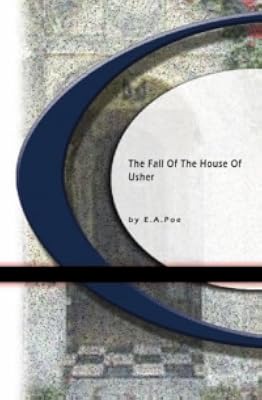
The Fall of the House of Usher [short story]
by Edgar Allan Poe
On This Page
Description
Dive into this classic from the singular mind of Edgar Allan Poe, who is widely regarded as the master of short horror fiction. The Fall of the House of Usher recounts the terrible events that befall the last remaining members of the once-illustrious Usher clan before it is—quite literally—rent asunder. With amazing economy, Poe plunges the reader into a state of deliciously agonizing suspense. It's a must-read for fans of the golden era of horror writing.Tags
Recommendations















Member Reviews
If any story deserves the epithet Gothic, it's this one. Published in 1839, Poe pulls out all the stops of his literary prowess in just 25 pages. The narrator takes us on a visit to a former childhood friend, Roderick Usher. Even before he steps inside his home, we're already immersed in an oppressive atmosphere, with a description of the dark, ominous surroundings. But it's not so much these external elements that contribute to the Gothic quality: Poe emphasizes Usher's mental state: hypersensitive, melancholic, and depressed. The connection between the organic and the inorganic is constantly focused on, the connection between the deplorable state of the Usher family and the house they inhabit. "Everything has a form of consciousness" show more is clearly not a theory invented only in the 20th century. And the denouement is correspondingly chilling. The gotic content of this tale may be a bit too exaggerated, but it’s an excellent introduction to the oeuvre of Edgar Allen Poe. show less
The plot of Edgar Allan Poe’s The Fall of the House of Usher is well known. An unnamed narrator arrives at the home of Roderick Usher, a childhood friend, after receiving a letter in which Usher describes an unspecified illness and begs him for help. As he approaches the house, the narrator is struck by its menacing appearance, with windows that seem like eyes fixed upon him with malicious intent. He also notices a thin crack running from the roof, down the façade of the building and all the way to the adjacent tarn.
Upon arrival, he discovers that Madeline, Roderick’s twin sister, also lives in the house. She too is gravely ill and suffers from frequent cataleptic fits.
In the days that follow, concerned by his friend’s show more deteriorating physical and mental condition, the narrator does his best to raise his spirits. Matters worsen dramatically, however, when Madeline dies.
Fearing that her body might be exhumed and dissected for scientific purposes — a practice not uncommon at the time — Roderick asks his friend to help him place her in one of the house’s vaults, where she is to remain for a fortnight before receiving a permanent burial.
The narrator continues his efforts to comfort Roderick, yet the atmosphere inside the house becomes increasingly oppressive. Strange sounds seem to reverberate through its walls, plunging both men into a state of mounting agitation. Then, during a violent storm, what appears to be a powerful gust of wind throws open the door of the room in which they have taken refuge, revealing Madeline herself, covered in blood after her desperate attempt to escape the vault. She throws herself upon her brother, terrifying him to death, and then dies herself.
The narrator flees in panic, only to witness the final destruction of the house, which splits apart along the crack he had noticed on his arrival and sinks into the tarn.
It is a remarkably short story, yet it contains all the essential elements of perfect Gothic fiction. Nothing is stated outright. The threat remains undefined, the horrors largely unseen, and even death itself is described with restraint. Yet the sense of impending doom is unmistakable.
It is precisely what remains unsaid that fills the characters with dread, that makes them glimpse shadows at the edge of their vision, that magnifies every creak and whisper until terror becomes overwhelming. Anyone can write horror with vampires, zombies, monsters or alien creatures. To create it using little more than a crack in a wall and a stretch of dark water is the mark of a master. show less
Upon arrival, he discovers that Madeline, Roderick’s twin sister, also lives in the house. She too is gravely ill and suffers from frequent cataleptic fits.
In the days that follow, concerned by his friend’s show more deteriorating physical and mental condition, the narrator does his best to raise his spirits. Matters worsen dramatically, however, when Madeline dies.
Fearing that her body might be exhumed and dissected for scientific purposes — a practice not uncommon at the time — Roderick asks his friend to help him place her in one of the house’s vaults, where she is to remain for a fortnight before receiving a permanent burial.
The narrator continues his efforts to comfort Roderick, yet the atmosphere inside the house becomes increasingly oppressive. Strange sounds seem to reverberate through its walls, plunging both men into a state of mounting agitation. Then, during a violent storm, what appears to be a powerful gust of wind throws open the door of the room in which they have taken refuge, revealing Madeline herself, covered in blood after her desperate attempt to escape the vault. She throws herself upon her brother, terrifying him to death, and then dies herself.
The narrator flees in panic, only to witness the final destruction of the house, which splits apart along the crack he had noticed on his arrival and sinks into the tarn.
It is a remarkably short story, yet it contains all the essential elements of perfect Gothic fiction. Nothing is stated outright. The threat remains undefined, the horrors largely unseen, and even death itself is described with restraint. Yet the sense of impending doom is unmistakable.
It is precisely what remains unsaid that fills the characters with dread, that makes them glimpse shadows at the edge of their vision, that magnifies every creak and whisper until terror becomes overwhelming. Anyone can write horror with vampires, zombies, monsters or alien creatures. To create it using little more than a crack in a wall and a stretch of dark water is the mark of a master. show less
Oh come on, how is this not fun. Read on a dark night, one when the lights are out because there is a furious storm beating on your rooftop and windows, it would make you shudder indeed.
It is not my first reading, but it might be my most appreciative one. I reveled in the description, the careful choice of words, the building agitation of our narrator. I picked up on one tidbit I might have missed before. Very early on in the narrator's description of Roderick Usher (who doesn't love that name?), we are told his "family had been noted, time our of mind, for a peculiar sensibility of temperament, displaying itself, through long ages, in many works of exalted art..." As an artist who seriously teetered on the edge of madness himself, I show more wonder how completely Poe connected art and insanity; how much he feared that the very sensitive and artist personality might succumb to it.
Having just finished a historical (biographical) novel of Poe, [b:Mrs. Poe|16130398|Mrs. Poe|Lynn Cullen|https://d.gr-assets.com/books/1420462099s/16130398.jpg|21955711], I had an itch to revisit some of his tales. I was tickled that this one was picked for a group read. Now, off to see what others are saying about it. show less
It is not my first reading, but it might be my most appreciative one. I reveled in the description, the careful choice of words, the building agitation of our narrator. I picked up on one tidbit I might have missed before. Very early on in the narrator's description of Roderick Usher (who doesn't love that name?), we are told his "family had been noted, time our of mind, for a peculiar sensibility of temperament, displaying itself, through long ages, in many works of exalted art..." As an artist who seriously teetered on the edge of madness himself, I show more wonder how completely Poe connected art and insanity; how much he feared that the very sensitive and artist personality might succumb to it.
Having just finished a historical (biographical) novel of Poe, [b:Mrs. Poe|16130398|Mrs. Poe|Lynn Cullen|https://d.gr-assets.com/books/1420462099s/16130398.jpg|21955711], I had an itch to revisit some of his tales. I was tickled that this one was picked for a group read. Now, off to see what others are saying about it. show less
I LOVED THIS.
Not only does Poe nail the tone (which shouldn't come as a surprise, because when does he ever fail to do that?) but the writing is really spectacular.
There's a sense not only of darkness and mystery and creeping superstition, but also of an oppressive and profound sadness. Usher is damaged, and all sorts of insane, but you can't help but feel for him- the last descendant of the House of Usher.
I also adored the dualistic symbolism of the House of Usher as both Usher's archaic bloodline and the more literal dwelling of the Ushers. Although Poe doesn't go into too much architectural detail, I'm fairly certain every person who reads this story will think of a sprawling Gothic stone mansion. (As they should, because that is exactly what it would be.) The ending, whereboth houses wind up falling , was darkly beautiful as well.
The only caveat I have with this story that prevented it from getting five stars was the fact that nothing was really explained. I'm fine with this- it's the case in many of Poe's stories- but I wanted to know more aboutUsher's curious affliction. And what was the deal with Madeline, his wraith-like sister?
Also, one of my favourite lines from The Fall of the House of Usher is, "An excited and highly distempered ideality threw a sulphureous lustre over all." I just think it's so succinct in describing the entire tone of the scene.
Read it here. show less
Not only does Poe nail the tone (which shouldn't come as a surprise, because when does he ever fail to do that?) but the writing is really spectacular.
He roamed from chamber to chamber with hurried, unequal, and objectless sleep. The pallor of his countenance had assumed, if possible, a more ghastly hue- but the luminousness of his eye had utterly gone out. the once occasional huskiness of his tone was heard no more; and a tremulous quaver, as if of extreme terror, habitually characterized his utterance. there were times, indeed, when I thought his unceasingly agitated mind was laboring with some oppressive secret, to divulge which he struggled for the necessary courage. At times, again, I was obliged to resolve all intoshow more
the mere inexplicable vagaries of of madness, for I beheld him gazing upon vacancy for long hours, in an attitude of the profoundest attention, as if listening to some imaginary sound. It was no wonder that his condition terrified- that it infected me. I felt it creeping upon me, by slow yet certain degrees, the wild influences of his own fantastic yet impressive superstitions.
There's a sense not only of darkness and mystery and creeping superstition, but also of an oppressive and profound sadness. Usher is damaged, and all sorts of insane, but you can't help but feel for him- the last descendant of the House of Usher.
I also adored the dualistic symbolism of the House of Usher as both Usher's archaic bloodline and the more literal dwelling of the Ushers. Although Poe doesn't go into too much architectural detail, I'm fairly certain every person who reads this story will think of a sprawling Gothic stone mansion. (As they should, because that is exactly what it would be.) The ending, where
The only caveat I have with this story that prevented it from getting five stars was the fact that nothing was really explained. I'm fine with this- it's the case in many of Poe's stories- but I wanted to know more about
Also, one of my favourite lines from The Fall of the House of Usher is, "An excited and highly distempered ideality threw a sulphureous lustre over all." I just think it's so succinct in describing the entire tone of the scene.
Read it here. show less
“The ‘House of Usher’ - an appellation which seemed to include, in the minds of the peasantry who used it, both the family and the family mansion.”
The narrator has been unexpectedly and urgently invited to visit Roderick Usher, one of his “boon companions in boyhood”, though he knows (or remembers?) oddly little about this friend.
From the opening words, Poe conjures an unsettling and other-worldly atmosphere with florid and archaic prose and by occasionally slipping an unexpected word in an otherwise ordinary description:
“During the whole of a dull, dark, and soundless day in the autumn…”
As he approaches “this mansion of gloom” everything builds to create “an iciness, a sinking, a sickening of the heart”.
show more
“I reined my horse to the precipitous brink of a black and lurid tarn that lay in unruffled lustre by the dwelling, and gazed down - but with a shudder even more thrilling than before - upon the remodelled and inverted images of the gray sedge, and the ghastly tree-stems, and the vacant and eye-like windows.”
Nevertheless, he approaches the house, is admitted, and is led through “many dark and intricate passages”. Even “The physician of the family… wore a mingled expression of low cunning and perplexity”. But the narrator is shocked at the sight of cadaverous Usher:
“I could not, even with effort, connect its Arabesque expression with any idea of simple humanity.”
Image: Dark and twisty corridors (Source, but edited)
Superstition versus science
Usher is a man of sudden mood changes and manias, keen to talk about the curse of his family line, his dying twin sister, and his struggle with “the grim phantasm, FEAR”. His friend thinks him a hypochondriac. They paint and read and sometimes Usher makes “wild improvisations on his speaking guitar”. He confides his belief in the sentience of all vegetable things, and in a real connection between the family’s fate and the gray stones of the ancestral home, which are covered in fungi and surrounded by decayed trees.
After much setting of mood, a major event happens, triggering other smaller ones. Usher is spooked and sees through a spiritual lens, while his friend pushes a reassuring rationalist perspective.
Meta
This is a short story, but it includes two significant chunks of other works to propel the prophetic undercurrent.
• A six-stanza poem, The Haunted Palace, is presented as one of Usher’s works. It has four stanzas of beauty followed by two of horror and seems to echo and predict his family’s fate. (Poe had previously published it as a standalone poem.)
• One of Usher’s favourite romances is “Mad Trist” by Sir Launcelot Canning. As the narrator reads it aloud, the story seems to echo in reality around them, culminating in a finale that inverts the opening metaphor of the House of Usher.
Image: Woodcut of the narrator fleeing the House of Usher (artist unknown) (Source)
Reflections
I last read this ~30 years ago and have vague memories of seeing it on screen, so although I remembered the gist of the story, the telling of it was fresh - in sharp contrast with the archaic phrasing and the “pestilent and mystic vapor” suffocating the House of Usher. I was especially taken by the odd reflections in the “sullen waters of the tarn” and the unreliable reflections in it.
See also
• Ray Bradbury wrote a dystopian sequel to this, Usher II, which I reviewed HERE. It’s included in some editions of The Martian Chronicles, which I reviewed HERE.
• Another brother and sister living in a creepy house in Julio Cortázar's short story, House Taken Over, which I reviewed HERE.
• The merging of family dynasty and their home, coupled with secrets, reminded me a little of Mervyn Peake’s magnificent Gormenghast books, which I reviewed HERE.
• This could easily inspire a story of the effects of Covid-isolation, but I won’t be the one to write it.
Short story club
I reread this as one of the stories in The Art of the Short Story, by Dana Gioia, from which I'm aiming to read one story a week with The Short Story Club, starting 2 May 2022.
You can read this story here.
You can join the group here. show less
The narrator has been unexpectedly and urgently invited to visit Roderick Usher, one of his “boon companions in boyhood”, though he knows (or remembers?) oddly little about this friend.
From the opening words, Poe conjures an unsettling and other-worldly atmosphere with florid and archaic prose and by occasionally slipping an unexpected word in an otherwise ordinary description:
“During the whole of a dull, dark, and soundless day in the autumn…”
As he approaches “this mansion of gloom” everything builds to create “an iciness, a sinking, a sickening of the heart”.
show more
“I reined my horse to the precipitous brink of a black and lurid tarn that lay in unruffled lustre by the dwelling, and gazed down - but with a shudder even more thrilling than before - upon the remodelled and inverted images of the gray sedge, and the ghastly tree-stems, and the vacant and eye-like windows.”
Nevertheless, he approaches the house, is admitted, and is led through “many dark and intricate passages”. Even “The physician of the family… wore a mingled expression of low cunning and perplexity”. But the narrator is shocked at the sight of cadaverous Usher:
“I could not, even with effort, connect its Arabesque expression with any idea of simple humanity.”
Image: Dark and twisty corridors (Source, but edited)
Superstition versus science
Usher is a man of sudden mood changes and manias, keen to talk about the curse of his family line, his dying twin sister, and his struggle with “the grim phantasm, FEAR”. His friend thinks him a hypochondriac. They paint and read and sometimes Usher makes “wild improvisations on his speaking guitar”. He confides his belief in the sentience of all vegetable things, and in a real connection between the family’s fate and the gray stones of the ancestral home, which are covered in fungi and surrounded by decayed trees.
After much setting of mood, a major event happens, triggering other smaller ones. Usher is spooked and sees through a spiritual lens, while his friend pushes a reassuring rationalist perspective.
Meta
This is a short story, but it includes two significant chunks of other works to propel the prophetic undercurrent.
• A six-stanza poem, The Haunted Palace, is presented as one of Usher’s works. It has four stanzas of beauty followed by two of horror and seems to echo and predict his family’s fate. (Poe had previously published it as a standalone poem.)
• One of Usher’s favourite romances is “Mad Trist” by Sir Launcelot Canning. As the narrator reads it aloud, the story seems to echo in reality around them, culminating in a finale that inverts the opening metaphor of the House of Usher.
Image: Woodcut of the narrator fleeing the House of Usher (artist unknown) (Source)
Reflections
I last read this ~30 years ago and have vague memories of seeing it on screen, so although I remembered the gist of the story, the telling of it was fresh - in sharp contrast with the archaic phrasing and the “pestilent and mystic vapor” suffocating the House of Usher. I was especially taken by the odd reflections in the “sullen waters of the tarn” and the unreliable reflections in it.
See also
• Ray Bradbury wrote a dystopian sequel to this, Usher II, which I reviewed HERE. It’s included in some editions of The Martian Chronicles, which I reviewed HERE.
• Another brother and sister living in a creepy house in Julio Cortázar's short story, House Taken Over, which I reviewed HERE.
• The merging of family dynasty and their home, coupled with secrets, reminded me a little of Mervyn Peake’s magnificent Gormenghast books, which I reviewed HERE.
• This could easily inspire a story of the effects of Covid-isolation, but I won’t be the one to write it.
Short story club
I reread this as one of the stories in The Art of the Short Story, by Dana Gioia, from which I'm aiming to read one story a week with The Short Story Club, starting 2 May 2022.
You can read this story here.
You can join the group here. show less
Wow, what a fantastic story. You have all the gothic elements crammed in here: a haunted (perhaps even sentient) house, a mysterious illness, madness, death, entombment, a dungeon, a violent storm, a cursed family, hints of possible incest (?), resurrection, bizarre poetry, and a story-within-the-story about a knight slaying a dragon. And binding this all together is Poe's inimitable style and narrative drive. It's horror of the creepy, atmospheric kind (the best kind, IMHO), the kind that gets under your skin and makes you feel it in a thousand subtle ways.
I read this several times between high school and college, and loved it each time...but in this re-read, I really wondered why, haha. I found the writing to be super convoluted, and had to go over paragraphs repeatedly to figure out what the heck Poe was saying!
So—this read didn’t live up to my educational recollections or hype. Alas.
But that aside, once I did figure out what was going on, dang. Poe is really the master of the creepy and the macabre. Good read for Halloween.
So—this read didn’t live up to my educational recollections or hype. Alas.
But that aside, once I did figure out what was going on, dang. Poe is really the master of the creepy and the macabre. Good read for Halloween.
Members
- Recently Added By
Lists

1001 Books You Must Read Before You Die
1,448 works; 1,134 members

Best Gothic Fiction
110 works; 31 members

19th Century
190 works; 16 members

Houses and Buildings as Characters in Fiction
182 works; 29 members

Favourite Books
1,819 works; 316 members

1,001 BYMRBYD Concensus
723 works; 27 members

1970s
657 works; 23 members
Shaking a Leg
111 works; 3 members

Top 100 to Read before you Die
109 works; 7 members

The Seven-League Shelf
57 works; 3 members

1830s
3 works; 1 member
Books I read in high school
52 works; 1 member

Greatest Books, allegedly
484 works; 9 members

Horror Spotlight Readalong
37 works; 2 members

Which house?
423 works; 16 members

Movies/Shows
621 works; 7 members

Movies/Shows with Halloween Scenes
28 works; 1 member

Favourite Short Stories
153 works; 9 members
Horror Then & Now
44 works; 4 members
Kate & Cheyanne's Horror Extravaganza
144 works; 6 members

Five star books
1,767 works; 110 members
Author Information

3,813+ Works 107,613 Members
Edgar Allan Poe was born in Boston, Massachusetts on January 19, 1809. In 1827, he enlisted in the United States Army and his first collection of poems, Tamerlane and Other Poems, was published. In 1835, he became the editor of the Southern Literary Messenger. Over the next ten years, Poe would edit a number of literary journals including the show more Burton's Gentleman's Magazine and Graham's Magazine in Philadelphia and the Broadway Journal in New York City. It was during these years that he established himself as a poet, a short story writer, and an editor. His works include The Fall of the House of Usher, The Tell-Tale Heart, The Murders in the Rue Morgue, The Mystery of Marie Roget, A Descent into the Maelstrom, The Masque of the Red Death, and The Raven. He struggle with depression and alcoholism his entire life and died on October 7, 1849 at the age of 40. (Bowker Author Biography) show less
Some Editions
Awards and Honors
Series
Belongs to Publisher Series
Work Relationships
Is contained in
A Descent into the Maelstrom / The Fall of the House of Usher / The Pit and the Pendulum by Edgar Allan Poe
Great Classic Hauntings: Six Unabridged Stories (Audio Editions Mystery Masters) by Geraint Wyn Davies
The Fall of the House of Usher and Other Writings: Poems, Tales, Essays, and Reviews (Penguin Classics) by Edgar Allan Poe
The Fall Of The House Of Usher: And Other Tales And Prose Writings of Edgar Allan Poe by Edgar Allan Poe
The Fall of the House of Usher. Ligeia. The Black Cat. The Pit and the Pendulum. The Cask of Amontillado. The Assignation. The Gold-Bug. MS. found in a Bottle by Edgar Allan Poe
Edgar Allan Poe: Collected Stories and Poems (Collector's Library Editions) by Edgar Allan Poe (indirect)
The Complete Tales of Mystery and Imagination; The Narrative of Arthur Gordon Pym; The Raven and Other Poems by Edgar Allan Poe (indirect)
The Works of Edgar Allen Poe in One Volume: Poems, Tales, Essays, Criticisms with New Notes by Edgar Allan Poe
The Complete Tales and Poems of Edgar Allan Poe with Selections from His Critical Writings by Edgar Allan Poe
The Best Short Stories of Edgar Allan Poe (The Fall of the House of Usher, The Tell-Tale Heart and Other Tales) by Edgar Allan Poe
Great Tales of Horror and Suspense; Weird Tales of Edgar Allan Poe: the Ghost Ship and Other Ghostly Stories, Dracula by Edgar Allan Poe
The annotated tales of Edgar Allan Poe edited with an introduction, notes, and a bibliography by Edgar Allan Poe
The American Short Story: A Collection of the Best Known and Most Memorable Stories by the Great American Authors by Thomas K. Parkes
The Best of Poe: The Tell-Tale Heart, The Raven, The Cask of Amontillado, and 30 Others by Edgar Allan Poe
The fall of the House of Usher and other stories (Classics of mystery & suspense) by Edgar Allan Poe
Spores of Doom: Dank Tales of the Fungal Weird: 59 (British Library Tales of the Weird) by Aaron Worth
The Fall of the House of Usher / The Pit and the Pendulum / Other Tales of Mystery and Imagination by Edgar Allan Poe
Contains
Is retold in
Has the adaptation
Inspired
Has as a commentary on the text
Has as a student's study guide
Common Knowledge
- Canonical title
- The Fall of the House of Usher [short story]
- Original title
- The Fall of the House of Usher
- Original publication date
- 1839
- People/Characters
- Roderick Usher (Madeline's brother); Madeline Usher (Roderick's sister); Narrator [The Fall of the House of Usher] (Roderick's boyhood friend)
- Important places
- House of Usher
- Related movies
- House of Usher (1960 | IMDb); The Fall of the House of Usher (2023 | IMDb)
- First words*
- Ich war den ganzen Tag lang geritten, einen grauen und lautlosen melancholischen Herbsttag lang - durch eine eigentümlich öde und traurige Gegend, auf die erdrückend schwer die Wolken herabhingen.
- Last words*
- (Click to show. Warning: May contain spoilers.)..., und der tiefe und schwarze Teich zu meinen Füssen schloss sich finster und schweigend über den Trümmern des 'Hauses Usher'.
- Original language
- English
- Disambiguation notice
- This is a short story, do NOT combine with the collection.
*Some information comes from Common Knowledge in other languages. Click "Edit" for more information.
Classifications
Statistics
- Members
- 1,333
- Popularity
- 18,036
- Reviews
- 47
- Rating
- (3.69)
- Languages
- 11 — Catalan, Czech, Dutch, English, Esperanto, French, German, Italian, Slovenian, Spanish, Swedish
- Media
- Paper, Audiobook, Ebook
- ISBNs
- 114
- UPCs
- 1
- ASINs
- 61