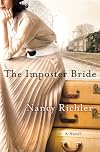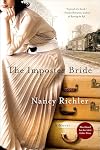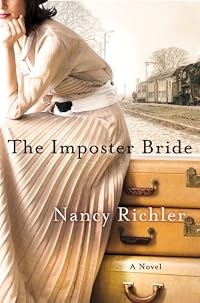
The Imposter Bride
by Nancy Richler
On This Page
Description
A novel about a mysterious mail-order bride in the wake of World War II, whose sudden decision ripples through time to deeply impact the daughter she never knew.Tags
Recommendations














Member Reviews
Let me preface this by saying this was not the book I picked up at the library to read. What I thought I was checking out was a romance - I'd been hit by a sudden nostalgia for my Harlequin days, and the back cover was intriguing. A deep and doomed love? A bride who is not only not who she claims to be, but one who flees, leaving behind husband and infant daughter? So, no, it wasn't the romance I expected. But it was a romance. Just one of a different sort.
I expected to read about Lily, and in some ways that's a fault of this novel. Lily is present almost entirely by her absence. She's pivotal, while all the while remaining benign. The story isn't even about the doomed love - in fact, I was hard pressed to divine that from what was show more given, even if one takes into account the filter of the bulk of the tale coming from her daughter, Ruth. No, the love story that is told is that of Ruth, and her absent mother. And, perhaps, by extension, all the women in this story and their relationships with others.
There are happy notes, sad ones, and poignant ones. Ones where the reader searches to understand the emotions that are there - and those that aren't. They're complex. Intricate. Woven out of experiences we glimpse at odd angles and struggle to compile over the entire novel, only to reach the end with a sense of completion, if not satisfaction. As with the entire novel, it is what it is, presented without inflection and left for us to divine.
Different, and beautiful. Sad, and lyrical. Much like the era the bulk of it is set in. Well worth the read. Well worth it. show less
I expected to read about Lily, and in some ways that's a fault of this novel. Lily is present almost entirely by her absence. She's pivotal, while all the while remaining benign. The story isn't even about the doomed love - in fact, I was hard pressed to divine that from what was show more given, even if one takes into account the filter of the bulk of the tale coming from her daughter, Ruth. No, the love story that is told is that of Ruth, and her absent mother. And, perhaps, by extension, all the women in this story and their relationships with others.
There are happy notes, sad ones, and poignant ones. Ones where the reader searches to understand the emotions that are there - and those that aren't. They're complex. Intricate. Woven out of experiences we glimpse at odd angles and struggle to compile over the entire novel, only to reach the end with a sense of completion, if not satisfaction. As with the entire novel, it is what it is, presented without inflection and left for us to divine.
Different, and beautiful. Sad, and lyrical. Much like the era the bulk of it is set in. Well worth the read. Well worth it. show less
I was really touched by this story of loss: loss of family, identity, history, human connection. Richler did a fantastic job at capturing the hectic and ignoble days at the war was brought to an end and still people had to fight to survive. It must have been a time of terrible confusion, looking for absent relatives, pulling bits of broken lives faced the horrible reality of having to reconstruct from scratch.
I found Lily to be an incredibly human character: we can neither judge her or call her out on her actions. She was simply trying to catch her bearings. Richler did a tremendous job of contrasting Canadians who stayed at home and saw the war from afar compared to the European who lived it all too closely. The realities are so show more different and there is always that gap in understanding.
The structure of the novel is also very clever: a soul-searching book but revealed, little by little, so that the reader cannot help but want to dig deeper into the past, looking for clues, trying to figure out if Lily is good or bad.
I was very much enthralled and taken by this story, one which I would very much recommend. show less
I found Lily to be an incredibly human character: we can neither judge her or call her out on her actions. She was simply trying to catch her bearings. Richler did a tremendous job of contrasting Canadians who stayed at home and saw the war from afar compared to the European who lived it all too closely. The realities are so show more different and there is always that gap in understanding.
The structure of the novel is also very clever: a soul-searching book but revealed, little by little, so that the reader cannot help but want to dig deeper into the past, looking for clues, trying to figure out if Lily is good or bad.
I was very much enthralled and taken by this story, one which I would very much recommend. show less
If your life, your very identity, is a lie, can you live hiding your true self forever? Or would you eventually have to leave the life you'd built on that false foundation no matter what the consequences for you or those left behind? In Nancy Richler's The Imposter Bride, this question, tied to questions of survival, love, interconnectedness, and the desperate secrets of World War II, drives the whole of this Scotiabank Giller Prize shortlisted novel.
Opening with Lily Azerov, now Kramer, sharing a plum with her new husband in a small room off of a banquet hall in Montreal just after their wedding ceremony, the novel alternates between Lily's new life as a mail order bride in Canada and her daughter Ruth's life and search for the mother show more who abandoned her and her father when she was only three months old. When Lily arrives in Canada after escaping a devastated post-war Europe via Palestine, she finds herself abandoned on the train platform. Her intended husband Sol took one look at her and left her sitting there so his brother Nathan ends up marrying the clearly emotionally damaged Lily instead. And it is as early as her wedding that the fact that she has assumed a false identity is clear, if not to all, then to some of the Jewish community in Montreal, specifically to the real Lily Azerov's cousin, Ida Pearl Krakauer, who has gatecrashed the wedding. Then the narrative flips to first person, told by Ruth, Nathan and Lily's daughter as she reminisces about the unexpected gift that arrived addressed to her on her sixth birthday. It was from her long-absent mother and contained nothing besides a pretty rock and a notecard with the details of where and when it was found.
As the novel progresses, it moves seamlessly back and forth between the details of Lily's life as a young wife, her memories of life on the Polish/Russian border and the horrors that drove her to her deception, the contents of the real Lily Azerov's journal, Ruth's feelings about growing up without a mother, and her ultimate search for the truth about the woman who could seemingly so easily walk out on her own precious baby. World War II damaged and shattered so many, including people not even born until after the war. The weight of the past and the loss of most of an entire generation haunted those who survived, a traumatic and terrible legacy that they in turn passed on to their own children as is evidenced here by Lily and Ruth and the ghosts in their lives. For Lily, there was no escape from her past within her assumed identity. And for Ruth there was nothing that could make up for her mother's choice to leave her despite the enveloping love with which the rest of the family surrounded her.
This tale is a beautifully written but heartbreaking one. Richler has constructed it incredibly intricately with each of the narratives interlocking with the other and yet still carefully closing in on themselves. There's some easy but delicately handled symbolism such as the rocks sent to Ruth from her mother much as stones are left on a grave suggest the resilience of enduring memory and the pair of journals left behind with Lily Azerov's being full while Lily Kramer's is blank, her story still unknown, still to be discovered. Although the narrative circles back upon itself time and again, it still moves forward smoothly and cleanly. The tone is generally melancholy, filled with unavoidable and overwhelming loss, but there is nothing graphic despite the portions set amongst the horrors of the war. Relationships, identity, and what we have to do to survive our lives form the backbone of each part of the novel and the ending is well earned with the characters living exactly where they should be and the narrative neatly coming full circle one final time. Quietly, carefully, and elegantly written, this is a book not to be missed. show less
Opening with Lily Azerov, now Kramer, sharing a plum with her new husband in a small room off of a banquet hall in Montreal just after their wedding ceremony, the novel alternates between Lily's new life as a mail order bride in Canada and her daughter Ruth's life and search for the mother show more who abandoned her and her father when she was only three months old. When Lily arrives in Canada after escaping a devastated post-war Europe via Palestine, she finds herself abandoned on the train platform. Her intended husband Sol took one look at her and left her sitting there so his brother Nathan ends up marrying the clearly emotionally damaged Lily instead. And it is as early as her wedding that the fact that she has assumed a false identity is clear, if not to all, then to some of the Jewish community in Montreal, specifically to the real Lily Azerov's cousin, Ida Pearl Krakauer, who has gatecrashed the wedding. Then the narrative flips to first person, told by Ruth, Nathan and Lily's daughter as she reminisces about the unexpected gift that arrived addressed to her on her sixth birthday. It was from her long-absent mother and contained nothing besides a pretty rock and a notecard with the details of where and when it was found.
As the novel progresses, it moves seamlessly back and forth between the details of Lily's life as a young wife, her memories of life on the Polish/Russian border and the horrors that drove her to her deception, the contents of the real Lily Azerov's journal, Ruth's feelings about growing up without a mother, and her ultimate search for the truth about the woman who could seemingly so easily walk out on her own precious baby. World War II damaged and shattered so many, including people not even born until after the war. The weight of the past and the loss of most of an entire generation haunted those who survived, a traumatic and terrible legacy that they in turn passed on to their own children as is evidenced here by Lily and Ruth and the ghosts in their lives. For Lily, there was no escape from her past within her assumed identity. And for Ruth there was nothing that could make up for her mother's choice to leave her despite the enveloping love with which the rest of the family surrounded her.
This tale is a beautifully written but heartbreaking one. Richler has constructed it incredibly intricately with each of the narratives interlocking with the other and yet still carefully closing in on themselves. There's some easy but delicately handled symbolism such as the rocks sent to Ruth from her mother much as stones are left on a grave suggest the resilience of enduring memory and the pair of journals left behind with Lily Azerov's being full while Lily Kramer's is blank, her story still unknown, still to be discovered. Although the narrative circles back upon itself time and again, it still moves forward smoothly and cleanly. The tone is generally melancholy, filled with unavoidable and overwhelming loss, but there is nothing graphic despite the portions set amongst the horrors of the war. Relationships, identity, and what we have to do to survive our lives form the backbone of each part of the novel and the ending is well earned with the characters living exactly where they should be and the narrative neatly coming full circle one final time. Quietly, carefully, and elegantly written, this is a book not to be missed. show less
It is a basic human need. “Our need to know where we come from, to connect it to who we are and where we’re going.”
Ruth becomes aware of this need, first, when she is six years old, but that is just the beginning.
It is not, however, the beginning of The Imposter Bride; Nancy Richler's novel begins with Ruth's mother.
Readers are introduced to Ruth's mother on the novel's first page, but years before she gives birth to Ruth. Readers meet her as a young woman who has travelled to Montreal in 1947 to marry a man who is meeting her at the train station.
Her arrival, however, precipitates a change of heart; Sol no longer wants to marry her. (This is not a spoiler, really, as readers learn of these events on the novel's first two show more pages.)
And so begins the series of insinuations as people slip into and out of each other's lives, inviting intimacies and then denying them.
"What man would insinuate himself into a woman’s private moment, as he just had, practically depositing himself onto her lap? The same man, she supposed, who would invite a woman to cross two oceans to marry him and then leave her at the station because she didn’t suit his mood on the day of her arrival."
So the book does begin with Ruth's mother arriving in Montreal, but the story does not begin there.
One could say that Ruth's story begins there (because Sol refuses the marriage and his brother, Nathan, offers marriage instead, and that's how Nathan becomes Ruth's father) but Ruth's story spirals around her mother's past.
"But now, at this moment, as she felt the reassuring weight of the new journal in her hand, a weight that gave substance to what she had dreamed and imagined, she felt she had arrived at the beginning."
Except that this beginning for Ruth's mother? It's from closer to the middle of the novel, which alternates between chapters told from each perspective, mother and daughter.
Ruth's mother has felt as though she arrived at the beginning on so many occasions. She no longer knows where she begins.
And readers know from the moment they pick up the novel that the bride is an imposter. Its author, however, is the real deal.
Nancy Richler spins a complicated and rewarding story. The Imposter Bride is the answer Ruth seeks or, more accurately, it is the process by which Ruth seeks to satisfy that basic human need to know where she came from, to connect it with who she is and where she is going.
"I sat for a long while with my fingertips resting on the first page of my mother’s notebook, and there was definitely a pulsing coming from it. "
The pulse that Nancy Richler's novel emits is a powerful one; it reads easily (like Ami McKay's The Birth House, Lilian Nattal's The River Midnight, Donna Morrissey's Kit's Law) but the story settles heavily in the reader's heart.
A much longer and more detailed discussion of this work appears on BuriedInPrint. show less
Ruth becomes aware of this need, first, when she is six years old, but that is just the beginning.
It is not, however, the beginning of The Imposter Bride; Nancy Richler's novel begins with Ruth's mother.
Readers are introduced to Ruth's mother on the novel's first page, but years before she gives birth to Ruth. Readers meet her as a young woman who has travelled to Montreal in 1947 to marry a man who is meeting her at the train station.
Her arrival, however, precipitates a change of heart; Sol no longer wants to marry her. (This is not a spoiler, really, as readers learn of these events on the novel's first two show more pages.)
And so begins the series of insinuations as people slip into and out of each other's lives, inviting intimacies and then denying them.
"What man would insinuate himself into a woman’s private moment, as he just had, practically depositing himself onto her lap? The same man, she supposed, who would invite a woman to cross two oceans to marry him and then leave her at the station because she didn’t suit his mood on the day of her arrival."
So the book does begin with Ruth's mother arriving in Montreal, but the story does not begin there.
One could say that Ruth's story begins there (because Sol refuses the marriage and his brother, Nathan, offers marriage instead, and that's how Nathan becomes Ruth's father) but Ruth's story spirals around her mother's past.
"But now, at this moment, as she felt the reassuring weight of the new journal in her hand, a weight that gave substance to what she had dreamed and imagined, she felt she had arrived at the beginning."
Except that this beginning for Ruth's mother? It's from closer to the middle of the novel, which alternates between chapters told from each perspective, mother and daughter.
Ruth's mother has felt as though she arrived at the beginning on so many occasions. She no longer knows where she begins.
And readers know from the moment they pick up the novel that the bride is an imposter. Its author, however, is the real deal.
Nancy Richler spins a complicated and rewarding story. The Imposter Bride is the answer Ruth seeks or, more accurately, it is the process by which Ruth seeks to satisfy that basic human need to know where she came from, to connect it with who she is and where she is going.
"I sat for a long while with my fingertips resting on the first page of my mother’s notebook, and there was definitely a pulsing coming from it. "
The pulse that Nancy Richler's novel emits is a powerful one; it reads easily (like Ami McKay's The Birth House, Lilian Nattal's The River Midnight, Donna Morrissey's Kit's Law) but the story settles heavily in the reader's heart.
A much longer and more detailed discussion of this work appears on BuriedInPrint. show less
I loved this compelling story about identity: who we are, where we come from, and how that affects the choices we make and the people who care about us. Lily Azerov arrives in Montreal to marry a man she's never met -- a man who rejects her on sight. But, Lily isn't really who she claims to be, as is apparent to the real Lily's cousin. Who Lily really is doesn't matter much to some of the family she builds in Montreal. But it does matter profoundly to her daughter, Ruth, whose search for answers is discouraged by her father and grandmother.
I couldn't stop reading. Like Ruth, I needed to know Lily's true story. This book is well written and thoroughly engaging.
I couldn't stop reading. Like Ruth, I needed to know Lily's true story. This book is well written and thoroughly engaging.
This is the engrossing and highly readable story of "Lily Azerov" who has fled Eastern Europe after the turmoil and horror of the Second World War. In Palestine, she makes arrangements to marry a Canadian Jew, Sol Kramer, who, on sight intimates the damage behind her calm demeanor. Sol quickly and shamefully decides not to marry Lily, but his brother Nathan does. Ida Krakauer and her teenaged daughter, Elka, show up at Nathan and Lily's wedding uninvited. Ida has heard from her sister Sonya in Tel Aviv that a young woman has recently been there posing as their cousin Lily. Ida determines, like Sonya, that Lily is indeed no relation of theirs, but someone who has assumed a new identity in an attempt to escape the trauma and horror of her show more war experience. Lily, apparently fearing exposure by Ida, flees Montreal, her marriage, and her three-month old child, though Ida, a self-made jeweler and gem cleaver with her own painful past has no intention of calling her on her assumed identity. The book largely focuses on the growing determination of Lily's daughter Ruth, who has grown up motherless, to find her mother and uncover the secret of her past. All she has to go on are the beautiful rocks her mother has sent her at irregular intervals over the years since Ruth was six, an uncut diamond, and Lily Azerov's journal, which was appropriated by the "imposter bride" somewhere along the way.
Author Richler has woven a richly rewarding novel of character,family, secrets, and history. In the Imposter Bride, she explores the deeply and uniquely human need to discover where we come from. Highly recommended. show less
Author Richler has woven a richly rewarding novel of character,family, secrets, and history. In the Imposter Bride, she explores the deeply and uniquely human need to discover where we come from. Highly recommended. show less
“She could find nothing in her present world to match her interior life …” (161)
Post WWII, a young Jewish woman, Lily Azerov, travels from Poland to Tel Aviv and eventually to Montreal, Canada, where she has prearranged to marry Sol Kramer. But Sol, to his almost immediate regret, rejects Lily on sight. And she marries instead his younger brother, Nathan. A Montreal jeweller, Ida Krakauer, attends the nuptials uninvited, hoping that the bride is her cousin, presumed to have died in the war. Alas, Ida realizes immediately that the bride is an imposter who has stolen her cousin’s identity. But Ida keeps the young woman’s secret, and she and her daughter, Elka, become family of the Kramers when Elka marries Sol. But no matter show more Ida’s confidence, “Lily” is a “broken bird,” unable to live her lie, and shortly after she gives birth to a daughter, Ruth, she disappears, leaving only a simple note to Nathan, “I’m sorry.” Not surprisingly, as Ruth grows, she attempts to understand, and eventually to find the woman she knows only by a false identity and by a handful of meager possessions: an uncut diamond and a private Yiddish journal which were Lily’s; a blank leather-bound journal belonging to her mother; and a small collection of beautiful rocks her mother has sent over the years. When Ruth becomes acquainted at school with a teacher whom she knows to have been “damaged” by the war, she considers what must have been her mother’s heartbreaking motivation in abandoning her family:
“’Shattered’ was the word Elka sometimes used, but until then the word had always brought to mind the teacup that sat on the highest shelf of Elka and Sol’s dining room high board, a white porcelain cup with a delicate pattern of blue flowers that had shattered once form a fall through Sol’s fingers, had been carefully repaired, but was too fragile now for the rigours of holding tea and being transported from saucer to mouth and then back to saucer again. My mother was like that teacup, I had come to think. She could not withstand the rigours of the life she was trying to live, a normal life of love, marriage and family” (123)
The Imposter Bride is a beautifully written, engaging read, Richler’s tone poignant and melancholy as she explores the experience of Jewish families who survived the Holocaust from the point of view of a child longing for her absent mother. Her use of Lily’s Yiddish journal is brilliant in allowing us to glimpse the prosperous, cultured, and venerable Jewish world crushed by war. And she masterfully uses secondary and even minor characters – Ruthie’s teacher crying silently through his classes – to depict incalculable human loss. Highly worthy of its place on Canada’s 2012 Giller Prize Shortlist, and highly recommended. show less
Post WWII, a young Jewish woman, Lily Azerov, travels from Poland to Tel Aviv and eventually to Montreal, Canada, where she has prearranged to marry Sol Kramer. But Sol, to his almost immediate regret, rejects Lily on sight. And she marries instead his younger brother, Nathan. A Montreal jeweller, Ida Krakauer, attends the nuptials uninvited, hoping that the bride is her cousin, presumed to have died in the war. Alas, Ida realizes immediately that the bride is an imposter who has stolen her cousin’s identity. But Ida keeps the young woman’s secret, and she and her daughter, Elka, become family of the Kramers when Elka marries Sol. But no matter show more Ida’s confidence, “Lily” is a “broken bird,” unable to live her lie, and shortly after she gives birth to a daughter, Ruth, she disappears, leaving only a simple note to Nathan, “I’m sorry.” Not surprisingly, as Ruth grows, she attempts to understand, and eventually to find the woman she knows only by a false identity and by a handful of meager possessions: an uncut diamond and a private Yiddish journal which were Lily’s; a blank leather-bound journal belonging to her mother; and a small collection of beautiful rocks her mother has sent over the years. When Ruth becomes acquainted at school with a teacher whom she knows to have been “damaged” by the war, she considers what must have been her mother’s heartbreaking motivation in abandoning her family:
“’Shattered’ was the word Elka sometimes used, but until then the word had always brought to mind the teacup that sat on the highest shelf of Elka and Sol’s dining room high board, a white porcelain cup with a delicate pattern of blue flowers that had shattered once form a fall through Sol’s fingers, had been carefully repaired, but was too fragile now for the rigours of holding tea and being transported from saucer to mouth and then back to saucer again. My mother was like that teacup, I had come to think. She could not withstand the rigours of the life she was trying to live, a normal life of love, marriage and family” (123)
The Imposter Bride is a beautifully written, engaging read, Richler’s tone poignant and melancholy as she explores the experience of Jewish families who survived the Holocaust from the point of view of a child longing for her absent mother. Her use of Lily’s Yiddish journal is brilliant in allowing us to glimpse the prosperous, cultured, and venerable Jewish world crushed by war. And she masterfully uses secondary and even minor characters – Ruthie’s teacher crying silently through his classes – to depict incalculable human loss. Highly worthy of its place on Canada’s 2012 Giller Prize Shortlist, and highly recommended. show less
Members
- Recently Added By
Published Reviews
ThingScore 75
The Imposter Bride is in many ways a mystery novel; the question of who Ruth’s mother actually is propels the narrative as pieces of her story are slowly revealed. In this vein, it is successful, leaving the reader hanging until near the end. But this book has far greater ambitions. It attempts to explore the process and necessity of unearthing the hidden parts of ourselves that lie buried show more in the traumas of the past — a past that often long precedes our existence. This is a deep and vast theme. One wishes Richler had ventured into it with less caution, giving readers the opportunity to view her characters in a more varied light than their good intentions and innocence suggest. In a realm of moral ambiguity, the full breadth and nuance of this sweeping narrative may fully come to life. show less
added by vancouverdeb
Finally, Richler is back, and with an elegant, ambitious, accomplished new work. The Imposter Bride elaborates Richler’s essential themes: Jewish history, maternal absence, female experience and the significance of the word. ...For those of us who are not children of survivors (I’m not), but who have friends who are (I do), and who have wondered (as I have) how a devastated Jewish family show more moves forward in faith and love and grace, this novel serves as a gut-wrenching education. show less
added by vancouverdeb
And yet, there is also something compelling about the saga Richler creates. We want to know each character’s history. Who is Lily, really? Why did she leave? Will Ruth ever find her? And what’s up with the rocks? There are many plot elements and scenes that could easily be deleted without detracting from the overall fabric of the narrative, but we are able to forgive these asides because, show more in the end, Richler manages to make us care about her vast catalogue of broken souls, even in their most trivial moments. show less
added by vancouverdeb
Lists

Canadian Historical Fiction 🇨🇦
157 works; 8 members
Author Information

4+ Works 642 Members
Nancy Richler was born in Montreal, Canada on May 16, 1957. She attended Brandeis University. She started writing fiction in 1998. Her novels included Throwaway Angels, Your Mouth Is Lovely, which won the 2003 Canadian Jewish Book Award for fiction, and The Imposter Bride. Her short fiction appeared in numerous anthologies and magazines including show more the New Quarterly, Prairie Fire, and the Journey Prize Anthology. She died from complications related to cancer on January 18, 2018 at the age of 60. (Bowker Author Biography) show less
Some Editions
Awards and Honors
Awards
Distinctions
Common Knowledge
- Original publication date
- 2012-03-20
- People/Characters
- Lily Azerov; Ruth Kramer; Nathan Kramer; Sol Kramer; Ida Pearl
- Important places
- Montréal, Québec, Canada; Canada
- Important events
- World War II
- Epigraph
- You whom I could not save/Listen to me./Try to understand this simple speech as I would be ashamed of another./I swear, there is in me no wizardry of words./I speak to you with silence like a cloud or a tree -- Czeslaw Milosz... (show all), "Dedication", Warsaw, 1945
- Dedication
- For Janet and Martin. And for Vicki.
- First words
- In a small room off a banquet hall in Montreal, Lily Karmer sat in silence with her new husband.
- Last words
- (Click to show. Warning: May contain spoilers.)I'll begin in a small room off a banquet hall in Montreal.
- Blurbers
- Kalotay, Daphne; Taylor, Kate; Benaron, Naomi; Gowda, Shilpi Somaya; Feldman, Ellen; Jensen, Nancy (show all 7); Richman, Alyson
Classifications
- Genres
- General Fiction, Fiction and Literature, Historical Fiction
- DDC/MDS
- 813.54 — Literature & rhetoric American literature in English American fiction in English 1900-1999 1945-1999
- LCC
- PR9199.3 .R5115 .I46 — Language and Literature English English Literature English literature: Provincial, local, etc.
- BISAC
Statistics
- Members
- 479
- Popularity
- 63,045
- Reviews
- 38
- Rating
- (3.53)
- Languages
- Dutch, English, Norwegian (Bokmål)
- Media
- Paper, Audiobook, Ebook
- ISBNs
- 20
- ASINs
- 5