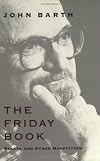
The Friday Book
by John Barth
On This Page
Description
"Whether discussing modernism, postmodernism, semiotics, Homer, Cervantes, Borges, blue crabs or osprey nests, Barth demonstrates an enthusiasm for the life of the mind, a joy in thinking (and in expressing those thoughts) that becomes contagious... A reader leaves The Friday Book feeling intellectually fuller, verbally more adept, mentally stimulated, with algebra and fire of his own."-- Washington Post Barth's first work of nonfiction is what he calls "an arrangement of essays and show more occasional lectures, some previously published, most not, most on matters literary, some not, accumulated over thirty years or so of writing, teaching, and teaching writing." With the full measure of playfulness and erudition that he brings to his novels, Barth glances into his crystal ball to speculate on the future of literature and the literature of the future. He also looks back upon historical fiction and fictitious history and discusses prose, poetry, and all manner of letters: "Real letters, forged letters, doctored letters... and of course alphabetical letters, the atoms of which the universe of print is made." "The pieces brought together in The Friday Book reflect Mr. Barth's witty, playful, and engaging personality... They are lively, sometimes casual, and often whimsical--a delight to the reader, to whom Mr. Barth seems to be writing or speaking as a learned friend."-- Kansas City Star "No less than Barth's fiction these pieces are performances, agile, dexterous, robust, offering the cerebral delights of playful lucidity."-- Richmond News Leader show lessTags
Recommendations














Member Reviews
Fabulous ramblings of a postmodern giant
Mostly literary essays
Ratings
Members
- Recently Added By
Author Information

39+ Works 12,284 Members
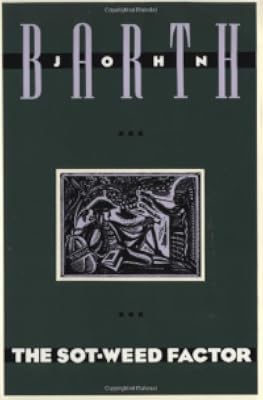
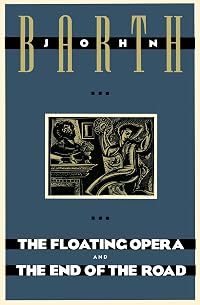
John Barth taught for many years in the writing program at Johns Hopkins University, and he lives in Chestertown, Maryland. (Publisher Provided) John Simmons Barth was born on May 27, 1930 in Cambridge, Maryland. He is considered to be one of the American writers who introduced a U.S. audience to experimental fiction. Barth began as a conventional show more novelist, exploring existential themes of suicide in The Floating Opera (1956) and the complexity of love in The End of the Road (1958). By the end of the 1950s, however, he was exploring less realistic techniques to keep the reader from being pulled into the story, and thus to make larger points. Those techniques include parody, which Barth first used in The Sot-Weed Factor (1960), to mock the style of the eighteenth-century picaresque novel, and Giles Goat-Boy (1966), which depicts the world as a giant university. In Chimera (1972), for which he won the National Book Award, Barth applied his method to retell classical myths. His later works include Letters (1979), in which Barth himself appears as a character, and Sabbatical (1982), the story of a woman college professor and her novelist husband, both of whom address the reader and author. Barth's other novels include The Tidewater Tales (1987) and The Last Voyage of Somebody the Sailor (1991). For most of his career as a writer, he has also been a professor of English, teaching at Pennsylvania State University, the State University of New York at Buffalo, and The Johns Hopkins University. (Bowker Author Biography) show less
Common Knowledge
- Original title
- The Friday Book: Essays and Other Nonfiction
- Original publication date
- 1984
- Original language
- English
Classifications
- Genres
- Nonfiction, Literature Studies and Criticism, Fiction and Literature
- DDC/MDS
- 814.54 — Literature & rhetoric American literature in English American essays in English 20th Century 1945-1999
- LCC
- PS3552 .A75 .F7 — Language and Literature American literature American literature Individual authors 1961-
- BISAC
Statistics
- Members
- 186
- Popularity
- 176,713
- Reviews
- 2
- Rating
- (4.08)
- Languages
- English
- Media
- Paper
- ISBNs
- 3
- ASINs
- 1