On This Page
Description
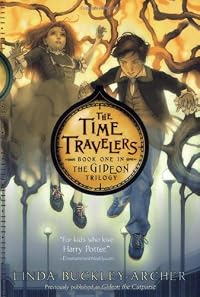
Ignored by his father and sent to Derbyshire for the weekend, twelve-year-old Peter and his new friend, Kate, are accidentally transported back in time to 1763 England where they are befriended by a reformed cutpurse.Tags
Recommendations




Member Reviews
Thanks to a failed experiment with an anti-gravity machine, two 21st century children, Kate and Pete, find themselves in eighteenth century London. They find and befriend Gideon, cutpurse and extraordinary Gentleman, as they search for the stolen machine that is their only way home to the 21st century, and outrun the dastardly Tar Man. This book is amazing and it combines historical fact and fiction perfectly with the detailed fictional science of time travel and the troubles two children from 2007 would have from being stuck in 1763. A nice easy read that kept me captivated, even as an adult, and allowed a glimpse into the minds of 12 year old time travelers.
First off, this was a good narration. I started to write "great", but then remembered three moments where, if I had been (God forbid) listening through earbuds, I would have had to claw them off my head and rock back and forth for a minute in pain. At the beginning and end of the book comes a sound effect which may or may not be some kind of audio logo for Simon & Schuster Audio, which sounded like a jet taking off. An intense blast of white noise. And the chapter in which the children come 'round in 1763 opens with … screaming. Not even the muted yelling tone Gerard Doyle used in other places to indicate louder speech without actually hollering in my ear – this was a jump-out-of-your-socks full bore very much unmuted scream. RIGHT show more at the beginning of the chapter. No warning. YAAARRGGH. Really, S&S Audio? You're going to perpetrate that on your customers?
I enjoyed the book while I was listening, and it held my interest enough that I think I got through it in one day, while doing random things that needed to be done. It felt legitimate, well-researched; the characters weren't perfect, and I can't say I liked them hugely, but they had engaging moments and pretty well-rounded. The only child Pete getting fed up with Kate's "embarrassing" tendency to burst into tears; Kate's reserve toward Peter who, after all, is someone she has only known for a few hours and who started off grumpy and sullen. I liked some of the interaction between the time periods, and the scientific attitude toward time travel. I liked that the children didn't fit right into the period with barely a raised eyebrow on others' parts or a complaint on theirs. I liked some of the secondary cast of characters, and especially I liked Gideon. I liked the celebrity cameos, mostly; they were a bit numerous, but fitted in pretty well. And I kind of enjoyed hating the genuinely kind of scary Tar Man.
I even loved a few moments, like: "We might not have discovered anything yet, but we have fabulous doors!"
But that's not to say I approved entirely. The device by which the children travel through time was vague and unconvincing, but it was just the techno-babble-embroidered mechanism to get the story rolling, and became the MacGuffin. And it never entirely made sense that it was entirely necessary for the children to have the device to get back to the future, nor how it appeared and disappeared. Did Kate's father mess something up? Did the dog or one of the kids careen into the thing and hit a button or something? Ridiculous as I know it sounds, it almost sounded like the dog was integral to its functioning as a time machine. (No, seriously. She seemed to have to be there.)
What I did not like about the secondary characters was a consistent inconsistency their behavior. There were several of the 18th century folks (Byngs and their attachments) who were, I thought, built up to be villains – and then suddenly everyone and their in-laws were on Peter and Kate's side and everyone was utterly trustworthy and supportive. And of the Bad Guys, I was completely unconvinced regarding Lord Luxon's villainy. There was a lot of talk about how awful he was – but almost all his behavior seemed perfectly honorable. If Gideon was a liar, there would be no real evidence against his ex-boss. And as for the footpads and highwaymen… a more silly and unrealistic group of miscreants I have not seen since that live Peter Pan they put on around Christmas (2014 – the villainy was almost as unconvincing as the lip-synching.) There was genuine menace, and then for a while all was foolish and children's-bookish – and then suddenly a shot rang out … I don't know. Odd.
The head-hopping in the book was a bit excessive. Point-of-view bounced dizzyingly from character to character, everyone from Peter and Kate all the way down to the I-believe-unnamed coachman – sometimes more than one in (what felt in the audiobook) the same paragraph.
And what happened to Peter's governess Margrit? About halfway through the book, shortly after the children vanish into the past, she makes an appearance keeping the other Dyer children occupied … and then, apart from a handful of brief mentions, vanishes herself. I would have thought as Peter's in loco parentis she would have been a little more prominent in police inquiries, if nothing else.
Speaking of the police … I don't know what to say about the investigation as described here. It felt … perfunctory, off-kilter – like the "time machine", more an object that had to be there and so was tossed in than anything meant to be believable. The detective was more a collection of descriptors than any kind of believable character (though I did like the line about his stocking up on single-serving frozen dinners at the start of the investigation – it was moments like that (and the fabulous doors) that keep this from a lower rating). And the interaction between the two sets of parents … I don't know. For Dr. Dyer to withhold information not only from the police – which was understandable, considering – but from Peter's parents… that was not right. Along with the Inspector, I was a bit glad when Peter's father forcibly expressed his displeasure with Kate's father. It felt like a chunk of text went missing toward the end; one moment Peter's father is getting up in the middle of the night, and the next, out of the blue, Kate's father is making a surprise appearance.
Oh, and then there's the other disappearance related to the machine. Apparently experimentation was moving along similar lines in the US, and … "a couple of months ago" that machine vanished as well, along with a cleaner. So… now that they have an idea what's going on, can I assume someone is going to try and find that cleaner? Or was he less important because he wasn't an influential person's child? And - - how could two, as I understand it, independently conceived, built, and operated machines develop the same unintended ability? "You see, Tim Williamson has been working on an antigravity project very similar to one in the States – which is why we were particularly happy to fund his research here. [(Really?)] We hoped that one project would complement the other. Anyway, Russ Merrick, at MIT, built a device that was different in design from Tim's but that had pretty similar aims…" How does that happen? They couldn't get the machines to do what they wanted them to, but …?
Even if I didn't have any other evidence I would be pretty sure this book was originally published in England. If for no other reason (like head-hopping, which is more common-slash-accepted in English fiction than American, I believe), the two Americans were singularly unconvincing; things came out of their mouths that sounded nothing like what ought to be said by American scientists. (And I have a very hard time believing that cash-strapped NASA is going to fund duplicate research in both MIT and London. They have had to fight tooth and nail for funding for everything they've done for the past quarter century.)
Finally, what I disliked the most about the book was its ending. What a moronic way for a main character to behave. I didn't buy it; I didn't like it; in fact it irritated me enough that there's no earthly way I'd pay the (*checks*) $8.54 for the second book on the Kindle. Up till that point I had vague plans to follow the story through. After that? I can live without knowing what happens next. show less
I enjoyed the book while I was listening, and it held my interest enough that I think I got through it in one day, while doing random things that needed to be done. It felt legitimate, well-researched; the characters weren't perfect, and I can't say I liked them hugely, but they had engaging moments and pretty well-rounded. The only child Pete getting fed up with Kate's "embarrassing" tendency to burst into tears; Kate's reserve toward Peter who, after all, is someone she has only known for a few hours and who started off grumpy and sullen. I liked some of the interaction between the time periods, and the scientific attitude toward time travel. I liked that the children didn't fit right into the period with barely a raised eyebrow on others' parts or a complaint on theirs. I liked some of the secondary cast of characters, and especially I liked Gideon. I liked the celebrity cameos, mostly; they were a bit numerous, but fitted in pretty well. And I kind of enjoyed hating the genuinely kind of scary Tar Man.
I even loved a few moments, like: "We might not have discovered anything yet, but we have fabulous doors!"
But that's not to say I approved entirely. The device by which the children travel through time was vague and unconvincing, but it was just the techno-babble-embroidered mechanism to get the story rolling, and became the MacGuffin. And it never entirely made sense that it was entirely necessary for the children to have the device to get back to the future, nor how it appeared and disappeared. Did Kate's father mess something up? Did the dog or one of the kids careen into the thing and hit a button or something? Ridiculous as I know it sounds, it almost sounded like the dog was integral to its functioning as a time machine. (No, seriously. She seemed to have to be there.)
What I did not like about the secondary characters was a consistent inconsistency their behavior. There were several of the 18th century folks (Byngs and their attachments) who were, I thought, built up to be villains – and then suddenly everyone and their in-laws were on Peter and Kate's side and everyone was utterly trustworthy and supportive. And of the Bad Guys, I was completely unconvinced regarding Lord Luxon's villainy. There was a lot of talk about how awful he was – but almost all his behavior seemed perfectly honorable. If Gideon was a liar, there would be no real evidence against his ex-boss. And as for the footpads and highwaymen… a more silly and unrealistic group of miscreants I have not seen since that live Peter Pan they put on around Christmas (2014 – the villainy was almost as unconvincing as the lip-synching.) There was genuine menace, and then for a while all was foolish and children's-bookish – and then suddenly a shot rang out … I don't know. Odd.
The head-hopping in the book was a bit excessive. Point-of-view bounced dizzyingly from character to character, everyone from Peter and Kate all the way down to the I-believe-unnamed coachman – sometimes more than one in (what felt in the audiobook) the same paragraph.
And what happened to Peter's governess Margrit? About halfway through the book, shortly after the children vanish into the past, she makes an appearance keeping the other Dyer children occupied … and then, apart from a handful of brief mentions, vanishes herself. I would have thought as Peter's in loco parentis she would have been a little more prominent in police inquiries, if nothing else.
Speaking of the police … I don't know what to say about the investigation as described here. It felt … perfunctory, off-kilter – like the "time machine", more an object that had to be there and so was tossed in than anything meant to be believable. The detective was more a collection of descriptors than any kind of believable character (though I did like the line about his stocking up on single-serving frozen dinners at the start of the investigation – it was moments like that (and the fabulous doors) that keep this from a lower rating). And the interaction between the two sets of parents … I don't know. For Dr. Dyer to withhold information not only from the police – which was understandable, considering – but from Peter's parents… that was not right. Along with the Inspector, I was a bit glad when Peter's father forcibly expressed his displeasure with Kate's father. It felt like a chunk of text went missing toward the end; one moment Peter's father is getting up in the middle of the night, and the next, out of the blue, Kate's father is making a surprise appearance.
Oh, and then there's the other disappearance related to the machine. Apparently experimentation was moving along similar lines in the US, and … "a couple of months ago" that machine vanished as well, along with a cleaner. So… now that they have an idea what's going on, can I assume someone is going to try and find that cleaner? Or was he less important because he wasn't an influential person's child? And - - how could two, as I understand it, independently conceived, built, and operated machines develop the same unintended ability? "You see, Tim Williamson has been working on an antigravity project very similar to one in the States – which is why we were particularly happy to fund his research here. [(Really?)] We hoped that one project would complement the other. Anyway, Russ Merrick, at MIT, built a device that was different in design from Tim's but that had pretty similar aims…" How does that happen? They couldn't get the machines to do what they wanted them to, but …?
Even if I didn't have any other evidence I would be pretty sure this book was originally published in England. If for no other reason (like head-hopping, which is more common-slash-accepted in English fiction than American, I believe), the two Americans were singularly unconvincing; things came out of their mouths that sounded nothing like what ought to be said by American scientists. (And I have a very hard time believing that cash-strapped NASA is going to fund duplicate research in both MIT and London. They have had to fight tooth and nail for funding for everything they've done for the past quarter century.)
Finally, what I disliked the most about the book was its ending. What a moronic way for a main character to behave. I didn't buy it; I didn't like it; in fact it irritated me enough that there's no earthly way I'd pay the (*checks*) $8.54 for the second book on the Kindle. Up till that point I had vague plans to follow the story through. After that? I can live without knowing what happens next. show less
Reviewed by Jocelyn Pearce for TeensReadToo.com
Peter feels he has been brushed off by his father yet again--and he has been. He's been waiting for his birthday treat for months, but his father always has business meetings and is too busy to spend time with him. His mother is off working in Los Angeles, far away from Peter and his father in London. The morning Peter and his father fight about it again, Margrit, the Au Pair, takes Peter with her to visit her friends out in the country.
These friends have a daughter, Kate, who is about Peter's age, twelve. Kate's father takes the two of them, plus Kate's dog, Molly, to the lab where he works. Kate and Peter end up chasing Molly through the halls--a small thing that ends up being very show more important.
One minute, they're running through the halls of the lab. The next minute, Kate and Peter, along with an antigravity machine that one of Kate's father's colleagues has been working on, have been transported back in time to a grassy hillside in 1763.
Before long, they've met two very different men of that time. The first is the Tar Man, who steals the antigravity machine, which could very well be the key to getting back to the present. The second is Gideon, an enemy of the Tar Man, who decides to help the two children from the future.
Before long, Kate and Peter are on an adventure, headed to London to recover the antigravity machine and get back to their homes and families. On their way, they will encounter highwaymen, make friends (including Gideon), and learn a lot about that time in history--the good and the bad.
Back in present-day England, Peter's parents are frantic with worry. Kate's father has figured out that the machine has something to do with their disappearance--but when ghostly images of the children appear dressed in clothing from the eighteenth-century, it becomes clear that this can't be shared with the public; who knows what destruction could result from the misuse of time travel technology?
The parallel storylines--the children's quest to get back to the present and Kate's father's struggle to bring them back--go together quite nicely. The jumping back and forth is not as confusing as it could have been, and both parts of the story are extremely well-written. The characters are realistic, the storylines interesting, the history fascinating, and, well, every aspect of this book brilliant! The cover is very unique and will draw readers right in. The story inside will not disappoint them, either! GIDEON THE CUTPURSE is the first in a trilogy, and I can't wait for the next two books! show less
Peter feels he has been brushed off by his father yet again--and he has been. He's been waiting for his birthday treat for months, but his father always has business meetings and is too busy to spend time with him. His mother is off working in Los Angeles, far away from Peter and his father in London. The morning Peter and his father fight about it again, Margrit, the Au Pair, takes Peter with her to visit her friends out in the country.
These friends have a daughter, Kate, who is about Peter's age, twelve. Kate's father takes the two of them, plus Kate's dog, Molly, to the lab where he works. Kate and Peter end up chasing Molly through the halls--a small thing that ends up being very show more important.
One minute, they're running through the halls of the lab. The next minute, Kate and Peter, along with an antigravity machine that one of Kate's father's colleagues has been working on, have been transported back in time to a grassy hillside in 1763.
Before long, they've met two very different men of that time. The first is the Tar Man, who steals the antigravity machine, which could very well be the key to getting back to the present. The second is Gideon, an enemy of the Tar Man, who decides to help the two children from the future.
Before long, Kate and Peter are on an adventure, headed to London to recover the antigravity machine and get back to their homes and families. On their way, they will encounter highwaymen, make friends (including Gideon), and learn a lot about that time in history--the good and the bad.
Back in present-day England, Peter's parents are frantic with worry. Kate's father has figured out that the machine has something to do with their disappearance--but when ghostly images of the children appear dressed in clothing from the eighteenth-century, it becomes clear that this can't be shared with the public; who knows what destruction could result from the misuse of time travel technology?
The parallel storylines--the children's quest to get back to the present and Kate's father's struggle to bring them back--go together quite nicely. The jumping back and forth is not as confusing as it could have been, and both parts of the story are extremely well-written. The characters are realistic, the storylines interesting, the history fascinating, and, well, every aspect of this book brilliant! The cover is very unique and will draw readers right in. The story inside will not disappoint them, either! GIDEON THE CUTPURSE is the first in a trilogy, and I can't wait for the next two books! show less
I haven't read this since high school, so I've been meaning to reread this for a while! It was one of my favorites back then, and I'm glad it's still a good read. :)
Peter Schock and Kate Dyer are two kids thrown together by a misfortune: they're transported from the 21st century to 1763 in a laboratory accident. There (then), they meet Gideon, a cutpurse-turned gentleman who is beautifully complex, his employer, Lord Luxon, and Lord Luxon's henchman, the Tar Man, who steals the kids' only way home. In their attempt to get this accidental time machine back, Peter and Kate are thrown into a plot involving highwaymen, kings, and chance meetings with historical figures.
At first, I remember thinking the writing seemed a bit stilted, but it show more didn't take long for this book to charm me over. This story has a way of worming its way into your heart, even with some cliched lines and a few cringe-worthy phrases. It's just, put simply, a well-written children's book.
It's disappointing to reread this adventure and find it so lacking in diversity, but it's hard to dislike a book I so loved when I was younger. I'm probably still biased, to be honest. show less
Peter Schock and Kate Dyer are two kids thrown together by a misfortune: they're transported from the 21st century to 1763 in a laboratory accident. There (then), they meet Gideon, a cutpurse-turned gentleman who is beautifully complex, his employer, Lord Luxon, and Lord Luxon's henchman, the Tar Man, who steals the kids' only way home. In their attempt to get this accidental time machine back, Peter and Kate are thrown into a plot involving highwaymen, kings, and chance meetings with historical figures.
At first, I remember thinking the writing seemed a bit stilted, but it show more didn't take long for this book to charm me over. This story has a way of worming its way into your heart, even with some cliched lines and a few cringe-worthy phrases. It's just, put simply, a well-written children's book.
It's disappointing to reread this adventure and find it so lacking in diversity, but it's hard to dislike a book I so loved when I was younger. I'm probably still biased, to be honest. show less
Once again taken in by a lovely cover, and it was worth it! This proved to be an exciting book: an adventure that starts with a futuristic sci-fi time travel sequence but quickly becomes a classic adventure story placed in 1736, among outlaws and royals, and with a look at eighteenth century London.
I found the book well-written, accessible to both the target age group and adults who like kids' books. The characters are believable and sympathetic; Buckley-Archer keeps you guessing about the true natures of those who help or hinder the childrens' quest to find the time machine that will take them home. The dialogue is often witty, especially with the confusion surrounding long-outdated vocabulary, clothing, customs, and objects. "I admire show more your bottom."
Buckley-Archer takes a relatively unromantic view of the London of the past, with its very definitive punishments for crime (lice-infested prisons, and hangings), its celebrity worship of highwaymen, its lack of hygeine. Nontheless, she finds enough redeeming value there to make her main character wonder if his modern-day life with jet-setting parents too busy with work to pay attention to him is in fact better than the more modest life he has found with Gideon.
The only criticisms I had were that some bits seemed a bit slow and others redundant; I felt that the narrative could have been just a bit tighter. Also, I know this is a fantasy book, but somehow I still found some parts scarcely to be believed, such as the rather casual meeting with the King and Queen. Thirdly, the attempt at a quantum physics explanation for the time travel was perfunctory and, in my opinion, unnecessary to the enjoyment of the story. But these are fairly minor points; I enjoyed this book a lot and am looking forward to the next in the trilogy. show less
I found the book well-written, accessible to both the target age group and adults who like kids' books. The characters are believable and sympathetic; Buckley-Archer keeps you guessing about the true natures of those who help or hinder the childrens' quest to find the time machine that will take them home. The dialogue is often witty, especially with the confusion surrounding long-outdated vocabulary, clothing, customs, and objects. "I admire show more your bottom."
Buckley-Archer takes a relatively unromantic view of the London of the past, with its very definitive punishments for crime (lice-infested prisons, and hangings), its celebrity worship of highwaymen, its lack of hygeine. Nontheless, she finds enough redeeming value there to make her main character wonder if his modern-day life with jet-setting parents too busy with work to pay attention to him is in fact better than the more modest life he has found with Gideon.
The only criticisms I had were that some bits seemed a bit slow and others redundant; I felt that the narrative could have been just a bit tighter. Also, I know this is a fantasy book, but somehow I still found some parts scarcely to be believed, such as the rather casual meeting with the King and Queen. Thirdly, the attempt at a quantum physics explanation for the time travel was perfunctory and, in my opinion, unnecessary to the enjoyment of the story. But these are fairly minor points; I enjoyed this book a lot and am looking forward to the next in the trilogy. show less
Gideon Seymour, cutpurse and gentleman, hides from the villainous Tar Man. Suddenly the sky peels away like fabric and from the gaping hole fall two curious-looking children. Peter Schock and Kate Dyer have fallen straight from the twenty-first century, thanks to an experiment with an antigravity machine. Before Gideon and the children have a chance to gather their wits, the Tar Man takes off with the machine -- and Kate and Peter's only chance of getting home. Soon Gideon, Kate, and Peter are swept into a journey through eighteenth-century London and form a bond that, they hope, will stand strong in the face of unfathomable treachery.
Interesting in that it simply does not plump its poor benighted accidental time travelers (two teenagers named Peter Schock and Kate Dyer) down in the past without positing how it is effecting those left behind in the 'now'. The main characters literally blur occasionally, wherever it is they are, and drop back into their future present (sounds like a grammar text) - thus arousing rumours of ghosts and suspicions of madness.
In the meantime, back in the late eighteenth century, they face highwaymen and ignorance and a general repugnance for a world unaware of hygiene and speedy communication and safe civil authorities...
Haven't finished this first book in the series yet but I am enjoying it.
In the meantime, back in the late eighteenth century, they face highwaymen and ignorance and a general repugnance for a world unaware of hygiene and speedy communication and safe civil authorities...
Haven't finished this first book in the series yet but I am enjoying it.
Members
- Recently Added By
Lists

Time travel -- children's/young adult fiction
231 works; 11 members
Author Information

5+ Works 2,792 Members
Some Editions
Awards and Honors
Awards
Distinctions
Series

Work Relationships
Common Knowledge
- Canonical title
- The Time Travelers
- Original title
- Gideon the Cutpurse
- People/Characters
- Peter Schock; Kate Dyer; Gideon Seymour; Sidney Byng; Parson Ledbury; The Tar Man
- Dedication
- For R., L., and I.
- First words
- During those first days at Hawthorn Cottage, Peter felt abandoned by his father.
- Last words
- (Click to show. Warning: May contain spoilers.)"I fear it may be the twenty-first century that will be terrified of the Tar Man."
Classifications
- Genres
- Fiction and Literature, Kids, Tween
- DDC/MDS
- 929.7 — History & geography Biographies, Genealogy, Healdry Genealogy, Flags, Heraldry, Civil Records Peerage, precedence, titles of honor; Royal houses
- LCC
- PZ7 .B882338 .G — Language and Literature Fiction and juvenile belles lettres Fiction and juvenile belles lettres Juvenile belles lettres
- BISAC
Statistics
- Members
- 1,629
- Popularity
- 13,767
- Reviews
- 37
- Rating
- (3.71)
- Languages
- 6 — Danish, English, French, German, Indonesian, Italian
- Media
- Paper, Audiobook, Ebook
- ISBNs
- 40
- ASINs
- 13