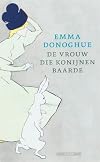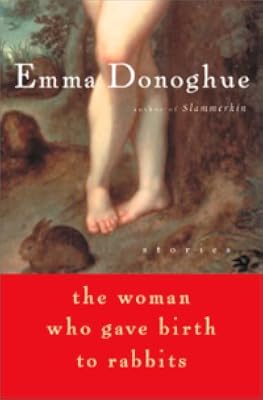
The Woman Who Gave Birth to Rabbits
by Emma Donoghue
On This Page
Description
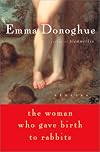
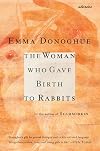
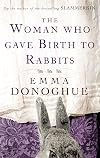
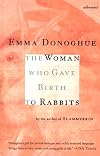
Emma Donoghue vividly brings to life stories inspired by her discoveries of fascinating, hidden scraps of the past. Here an engraving of a woman giving birth to rabbits, a plague ballad, surgical case notes, theological pamphlets, and an articulated skeleton are ingeniously fleshed out into rollicking, full-bodied fictions. Whether she's spinning the tale of an English soldier tricked into marrying a dowdy spinster, a Victorian surgeon's attempts to "improve" women, a seventeenth-century show more Irish countess who ran away to Italy disguised as a man, or an "undead" murderess returning for the maid she left behind to be executed in her place, Emma Donoghue brings to her tales a colorful, elegant prose filled with the sights and smells and sounds of the period. She summons the ghosts of those men and women who counted for nothing in their own day and brings them to unforgettable life in fiction. show lessTags
Recommendations
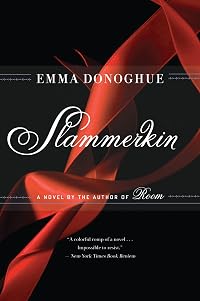





Member Recommendations
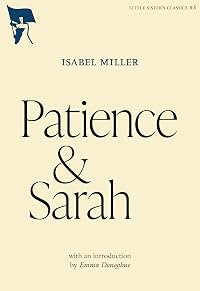
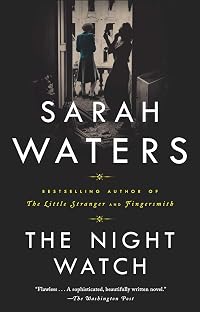
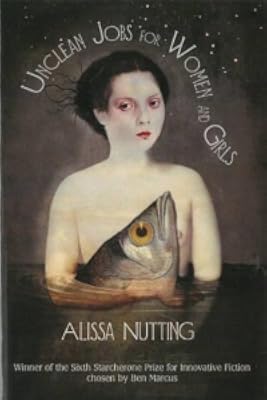
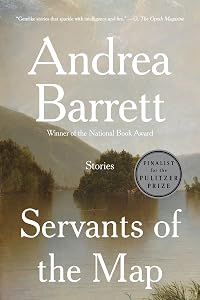
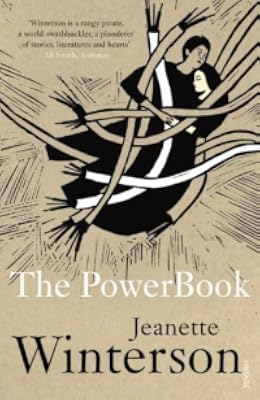
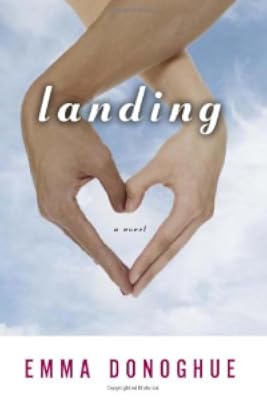
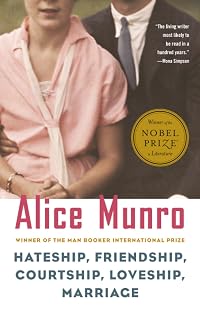
Littlemissmops Atwood and Donoghue both have the same eye for details, and although these two book are quite dissmilar, Donoghue reminded me of early Atwood.
11
Member Reviews
Have I ever been so in love with a book of short stories as this? The only one I can think of that would come close is Margaret Atwood's Good Bones, but that was less a book of short stories than it was a collection of prose poems and reimagined faerie tales. No, this is it. And Emma Donoghue is a delightful genius. Her writing takes part of what I love best about Jane Austen, colours it with a decidedly feminist sensibility, and mixes in a fascination with obscure historical details, especially those regarding medicine or illness. In truth, I found the first story a little dry, but with each successive story I found myself more and more enamored. By the end I wanted to hug the book to myself, and if I had a bit of money, I have several show more friends I would love to send off copies of this book to immediately. (Mindy, you are at the top of this list. Go see if your library has this book immediately!)
I would also like to point out that I'm not even particularly fond of short stories. Okay, I loved the Mark Twain stories my father read to me as a child, the Stephen King short stories I was addicted to in high school, then Neil Gaiman's short stories in college, but these are the exception. Most collections of short stories I never finish, rather I limp through two or three, then put the book down somewhere, never to be picked up again. I think the format is much abused, by people who can't be bothered to sustain a plotline long enough to create a novel. But Donaghue's stories are little gems.
What can I say to make you go out and pick up this book? Perhaps that each story is based off of some snippet of historical truth, a note in a ledger, a footnote in a biography of someone else. Some true thing that glimmered and fascinated, but was isolated, and nothing more of that life was known. Donaghue fleshes out these twinklings into stories, into women that we should have known. Passionate women who loved, raged and fought. Women who chose different paths, and women whose paths were chosen for them. All illuminate their time, regardless of how close to truth their stories are. And even better, following each story is a note of the truth behind it, documenting what parts of the story were true, and often how the rest was imagined.
This is one of the finest books I have read in a while. I would add it to Michelle Tea's class of women's experience in literature (read the upcoming bookslut interview to find out what I'm talking about.) show less
I would also like to point out that I'm not even particularly fond of short stories. Okay, I loved the Mark Twain stories my father read to me as a child, the Stephen King short stories I was addicted to in high school, then Neil Gaiman's short stories in college, but these are the exception. Most collections of short stories I never finish, rather I limp through two or three, then put the book down somewhere, never to be picked up again. I think the format is much abused, by people who can't be bothered to sustain a plotline long enough to create a novel. But Donaghue's stories are little gems.
What can I say to make you go out and pick up this book? Perhaps that each story is based off of some snippet of historical truth, a note in a ledger, a footnote in a biography of someone else. Some true thing that glimmered and fascinated, but was isolated, and nothing more of that life was known. Donaghue fleshes out these twinklings into stories, into women that we should have known. Passionate women who loved, raged and fought. Women who chose different paths, and women whose paths were chosen for them. All illuminate their time, regardless of how close to truth their stories are. And even better, following each story is a note of the truth behind it, documenting what parts of the story were true, and often how the rest was imagined.
This is one of the finest books I have read in a while. I would add it to Michelle Tea's class of women's experience in literature (read the upcoming bookslut interview to find out what I'm talking about.) show less
The Woman Who Gave Birth to Rabbits is a collection of short stories, inspired by extraordinary snippets from Britain's history. On a superficial level, this is all that connects the stories (oh, along with a sly reference to rabbits in every story). But in a more meaningful way, the stories all raise questions about the shiftiness of history and the characters it entombs (and those it doesn't). Each story is about a woman whose deeds have been almost but not quite forgotten; Donoghue fleshes out the dry annals of history into living people.
My favorite stories were the ones with which readers could make wry modern day comparisons: the captain who drunkenly marries a spinster is reminiscent of an ill-fated Vegas wedding; a woman leading show more a Rapture-ready cult has numerous cultic counterparts. "The Necessity of Burning," in which a woman is told her dead child will burn in Hell solely because she baptized him "In the name of the Son and Father," rather than Father and Son, has uncomfortable parallels with the unapologetic legalism of some religious people even today. Donoghue brings these marginalized and everyday women, who would have not made it in "real" history, to life as she retells their stories. show less
My favorite stories were the ones with which readers could make wry modern day comparisons: the captain who drunkenly marries a spinster is reminiscent of an ill-fated Vegas wedding; a woman leading show more a Rapture-ready cult has numerous cultic counterparts. "The Necessity of Burning," in which a woman is told her dead child will burn in Hell solely because she baptized him "In the name of the Son and Father," rather than Father and Son, has uncomfortable parallels with the unapologetic legalism of some religious people even today. Donoghue brings these marginalized and everyday women, who would have not made it in "real" history, to life as she retells their stories. show less
I think this collection could be described as "filling in the gaps of history". Various unusual and quirky things that have caught Emma Donoghue's interest over the course of her research are filled out - from the titular woman who gave birth to rabbits, to people mentioned in folk songs, to minor historical figures - all given their possible story. A nice touch is that Donoghue gives a brief description of where she sourced her ideas in brief notes at the end of each story.
This is an interesting collection full of fascinating possibilities but, for some reason, I didn't really warm to many of the characters. This could be because I felt that there is a certain detached quality to the stories and the narrators weren't always appealing. show more I'm not sorry that I read this collection but I don't think it is one I'll want to re-visit. show less
This is an interesting collection full of fascinating possibilities but, for some reason, I didn't really warm to many of the characters. This could be because I felt that there is a certain detached quality to the stories and the narrators weren't always appealing. show more I'm not sorry that I read this collection but I don't think it is one I'll want to re-visit. show less
I enjoyed this book much more than I'd expected to. I often struggle with short story collections because there's no continuous plot thread that makes me want to keep reading, but these stories had a different kind of twist that was almost as good: each one is inspired by an obscure historical fact, and at the end of each story there's a note explaining the historical basis. I found this absolutely fascinating, and I appreciated the stories much more when I could see how Donoghue had crafted them from the tiniest scraps of historical information. I just wish the notes had been longer.
http://nhw.livejournal.com/46408.html
A fascinating set of short stories with a theme of how we live in our own bodies. I bought it because I had spotted her as an Irish author of occasionally sff-type stuff. The last story in this collection, "Looking for Petronilla", does turn out to have fantasy elements and to my great annoyance takes an idea for a short story I have been working on recently and does it much better than I could hope to. The whole collection is excellent. The true story of Caroline Crachami will linger with me, as will the tale of Effie's wedding night, and the Cambridge book-burning (this last told with a love of the geography of the city with which I completely agree).
A fascinating set of short stories with a theme of how we live in our own bodies. I bought it because I had spotted her as an Irish author of occasionally sff-type stuff. The last story in this collection, "Looking for Petronilla", does turn out to have fantasy elements and to my great annoyance takes an idea for a short story I have been working on recently and does it much better than I could hope to. The whole collection is excellent. The true story of Caroline Crachami will linger with me, as will the tale of Effie's wedding night, and the Cambridge book-burning (this last told with a love of the geography of the city with which I completely agree).
Interesting Women
By sally tarbox on 2 Aug. 2012
Format: Kindle Edition
Intriguing collection of short stories based around female moments in history (many from the author's native Ireland.)
I found myself motivated to look up some of these women on the internet- Frances Cobbe who devoted her life to the anti-vivisection movement; Elspeth Buchan who led a religious cult in the 1790s; Dido Bell, a black girl brought up as daughter of the house by her titled white uncle during the era of the slave trade. Each story is followed by background notes on the characters mentioned.
Well written and totally original.
By sally tarbox on 2 Aug. 2012
Format: Kindle Edition
Intriguing collection of short stories based around female moments in history (many from the author's native Ireland.)
I found myself motivated to look up some of these women on the internet- Frances Cobbe who devoted her life to the anti-vivisection movement; Elspeth Buchan who led a religious cult in the 1790s; Dido Bell, a black girl brought up as daughter of the house by her titled white uncle during the era of the slave trade. Each story is followed by background notes on the characters mentioned.
Well written and totally original.
I'm not generally a short-story person, but I make an exception for Emma Donoghue. This collection (which I must admit to not remembering perfectly -- it's been a while since I read it) takes odd and unlikely from history and turns them into clever and often compelling fiction.
Members
- Recently Added By
Author Information

42+ Works 34,602 Members
Emma Donoghue was born on October 24, 1969 in Dublin, Ireland. She received her BA degree from the University College Dublin and PhD in English from University of Cambridge. Her first novel was Stir. Her next novel was Hood which won the 1997 American Library Association's Gay, Lesbian and Bisexual Book Award for Literature. Her novel Slammerkin show more was a finalist in the 2001 Irish Times Irish Literature Prize for Fiction. The Sealed Letter, published in 2008, is a work of historical fiction. This work was the joint winner of the 2009 Lambda Literary Award for Lesbian Fiction. She continued writing several award winning novels including Room which was shortlisted for the Man Booker Prize in September 2010. Some of her other works include Astray, Three and a Half Deaths, and Frog Music. (Bowker Author Biography) show less
Some Editions
Common Knowledge
- Canonical title
- The Woman Who Gave Birth to Rabbits
- Original publication date
- 2002
- Dedication
- This book is dedicated with love to my father, Denis, who taught me that books are for letting us imagine lives other than our own.
- First words
- We were at home in Godalming, though some call it Godlyman, and I can't tell which is right, I say it the same way my mother said it.
- Last words
- (Click to show. Warning: May contain spoilers.)My only love now, the only one whose face I can remember. There, around some corner, she burns, she burns.
Classifications
Statistics
- Members
- 484
- Popularity
- 62,425
- Reviews
- 20
- Rating
- (3.60)
- Languages
- Dutch, English
- Media
- Paper, Audiobook, Ebook
- ISBNs
- 12
- ASINs
- 7