On This Page
Description
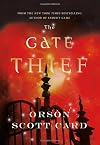
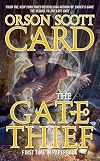
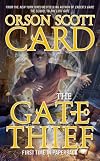
"In this sequel to The Lost Gate, bestselling author Orson Scott Card continues his fantastic tale of the Mages of Westil who live in exile on Earth. Here on Earth, Danny North is still in high school, yet he holds in his heart and mind all the stolen outselves of thirteen centuries of gatemages. The Families still want to kill him if they can't control him...and they can't control him. He is far too powerful. And on Westil, Wad is now nearly powerless--he lost everything to Danny in their show more struggle. Even if he can survive the revenge of his enemies, he still must somehow make peace with the Gatemage Daniel North. For when Danny took that power from Loki, he also took the responsibility for the Great Gates. And when he comes face-to-face with the mages who call themselves Bel and Ishtoreth, he will come to understand just why Loki closed the gates all those centuries ago. "-- show lessTags
Recommendations




Member Reviews
I think Orson Scott Card is doing a fantastic job writing good-kid YA. It's really hard. Most of the YA out there is full of stupid kids doing stupid things and while Danny fits the bill, he's still a sight better than most. He's dependable and loyal and he does the right thing even when it would be so easy to just fall into the traps that everyone lays out for him.
I'm talking about sex.
I mean, truly, Danny's now the definition of a god, with super-uber gate-magic powers that not only let him use his imagination and trickery, but they also heal the people that go through them. That's pretty beast, especially since he can make a million of the gates. He's a god among gods. God-Punk at its best. :)
But sex is the downfall of all the gods, show more is it not? Just look at Zeus. And yet, Danny is trying not to be *that*. Admirable, don't you think?
Alas, this isn't the entire book, but it's an important part. The rest is all about the coming war with Seth, the Dragon, with Satan, with Bel, while all the while having to deal or not deal with the rest of the underpowered mortal-gods as they go through the Great Gate that amps up all their powers, while all the while trying to protect his normal friends. Danny's pretty heroic, but he's still just a kid, and a lot of the dialog is very HS.
In the end, I'm really happy with the shape of this story. I love most of the writing and I think it's really gorgeous when it comes to clarity and how well it explains the magic system and just how huge the stakes are. Stolen souls across time? Yup. Worthy of a tale of gods on Earth. :)
Above all, though, I love just how much comparative religion there is in here and how nicely it dovetails into the action. :)
I'm having a blast with this series. Very easy read, emotional, and a lot of high standards while the rest of humanity and gods wallow in the muck. :) It's pretty awesome, in fact.
(And if you're worried this is just another religious tract, don't worry. It's no more religious than, say, OSC's Speaker For The Dead.) Morals, yes. Hammer over head? No. Just decisions and trying to do the right thing. :) show less
I'm talking about sex.
I mean, truly, Danny's now the definition of a god, with super-uber gate-magic powers that not only let him use his imagination and trickery, but they also heal the people that go through them. That's pretty beast, especially since he can make a million of the gates. He's a god among gods. God-Punk at its best. :)
But sex is the downfall of all the gods, show more is it not? Just look at Zeus. And yet, Danny is trying not to be *that*. Admirable, don't you think?
Alas, this isn't the entire book, but it's an important part. The rest is all about the coming war with Seth, the Dragon, with Satan, with Bel, while all the while having to deal or not deal with the rest of the underpowered mortal-gods as they go through the Great Gate that amps up all their powers, while all the while trying to protect his normal friends. Danny's pretty heroic, but he's still just a kid, and a lot of the dialog is very HS.
In the end, I'm really happy with the shape of this story. I love most of the writing and I think it's really gorgeous when it comes to clarity and how well it explains the magic system and just how huge the stakes are. Stolen souls across time? Yup. Worthy of a tale of gods on Earth. :)
Above all, though, I love just how much comparative religion there is in here and how nicely it dovetails into the action. :)
I'm having a blast with this series. Very easy read, emotional, and a lot of high standards while the rest of humanity and gods wallow in the muck. :) It's pretty awesome, in fact.
(And if you're worried this is just another religious tract, don't worry. It's no more religious than, say, OSC's Speaker For The Dead.) Morals, yes. Hammer over head? No. Just decisions and trying to do the right thing. :) show less
Well, this is a difficult one. I liked the story and thought it was a good continuation of book 1, but there are also a few things that stuck in my throat about The gate thief.
Let me tell you that I'm generally not very interested in an author's personal views, as long as his books are good. So far, I've enjoyed most of OSC's works, despite the fact that all his heroes are male, all his books experience a dearth of women or girls, and the ones that are there tend to be inferior to the men. I've managed to step over all that, because . Because Pathfinder. And yes, because The lost gate.
But then I'm reading The gate thief. First, all the drowther (read:muggle) girls want to sleep with Danny North, the main character. Eye-roll worthy, show more but ok, whatever. Then, Danny compares the girls to man-mages in his mind. Man-mages are considered the most evil of mages, because they manipulate and control people. Riiiight. Not having fun here. And then, the most brilliant thing of all, Danny's almost-girlfriend, the one girl who is genuinely interested in him and not just in having his babies says to him: It's an instinct, Danny. We want to be pregnant when our man goes off to war."
Ugh, ugh, ugh! That line just made me sick.
In his afterword, OSC claims he put all of this in, because there are so many examples in myths of gods sleeping with women, and that even in the real world, there are women who fall for guys with power. Fine. Then put ONE woman like that in, or two, but all of them? And there is really no excuse for the above quote.
I want to finish the series and see how it all ends, but I really hope OSC tones it down from here on, because I don't need books that make me want to throw up in my life... show less
Let me tell you that I'm generally not very interested in an author's personal views, as long as his books are good. So far, I've enjoyed most of OSC's works, despite the fact that all his heroes are male, all his books experience a dearth of women or girls, and the ones that are there tend to be inferior to the men. I've managed to step over all that, because . Because Pathfinder. And yes, because The lost gate.
But then I'm reading The gate thief. First, all the drowther (read:muggle) girls want to sleep with Danny North, the main character. Eye-roll worthy, show more but ok, whatever. Then, Danny compares the girls to man-mages in his mind. Man-mages are considered the most evil of mages, because they manipulate and control people. Riiiight. Not having fun here. And then, the most brilliant thing of all, Danny's almost-girlfriend, the one girl who is genuinely interested in him and not just in having his babies says to him: It's an instinct, Danny. We want to be pregnant when our man goes off to war."
Ugh, ugh, ugh! That line just made me sick.
In his afterword, OSC claims he put all of this in, because there are so many examples in myths of gods sleeping with women, and that even in the real world, there are women who fall for guys with power. Fine. Then put ONE woman like that in, or two, but all of them? And there is really no excuse for the above quote.
I want to finish the series and see how it all ends, but I really hope OSC tones it down from here on, because I don't need books that make me want to throw up in my life... show less
Card expands his quasi-mythological tale which seems to explain the presence of quite a few world mythologies/religions. Danny is a very powerful Gate Mage, trying to save the world of humans both from the evil antagonist, Bel, and his fellow mages who have a tendency to regard humans as cattle. I enjoyed the continued focus on Danny and his high school friends, though the fact that literally every girl he meets wants to have his baby is a little gross. I particularly liked the character development of Loki/Wad; he had a much more dynamic arc than smart-@ss Danny.
One of the dangers with scifi/fantasy novels is that the author will fall a little too in love with the world-building part of the genre. You can come up with the coolest concept possible, and then ruin it when you explain it into the ground. At 350 pages, this easily had 150 pages of exposition and 100 of them should have stayed as background notes. When there was a plot, it was enjoyable, even if it is abundantly clear that Card has never had a conversation with an actual teenage girl.
Come on, Card. You had a good idea here. Let's not destroy it by lecturing your readers to death.
Come on, Card. You had a good idea here. Let's not destroy it by lecturing your readers to death.
Having enjoyed the previous book in the series, “The Lost Gate,” I was looking forward to reading what happened next to Danny North. I was disappointed, not in the writing style, the character development, or even the broadening plot scope – I loved those – but I was disappointed in the spiritual direction of the book.
** SPOILER ALERT ** The following contains information that could spoil the story. Read at your own peril.
On a positive side, this second story is no longer only about an individual’s freedom and self-actualization, but about defeating the Earth from a global threat. Personally, I like that. And the protagonist Danny North is not fighting the threat alone. Again: kudos. Moreover, the apparent-antagonist Loki, show more has a plausible motivation, one that I could cheer for. There is more intrigue and a deepening description of the Mither Mage world – all things that a reader might expect from a sequel.
It is the true antagonist Bal and the history and spiritual world-view behind him that turns me off. Personally, I don’t care for reinterpreting religion and history. They are what it are. OK, yes, I am an historical science fiction author who writes fiction about historical events, and in so doing, I fill in the gaps of what history doesn’t tell us. But I try to keep true to our current best records of history. It is this perfectionism in me that cringes when I see obvious rewriting of history and established religions. And so IMHO this ruined the story for me. show less
** SPOILER ALERT ** The following contains information that could spoil the story. Read at your own peril.
It is the true antagonist Bal and the history and spiritual world-view behind him that turns me off. Personally, I don’t care for reinterpreting religion and history. They are what it are. OK, yes, I am an historical science fiction author who writes fiction about historical events, and in so doing, I fill in the gaps of what history doesn’t tell us. But I try to keep true to our current best records of history. It is this perfectionism in me that cringes when I see obvious rewriting of history and established religions. And so IMHO this ruined the story for me.
In The Lost Gate, we met Danny North, a boy god among men, who is barely learning about his powers -- what they are and how to use them. The story continues in The Gate Thief as Danny's powers -- not seen in 1400 years -- make him quite valuable in an anticipated war between the gods. At the end of the prior book, Danny had encountered the "Gate Thief" but Danny is more powerful and thus becomes the new titular thief. Meanwhile, he's trying to go through high school like a "normal" teenager. Just about every female in the book wants to sleep with him; he must have some god-like will to resist so many. (This is where the book is weakest as it gets close to Cinemax-style erotica, but everything stays on the "clean" side.) But just like show more every teenager who thinks he knows it all already, Danny makes a few decisions that seem like good ideas at the time, but those lead to a rift in the god families and ultimately lead to a change in Danny himself. The story ends at a cliffhanger, but there is a fascinating afterword that explains how the story changed between when it was conceived and when it got sent to the publisher.
--------------------------------
LT Haiku:
Mouthy teenager
Still learning to use powers
Falls for a bad girl. show less
--------------------------------
LT Haiku:
Mouthy teenager
Still learning to use powers
Falls for a bad girl. show less
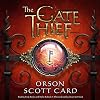
First things first: I listened to the audio version of this book and the narration was very well done.
That said, this was not a very good book. I really enjoyed the first book in this series. And I enjoyed the first half of this book. Then it just kind of came crashing down. The characters spend a lot of time sitting around talking about philosophy and why all these things are happening. There’s so much convoluted talk of ka, and ba, and outself, and inself, and blah, blah, blah. it goes on and on and on. Had I been reading a physical copy, maybe I could have gone back and tried to understand it, but honestly I fast forwarded through the audio a few times because it was so boring. This (and checking reviews for the next book) has show more killed my desire to finish the series. If you read and enjoyed the first book, just stop there. show less
That said, this was not a very good book. I really enjoyed the first book in this series. And I enjoyed the first half of this book. Then it just kind of came crashing down. The characters spend a lot of time sitting around talking about philosophy and why all these things are happening. There’s so much convoluted talk of ka, and ba, and outself, and inself, and blah, blah, blah. it goes on and on and on. Had I been reading a physical copy, maybe I could have gone back and tried to understand it, but honestly I fast forwarded through the audio a few times because it was so boring. This (and checking reviews for the next book) has show more killed my desire to finish the series. If you read and enjoyed the first book, just stop there. show less
Members
- Recently Added By
Lists

Lion's Mane Hardcover Wishlist
19 works; 1 member
Author Information

575+ Works 213,369 Members
Orson Scott Byron Walley Card, was born in 1951 and studied theater at Brigham Young University. He received his B.A. in 1975 and his M.A. in English in 1981. He wrote plays during that time, including Stone Tables (1973) and the musical, Father, Mother, Mother and Mom (1974). A Mormon, Scott served a two-year mission in Brazil before starting show more work as a journalist in Utah. He also designed games at Lucas Film Games, 1989-92. He is best known for his science fiction novels, including the popular Ender series. Well known titles include A Planet Called Treason (1979), Treasure Box (1996), and Heartfire (1998). He has also written the guide called How to Write Science Fiction and Fantasy (1990). His novel Ender's Game and its sequel Speaker for the Dead, both won Hugo and Nebula awards, making Card the only author to win both prizes in consecutive years. His titles Shadows in Flight, Ruins and Ender's Game made The New York Times Best Seller List. He is also the author of The First Formic War Series, which includes the titles Earth Unaware, Earth Afire, and Earth Awakens. (Bowker Author Biography) show less
Some Editions
Series

Belongs to Publisher Series
Common Knowledge
- Canonical title
- The Gate Thief
- Original publication date
- 2013-03-19
- People/Characters
- Danny North
- Dedication
- To Rick Fenton and Gordon Lundrigan, my companions in spiritual, moral, and philosophical searches and my exemplars in shepherdry
- First words
- On a certain day in November, in the early afternoon, if you had just parked your car at Kenney's burger place in Buena Vista, Virginia, or maybe you were walking into Nick's Italian Kitchen or Todd's Barbecue, you might have... (show all) cast your gaze up the hill toward Parry McCluer High School.
- Last words
- (Click to show. Warning: May contain spoilers.)I am the Gate Thief, and because of your nobility, the victory is mine.
- Publisher's editor
- Meacham, Beth
Classifications
Statistics
- Members
- 767
- Popularity
- 36,351
- Reviews
- 22
- Rating
- (3.65)
- Languages
- English, French, Polish, Spanish
- Media
- Paper, Audiobook, Ebook
- ISBNs
- 15
- ASINs
- 6