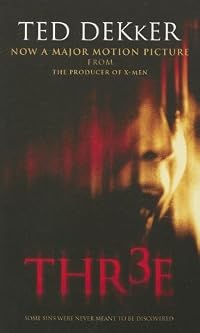
Thr3e
by Ted Dekker
On This Page
Description
The award-winning, best-selling suspense masterwork, now a major motion picture event. Enter a world where nothing is what it seems. Where your closest friend could be your greatest enemy. Kevin Parson is alone in his car when his cell phone rings. A man calling himself Slater offers a deadly ultimatum: You have exactly three minutes to confess your sin to the world. Refuse, and the car you're driving will blow sky high. Then the phone goes dead. Kevin panics. Who would make such a demand? show more What sin? Yet not sure what else to do, Kevin swerves into a parking lot and runs from his car. Just in case. Precisely three minutes later, a massive explosion sets his world on a collision course with madness. And that's only the first move in this deadly game. From the #1 best-selling fiction author comes a powerful story of good, evil, and all that lies between. show lessTags
Recommendations



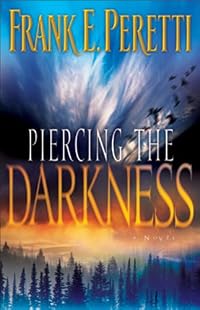
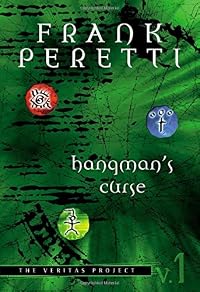
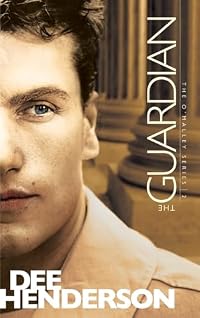
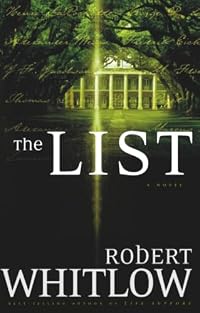

Member Reviews
If you're the kind of person who enjoys the thrill of rollercoaster action, mindboggling mind games and fantastical plot twists, disdaining all regard to reason, you might find a bosom buddy in Ted Dekker. Thr3e is like Fight Club on steroids with a besprinkling of the Sixth Sense, with a curiously oddball spiritual message jammed into the mishmash like a pube in a toilet bowl. The plot might be a bit melodramatic and the dialogue a bit childish and prissy, but behind all the pyromaniacal hullabaloo, the moral significance rings true. What I found most interesting was the way Dekker changed the formula to introduce a mentally ill character with the magical power of animating his individual personalities in the flesh, with a sort of play show more on magical realism. An impressive read overall. Kevin reminds me of my own craziness sometimes with his talks with himself, but at least I'm not blowing up buses and libraries. show less
(4.5 / 5)
Equal parts thriller and philosophical, this book starts with a discussion about the nature of man and by the end of the first chapter, has the main character nearly blown up. Kevin is tormented by a man who demands he confess his sin or his attacks will only get worse. Aided by a caring FBI agent whose brother was killed in a similar fashion only a few months previous and Kevin's best friend since childhood, he struggles to understand what the madman wants from him. All of this leads up to an unexpected confrontation that I did not see coming.
The book is billed as a thriller, but I think where it tends to trip some people up is that it's also very philosophical. Unlike Peretti, whom many people compare Dekker to, I don't know show more that I'd classify Ted Dekker as a Christian author exactly. The books of his that I have read contain religion or spirituality, but not exactly Christianity. There is a fairly strong moral message in this book, though, and it can slow down the action. It doesn't bother me much, but it might others.
I first read this book in the early 2000s. I've considered it one of my favorite books ever since then, but unlike my long-time favorite book, I have never re-read this one before now. It has the type of ending that led me to think that it wouldn't really be worth re-reading. Now that it's 15ish years later and I find myself enjoying books again, I decided it was time. I did enjoy it this time through, but not quite as much as the first time, because of the knowledge I had. However, knowing the Big Twist, I was able to see the build-up to it, spot the signs and hints. I appreciated the way that Dekker spun the story.
I did still enjoy the book, particularly the characterization of the main character, Kevin, and his childhood. That was one big thing I didn't quite remember from when I first read it--the book hinted at him having a more difficult childhood than what was even shown up front, but I couldn't remember what it was. I enjoyed unraveling the story again, even though I knew what it was leading up to. I also very much enjoyed Kevin's relationship with his professor, and the role the professor played in the latter part of the book.
One gripe that I have is in the symbolism regarding the Big Twist. To use an example, when watching Sixth Sense for the first time, you may not even know that the color red is always involved in the Big Twist (not spoiling, though by now, if you don't know the twist in that movie, where have you been living?) throughout the movie unless you are told about it by someone else. It's there, but it's subtle. In this book, the number 3 is a huge part of the bad guy's psyche, and it's not even remotely subtle. The bad guy himself says how much he likes the number 3 more than once. I think I would have liked to see it as a more subtle element. show less
Equal parts thriller and philosophical, this book starts with a discussion about the nature of man and by the end of the first chapter, has the main character nearly blown up. Kevin is tormented by a man who demands he confess his sin or his attacks will only get worse. Aided by a caring FBI agent whose brother was killed in a similar fashion only a few months previous and Kevin's best friend since childhood, he struggles to understand what the madman wants from him. All of this leads up to an unexpected confrontation that I did not see coming.
The book is billed as a thriller, but I think where it tends to trip some people up is that it's also very philosophical. Unlike Peretti, whom many people compare Dekker to, I don't know show more that I'd classify Ted Dekker as a Christian author exactly. The books of his that I have read contain religion or spirituality, but not exactly Christianity. There is a fairly strong moral message in this book, though, and it can slow down the action. It doesn't bother me much, but it might others.
I first read this book in the early 2000s. I've considered it one of my favorite books ever since then, but unlike my long-time favorite book, I have never re-read this one before now. It has the type of ending that led me to think that it wouldn't really be worth re-reading. Now that it's 15ish years later and I find myself enjoying books again, I decided it was time. I did enjoy it this time through, but not quite as much as the first time, because of the knowledge I had. However, knowing the Big Twist, I was able to see the build-up to it, spot the signs and hints. I appreciated the way that Dekker spun the story.
I did still enjoy the book, particularly the characterization of the main character, Kevin, and his childhood. That was one big thing I didn't quite remember from when I first read it--the book hinted at him having a more difficult childhood than what was even shown up front, but I couldn't remember what it was. I enjoyed unraveling the story again, even though I knew what it was leading up to. I also very much enjoyed Kevin's relationship with his professor, and the role the professor played in the latter part of the book.
One gripe that I have is in the symbolism regarding the Big Twist. To use an example, when watching Sixth Sense for the first time, you may not even know that the color red is always involved in the Big Twist (not spoiling, though by now, if you don't know the twist in that movie, where have you been living?) throughout the movie unless you are told about it by someone else. It's there, but it's subtle. In this book, the number 3 is a huge part of the bad guy's psyche, and it's not even remotely subtle. The bad guy himself says how much he likes the number 3 more than once. I think I would have liked to see it as a more subtle element. show less
I really enjoyed this one. It was suspenseful, while also being an enjoyable read. It sails along smoothly. There are enough plot twist to keep the pages turning, without changing the speed of the story, or endangering the believability of the plot. It kept me engaged until the end. Well done Dekker.
His cellphone rings and twenty-eight-year-old seminary student Kevin Parson is thrown into the middle of what seems to be a madman’s game. He must confess his sin to the world or risk the consequences . . . but Kevin, a quiet, unassuming, naïve young man, has no idea why anyone would want to hurt him and doesn’t know what dark secret from his past this madman called Slater wants him to reveal.
A bomb explodes and the cat-and-mouse game between hunter and hunted begins. As Slater relentlessly stalks Kevin and the danger escalates, who will win this malicious game?
Strong characters, an intriguing premise, and a top-notch telling of the tale all combine to create a truly riveting mystery. The suspense is palpable; the tension unending. show more The captivating story unfolds through several points of view: Kevin, his friend Samantha Sheer [who works for the California Bureau of Investigation], FBI Special Agent Jennifer Peters, and Richard Slater.
In this evocative tale of good, evil, and what lies between them, readers will find that the more they believe they understand the less they really comprehend. And the narrative, for most of the telling of the tale, keeps the reader glued to the page.
But, then, the story takes an unforeseen turn, an unexpected twist that turns everything upside down and strains credibility. Consequently, many readers are going to feel cheated by this regrettable turn of events and the narrative’s disappointing denouement. show less
A bomb explodes and the cat-and-mouse game between hunter and hunted begins. As Slater relentlessly stalks Kevin and the danger escalates, who will win this malicious game?
Strong characters, an intriguing premise, and a top-notch telling of the tale all combine to create a truly riveting mystery. The suspense is palpable; the tension unending. show more The captivating story unfolds through several points of view: Kevin, his friend Samantha Sheer [who works for the California Bureau of Investigation], FBI Special Agent Jennifer Peters, and Richard Slater.
In this evocative tale of good, evil, and what lies between them, readers will find that the more they believe they understand the less they really comprehend. And the narrative, for most of the telling of the tale, keeps the reader glued to the page.
But, then, the story takes an unforeseen turn, an unexpected twist that turns everything upside down and strains credibility. Consequently, many readers are going to feel cheated by this regrettable turn of events and the narrative’s disappointing denouement. show less
For the snapshot, I'd have to say that overall, Thr3e is great work. It manages to do a balancing act between the scientific psychobabble and actual action and keep all the plot threads pointed squarely in the proper direction without belaboring one side or the other or leaving you with mismatched loose ends. There's a small handful of issues, but for the most part it's solidly in the "recommended" camp, especially if you're a fan of Fight Club, Invisible Monsters or anything else where there's a whole lot going on behind the scenes and everything you know - or are told - could be wrong.
The premise: Kevin Parsons is a young seminary student, preparing for his thesis and generally living a good life. That is, until a mysterious man named show more Slater calls him with the ultimatum: Confess in the next three minutes, or I blow up your car. The madman makes good on his threat when Kevin proves unable or unwilling to make his confession or to solve a riddle Slater gave him; from there the game progresses. The riddles get odder, the explosions get bigger, and everything points to something in Kevin's past, something unforgivable. Along the way we bring in Jennifer Peters, an FBI psychologist on the hunt for the Riddle Killer - who may or may not be Slater - and Kevin's childhood friend, Samantha.
On the good: The language is clear and concise, without nagging, dangling sentence fragments or other technical faux pas. The characters all prove interesting, well developed and believable, with a wide variety of types, professions and mannerisms; while juggling this circus, Dekker manages to avoid having any of the characters feel like they're just puppets or clones of others, spitting out dialogue or performing actions that would run counter to them merely because the character who SHOULD be doing it isn't available. Given the final punchline of the book, I found this to be doubly impressive.
The multiple threads of what's going on - the hunt for the Riddle Killer, the personal attacks levied against protagonist Kevin Parsons, the broken family and warped past of Kevin and his childhood friend (and pseudo-love interest) Samantha - are all handled wonderfully, juggling between them without stepping on any toes and providing enough information that you're intrigued but without making it too obvious as to what's going on until the final act. There's a very Sixth Sense or Fight Club style to the whole thing, where if you come back to it after knowing what it was all about you'll see the clues and tip offs everywhere, but the way they were presented as merely part of the tale managed to not call undue attention to them. Managing that trick has always been something that impresses me.
Certain sequences in the book - in particular the return trip to Kevin's childhood home, and the things we find there, or Kevin's childhood confrontation with the boy who may be the young Slater - do an excellent job of raising the creep-o-meter without anything appearing to be directly threatening... at least at first. The final confrontation is also superbly written and despite being a trifle heavy on the religious metaphors manages to ironically avoid the deus ex machina that some might be expecting when a writer so thoroughly corners his characters.
Now for the bad: The last three pages or so are just slop. We could have ended when the guilty party was apprehended and closed the curtains; putting the sugar-and-spice spin on things felt forced and unrealistic compared to the 400 or so pages that came before it.
I thought I'd have more to list there, but honestly now I can't think of what it might be. I suppose that goes back to the good column, if all I can think of to say is that the epilogue kinda stinks.
Again, overall I heartily recommend this book to anyone who's into thrillers or tales of mental instability; Dekker's prose alone is worth the trip and the fact that it's wrapped around an excellent tale is just icing on the cake. show less
The premise: Kevin Parsons is a young seminary student, preparing for his thesis and generally living a good life. That is, until a mysterious man named show more Slater calls him with the ultimatum: Confess in the next three minutes, or I blow up your car. The madman makes good on his threat when Kevin proves unable or unwilling to make his confession or to solve a riddle Slater gave him; from there the game progresses. The riddles get odder, the explosions get bigger, and everything points to something in Kevin's past, something unforgivable. Along the way we bring in Jennifer Peters, an FBI psychologist on the hunt for the Riddle Killer - who may or may not be Slater - and Kevin's childhood friend, Samantha.
On the good: The language is clear and concise, without nagging, dangling sentence fragments or other technical faux pas. The characters all prove interesting, well developed and believable, with a wide variety of types, professions and mannerisms; while juggling this circus, Dekker manages to avoid having any of the characters feel like they're just puppets or clones of others, spitting out dialogue or performing actions that would run counter to them merely because the character who SHOULD be doing it isn't available. Given the final punchline of the book, I found this to be doubly impressive.
The multiple threads of what's going on - the hunt for the Riddle Killer, the personal attacks levied against protagonist Kevin Parsons, the broken family and warped past of Kevin and his childhood friend (and pseudo-love interest) Samantha - are all handled wonderfully, juggling between them without stepping on any toes and providing enough information that you're intrigued but without making it too obvious as to what's going on until the final act. There's a very Sixth Sense or Fight Club style to the whole thing, where if you come back to it after knowing what it was all about you'll see the clues and tip offs everywhere, but the way they were presented as merely part of the tale managed to not call undue attention to them. Managing that trick has always been something that impresses me.
Certain sequences in the book - in particular the return trip to Kevin's childhood home, and the things we find there, or Kevin's childhood confrontation with the boy who may be the young Slater - do an excellent job of raising the creep-o-meter without anything appearing to be directly threatening... at least at first. The final confrontation is also superbly written and despite being a trifle heavy on the religious metaphors manages to ironically avoid the deus ex machina that some might be expecting when a writer so thoroughly corners his characters.
Now for the bad: The last three pages or so are just slop. We could have ended when the guilty party was apprehended and closed the curtains; putting the sugar-and-spice spin on things felt forced and unrealistic compared to the 400 or so pages that came before it.
I thought I'd have more to list there, but honestly now I can't think of what it might be. I suppose that goes back to the good column, if all I can think of to say is that the epilogue kinda stinks.
Again, overall I heartily recommend this book to anyone who's into thrillers or tales of mental instability; Dekker's prose alone is worth the trip and the fact that it's wrapped around an excellent tale is just icing on the cake. show less
magine a world where ABSOLUTELY nothing is what it seems. A world where even craft-masters M. Night Shyamalan and Alfred Hitchcock couldn't predict what's around the next bend. Kevin is a Seminary student with a big problem - he's being stalked by a madman who knows too much - more than even Kevin, at times. As he is forced to deal with the past he fought so hard to escape, Kevin wonders the whole time if he can truly find freedom, even with the help of an old friend and an FBI agent running from demons of her own. Even if you think you know, you still have NO idea.
One of the things I really liked about "Three" was its multiple layers. It was so well-written that, even though the answer to the whole story was presented at the beginning, show more it was not obvious until it smacked you in the face at the end. show less
One of the things I really liked about "Three" was its multiple layers. It was so well-written that, even though the answer to the whole story was presented at the beginning, show more it was not obvious until it smacked you in the face at the end. show less
I. Loved. This. Book. Really, the only problem, and it was minor, was that it lagged in spots. The reason the slowing down was noticeable for me was that for the most part, the pace was really fast. I really loved how Dekker played with the reader's head near the end. I don't want to give anything away, so I'll be vague, but just when I thought I knew what was going on, he'd spin it another way, when I thought perhaps he was leading me away intentionally, something would occur to make me think, "Okay, so it really was..." and then a page later I was back to believing my first guess was right. Well done. I'm sure that makes absolutely no sense if you haven't read this book.
Anyway, I love Dekker's voice and style as well. I'll be picking show more up another of his books soon. show less
Anyway, I love Dekker's voice and style as well. I'll be picking show more up another of his books soon. show less
Members
- Recently Added By
Author Information

166+ Works 47,672 Members
The son of missionaries, Ted Dekker grew up in the jungles of Indonesia. He returned to the United States to attend Evangel College, graduating with a religion and philosophy major. After several years in corporate marketing, he began writing books like Heaven's Wager. Ted and his wife live in the mountains of Colorado with their four children. show more (Publisher Provided) Ted Dekker was born on October 24, 1962. After receiving a bachelor's degree from Evangel University, he entered the corporate world. After numerous successful years, he traded corporate life for a wide range of entrepreneurial pursuits that included buying and selling businesses, healthcare services, and marketing. Eventually he decided to try his hand at writing. He writes spiritual thrillers, mainstream novels, and fantasy thrillers that metaphorically explore faith. His works include Black; Red; White; Thr3e; Blink; Showdown; Saint; Skin; Heaven's Wager; Obsessed; When Heaven Weeps; Thunder of Heaven; and A Martyr's Song. He also wrote The Slumber of Christianity, a non-fiction work about misplaced values in the post-modern church. (Bowker Author Biography) show less
Some Editions
Awards and Honors
Awards
Notable Lists
Work Relationships
Common Knowledge
Classifications
Statistics
- Members
- 2,503
- Popularity
- 7,664
- Reviews
- 68
- Rating
- (3.84)
- Languages
- 9 — Dutch, English, Finnish, French, German, Korean, Portuguese, Spanish, Swedish
- Media
- Paper, Audiobook, Ebook
- ISBNs
- 30
- UPCs
- 5
- ASINs
- 15