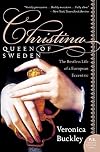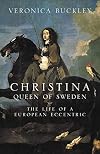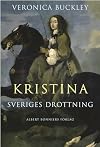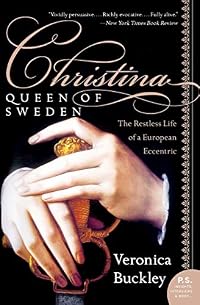
Christina, Queen of Sweden: The Restless Life of a European Eccentric
by Veronica Buckley
On This Page
Description
The groundbreaking new biography of one of the most progressive, influential and entertaining women of the seventeenth century, Christina Alexandra, Queen of Sweden. In 1654, to the astonishment and dismay of her court, Christina Alexandra announced her abdication in favour of her cousin, Charles. Instrumental in bringing the Thirty Years War to a close at the age of 22, Christina had become one of the most powerful monarchs in Europe. She had also become notorious for her extravagant show more lifestyle. Leaving the narrow confines of her homeland behind her, Christina cut a remarkable path across Europe. She acted as mediator in the Franco-Spanish War and, in return for financial support, was received into the Roman Catholic Church despite the fierce condemnation of her protestant countrymen. Christina settled in Rome at the luxurious Palazzo Farnese where she established a lavish salon for Rome's artists and intellectuals. More than once she was forced to leave Rome while one scandal or another died down; she was painted a lesbian, a prostitute and even a hermaphrodite. financial support from the Pope and the Spanish crown dried up, Christina began to court French favour, eventually even plotting with them to overthrow the Spanish at Naples, where she hoped to be installed as queen. Despite her political vacillations and a lifelong refusal to restrain her appetites, Christina ended her days in Rome relatively free from disfavour and financial strife. At the express order of the Pope, she was buried, with full ceremony, in the walls of St Peter's Basilica, one of only two women to be so honoured. Reminiscent of Amanda Foreman's Georgiana, Duchess of Devonshire and Claire Tomalin's Jane Austen: A Life, Buckley combines a personal approach with a lively interest in the social and historical world of seventeenth-century Europe to bring this remarkable personality to life. show lessTags
Recommendations

















Member Recommendations
Member Reviews
I came to this book knowing the basic outline of Christina of Sweden's life but not the details - and what struck me was the role of gender in this 17th-century queen's life. Initially mistaken for a boy at birth (and possibly intersex?), Christina become Queen of Sweden in her own right while still a child. She refused to marry, however, and eventually abdicated from her throne, motivated partly by a desire to convert to Catholicism. She spent years traveling across Europe, often dressed in men's clothing, and was attracted to both men and women. I wish this historical figure was talked about more - she clearly deserves more attention than she typically receives and her life would provide a rich platform for discussions of gender and show more sexuality. show less
Part of the “interesting women” reading list. There must have been high hopes for the daughter of Gustavus Adolphus (more correctly but more confusingly called “Gustav Adolf” in this book), but while Christina was bright and had a forceful personality, she definitely wasn’t a version of her father in skirts. In fact, it wasn’t clear if she belonged in skirts at all; it took doctors 24 hours after her birth to determine her gender, she often wore men’s clothes as an adult, and a good number of her romantic attachments appear to have been with other women. The less respectful of her contemporaries described her as a “hunchback lesbian dwarf whore”, and it’s quite clear that even with her acknowledged beautiful eyes, show more she would never be mistaken for Greta Garbo.
She reminds me of a smarter but homelier version of a modern pop star - perhaps if Paris Hilton could qualify for Mensa and had once been in a bad car wreck? Her life story is full of not-quite-successful attempts to be great, with numerous interesting and ambitious projects that she was just a little too much of an airhead to complete. She wanted to an Athena, presiding over a court full of artists and scholars and philosophers, but (apologies to 17th century Sweden just wasn’t the place to do this. Although she did manage to lure Rene Descartes to Stockholm, he promptly caught pneumonia and died. Her eventual solution to the problem was characteristically outrageous and not very well thought out: she abdicated the throne, converted to Catholicism, and moved to Rome. Although she amassed a decent sculpture collection (dispensing a small amount of patronage to Bernini) and had occasional musical evenings with Correlli and Scarlatti, she was mostly too impoverished to run the kind of salon she had always anticipated. She attempted to stay active in European politics without any success, becoming a comic and pathetic figure at the royal courts she visited, and she ruined her reputation by having one of her own “court” of hangers-on summarily executed for treason.
At least, the end of her life was not unpleasant. With all passion spent she retired to her Roman villa and her art collection. In her last illness she forgave all her enemies and requested forgiveness for herself.
This is author Veronica Buckley’s first book, and I’m impressed. The narrative is well done and the research is impeccable. Apparently it’s a graduate thesis that Buckley spent years refining. I’m hoping there’s another book in the wings somewhere. show less
She reminds me of a smarter but homelier version of a modern pop star - perhaps if Paris Hilton could qualify for Mensa and had once been in a bad car wreck? Her life story is full of not-quite-successful attempts to be great, with numerous interesting and ambitious projects that she was just a little too much of an airhead to complete. She wanted to an Athena, presiding over a court full of artists and scholars and philosophers, but (apologies to 17th century Sweden just wasn’t the place to do this. Although she did manage to lure Rene Descartes to Stockholm, he promptly caught pneumonia and died. Her eventual solution to the problem was characteristically outrageous and not very well thought out: she abdicated the throne, converted to Catholicism, and moved to Rome. Although she amassed a decent sculpture collection (dispensing a small amount of patronage to Bernini) and had occasional musical evenings with Correlli and Scarlatti, she was mostly too impoverished to run the kind of salon she had always anticipated. She attempted to stay active in European politics without any success, becoming a comic and pathetic figure at the royal courts she visited, and she ruined her reputation by having one of her own “court” of hangers-on summarily executed for treason.
At least, the end of her life was not unpleasant. With all passion spent she retired to her Roman villa and her art collection. In her last illness she forgave all her enemies and requested forgiveness for herself.
This is author Veronica Buckley’s first book, and I’m impressed. The narrative is well done and the research is impeccable. Apparently it’s a graduate thesis that Buckley spent years refining. I’m hoping there’s another book in the wings somewhere. show less
This is a biography of the eccentric 17th century Queen of Sweden, Christina. Christina was the only child of King Gustav and gained the throne at age 5. She started actually ruling at age 18 and abdicated in favor of her cousin, Karl Gustav, who many wanted her to marry, at age 28. She was an odd woman - educated and considered sort of manly, she often wore men's clothing and was very active. Her sexuality was always suspect, but she seems to have been more asexual than anything. It's always hard to tell at this sort of distance what the truth is vs. what cultural sensibilities of the time implied.
She was ensconced in the Lutheran country of Sweden and made the highly politcal (though she probably didn't view it that way) decision to show more convert to Catholicism after her abdication. She lived most of her life after leaving Sweden in sunny, warm, Catholic, Rome. Pretty much as opposite from Sweden as she could get.
I enjoyed this book, but I think it could have been better. I was a bit bored at times, even though this woman led an eccentric and exciting life. She was constantly making bad decision politically and personally. I'm a little ambivalent about recommending it, but if you like historical biographies, it's probably worth the time. I'm always interesting in reading about women who wielded power in these eras. show less
She was ensconced in the Lutheran country of Sweden and made the highly politcal (though she probably didn't view it that way) decision to show more convert to Catholicism after her abdication. She lived most of her life after leaving Sweden in sunny, warm, Catholic, Rome. Pretty much as opposite from Sweden as she could get.
I enjoyed this book, but I think it could have been better. I was a bit bored at times, even though this woman led an eccentric and exciting life. She was constantly making bad decision politically and personally. I'm a little ambivalent about recommending it, but if you like historical biographies, it's probably worth the time. I'm always interesting in reading about women who wielded power in these eras. show less
Christina became Queen of Sweden as a child and abdicated as a young woman. I absolutely hate her. She was a terrible queen and a selfish, pompous, spoiled woman. I was so pleased when she abdicated the throne so she could pursue her Grand Artistic Future, and doubly pleased when it turned out she was no great genius, after all. She died alone, desitute, and despised by most of Europe, which I think fitting for such an annoying person.
The history itself is well-researched and well-written. I usually read about monarchs whose fates I already know--it felt very weird not to know what would happen. I was so impatient to find out that I actually skipped ahead several times.
The history itself is well-researched and well-written. I usually read about monarchs whose fates I already know--it felt very weird not to know what would happen. I was so impatient to find out that I actually skipped ahead several times.
I got the impression, reading this biography, that the author didn't really like Christina that much. As a result, the portrait was unflattering. On a positive note, the book was very well researched, which made reading the footnotes almost more interesting than the book itself. I'm not sure that this is a good thing. Overall this book raised more questions than it answered and was curiously unsatisfying.
Haven't read much about her before so this was very interesting and well written. But I absolutely hated her. She was selfish and spoiled.
Haven't read it yet, but am looking forward to it.
Members
- Recently Added By
Author Information

9 Works 545 Members
Veronica Buckley was born in New Zealand. She studied in London and Oxford, where she did her postgraduate work on Christina Alexandra. She now lives in Paris with her husband
Some Editions
Series
Belongs to Publisher Series
Die Andere Bibliothek (250)
Common Knowledge
- Canonical title*
- Kristina : Sveriges drottning
- People/Characters
- Christina of Sweden (Kristina, Queen of Sweden); Gustavus Adolphus the Great, King of Sweden; Maria Eleanora of Brandenburg; Axel Oxenstierna (Axel Gustafsson Oxenstierna of Södermöre, Baron); Gabriel Gustavsson Oxenstierna, Baron; Gabriel Bengtsson Oxenstierna, Baron (show all 31); Jakob De la Gardie (Count); Baron Karl Karlsson Gyllenhjelm; Charles X Gustav of Sweden; Johan Mathiae; Monsieur Duncan de Cerisantes; Ebba Square; Magus De la Gardie; Johan Adler Salvius; Pierre Bourdelot; Cardinal Decio Azzolino; Maria Euphrosyne; Claude de Saumaise; Anna Maria van Schurman; Cardinal Jules Mazarin; Pierre-Hector Chanut; Donna Olimpia-Maidalchini; Pere Le Bel; Ludovico Santinelli; Marchese Gian Rinaldo Monaldeschi; Giuseppe Francesco Borri; Clement or Clemens IX, Pope (Giulio Rospigliosi, 1600-1669); Miguel de Molinos; Gian Lorenzo Bernini; Angelica Quadrelli; Alexander VII, Pope (Fabio Chigi, 1599-1667)
- Important places
- Stockholm, Sweden; Osnabrück, Lower Saxony, Germany; Münster, North Rhine-Westphalia, Germany; Prague, Czech Republic; Antwerp, Antwerp, Belgium; Rome, Italy (show all 9); Paris, Île-de-France, France; Fontainebleau, Seine-et-Marne, Île-de-France, France; Hamburg, Germany
- Important events
- Thirty Years War (1618 | 1648); Franco-Spanish War (1635 | 1659); Treaty of Compiègne (1635); Torstenson War (1643 | 1645); Peace of Westphalia (1648); The Fronde (1648 | 1653)
- Dedication
- For CRB, my father, who's always known how to tell a good story
- First words
- Nowadays, if you have a few dollars to spare, you can buy a copy of an old newspaper printed on the day you were born.
- Quotations
- Christianity is no more than a trick played by the powerful to keep the humble people down. - Queen Kristina of Sweden
I am not inferring that there are intelligent beings in the stars or anywhere else...but I am not sure that Man is the final purpose of creation. - René Descartes
Marriage is the best cure for love and the marriage bed is its tomb. - Queen Kristina of Sweden
To love God and one's neighbor is real piety. All the rest is just farce. - Queen Kristina of Sweden - Last words
- (Click to show. Warning: May contain spoilers.)From grand and lovely portraits, her blue eyes gaze out across the centuries, still challenging, still hoping, while the fireworks of her story, at first sight dazzling, at times even lurid, settle at least to a more human glow.
*Some information comes from Common Knowledge in other languages. Click "Edit" for more information.
Classifications
- Genres
- History, Nonfiction, Biography & Memoir, General Nonfiction
- DDC/MDS
- 948.5034092 — History & geography History of Europe Northern Europe: Norway, Sweden, Denmark, Finland, Iceland Sweden; region of the Baltic Sea History by Period Period of 1523-1809 Age of Greatness, 1611-1718
- LCC
- DL719 .B83 — History of Europe, Asia, Africa and Oceania Northern Europe. Scandinavia History of Northern Europe. Scandinavia Sweden History By period Modern, 1523- Vasa dynasty, 1523-1654. Gustaf II Adolf,
- BISAC
Statistics
- Members
- 323
- Popularity
- 97,811
- Reviews
- 7
- Rating
- (3.45)
- Languages
- 6 — Czech, Dutch, English, German, Italian, Swedish
- Media
- Paper, Ebook
- ISBNs
- 13
- ASINs
- 3