On This Page
Description
In the cosmopolitan world of seventeenth-century Madrid, with its posh theaters and gleaming palaces, Captain Alatriste and his protégé, Íñigo, become unwilling participants in a court conspiracy that could lead them both to the gallows.Tags
Recommendations
































Member Reviews
Nobody expects the Spanish Inquisition...
...Except in a Pérez-Reverte novel, where we'd probably be rather disappointed if they didn't burst into the room at some point. No cause for concern this time, anyway: in this, the fifth adventure of jaded warhorse capitán Alatriste and his intrepid teenage sidekick Iñigo, we get intrigue, romance, sword fights, 17th century poets, incognito monarchs, a cross-dressing royal menina, the moonlight abduction of an old miser's beautiful ward, and more of the captain's old enemies than you can point a pistol at.
It's 1626, a new piece by Tirso de Molina is opening in Madrid, and Alatriste and Iñigo are stuck in town without very much to do. Alatriste gets involved in an affair with a well-known show more actress, but it turns out that she has several very powerful admirers who resent his intrusion. And then it starts looking as though there is more going on than simple sexual jealousy. Surely they can't have got accidentally involved in yet another high-level political conspiracy? Well, possibly...
Great fun, in the best Dumas tradition, but laced with Pérez-Reverte's very 20th century conviction that violence carried out with edged weapons by men in cloaks and feathered hats is no less brutal and disgusting than the modern kind, and leads to its fair share of mud, blood and pain. And that in the middle of all this glamour and poetry the Spanish Golden Age is being frittered away in greed, incompetence and infighting. show less
...Except in a Pérez-Reverte novel, where we'd probably be rather disappointed if they didn't burst into the room at some point. No cause for concern this time, anyway: in this, the fifth adventure of jaded warhorse capitán Alatriste and his intrepid teenage sidekick Iñigo, we get intrigue, romance, sword fights, 17th century poets, incognito monarchs, a cross-dressing royal menina, the moonlight abduction of an old miser's beautiful ward, and more of the captain's old enemies than you can point a pistol at.
It's 1626, a new piece by Tirso de Molina is opening in Madrid, and Alatriste and Iñigo are stuck in town without very much to do. Alatriste gets involved in an affair with a well-known show more actress, but it turns out that she has several very powerful admirers who resent his intrusion. And then it starts looking as though there is more going on than simple sexual jealousy. Surely they can't have got accidentally involved in yet another high-level political conspiracy? Well, possibly...
Great fun, in the best Dumas tradition, but laced with Pérez-Reverte's very 20th century conviction that violence carried out with edged weapons by men in cloaks and feathered hats is no less brutal and disgusting than the modern kind, and leads to its fair share of mud, blood and pain. And that in the middle of all this glamour and poetry the Spanish Golden Age is being frittered away in greed, incompetence and infighting. show less
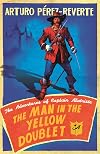
El caballero del jubón amarillo
Arturo Pérez-Reverte
Publicado: 2003 | 208 páginas
Novela Aventuras Histórico
Serie: Las aventuras del capitán Alatriste #5
«Don Francisco de Quevedo me dirigió una mirada que interpreté como era debido, pues fui detrás del capitán Alatriste. Avísame si hay problemas, habían dicho sus ojos tras los lentes quevedescos. Dos aceros hacen más papel que uno. Y así, consciente de mi responsabilidad, acomodé la daga de misericordia que llevaba atravesada al cinto y fui en pos de mi amo, discreto como un ratón, confiando en que esta vez pudiéramos terminar la comedia sin estocadas y en paz, pues habría sido bellaca afrenta estropearle el estreno a Tirso de Molina. Yo estaba lejos de imaginar hasta show more qué punto la bellísima actriz María de Castro iba a complicar mi vida y la del capitán, poniéndonos a ambos en gravísimo peligro; por no hablar de la corona del rey Felipe IV, que esos días anduvo literalmente al filo de una espada. Todo lo cual me propongo contar en esta nueva aventura, probando así que no hay locura a la que el hombre no llegue, abismo al que no se asome, y lance que el diablo no aproveche cuando hay mujer hermosa de por medio.» show less
Arturo Pérez-Reverte
Publicado: 2003 | 208 páginas
Novela Aventuras Histórico
Serie: Las aventuras del capitán Alatriste #5
«Don Francisco de Quevedo me dirigió una mirada que interpreté como era debido, pues fui detrás del capitán Alatriste. Avísame si hay problemas, habían dicho sus ojos tras los lentes quevedescos. Dos aceros hacen más papel que uno. Y así, consciente de mi responsabilidad, acomodé la daga de misericordia que llevaba atravesada al cinto y fui en pos de mi amo, discreto como un ratón, confiando en que esta vez pudiéramos terminar la comedia sin estocadas y en paz, pues habría sido bellaca afrenta estropearle el estreno a Tirso de Molina. Yo estaba lejos de imaginar hasta show more qué punto la bellísima actriz María de Castro iba a complicar mi vida y la del capitán, poniéndonos a ambos en gravísimo peligro; por no hablar de la corona del rey Felipe IV, que esos días anduvo literalmente al filo de una espada. Todo lo cual me propongo contar en esta nueva aventura, probando así que no hay locura a la que el hombre no llegue, abismo al que no se asome, y lance que el diablo no aproveche cuando hay mujer hermosa de por medio.» show less
It's difficult to believe that The Cavalier in the Yellow Doublet (Plume, 2010) is the fifth book in Arturo Perez-Reverte's Captain Alatriste series - but it's true, nonetheless. This time our hero and his faithful sidekick find themselves caught up in a plot against the king (oh, no, wait, that's every Captain Alatriste book ...). Kidding aside, I'm sorry to say that the books do seem to be getting a little bit formulaic, but perhaps that's the point.
Slightly slower-paced than the last couple in the series (most of the action is concentrated in the last twenty pages of the book, with just a few spurts of activity - and blood - scattered through the first 300 pages), this book doesn't add too much to our understanding of Captain show more Alatriste (except to gain a slightly better sense of just how stubborn he is and how brutal he can be), but we do learn a bit more about our narrator, the young and still-smitten Inigo (though as this book closes there's some question about just how far he'll carry that particular torch).
Worth reading if you're into the series.
http://philobiblos.blogspot.com/2010/09/book-review-cavalier-in-yellow-doublet.h... show less
Slightly slower-paced than the last couple in the series (most of the action is concentrated in the last twenty pages of the book, with just a few spurts of activity - and blood - scattered through the first 300 pages), this book doesn't add too much to our understanding of Captain show more Alatriste (except to gain a slightly better sense of just how stubborn he is and how brutal he can be), but we do learn a bit more about our narrator, the young and still-smitten Inigo (though as this book closes there's some question about just how far he'll carry that particular torch).
Worth reading if you're into the series.
http://philobiblos.blogspot.com/2010/09/book-review-cavalier-in-yellow-doublet.h... show less
Mexico had Zorro, England had Robin Hood and France is represented by D’Artagnan, but Spain and swash-bucklers don’t go together – unless you count Don Quixote, tilting at windmills, or the legendary El Cid.
Or so I thought until I met Captain Diego Alatriste, soldier, adventurer, loyalist and ladies man, a period Dirty Harry, James Bond and Don Juan rolled into one, the creation of the nimble pen of Arturo Perez-Reverte, best known in English for his intelligent bibliomystery, The Club Dumas.
The literary thriller is a relatively new genre in English, which tends to be fairly rigid: real authors generally leave action-adventure to mere novelists who, on the whole, avoid content that smacks too much of poetry, philosophy or show more political polemic.
Perez-Reverte surprised me by the gusto with which he depicted the streets of flamboyant, bellicose, belligerent and Church-driven Madrid, and the humanism he uses to describe the observations of young Inigo Balboa, ward and page to Captain Alatriste.
The stalwart soldier, returned from Flanders and Seville, is trysting with actress Maria de Castro, toast of the Madrid theatre world, much to the fury of her other lover, the King of Spain, and Alatriste’s common-law wife, Caridad.
Narrator Inigo is hopelessly in love with the scheming Angelica de Alquezar, a lovely maid of honour at the royal court and niece of one of Diego Alatriste’s most deadly enemies.
Pretty Angelica has proved poisonous in the past when she caused Inigo to be arrested by the Inquisition and almost burned at the stake yet despite this the hapless youth is putty in her hands and, together with his master, is soon delivered into danger again.
They are led into a trap whereby they come face to face with King Phillip IV in a deserted area, only to be attacked by Diego’s nemesis, assassin Gualterio Malatesta and his henchmen.
Out-numbered over two to one they are over-whelmed, yet the attackers flee after having killed the king: when the Royal guards find Diego beside the corpse of his regal rival in love, he is arrested for regicide.
Except the dead man was actually the king’s double: Phillip is alive and well but his enemies want him dead and replaced by a puppet whom they can control, and it’s up to the falsely accused Alatriste to prevent another murder.
Amidst the sword fights, romance, politics, conspiracy, skullduggery and intrigue, we have visits to the theatre, biographies of dramatists and writers, and enough quotations from plays and poems to fill a book.
For a soldier and a servant, Inigo is a bit of a savant and has memorized myriad lines: his English counterparts had the wealth of Shakespeare, Chaucer, Marlowe, Donne, Milton, Spencer and a hundred other gifted writers to choose from. Inigo was not so fortunate.
Seventeenth Century Spain was a deeply religious and spiritual nation, yet much of its literature was surprisingly trite and prosaic: Some of the beauty might be lost in translation but one can’t help suspecting there was not that much to lose in the first place.
Evil and evil doers? Leave them well alone.
Let us live as witnesses not accomplices,
So the old world to the new makes moan.
Umm, yes. Quite.
Poetry – even bad poetry – is not quite what one expects in a modern action adventure: Zorro certainly never quotes verse and even the Three Musketeers confined themselves to All for One and One for All! Huzzah! As for Robin Hood, he leaves all that sort of thing to Alan-a-Dale.
I enjoyed The Man in the Yellow Doublet: would I recommend it? Yes. Would I seek out other Alatriste stories? I didn’t enjoy it that much. show less
Or so I thought until I met Captain Diego Alatriste, soldier, adventurer, loyalist and ladies man, a period Dirty Harry, James Bond and Don Juan rolled into one, the creation of the nimble pen of Arturo Perez-Reverte, best known in English for his intelligent bibliomystery, The Club Dumas.
The literary thriller is a relatively new genre in English, which tends to be fairly rigid: real authors generally leave action-adventure to mere novelists who, on the whole, avoid content that smacks too much of poetry, philosophy or show more political polemic.
Perez-Reverte surprised me by the gusto with which he depicted the streets of flamboyant, bellicose, belligerent and Church-driven Madrid, and the humanism he uses to describe the observations of young Inigo Balboa, ward and page to Captain Alatriste.
The stalwart soldier, returned from Flanders and Seville, is trysting with actress Maria de Castro, toast of the Madrid theatre world, much to the fury of her other lover, the King of Spain, and Alatriste’s common-law wife, Caridad.
Narrator Inigo is hopelessly in love with the scheming Angelica de Alquezar, a lovely maid of honour at the royal court and niece of one of Diego Alatriste’s most deadly enemies.
Pretty Angelica has proved poisonous in the past when she caused Inigo to be arrested by the Inquisition and almost burned at the stake yet despite this the hapless youth is putty in her hands and, together with his master, is soon delivered into danger again.
They are led into a trap whereby they come face to face with King Phillip IV in a deserted area, only to be attacked by Diego’s nemesis, assassin Gualterio Malatesta and his henchmen.
Out-numbered over two to one they are over-whelmed, yet the attackers flee after having killed the king: when the Royal guards find Diego beside the corpse of his regal rival in love, he is arrested for regicide.
Except the dead man was actually the king’s double: Phillip is alive and well but his enemies want him dead and replaced by a puppet whom they can control, and it’s up to the falsely accused Alatriste to prevent another murder.
Amidst the sword fights, romance, politics, conspiracy, skullduggery and intrigue, we have visits to the theatre, biographies of dramatists and writers, and enough quotations from plays and poems to fill a book.
For a soldier and a servant, Inigo is a bit of a savant and has memorized myriad lines: his English counterparts had the wealth of Shakespeare, Chaucer, Marlowe, Donne, Milton, Spencer and a hundred other gifted writers to choose from. Inigo was not so fortunate.
Seventeenth Century Spain was a deeply religious and spiritual nation, yet much of its literature was surprisingly trite and prosaic: Some of the beauty might be lost in translation but one can’t help suspecting there was not that much to lose in the first place.
Evil and evil doers? Leave them well alone.
Let us live as witnesses not accomplices,
So the old world to the new makes moan.
Umm, yes. Quite.
Poetry – even bad poetry – is not quite what one expects in a modern action adventure: Zorro certainly never quotes verse and even the Three Musketeers confined themselves to All for One and One for All! Huzzah! As for Robin Hood, he leaves all that sort of thing to Alan-a-Dale.
I enjoyed The Man in the Yellow Doublet: would I recommend it? Yes. Would I seek out other Alatriste stories? I didn’t enjoy it that much. show less
El caballero del Jubón amarillo se desarrolla en el mundo de los corrales de comedias del Madrid del siglo XVII. En esta ocasión Diego Alatriste volverá a cruzarse con viejos amigos y viejos enemigos, y con los personajes famosos de la época como Lope de Vega, Calderón de la Barca y el capitán Alonso Contreras.
Lances, estocadas, intrigas palaciegas y aventuras amorosas salpican un relato de acción trepidante.
«Don Francisco de Quevedo me dirigió una mirada que interpreté como era debido, pues fui detrás del capitán Alatriste. Avísame si hay problemas, habían dicho sus ojos tras los lentes quevedescos. Dos aceros hacen más papel que uno. Y así, consciente de mi responsabilidad, acomodé la daga de misericordia que llevaba show more atravesada al cinto y fui en pos de mi amo, discreto como un ratón, confiando en que esta vez pudiéramos terminar la comedia sin estocadas y en paz, pues habría sido bellaca afrenta estropearle el estreno a Tirso de Molina. Yo estaba lejos de imaginar hasta qué punto la bellísima actriz María de Castro iba a complicar mi vida y la del capitán, poniéndonos a ambos en gravísimo peligro; por no hablar de la corona del rey Felipe IV, que esos días anduvo literalmente al filo de una espada. Todo lo cual me propongo contar en esta nueva aventura, probando así que no hay locura a la que el hombre no llegue, abismo al que no se asome, y lance que el diablo no aproveche cuando hay mujer hermosa de por medio.» show less
Lances, estocadas, intrigas palaciegas y aventuras amorosas salpican un relato de acción trepidante.
«Don Francisco de Quevedo me dirigió una mirada que interpreté como era debido, pues fui detrás del capitán Alatriste. Avísame si hay problemas, habían dicho sus ojos tras los lentes quevedescos. Dos aceros hacen más papel que uno. Y así, consciente de mi responsabilidad, acomodé la daga de misericordia que llevaba show more atravesada al cinto y fui en pos de mi amo, discreto como un ratón, confiando en que esta vez pudiéramos terminar la comedia sin estocadas y en paz, pues habría sido bellaca afrenta estropearle el estreno a Tirso de Molina. Yo estaba lejos de imaginar hasta qué punto la bellísima actriz María de Castro iba a complicar mi vida y la del capitán, poniéndonos a ambos en gravísimo peligro; por no hablar de la corona del rey Felipe IV, que esos días anduvo literalmente al filo de una espada. Todo lo cual me propongo contar en esta nueva aventura, probando así que no hay locura a la que el hombre no llegue, abismo al que no se asome, y lance que el diablo no aproveche cuando hay mujer hermosa de por medio.» show less
Arturo Perez-Reverte brings us the fifth installment in the reliable Captain Alatriste series. As always the book features well-researched, factually grounded historical fiction set in the 17th century Spain, a generous dollop of poetry and theater, ladles of royal court intrigue, a full measure of fooling around between the sheets (almost entirely off-stage), and enough swashbuckling action to satisfy D'Artagnan. In addition to the Captain (Diego Alatriste y Tenorio), the familiar cast of characters returns: Alatriste's faithful sidekick Inigo Balboa y Aguirre, Inigo's heart-throb the angelic devil Angelica de Alquezar, the historic poet Francisco de Quevedo and, of course, Alatriste's arch nemesis, the whistling bad guy Gualterio show more Malatesta. The book's conceit is that we are reading manuscripts written by Inigo many years later in his dotage.
Alatriste and King Philp IV of Spain are both successfully bedding the actress Maria de Castro. The King takes offense and has Count Guadalmedina warn off the Captain. Readers of the series can guess how that goes over. Meanwhile, our narrator Inigo, now a nearly full-grown man, makes surprising progress in laying siege to Angelica's treasures. The two pursuits become linked by deadly court intrigue.
Readers new to the series will want to start with the first book, Captain Alatriste. Returning readers will not be surprised to learn that Perez-Reverte has delivered the goods again. Quibbles: The development of the story can drag at times and some of the threads extend through the entire series. I for one am well and truly ready for Alatriste to dispatch Malatesta to the depths of a fiery Hell. Perez-Reverte has played that particular string out beyond credulity and risks becoming a little absurd.
By the way, the publisher gets off a howler on the book jacket where it states that Inigo is a recently-returned veteran of the Hundred Years War. Oops, wrong war. The Hundred Years War ended in 1453. This book is set in 1626, which would make Inigo roughly 190 years old if he fought in the Hundred Years War. Alatriste and Inigo fought in the Thirty Years War [The Thirty Years War (New York Review Books Classics)] (1618-1648), which itself was just a part of the Eighty Years War (1568-1648). Those wacky Europeans and their incessant warfare! Confusing, yes, but catching stuff like that is why editors exist.
With The Cavalier in the Yellow Doublet, Perez-Reverte provides another enjoyable edition in this colorful historical series. show less
Alatriste and King Philp IV of Spain are both successfully bedding the actress Maria de Castro. The King takes offense and has Count Guadalmedina warn off the Captain. Readers of the series can guess how that goes over. Meanwhile, our narrator Inigo, now a nearly full-grown man, makes surprising progress in laying siege to Angelica's treasures. The two pursuits become linked by deadly court intrigue.
Readers new to the series will want to start with the first book, Captain Alatriste. Returning readers will not be surprised to learn that Perez-Reverte has delivered the goods again. Quibbles: The development of the story can drag at times and some of the threads extend through the entire series. I for one am well and truly ready for Alatriste to dispatch Malatesta to the depths of a fiery Hell. Perez-Reverte has played that particular string out beyond credulity and risks becoming a little absurd.
By the way, the publisher gets off a howler on the book jacket where it states that Inigo is a recently-returned veteran of the Hundred Years War. Oops, wrong war. The Hundred Years War ended in 1453. This book is set in 1626, which would make Inigo roughly 190 years old if he fought in the Hundred Years War. Alatriste and Inigo fought in the Thirty Years War [The Thirty Years War (New York Review Books Classics)] (1618-1648), which itself was just a part of the Eighty Years War (1568-1648). Those wacky Europeans and their incessant warfare! Confusing, yes, but catching stuff like that is why editors exist.
With The Cavalier in the Yellow Doublet, Perez-Reverte provides another enjoyable edition in this colorful historical series. show less
Entretenido como siempre, aunque de nuevo puede resultar un poco repetitivo comparado con otros libros de la serie. Iñigo va creciendo y su visión del capitán Alatriste es más adulta y ambivalente.
Members
- Recently Added By
Author Information

78+ Works 37,857 Members
Novelist and former journalist Arturo Pérez-Reverte Gutiérrez was born in Cartagena, Spain on November 25, 1951. He started his journalistic career writing for the Spanish newspaper Pueblo and later for Television Espanola - the Spanish state owned television, in the role of war correspondant. He worked as a war correspondent from 1973 to1994 show more before becoming a full-time writer. His first novel, El húsar, which was set in the Napoleonic Wars, was published in 1986, and he is well-known internationally for his popular Captain Alatriste fiction series, which takes place in 17th-century Europe. Pérez-Reverte has been elected to the Spanish Royal Academy. (Bowker Author Biography) show less
Some Editions
Awards and Honors
Distinctions
Series

Work Relationships
Common Knowledge
- Canonical title
- The Cavalier in the Yellow Doublet
- Alternate titles
- The Man in the Yellow Doublet
- Original publication date
- 2003
- People/Characters
- Diego Alatriste y Tenorio; Iñigo Balboa ; Caridad la Lebrijana; Maria de Castro; Angélica de Alquézar; Philip IV, King of Spain (show all 7); Gualterio Malatesta
- Important places
- Spain
- Dedication
- To Germán Dehesa
for all the small honourable acts
Classifications
- Genres
- Fiction and Literature, General Fiction, Historical Fiction
- DDC/MDS
- 863.64 — Literature & rhetoric Spanish Literature Spanish fiction 20th Century 1945-2000
- LCC
- PQ6666 .E765 .C3313 — Language and Literature French, Italian, Spanish and Portuguese literatures Spanish literature Individual authors, 1961-2000
- BISAC
Statistics
- Members
- 799
- Popularity
- 34,517
- Reviews
- 25
- Rating
- (3.66)
- Languages
- 8 — Danish, Dutch, English, French, Italian, Polish, Portuguese, Spanish
- Media
- Paper, Audiobook, Ebook
- ISBNs
- 37
- ASINs
- 9