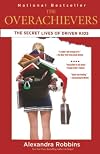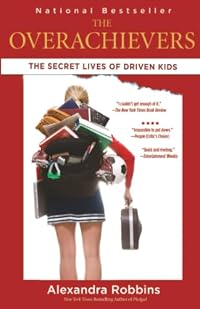
The Overachievers: The Secret Lives of Driven Kids
by Alexandra Robbins 
On This Page
Description
A look at the world of teens who face unbearable pressure to succeed explores such issues as intense stress, sports rage, parental guilt, the study drug black market, and the cutthroat college admissions process, as well as their impact on young people.Tags
Recommendations


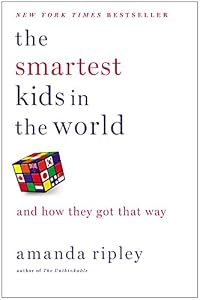

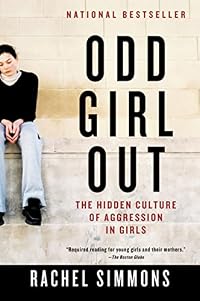
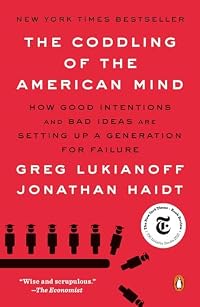
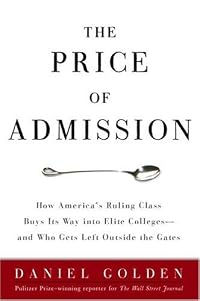
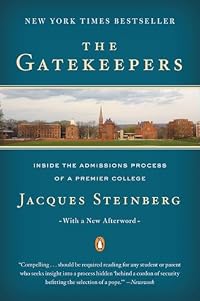

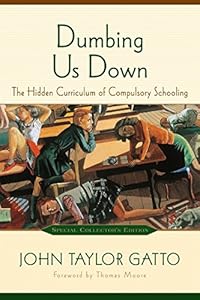

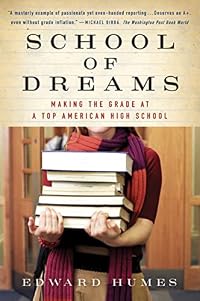
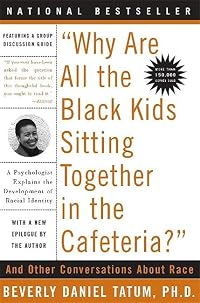
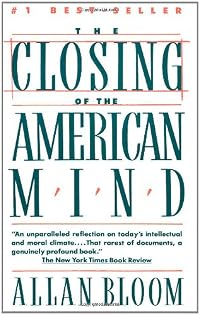
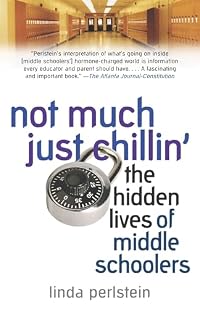

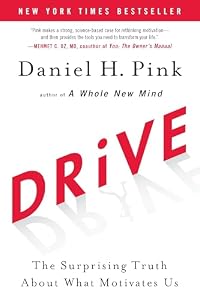

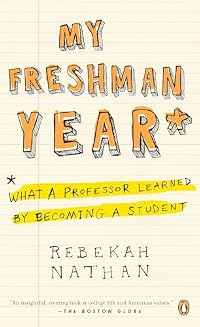

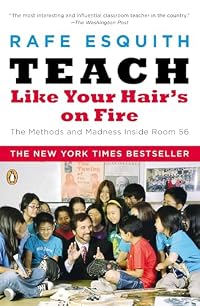


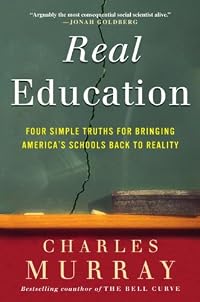
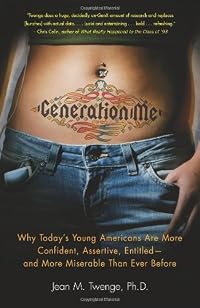


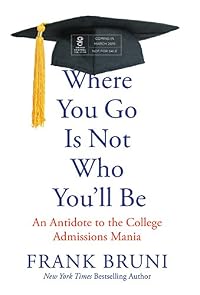






Member Recommendations
DDay Fictional account of overacheiver high school students applying for college, also set in Montgomery County, Maryland
Member Reviews
I was brought up to be the best in school. My mom would always ask me what my ranking in my class was. I would be reprimanded when I didn't get an A in class. But when I did get an A, that was the end of discussion. High school was a time for me to put work and school first, and a social life last. And where did that land me? In college.
Now, my life differs than many of the predictions that were made in [b:The Overachievers|25575|The Overachievers The Secret Lives of Driven Kids|Alexandra Robbins|http://photo.goodreads.com/books/1167758095s/25575.jpg|1286112]. [a:Alexandra Robbins|14141|Alexandra Robbins|http://photo.goodreads.com/authors/1296951379p2/14141.jpg] follows the lives of nine students as they work their way through the show more junior or senior year, many of them working towards that goal of getting into an Ivy League school. That's all that matters, right?
It starts from birth, and for some families, even before birth. We are raised in a culture to survive and beat all the others. We put classical music on mothers' pregnant bellies to enhance the future baby's aptitude for success. We enroll them into prestigious preschools, because if we don't, then they WILL NOT go to college. We drug our kids so that they can take un-timed tests, most of which are designed to test their test-taking skills and not their desire to learn. And they take 22 AP courses in high school to prepare for college, not to mention get a perfect 1600 (back in my day at least) on the SAT. And even then, it's a 8.2% chance to get into that coveted school. But wait...even if they don't get in, you can always sue the school for discrimination.
But let's say they get into that prestigious college that they've had the burden or working towards all their lives? You start over. Because they've been raised by their parents...their oh-so-loving parents who will do everything for them. Even if it's making decisions.
I can go on and on, but you get the picture. Overachievers reads as a microcosm of our culture today, of the way we struggle to be the best at the cost of our own happiness. Whether or not you see this in your own lives, or those around you, I think that there's something we can all learn from this: take a step back from your own life and reflect. If all we strive for is that next best school or career or soul mate, we'll never live our lives in the present.
I'm a stubborn person. When I went to college, I decided to just have fun and enjoy it. I didn't pursue studying engineering or medicine, which is what my mom wanted me to do. I picked a major I liked, and figured I may as well be living in a box after I graduate (I'm not, by the way). And then after graduation, I figured I'd do something completely different...so I went to a foreign country to teach English. Life can be quite unexpected, but I've appreciated every moment of it. I've learned so much about myself and what things in life make me happy. Now I just tell myself that if worse comes to worse and I lose absolutely everything in life...I'll just go back to Korea and teach English. If I'm happy doing it, why not? show less
Now, my life differs than many of the predictions that were made in [b:The Overachievers|25575|The Overachievers The Secret Lives of Driven Kids|Alexandra Robbins|http://photo.goodreads.com/books/1167758095s/25575.jpg|1286112]. [a:Alexandra Robbins|14141|Alexandra Robbins|http://photo.goodreads.com/authors/1296951379p2/14141.jpg] follows the lives of nine students as they work their way through the show more junior or senior year, many of them working towards that goal of getting into an Ivy League school. That's all that matters, right?
It starts from birth, and for some families, even before birth. We are raised in a culture to survive and beat all the others. We put classical music on mothers' pregnant bellies to enhance the future baby's aptitude for success. We enroll them into prestigious preschools, because if we don't, then they WILL NOT go to college. We drug our kids so that they can take un-timed tests, most of which are designed to test their test-taking skills and not their desire to learn. And they take 22 AP courses in high school to prepare for college, not to mention get a perfect 1600 (back in my day at least) on the SAT. And even then, it's a 8.2% chance to get into that coveted school. But wait...even if they don't get in, you can always sue the school for discrimination.
But let's say they get into that prestigious college that they've had the burden or working towards all their lives? You start over. Because they've been raised by their parents...their oh-so-loving parents who will do everything for them. Even if it's making decisions.
I can go on and on, but you get the picture. Overachievers reads as a microcosm of our culture today, of the way we struggle to be the best at the cost of our own happiness. Whether or not you see this in your own lives, or those around you, I think that there's something we can all learn from this: take a step back from your own life and reflect. If all we strive for is that next best school or career or soul mate, we'll never live our lives in the present.
I'm a stubborn person. When I went to college, I decided to just have fun and enjoy it. I didn't pursue studying engineering or medicine, which is what my mom wanted me to do. I picked a major I liked, and figured I may as well be living in a box after I graduate (I'm not, by the way). And then after graduation, I figured I'd do something completely different...so I went to a foreign country to teach English. Life can be quite unexpected, but I've appreciated every moment of it. I've learned so much about myself and what things in life make me happy. Now I just tell myself that if worse comes to worse and I lose absolutely everything in life...I'll just go back to Korea and teach English. If I'm happy doing it, why not? show less
This book was pretty fascinating, but I really wonder at what type of school are smart kids considered popular. I was in the top 15 of my HS graduating class and was the biggest nerd in the universe... and the others in the top weren't exactly seen highly by my school's popular cliques. I also think it takes a very wealthy school district to produce so many kids hell bent on an ivy school, unless things have just changed radically in the ~5 years between my HS graduation and when this book was written. Not many people at my high school could afford a 4-year school, much less an ivy. So I'd say this book is definitely not very representative of high schools at large.
Finally, I think it's absurd that parents and kids think their lives show more will be destroyed if they don't get into these prestigious universities. I went to a great engineering school, but not the best, and a great grad school, but not the best, and I have a great job, and am very happy with what I do. I'm not flipping burgers at McDonalds because I didn't go to Princeton or MIT. show less
Finally, I think it's absurd that parents and kids think their lives show more will be destroyed if they don't get into these prestigious universities. I went to a great engineering school, but not the best, and a great grad school, but not the best, and I have a great job, and am very happy with what I do. I'm not flipping burgers at McDonalds because I didn't go to Princeton or MIT. show less
This book about the ways in which being over-driven, over-ambitious and over-scheduled is sucking the life out of teenagers may have been novel when it was published, but to my ear it has all been discussed to death already in many other fora. What set this book apart was the individual case studies that Robbins did of students at her Alma Mater, Walt Whitman. Although she refers to them as "Overachievers," it was honestly my opinion that with a couple of exceptions, they were pretty average students, with a small handful of extracurriculars and GPAs in the high 3's. Nonetheless, I found myself drawn to them and their stories.
The researched portions felt pretty redundant and Robbins didn't have much novel to add in them. Also, I found show more her breathless scare tactics a little dated, given that it's my experience that now that the overachievers are old enough to have kids of our own, it's a huge status symbol to underschedule your kids, put them in play-based preschools or opt out of preschool entirely and not pressure them. Who knows if that'll stick as our kids get older, but certainly the horrors of Baby Einstein and Baby Galileo are remnants of a past era.
I also found that there were some parts that stuck out -- that in the drive to make a point, Robbins just put in everything that sounded like it fit, whether or not it was a good idea. For instance, she complains about summer homework. Summer homework and summer curriculae are the best evidence-based interventions to bridge the gap between lower and upper class students that develops over summers. Similarly, she decries full-day kindergarten, which I see as a necessary invention in the women's liberation movement. I also wish she had talked more about the effects of burnout on long-term career success, which scored only a glancing mention at the end.
Still, I found it a kind of fun and easy to read what was essentially a rant about a topic on which I mostly share the same view. show less
The researched portions felt pretty redundant and Robbins didn't have much novel to add in them. Also, I found show more her breathless scare tactics a little dated, given that it's my experience that now that the overachievers are old enough to have kids of our own, it's a huge status symbol to underschedule your kids, put them in play-based preschools or opt out of preschool entirely and not pressure them. Who knows if that'll stick as our kids get older, but certainly the horrors of Baby Einstein and Baby Galileo are remnants of a past era.
I also found that there were some parts that stuck out -- that in the drive to make a point, Robbins just put in everything that sounded like it fit, whether or not it was a good idea. For instance, she complains about summer homework. Summer homework and summer curriculae are the best evidence-based interventions to bridge the gap between lower and upper class students that develops over summers. Similarly, she decries full-day kindergarten, which I see as a necessary invention in the women's liberation movement. I also wish she had talked more about the effects of burnout on long-term career success, which scored only a glancing mention at the end.
Still, I found it a kind of fun and easy to read what was essentially a rant about a topic on which I mostly share the same view. show less
This is a flawed book but has two real strengths. The kids tell their own stories, and the stories are about the perils of success, not failure. I was drawn in quickly by these hooks, having been a high school nerd burnout myself, but sort of lost interest midway through. I would have preferred the author to cover each student from start to finish, rather than cutting and shuffling the deck. Or else, if skipping back and forth, to cover fewer students.
Still, I thought the stories compelling and left the book lying about for my 13 year old granddaughter to find while resting from her apparent video game career. My thinking was that 1) she would be forewarned of falling into the overachiever trap (although that's not really a major show more concern) 2) she would see that superstudents weren't merely gifted, but worked like hell for the grades and 3) she would not feel defeated if her grades in high school turn out "merely" "good" or "average."
I was surprised. Not only did she pick the book up, but that she actually kept at it for a week or two, carried it about, and read it to the finish. I was pretty confident she got something from it because ultimately the spine was broken and the cover mutilated - sure signs of her approval (her copy of the Golden Compass looks like the Dead Sea Scrolls). We haven't discussed it yet though. Sometimes the oblique approach is best in these matters. show less
Still, I thought the stories compelling and left the book lying about for my 13 year old granddaughter to find while resting from her apparent video game career. My thinking was that 1) she would be forewarned of falling into the overachiever trap (although that's not really a major show more concern) 2) she would see that superstudents weren't merely gifted, but worked like hell for the grades and 3) she would not feel defeated if her grades in high school turn out "merely" "good" or "average."
I was surprised. Not only did she pick the book up, but that she actually kept at it for a week or two, carried it about, and read it to the finish. I was pretty confident she got something from it because ultimately the spine was broken and the cover mutilated - sure signs of her approval (her copy of the Golden Compass looks like the Dead Sea Scrolls). We haven't discussed it yet though. Sometimes the oblique approach is best in these matters. show less
Last night I finished reading The Overachievers, by Alexandra Robbins, whic I have been wanting to read since it came out. In it, Robbins documents the lives of a group of high school juniors and seniors (along with one college freshman) . While I accept the validity of her basic argument: that track of a college-bound student is unnecessarily and unhealthily weighted by intense competition for class rankings and high test scores, she is blind to a couple of important issues.
First, she rarely includes the parents' point of view, and I recall no interviews at all with teachers. While I understand that the particular teachers of the students in the book might be unwilling or unable to participate (for legal reasons), she includes show more profiles of people and events completely unrelated to the main narratives, and I think that teachers in similar situations to the students in the school could have provided important information. I'd be especially interested in what they have to say about the grade negotiating. Robbins also seems to forget that the teachers probably have between 125-150 students, not just the group she profiles.
She also missed the educator's perspective on how to make improvements. She is opposed to "No Child Left Behind" because of the test pressure, but she doesn't seem aware that this initiative has actually helped low-income schools with badly needed extra funding. She also doesn't seem aware of block scheduling in high schools, which helps students by making them responsible for fewer separate subjects each semester although she mentions a similar scheme as being a benefit of a particular college.
I would also like to have seen at least one student who was facing serious financial pressures in addition to academic pressures. I sometimes got a little impatient with students who ONLY had to worry about getting in an Ivy or other prestigious school and not at all about paying for it. Only one student came from a family not able (apparently) to shell out serious amounts of money for college. I realize that she has to establish her boundaries somewhere, but I think the lack of attention to the finances of colleges are a major shortcoming of the book.
In the end, if a book is judge by how thought-provoking it is, well, this one makes the grade. show less
First, she rarely includes the parents' point of view, and I recall no interviews at all with teachers. While I understand that the particular teachers of the students in the book might be unwilling or unable to participate (for legal reasons), she includes show more profiles of people and events completely unrelated to the main narratives, and I think that teachers in similar situations to the students in the school could have provided important information. I'd be especially interested in what they have to say about the grade negotiating. Robbins also seems to forget that the teachers probably have between 125-150 students, not just the group she profiles.
She also missed the educator's perspective on how to make improvements. She is opposed to "No Child Left Behind" because of the test pressure, but she doesn't seem aware that this initiative has actually helped low-income schools with badly needed extra funding. She also doesn't seem aware of block scheduling in high schools, which helps students by making them responsible for fewer separate subjects each semester although she mentions a similar scheme as being a benefit of a particular college.
I would also like to have seen at least one student who was facing serious financial pressures in addition to academic pressures. I sometimes got a little impatient with students who ONLY had to worry about getting in an Ivy or other prestigious school and not at all about paying for it. Only one student came from a family not able (apparently) to shell out serious amounts of money for college. I realize that she has to establish her boundaries somewhere, but I think the lack of attention to the finances of colleges are a major shortcoming of the book.
In the end, if a book is judge by how thought-provoking it is, well, this one makes the grade. show less
Overachievers: the Secret Lives of Driven Kids by Alexandra Robbins is about the problems our generation faces. Ms. Robbins is a journalist, but she took a year off from newspaper writing to follow several teenagers at a Maryland high school through their daily lives. Readers watch as high school juniors and seniors and a college freshman deal with taking the SATs many times in order to get a perfect score of 1600 ( before the SAT was changed), taking many AP and honors classes, taking SAT prep classes, college admissions, extracurricular activities, as well as the social and familial lives of today’s teens. These teens are trying to get into Ivy League schools such as Harvard, Yale, Dartmouth, and Georgetown, which most of us show more wouldn’t dream of applying for.
This book also includes some statistics about how endangered our generation is due to our workaholic, overachiever mentality. For example, this mentality means more teens suffer from depression, drug abuse, dating abuse, and have more car accidents. The book also disproves the “old person” myth that our generation is lazy (something that annoys me). Overachievers is a must-read for our generation or for our parents. show less
This book also includes some statistics about how endangered our generation is due to our workaholic, overachiever mentality. For example, this mentality means more teens suffer from depression, drug abuse, dating abuse, and have more car accidents. The book also disproves the “old person” myth that our generation is lazy (something that annoys me). Overachievers is a must-read for our generation or for our parents. show less
The Overachievers This was a fascinating read, especially as a homeschooler getting ready to start college in the fall. The book really made me think about the constant resume padding that students do. The section on mental health issues that students are experiencing here and comparison to the issues of students in Asia was scary and depressing. I found each of the students to be intriguing. I'm also now interested in reading Pledged by Robbins.
Members
- Recently Added By
Lists

Independent Reading Suggestions
69 works; 3 members

Hachette Book Group
152 works; 6 members
Author Information

9+ Works 3,556 Members
Alexandra Robbins is on the staff of The New Yorker and has written for numerous magazines and newspapers. A Yale graduate, she lives in the Washington, D.C. area.
Alexandra Robbins is a LibraryThing Author, an author who lists their personal library on LibraryThing.
Some Editions
Common Knowledge
- Important places
- Walt Whitman High School, Bethesda, Maryland, USA
Classifications
- Genres
- General Nonfiction, Nonfiction, Sociology
- DDC/MDS
- 305.2350973 — Society, Government, and Culture Social sciences, sociology & anthropology Social group - Age, Gender, Ethnicity Age groups Young people up to 20 Adolescents
- LCC
- BF637 .O94 .R625 — Philosophy, Psychology and Religion Psychology Psychology Applied psychology
- BISAC
Statistics
- Members
- 478
- Popularity
- 63,066
- Reviews
- 13
- Rating
- (3.78)
- Languages
- English
- Media
- Paper, Ebook
- ISBNs
- 5
- ASINs
- 4