
On This Page
Description
Raised by the brothers of the Sixth Order, Vaelin Al Sorna, a Warrior of the Faith, must battle the Empire and even his own father in the first book of a new fantasy trilogy.Tags
Recommendations
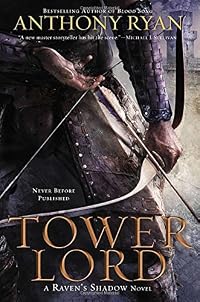
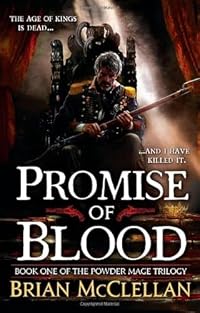
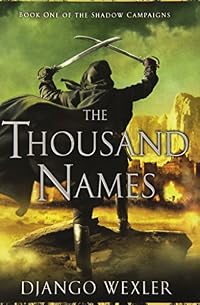

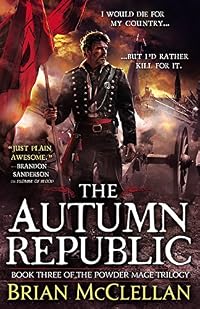

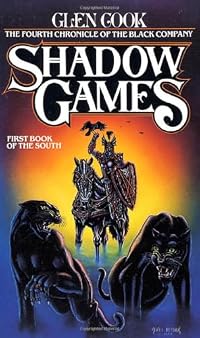
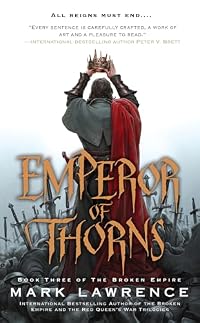
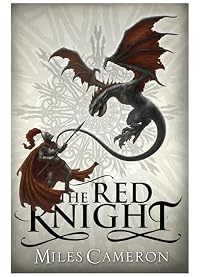
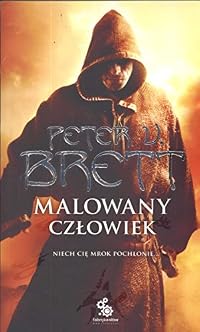
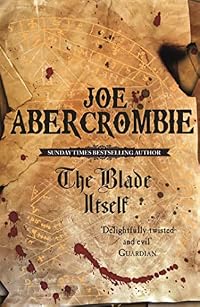
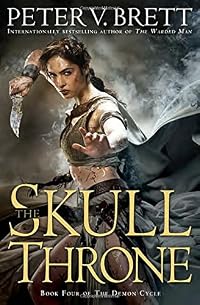
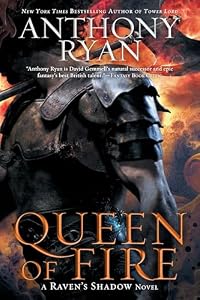
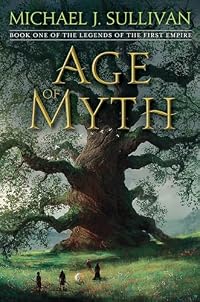
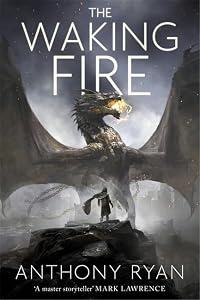
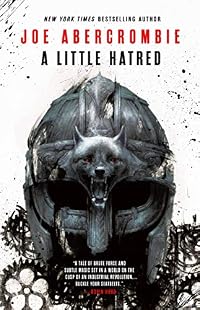
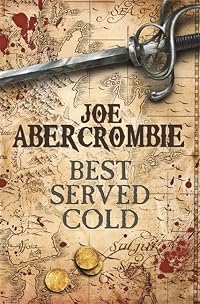

Member Recommendations
Member Reviews
This book broke my heart. And that's okay. Every once in awhile you come across a story that you really aren't sure will end with a satisfying affirmation that all will be--eventually--right with the world. It's the mark of a great story teller to keep you invested in a tale even though you're not certain how it will end; that the hero might not survive. That good people might have died in vain. That sometimes the ends might not justify the means, and it doesn't matter because both just suck.
It's depressing at times, but it's good storytelling. It's compelling narrative. And it's the mark of a ballsy writer. I can respect that.
There were some grammatical and editing issues that were rather jarring and broke up the pace for me, but show more overall I could easily overlook these because everything else about this book was SO good. The pacing of the plot in particular was brilliant and every intricacy was eventually addressed, every question answered--even small things I didn't expect would be important later. I loved this story. I loved the characters. I loved the ending. This book completely knocked my socks off and I can't wait for the next one. show less
It's depressing at times, but it's good storytelling. It's compelling narrative. And it's the mark of a ballsy writer. I can respect that.
There were some grammatical and editing issues that were rather jarring and broke up the pace for me, but show more overall I could easily overlook these because everything else about this book was SO good. The pacing of the plot in particular was brilliant and every intricacy was eventually addressed, every question answered--even small things I didn't expect would be important later. I loved this story. I loved the characters. I loved the ending. This book completely knocked my socks off and I can't wait for the next one. show less
Actual rating: 4.5 stars
First off, I'm going to clarify that I only lower my rating to 4.5 because of the grammar and punctuation mistakes. Some your/you're mix-ups, a shit-ton of compound words without the hyphen to join them, a lot of missing commas when a character addresses another by name or title, and a lot of commas where there should've been periods or at least semi-colons. Since I found this book online, I can't know for sure, but I'm quite certain that I read the self-published edition. I see here on GR that since then it's been published by an actual book publisher, so I imagine (and truly hope) that the book has gone through the hands of a proofreader to fix all these small but quite annoying mistakes.
However, it might be show more the first time in my life I was actually completely willing to ignore the terrible punctuation, even though it slowed my reading considerably, because the story is too great to be passed up just because of grammar. I'm a proofreader myself, so it's extremely hard to enjoy a book with grammar mistakes because I keep correcting them in my head instead of actually reading the story, so the fact that I was able to look past that says a lot. Although I would seriously recommend the author to know his own language better, as it would undoubtedly improve his writing.
I'm still quite new to the High Fantasy and Epic Fantasy genre. I picked up this book because some people compared the writing to that of Patrick Rothfuss, who is my favorite author. So I felt almost obliged to read it to see if it was true. And, in a way, it was. After I managed to look past the grammatical errors, I saw Anthony Ryan's writing for what it was: pretty fucking good. Different from Rothfuss, though. Whereas Pat is a poet who paints gorgeously-detailed pictures with music between each word, Anthony is a writer who shows things as they are because there's no place for adorments and decoration in a story about war. He's no romantic. But there is something there, I'm not sure what, that makes the writings feel similar even though the stories are so different. He describes very clearly and with great vocabulary, which made it all the easier to ignore the punctuation.
Despite the clear difference between the tone of both books, there is one major similarity between The Name of The Wind and Blood Song: the main character is a living legend fallen to somewhat disgrace who, for whatever reason, tells his epic life-story to a scribe. The biggest difference is that Kvothe is an intellectual smart-ass with a god-like talent for music and trouble, while Vaelin is a sad man, seemingly without any control over his fate, deprived of his childhood to be raised as a soldier.
The story of this book is epic, to say the least. It is also brutal, violent, intriguing, sad, and heart-breaking; there's hardly any happiness found in the pages of this book. I cannot tell you how much I hurt while reading it. I know it's because I'm not used to reading stories in which warriors and soldiers are protagonists.
I found Blood Song to have so much injustice, to be so brutal. For me, it didn't have enough fantasy elements by a long mile, which would've made it more bearable for me. It seems all of them were all crammed in the last 120 pages or so. Until then, the fantasy elements were a handful of small scenes that roused the mysteries of Vaelin's power. The rest was about a boy abandoned by his father, raised in a cruel and violent environment and forced to take part in a useless war. It was harsh and painfully realistic, and it hurt to read it. But don't get me wrong: I loved every minute of it. Despite the harsh reality, it was still so good, so well-written, that I somehow enjoyed it greatly. The pacing is fantastic. You can see and hear the difference between Vaelin as a little boy and Vaelin as a man, you can see how much of what he goes through ages him.
There were a few times when there were unexpected flashbacks scenes that threw me off track, but I always found my way back when the context was explained, although I felt that the context could have been mentioned at the beginning of the flashback and the momentary confusion would've been avoided. The names sometimes confused me as well, because they are all pretty similar and there are a lot of them. It took me a while to remember the names of Vaelin's group of friends and to remember which name belonged to which character (sidenote: how amazing is the name Vaelin Al Sorna? It truly sounds like a warrior, I love it.). Other than that, everything was perfect. The book could've used some more world-building perhaps, but it was detailed when it needed to, so I don't really have any complaints there. I like that the book doesn't end in a cliff-hanger and doesn't have loose ends, which bother me greatly. Of course not everything is explained because we haven't been told the entire story yet, but what is presented at the beginning is resolved at the end, and you finish the book content.
I look forward to reading the rest of the series to know how everything unfolds now that we know the answers to the biggest mysteries of the story. show less
First off, I'm going to clarify that I only lower my rating to 4.5 because of the grammar and punctuation mistakes. Some your/you're mix-ups, a shit-ton of compound words without the hyphen to join them, a lot of missing commas when a character addresses another by name or title, and a lot of commas where there should've been periods or at least semi-colons. Since I found this book online, I can't know for sure, but I'm quite certain that I read the self-published edition. I see here on GR that since then it's been published by an actual book publisher, so I imagine (and truly hope) that the book has gone through the hands of a proofreader to fix all these small but quite annoying mistakes.
However, it might be show more the first time in my life I was actually completely willing to ignore the terrible punctuation, even though it slowed my reading considerably, because the story is too great to be passed up just because of grammar. I'm a proofreader myself, so it's extremely hard to enjoy a book with grammar mistakes because I keep correcting them in my head instead of actually reading the story, so the fact that I was able to look past that says a lot. Although I would seriously recommend the author to know his own language better, as it would undoubtedly improve his writing.
I'm still quite new to the High Fantasy and Epic Fantasy genre. I picked up this book because some people compared the writing to that of Patrick Rothfuss, who is my favorite author. So I felt almost obliged to read it to see if it was true. And, in a way, it was. After I managed to look past the grammatical errors, I saw Anthony Ryan's writing for what it was: pretty fucking good. Different from Rothfuss, though. Whereas Pat is a poet who paints gorgeously-detailed pictures with music between each word, Anthony is a writer who shows things as they are because there's no place for adorments and decoration in a story about war. He's no romantic. But there is something there, I'm not sure what, that makes the writings feel similar even though the stories are so different. He describes very clearly and with great vocabulary, which made it all the easier to ignore the punctuation.
Despite the clear difference between the tone of both books, there is one major similarity between The Name of The Wind and Blood Song: the main character is a living legend fallen to somewhat disgrace who, for whatever reason, tells his epic life-story to a scribe. The biggest difference is that Kvothe is an intellectual smart-ass with a god-like talent for music and trouble, while Vaelin is a sad man, seemingly without any control over his fate, deprived of his childhood to be raised as a soldier.
The story of this book is epic, to say the least. It is also brutal, violent, intriguing, sad, and heart-breaking; there's hardly any happiness found in the pages of this book. I cannot tell you how much I hurt while reading it. I know it's because I'm not used to reading stories in which warriors and soldiers are protagonists.
I found Blood Song to have so much injustice, to be so brutal. For me, it didn't have enough fantasy elements by a long mile, which would've made it more bearable for me. It seems all of them were all crammed in the last 120 pages or so. Until then, the fantasy elements were a handful of small scenes that roused the mysteries of Vaelin's power. The rest was about a boy abandoned by his father, raised in a cruel and violent environment and forced to take part in a useless war. It was harsh and painfully realistic, and it hurt to read it. But don't get me wrong: I loved every minute of it. Despite the harsh reality, it was still so good, so well-written, that I somehow enjoyed it greatly. The pacing is fantastic. You can see and hear the difference between Vaelin as a little boy and Vaelin as a man, you can see how much of what he goes through ages him.
There were a few times when there were unexpected flashbacks scenes that threw me off track, but I always found my way back when the context was explained, although I felt that the context could have been mentioned at the beginning of the flashback and the momentary confusion would've been avoided. The names sometimes confused me as well, because they are all pretty similar and there are a lot of them. It took me a while to remember the names of Vaelin's group of friends and to remember which name belonged to which character (sidenote: how amazing is the name Vaelin Al Sorna? It truly sounds like a warrior, I love it.). Other than that, everything was perfect. The book could've used some more world-building perhaps, but it was detailed when it needed to, so I don't really have any complaints there. I like that the book doesn't end in a cliff-hanger and doesn't have loose ends, which bother me greatly. Of course not everything is explained because we haven't been told the entire story yet, but what is presented at the beginning is resolved at the end, and you finish the book content.
I look forward to reading the rest of the series to know how everything unfolds now that we know the answers to the biggest mysteries of the story. show less
The book starts with grown and captured Vaelin Al Sorna who tells his story to a historian of the enemy, before he is to fight in a duel where he is sentenced to die.
Abandoned as a child by his father at the gate of the Sixth Order of the Faith, which is sort of a military monastic order. The boys go through brutal training and not all of them survive it. Vaelin emerges as a leader of the group and becomes the most feared and greatest warrior known as the Hope Killer.
The book starts where it ends which was nice touch and while you knew what would happen, you will still wonder how it became and how he turned out the way he did.
There’s lot of people in the book and at first I was really lost who was who (even if there’s character list show more in the end) and trying to keep them sorted. The book starts little slow part when it picks up, it really picks up! Makes you glad you didn’t give up in the beginning.
The time when the boys were training was interesting and it showed what molded them when they were growing but it felt at times like it went on forever.
I wish it was better explained in what time we were. At times it suddenly jumped years ahead and you realize that Vaelin isn’t 15-year old kid anymore. Made it confusing but that’s my only major complain about the book.
I liked Vaelin and it was interesting to see him growing up. He’s not entirely good but he’s not entirely bad either. I’m curious to see if he will meet his father in later books because there’s some unfinished business there.
The book ended too soon and I really wanna get my hands on the next one! show less
Abandoned as a child by his father at the gate of the Sixth Order of the Faith, which is sort of a military monastic order. The boys go through brutal training and not all of them survive it. Vaelin emerges as a leader of the group and becomes the most feared and greatest warrior known as the Hope Killer.
The book starts where it ends which was nice touch and while you knew what would happen, you will still wonder how it became and how he turned out the way he did.
There’s lot of people in the book and at first I was really lost who was who (even if there’s character list show more in the end) and trying to keep them sorted. The book starts little slow part when it picks up, it really picks up! Makes you glad you didn’t give up in the beginning.
The time when the boys were training was interesting and it showed what molded them when they were growing but it felt at times like it went on forever.
I wish it was better explained in what time we were. At times it suddenly jumped years ahead and you realize that Vaelin isn’t 15-year old kid anymore. Made it confusing but that’s my only major complain about the book.
I liked Vaelin and it was interesting to see him growing up. He’s not entirely good but he’s not entirely bad either. I’m curious to see if he will meet his father in later books because there’s some unfinished business there.
The book ended too soon and I really wanna get my hands on the next one! show less
I think this book was solid, but the comparisons to Name of the Wind are a bit farfetched. This book rushes a lot. It doesn't feel as much like an enjoyable story as it does a lesson (though it's not clear in what), and this makes it less enjoyable to relax and lose oneself in. The story itself was good, though not perfect, and the characters were a bit less developed than I would have expected. Most of all, I found the format to be a bit awkward. The present day vs. long historical sections were not as well done as in the Name of the Wind, and often ruined bits of the story by telling what would happen in the next historical part (which I found extremely frustrating). Overall, worth reading for fans of the genre, but not a book I'd show more recommend to anyone else. show less
The story of Blood Song is about a young boy who trains and grows up to become a leader and one of the greatest warriors in the kingdom. It's a tried-and-true formula in epic fantasy which by all rights I should be sick to death of by now, but Anthony Ryan manages to pull it off and still make it feel like something new.
Take how the book starts, for example, opening on an encounter between a scribe and a
prisoner who is being transported across the sea to answer for his crimes. A duel to the death is the only end left for Vaelin al Sorna, also known as "Hope Killer". With such an epithet, you just can't help but wonder what manner of person this must be, but I was also intrigued by the prisoner's soft spokenness and eloquence, as well show more as the fact everyone seems to treat him with deference despite his chains.
Vaelin's story is recounted by the scribe, a mode of storytelling which is not uncommon even outside of literature, but in this case it is deftly executed, providing a deeply immersive experience for the reader. As a child, the main character is sent to the Sixth Order to train in the martial ways of the Faith. It's a harsh life fraught with peril, while Vaelin and his peers are driven relentless by their instructors to learn everything from doctrine and history to survival methods or ways to wield a sword.
Generally, I'm not a fan of this trope; personally, I find the training and "growing up" part of the hero's story is usually the most tedious, and I'm usually looking forward to getting it over with. So imagine my surprise when these sections of the book turned out to be the most rewarding aspect for me. I loved reading about Vaelin's experiences in the Sixth Order, especially some of the more challenging trials. I very much enjoyed the bonds he shared with his fellow brothers of the Faith, the fact that any conflicts between the boys are negated by the knowledge that they are all in this together.
In fact, I liked this section a lot more than the later parts of the book, in which we see Vaelin go off to fight big battles and become embroiled in political plots and secretive magics. That's the kind of stuff I normally live for in my epic fantasy, so you can imagine just how much I enjoyed the first half of the novel for it to be my favorite part! Not that the second half is a slouch -- I think most people would find it more interesting, actually, but I couldn't help developing a soft spot for Vaelin back when he was just a boy and still retained some of his innocence towards the world.
And yet, I have nothing but good things to say about the portrayal of Vaelin, or any of the characters, in all the stages of his life. The relationships forged early between him and his brothers continue to evolve as they face their hardships together, and when enemies become friends or friends become enemies, the transformations are both a surprise but also believable. Vaelin himself is good and honorable at his core, and his desire to transcend the expectations of his order and be a better person for those around him is an engrossing study into the themes of sacrifice, morals and personal beliefs.
Highly recommended. I can just imagine the reactions of readers who picked this book up before it was bought by a major publisher. A gem like this doesn't come along very often, and I would say it stands out even on a shelf beside some of the major epic fantasy novels these days. show less
Take how the book starts, for example, opening on an encounter between a scribe and a
prisoner who is being transported across the sea to answer for his crimes. A duel to the death is the only end left for Vaelin al Sorna, also known as "Hope Killer". With such an epithet, you just can't help but wonder what manner of person this must be, but I was also intrigued by the prisoner's soft spokenness and eloquence, as well show more as the fact everyone seems to treat him with deference despite his chains.
Vaelin's story is recounted by the scribe, a mode of storytelling which is not uncommon even outside of literature, but in this case it is deftly executed, providing a deeply immersive experience for the reader. As a child, the main character is sent to the Sixth Order to train in the martial ways of the Faith. It's a harsh life fraught with peril, while Vaelin and his peers are driven relentless by their instructors to learn everything from doctrine and history to survival methods or ways to wield a sword.
Generally, I'm not a fan of this trope; personally, I find the training and "growing up" part of the hero's story is usually the most tedious, and I'm usually looking forward to getting it over with. So imagine my surprise when these sections of the book turned out to be the most rewarding aspect for me. I loved reading about Vaelin's experiences in the Sixth Order, especially some of the more challenging trials. I very much enjoyed the bonds he shared with his fellow brothers of the Faith, the fact that any conflicts between the boys are negated by the knowledge that they are all in this together.
In fact, I liked this section a lot more than the later parts of the book, in which we see Vaelin go off to fight big battles and become embroiled in political plots and secretive magics. That's the kind of stuff I normally live for in my epic fantasy, so you can imagine just how much I enjoyed the first half of the novel for it to be my favorite part! Not that the second half is a slouch -- I think most people would find it more interesting, actually, but I couldn't help developing a soft spot for Vaelin back when he was just a boy and still retained some of his innocence towards the world.
And yet, I have nothing but good things to say about the portrayal of Vaelin, or any of the characters, in all the stages of his life. The relationships forged early between him and his brothers continue to evolve as they face their hardships together, and when enemies become friends or friends become enemies, the transformations are both a surprise but also believable. Vaelin himself is good and honorable at his core, and his desire to transcend the expectations of his order and be a better person for those around him is an engrossing study into the themes of sacrifice, morals and personal beliefs.
Highly recommended. I can just imagine the reactions of readers who picked this book up before it was bought by a major publisher. A gem like this doesn't come along very often, and I would say it stands out even on a shelf beside some of the major epic fantasy novels these days. show less
I’ve been curious about this one for a while, and I finally picked it up when the Fantasy Aficionados group chose it for this month’s read. I liked it quite a bit. Lately, I’ve gotten away from these longer epic fantasy coming-of-age things, but it was good to sink into this one and follow Vaelin Al Sorna’s journey. I liked the camaraderie and brotherhood that grew among the boys during their training, and I thought their ultimate badassery was well-developed. I liked that the story contained glimpses into how Vaelin was perceived by the people the Order fought against, especially through Verniers’ narration. The suggestion that the reader is getting the true story and that not all of it is being shared with Verniers was show more intriguing, but I wanted to know what else Vaelin held back.
I was frustrated by all the secret-keeping Vaelin did.I also wish he hadn’t made Sherin’s decision for her at the end! I thought throughout the book he should have been more forthcoming with his friends. I don’t know what harm it would do for Barkus/not Barkus to know there was an attempt on Vaelin’s life, the first secret he keeps at Sollin’s orders. Ugh, those things always come out in the open, Vaelin! I’m still not sure I understand the deal with the blood song or the wolf—I had a wild theory about the wolf, but sadly, I was wrong—but maybe that’s explained in later books.
There’s a ton going on in this book, with lots of names, places, and vocabulary to learn. There’s a handy guide to the characters in the back of the book.
An enjoyable brick of a book. I’m glad I read it. show less
I was frustrated by all the secret-keeping Vaelin did.
There’s a ton going on in this book, with lots of names, places, and vocabulary to learn. There’s a handy guide to the characters in the back of the book.
An enjoyable brick of a book. I’m glad I read it. show less
Despite the fact that most of this book is piecemealed together from borrowed pieces of other popular fantasy series I still really liked this book. The main reason I was reluctant to read it despite the high rating is the religious themes the description implies it has. Don't let that stop you from reading it the religious themes actually don't detract from the novel like I was worried they would. There were two main problems with the novel that kept me from giving it five stars. First the entire framing story of a scribe writing the story of a great warrior (stolen from The Name of the Wind) makes no sense because the plot he is writing down is different from the plot he mentions in the interludes. And second at about 2/3's of the way show more through the novel the once linear structure jumps ahead several years skipping a great deal of events and then occasionally backtracking to cover some but not all of them. show less
Members
- Recently Added By
Lists

Jean's Sci Fi/Fantasy Reading list
189 works; 12 members

Sarah's Wish List
48 works; 1 member

SantaThing 2014 Gifts
299 works; 17 members

infjsarah's wishlist
408 works; 2 members

Books Read in 2014
2,341 works; 89 members

Recommend Fantasy Books
100 works; 1 member
Author Information

Some Editions
Awards and Honors
Distinctions
Series

Belongs to Publisher Series
Science Fiction Book Club (1379118)
Work Relationships
Common Knowledge
- Canonical title
- Blood Song
- Original title
- Blood Song
- Original publication date
- 2012-01-22
- People/Characters*
- Vaelin Al Sorna
- Epigraph
- Raven's shadow
Sweeps across my heart,
Freezes the torrent of my tears
-Seordah poem, author unknown - Dedication
- For Dad, who never let me give up
- First words
- He had many names.
- Last words*
- (Click to show. Warning: May contain spoilers.)Verderop in het oosten kondigde een stofwolk de komst van een groep ruiters aan, met aan het hoofd de rijzige gestalte van procureur-generaal Velsus, die zichtbaar haast had zijn buit in ontvangst te nemen.
- Blurbers*
- Sullivan, Michael J.
- Original language
- English
*Some information comes from Common Knowledge in other languages. Click "Edit" for more information.
Classifications
Statistics
- Members
- 1,924
- Popularity
- 10,980
- Reviews
- 77
- Rating
- (4.17)
- Languages
- 11 — Czech, Dutch, English, French, German, Hungarian, Italian, Portuguese, Romanian, Spanish, Turkish
- Media
- Paper, Audiobook, Ebook
- ISBNs
- 34
- ASINs
- 17