On This Page
Description
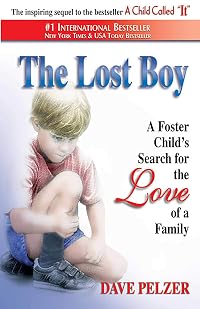
Biography & Autobiography. Family & Relationships. Self-Improvement. Nonfiction. HTML:Imagine a young boy who has never had a loving home. His only possesions are the old, torn clothes he carries in a paper bag. The only world he knows is one of isolation and fear. Although others had rescued this boy from his abusive alcoholic mother, his real hurt is just begining — he has no place to call home.This is Dave Pelzer's long-awaited sequel to A Child Called "It". In The Lost Boy, he show more answers questions and reveals new adventures through the compelling story of his life as an adolescent. Now considered an F-Child (Foster Child), Dave is moved in and out of five different homes. He suffers shame and experiences resentment from those who feel that all foster kids are trouble and unworthy of being loved just because they are not part of a "real" family.
Tears, laughter, devastation and hope create the journey of this little lost boy who searches desperately for just one thing — the love of a family. show less
Tags
Recommendations



Member Reviews
David Pelzer continues the story he began in A Child Called It, picking up from the time he entered foster care. A very confused boy who wants to be 'good' and be loved, he seeks out approval in sometimes disastrous ways.
I found this very true to the lived experiences I've witnessed as a social worker. These days, David would have been diagnosed with Reactive Attachment Disorder and provided additional services, as well as his foster parents would have been. Taking place in the early days of the child protection and foster care system, it was evident that all the people involved were doing the best they could with what they had to work with. I commend Pelzer, his workers and his various parental figures for their fortitude. People who show more call Pelzer's memoirs unbelievable or unrelatable have no idea what they're talking about. show less
I found this very true to the lived experiences I've witnessed as a social worker. These days, David would have been diagnosed with Reactive Attachment Disorder and provided additional services, as well as his foster parents would have been. Taking place in the early days of the child protection and foster care system, it was evident that all the people involved were doing the best they could with what they had to work with. I commend Pelzer, his workers and his various parental figures for their fortitude. People who show more call Pelzer's memoirs unbelievable or unrelatable have no idea what they're talking about. show less
While this book wasn't as graphic as the first novel, " A Child Called IT", it was heart-breaking nonetheless. I cannot believe the strength that Dave Peltzer demonstrated throughout his young life, and the "problems" that he had as far as his struggles seemed mundane compared to what he went through. It irked me to the core that his mother was not thrown in jail for the rest of her life, regardless of her "mental illness", so should have been tossed in jail, or even a mental institution for the remander of her life for what she did to her own child, but instead she walked free.
This story goes into depth looking at the trial between the state and Mrs. Pelzer, as well as Daves journeys through different foster families and trying to show more find his place in the world, as well as his on-going struggles to fit in and live a normal life. Not only did his mother torment him, but the kids in his schools as well as his foster families tormented him as well, and it goes to show that you should NEVER pick on another child, because you NEVER know what they are going through. My heart absolutly broke for this little boy, and at an age when kids are going to be a reality to me in the near future, it breaks my heart even more to know that a parent can subject there child to such a horrific childhood.
Everyone should read this book, it's not going to make you happy, or uplift you, but it's still essential to read if only to open your eyes to the realities of child abuse and the need for not only foster parents, but for exceptance for children that are different, and for the parents that foster them. show less
This story goes into depth looking at the trial between the state and Mrs. Pelzer, as well as Daves journeys through different foster families and trying to show more find his place in the world, as well as his on-going struggles to fit in and live a normal life. Not only did his mother torment him, but the kids in his schools as well as his foster families tormented him as well, and it goes to show that you should NEVER pick on another child, because you NEVER know what they are going through. My heart absolutly broke for this little boy, and at an age when kids are going to be a reality to me in the near future, it breaks my heart even more to know that a parent can subject there child to such a horrific childhood.
Everyone should read this book, it's not going to make you happy, or uplift you, but it's still essential to read if only to open your eyes to the realities of child abuse and the need for not only foster parents, but for exceptance for children that are different, and for the parents that foster them. show less
3.5 stars
This continues Dave Pelzer’s memoirs after “A Child Called ‘It’”. At 12(?) years old, he is finally rescued from his abusive home life (particularly his mother) by a police officer and placed in a foster home. Until he turns 18, he goes through a number of foster homes, though except for the first one, through no fault of his own. None of his foster homes were bad to him.
This was good. The first chapter did back up just a little bit to give the reader a taste of what he’d had to endure previous to being removed from his biological family’s “care”, before moving on to follow him until he no longer needed to be taken care of via foster homes. He has all good things to say about foster care and the love and show more support he received after coming out of his previously abusive life. He talks more about this in an Afterword, as well as adding notes from one of his foster mothers, a teacher, and other people who helped him during this stage of his life. show less
This continues Dave Pelzer’s memoirs after “A Child Called ‘It’”. At 12(?) years old, he is finally rescued from his abusive home life (particularly his mother) by a police officer and placed in a foster home. Until he turns 18, he goes through a number of foster homes, though except for the first one, through no fault of his own. None of his foster homes were bad to him.
This was good. The first chapter did back up just a little bit to give the reader a taste of what he’d had to endure previous to being removed from his biological family’s “care”, before moving on to follow him until he no longer needed to be taken care of via foster homes. He has all good things to say about foster care and the love and show more support he received after coming out of his previously abusive life. He talks more about this in an Afterword, as well as adding notes from one of his foster mothers, a teacher, and other people who helped him during this stage of his life. show less
In many ways I found this book even more disturbing than the first one. That some families are totally disfunctional is sad, even tragic. But the fumbling way society goes about trying to help those who have managed to survive such a life is a condemnation of us all.
First off, narrator Brian Keeler does an excellent job handling the many man, woman, and boy voices required to narrate this memoir. He uses an understated delivery ranging from Martin Donovan to Tommy Chong.
I plan on taking in a trio of book related to Pelzer's life this summer and after being inspired by my nephew picking up A Child Called "It". Apparently, there is some controversy around the facts of this life. I don't know. How would I? Maybe things not factually accurate are psychologically accurate. I just finished Speak, Memory and the great writer there spoke of needed to get facts and corrections from cooperative family members to get his own story right. This foster child estranged from his parents hardly had the same show more options.
Frequent dialog I know is a feature of typical memoirs and I find it hard to believe any memory can be that good, but other than this is a moving recollection that reads true enough me. Backmatter include testimonial from foster care and probation figures that new Pelzer as a lost child in the '70s. The over goal here is not woe-is-me but a clarion call for more, better screened foster parents and undermining prejudice toward foster children. Worth goals, indeed. show less
I plan on taking in a trio of book related to Pelzer's life this summer and after being inspired by my nephew picking up A Child Called "It". Apparently, there is some controversy around the facts of this life. I don't know. How would I? Maybe things not factually accurate are psychologically accurate. I just finished Speak, Memory and the great writer there spoke of needed to get facts and corrections from cooperative family members to get his own story right. This foster child estranged from his parents hardly had the same show more options.
Frequent dialog I know is a feature of typical memoirs and I find it hard to believe any memory can be that good, but other than this is a moving recollection that reads true enough me. Backmatter include testimonial from foster care and probation figures that new Pelzer as a lost child in the '70s. The over goal here is not woe-is-me but a clarion call for more, better screened foster parents and undermining prejudice toward foster children. Worth goals, indeed. show less
I believe I did read "A Child Called 'It'" to which this book is a sequel. It chronicles the author's time from around age 9 to around age 18 most of which was spent in foster care.
The author wants his mother to love him yet he also fears that he will have to go back to living with her. He also wants answers to questions that no one can answer. I too question what happened that changed his family dynamic since he remembers being part of the family and going to the river prior to the abuse--especially since it seemed to all be directed at the author. I wonder if one of the other boys ended up on the receiving end of her abuse once David left home and was put in the foster system. I wonder what was going through the mind of the first show more mental health professional David saw. Had he been "poisoned" by the mother's thoughts prior to talking to David? Or was he just a quack?
As a result of David's struggle for acceptance, he falls in with some of the wrong crowds while growing up because they pretend to accept him but then use him as the patsy when the occasion suits them. That's sad. show less
The author wants his mother to love him yet he also fears that he will have to go back to living with her. He also wants answers to questions that no one can answer. I too question what happened that changed his family dynamic since he remembers being part of the family and going to the river prior to the abuse--especially since it seemed to all be directed at the author. I wonder if one of the other boys ended up on the receiving end of her abuse once David left home and was put in the foster system. I wonder what was going through the mind of the first show more mental health professional David saw. Had he been "poisoned" by the mother's thoughts prior to talking to David? Or was he just a quack?
As a result of David's struggle for acceptance, he falls in with some of the wrong crowds while growing up because they pretend to accept him but then use him as the patsy when the occasion suits them. That's sad. show less
After the heart-rending tale told in 'A Child Called It', this book is a pretty light read. Dave is removed from the horribly abusive home he nearly died in, and placed in foster care. I could not help but feel angry and frustrated at Dave's father's enabling of the abuse. Although Dave faces issues, nothing is as bad as what he had come from, so this book really is light in comparison to the first. It just basically tells us about what happened after Dave was rescued, and points out some issues in the child protection services/welfare system.
Members
- Recently Added By
Lists

Books Tagged Abuse
152 works; 4 members

Books Read in 2000
115 works; 4 members
Author Information

17 Works 19,128 Members
Some Editions
Awards and Honors
Series

Work Relationships
Common Knowledge
- Canonical title
- The Lost Boy : A Foster Child's Search for the Love of a Family
- Original title
- The Lost Boy: A Foster Child's Search for the Love of a Family
- Original publication date
- 1997
- People/Characters
- David "Dave" Pelzer; Steven Ziegler; Joyce Woodworth; Pamela Gold; Mary; Rudy Catanze (show all 22); Lilian Catanze; Michael Nulls; Joanne Nulls; Jody Jones; Vera Jones; John Walsh; Linda Walsh; Gordon Hutchenson; David Howard; Paul Brazell; William D. Brazell; Sandy Marsh; Michael A. Marsh; Harold Turnbough; Alice Turnbough; Stephen Pelzer
- Important places
- San Francisco, California, USA; Daly City, California, USA
- Dedication
- (Many names followed by:)
Bless you all, for,
'It takes a community to save a child.' - First words
- Winter 1970, Daly City, California - I'm alone.
[Epilogue] December 1993, Sonoma County, California--I'm alone.
[Perspectives on Foster Care: David Pelzer] There is not a doubt in my mind that had I stayed with my biological mother much longer, I would have definitely been killed.
[Perspectives on Foster Care: Alice Turnbough] Dave came to us when he was 13 years old.
[Perspectives on Foster Care: Dennis Tapley] I have been teaching for more than 20 years.
[Perspectives on Foster Care: Carl Miguel] Dave Pelzer, a seriously abused child, was booked into the San Mateo County Juvenille Hall in 1974. (show all 7)
[Perspectives on Foster Care: Michael Marsh, Mentor] one day in 1976, in the quiet, blue-collar California neighborhood of Menlo Park, I walked out of my garage and was disheartened to view the driveway scene next door. - Last words
- (Click to show. Warning: May contain spoilers.)[Epilogue] Stephen and I are a family.
(Click to show. Warning: May contain spoilers.)"Now the adventure begins!"
(Click to show. Warning: May contain spoilers.)[Perspectives on Foster Care: David Pelzer] There is not a doubt in my mind that had I stayed with my biological mother much longer, I would have definitely been killed.
(Click to show. Warning: May contain spoilers.)[Perspectives on Foster Care: Alice Turnbough] I'm proud to be David's mother.
(Click to show. Warning: May contain spoilers.)[Perspectives on Foster Care: Dennis Tapley] He is to be congratulated for his success.
(Click to show. Warning: May contain spoilers.)[Perspectives on Foster Care: Carl Miguel] And as he walked back into juvenile hall in 1989, as a counselor, I felt a tear in my eye and simply said, "Bravo."
(Click to show. Warning: May contain spoilers.)[Perspectives on Foster Care: Michael Marsh, Mentor] I love you. - Blurbers
- Bradshaw, John
- Original language
- English US
Classifications
- Genres
- Biography & Memoir, Nonfiction, General Nonfiction
- DDC/MDS
- 362.76092 — Society, government, & culture Social problems and social services Social Welfare Child welfare Sexual Abuse
- LCC
- HV881 .P45 — Social sciences Social pathology. Social and public welfare. Criminology Social pathology. Social and public welfare. Protection, assistance and relief Special classes Children Destitute, neglected, and abandoned
- BISAC
Statistics
- Members
- 4,444
- Popularity
- 3,334
- Reviews
- 75
- Rating
- (3.82)
- Languages
- 9 — Danish, Dutch, English, French, German, Indonesian, Japanese, Spanish, Swedish
- Media
- Paper, Audiobook, Ebook
- ISBNs
- 44
- ASINs
- 11