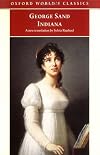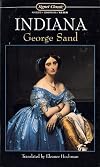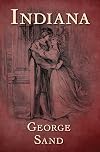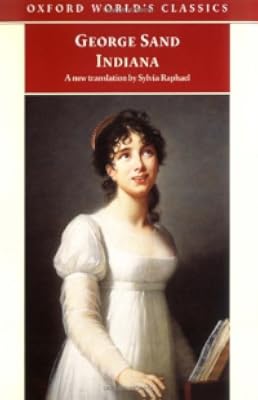
Indiana
by George Sand
On This Page
Description
A noblewoman travels from colonial Africa to revolutionary France in search of love in this nineteenth-century romantic classic.On the Île Bourbon off the coast of Madagascar, Indiana is miserable in her marriage to the cold Colonel Delmare. Although she has a friendly companion in the ever-present Englishman Sir Ralph, she yearns to feel passion and desire.
When she catches the interest of the handsome young Raymon de Ramiere, Indiana is willing to take any risk, including running away show more to France as the July Revolution rages in Paris. But after she falls ill, she will begin a transformation that could bring about her happiness—or her downfall.
The first novel Amantine Aurore Dupin published under the pseudonym George Sand, Indiana was an auspicious debut from one of the most fascinating and daring women of the early nineteenth century, a rebellious artist who defied societal expectations and went on to become one of the major names in French literature. Classic Literature. Historical Fiction. Fiction. Romance. show less
Tags
Recommendations



















Member Reviews
I have been reading two Victorian novels simultaneously, which is weirdly lonely, so many heavily felt and ponderously expressed sentiments so foreign to my own, all at once. Of the two, Indiana is not my favourite: the overpowering concern with convention bedraggles the proceedings--not only the romantic-marital-sexual conventions that tear lives apart, but also the unconventional adherence to convention that Sand ultimately approves of and adheres to--she's all for histrionics, for sad lovers loyal unto death and finding everythingineachother'seyes in that nineteenth-century codependent Jane Eyre way, it seems; what she's against is actually playas, and what she's for, a mildly cartoonishly tragical version of True Wuv, and in that show more sense although she no doubt wore trousers and smoked cigars and was an important bohemian feminist, and deserves her vanguard-luminary status in that sense, her view of relationships between men and women--that of the young Sand who wrote this at least--actually comes across as deeply conservative in terms of her view of love while also being advanced in terms of her insistence that women be let govern themselves and highly moral from that perspective. The little character insights are as good as many of her contemporaries but not as good as the best (people undergo conversions this way and that at the behest of the plot), and so what you're left with is a sad story of a destructive love affair whose ruling humours (the need for utmost total unreal devotion, the need for a man to have mistresses, great-man-of-history worship, the the choice of suicide in this bad old world even over life into which a new hope has just come because you're just so tired, and the representation of this choice as highly moral) have become largely historical ones. I felt sad for Indiana, but also like this is maybe more a book for young nineteenth-century women married off to cranky old colonels who deal with it by many obscure psychosomatic ailments (to be fair, women couldn't own property, etc., so she couldn't leave, and what other comeback did she have?) and who find the idea of a lovers' suicide pact irresistibly romantic and who would love to go to pieces emotionally and be directed from there as long as their lover-director is ardent and devoted and not cranky like their husband or flighty like the other romantic rival and early favourite. I don't want to be unsympathetic to Indiana but this novel does mostly leave me with the sense that everybody back then was doing a piss-poor fucking job (a service in itself, important in its day, etc.!). show less
This isn't typically the kinda book I read, here leaning more on the Romantic/Idealism end of the genre spectrum. That said, Sand writes well. Eloquently. This is her first novel, from around 1832. As a story there are a few creeps that oppress and use (even kill) representing different aspects of French society (the retrograde parts). It's fairly realist until towards the end when it radically shifts gears and in the process diminishes the power of Indiana as a character and becomes something else altogether. Perhaps, I am to believe they have found their little piece of utopia away from the urban centers and living off the land as well as slowly buying freedom for their slaves is enough. I just felt it ended on a minor note.
Indiana is in a loveless marriage when she falls madly in love with a Parisian for whom she‘s ready to abandon all. Set contemporaneously when it was written, 1831, you have to imagine that Indiana‘s actions would likely destroy her life. The romance is over-the-top, apparently common during this period. But the author, a woman writing under a pen name, was on the cutting edge of women‘s rights and she held very strong beliefs about women in society. The author‘s practical and philosophical opinions about France in the 1830s are worth reading if you can get past the way, way overdone forbidden love story. The author complains vociferously in multiple prefaces about the censorship this book suffered. The MC ultimately moved back show more to her home island of Reunion (then íle Bourbon) and its descriptions are lovely. show less
This an interesting novel. While, if you occasionally enjoy a good melodrama, this is a good selection, I found it inconsistent at times. The protagonist is a classically ethereal beauty who is downtrodden by her husband, who is in love with a scoundrel, and who is beloved by a strong and selfless male friend. Nothing unusual there. Stormy, passionate moments define the entire story until the heavens open and provide a peaceful, idyllic ending. Nothing unusual there either. I think the strangeness of the story is that the author published this novel under a male pseudonym, and engages in the uncommon habit of addressing the reader, as a man observing female behavior. I found myself thinking of Shakespeare's "play within a play". Clearly show more the author was working through the natural character of women, if there is such a thing. See what you think by the idyllic end! show less
3.5-stars, really.
I didn't enjoy reading this book very much but I did enjoy the pondering and reflection that has resulted. The used of allegory was excellent and the portrait of life for a married woman in the early 1800s was portrayed achingly. I also enjoyed the Creole threads of the story. So - lots of interesting things going on but it was inconsistently delivered. Translation issue? Maybe? There was one section in particular that droned on about the political climate of France and, holy hell, it sucked. to be fair, I had recently read [b:War and Peace|290979|War and Peace|Leo Tolstoy|http://photo.goodreads.com/books/1320544190s/290979.jpg|4912783] and [b:Les Misérables|2410774|Les Misérables|Victor show more Hugo|http://photo.goodreads.com/books/1320480043s/2410774.jpg|3208463] right before INDIANA, and Hugo and Tolstoy write political asides like nobody's business...so in contrast, Sand was lacking. show less
I didn't enjoy reading this book very much but I did enjoy the pondering and reflection that has resulted. The used of allegory was excellent and the portrait of life for a married woman in the early 1800s was portrayed achingly. I also enjoyed the Creole threads of the story. So - lots of interesting things going on but it was inconsistently delivered. Translation issue? Maybe? There was one section in particular that droned on about the political climate of France and, holy hell, it sucked. to be fair, I had recently read [b:War and Peace|290979|War and Peace|Leo Tolstoy|http://photo.goodreads.com/books/1320544190s/290979.jpg|4912783] and [b:Les Misérables|2410774|Les Misérables|Victor show more Hugo|http://photo.goodreads.com/books/1320480043s/2410774.jpg|3208463] right before INDIANA, and Hugo and Tolstoy write political asides like nobody's business...so in contrast, Sand was lacking. show less
Ca commencait comme du Jane Austen, mais rapidement un des persos devient vraiment malfaisant, et jusqu'au dernières 20 p on ne sait pas si ca va finir en double suicide ou en mariage et d'ailleurs elle nous fait un plot twist dans la conclusion
Written by the notorious Amantine-Lucile-Aurore Dupin - pen name: George Sand, who flaunted convention this is never-the-less a romantic novel. Female desire constrained by society - a little more risque than Jane Austen's work and set in France and a colonial possession of France.
Members
- Recently Added By
Lists

Female Author
1,235 works; 64 members

500 Great Books by Women
507 works; 60 members

Leah Eady's Book Mentions
18 works; 2 members

Book wishlist
78 works; 1 member

The Complete Rory Gilmore Reading List
506 works; 5 members

In Our Time books
4,934 works; 2 members
Author Information

453+ Works 6,422 Members
George Sand began life as Aurore Dupin, the daughter of a count and a dressmaker. Educated both on her aristocratic grandmother's estate and in a Parisian convent, at 18 she married Casimer Dudevant, a provincial gentleman whose rough temperament was the opposite of her own, and from whom she obtained a separation several years later. At 31 she show more moved to Paris, where she changed her name and plunged into the bohemian world of French romanticism. Frequently dressed in men's clothing, she participated actively in literary debates, cultural events, and even the revolution of 1848. Sand was friend and correspondent with many of the major artists and writers of her age, including Balzac, Flaubert, and Liszt. Her love affairs with the poet Musset and the composer Chopin were the stuff of legend, chronicled in her own Story of My Life. Sand's immensely popular novels ranged from sentimental stories of wronged women, to utopian socialist fictions, such as her masterpiece in Consuelo, 1842, to explorations of pastoral themes written when she retired, late in life, to her estate in Berry. Though frequently dismissed as overblown or too sentimental, Sand's fiction has recently undergone a revaluation, emerging as an influential body of women's writing. As both a writer and an intellectual personality, Sand is a central figure in nineteenth-century French cultural life. George Sand died in 1876 (Bowker Author Biography) show less
Awards and Honors
Notable Lists
Series
Belongs to Publisher Series
Work Relationships
Common Knowledge
- Canonical title
- Indiana
- Original title
- Indiana
- Original publication date
- 1832
- People/Characters
- Indiana Delmare; Colonel Delmare; Sir Ralph Brown; Noun; Raymon de Ramière
- Important places
- Brie, France (region); Paris, France; Réunion, France (as Bourbon Island)
- First words
- On a chilly wet autumn evening, in a little manor house in Brie, three people, lost in thought, were solemnly watching the embers burn in the fireplace and the hands make their way slowly round the clock.
Classifications
Statistics
- Members
- 763
- Popularity
- 36,724
- Reviews
- 11
- Rating
- (3.39)
- Languages
- 10 — Danish, Dutch, English, French, German, Galician, Italian, Russian, Spanish, Turkish
- Media
- Paper, Audiobook, Ebook
- ISBNs
- 73
- ASINs
- 16