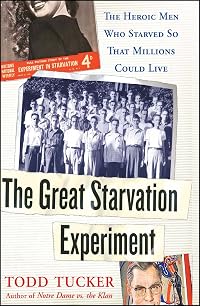
The Great Starvation Experiment: The Heroic Men Who Starved so That Millions Could Live
by Todd Tucker
On This Page
Description
What does it feel like to starve? To feel your body cry out for nourishment, to think only of food? How many fitful, hungry nights must pass before dreams of home-cooked meals metastasize into nightmares of cannibalism? Why would anyone volunteer to find out? In The Great Starvation Experiment, historian Todd Tucker tells the harrowing story of thirty-six young men who willingly and bravely faced down profound, consuming hunger. As conscientious objectors during World War II, these men were show more eager to help in the war effort but restricted from combat by their pacifist beliefs. So, instead, they volunteered to become guinea pigs in one of the most unusual experiments in medical history -- one that required a year of systematic starvation. Dr. Ancel Keys was already famous for inventing the K ration when the War Department asked for his help with feeding the starving citizens of Europe and the Far East at the war's end. Fascists and Communists, it was feared, could gain a foothold in war-ravaged areas. "Starved people," Keys liked to say, "can't be taught Democracy." The government needed to know the best way to rehabilitate those people who had been severely underfed during the long war. To study rehabilitation, Keys first needed to create a pool of starving test subjects. Gathered in a cutting-edge lab underneath the football stadium at the University of Minnesota, Dr. Keys' test subjects forsook most food and were monitored constantly so that Dr. Keys and his scientists could study the effects of starvation on otherwise healthy people. While the weight loss of the men followed a neat mathematical curve, the psychological deterioration was less predictable. Some men drank quarts and quarts of water to fill their empty stomachs. One man chewed as many as forty packs of gum a day. One man mutilated himself to escape the experiment. Ultimately only four of the men were expelled from the experiment for cheating -- a testament to the volunteers' determination and toughness. To prevent atrocities of the kind committed by the Nazi doctors, international law now prevents this kind of experimentation on healthy people. But in this remarkable book, Todd Tucker captures a lost sliver of American history -- a time when cold scientific principles collided with living, breathing human beings. Tucker depicts the agony and endurance of a group of extraordinary men whose lives were altered not only for the year they participated in the experiment, but forever. show lessTags
Recommendations



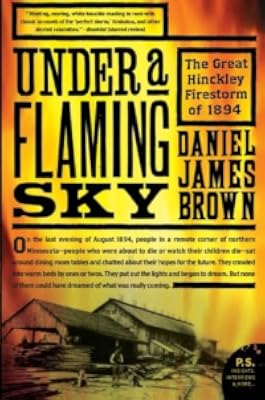
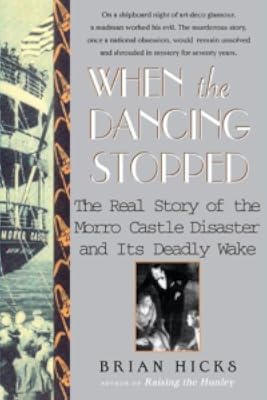
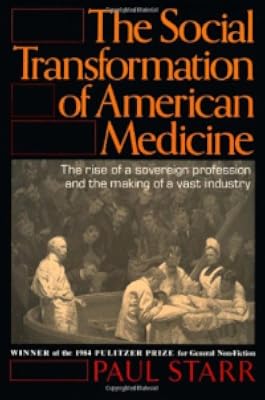

Member Recommendations

Member Reviews
I am actually surprised that this book is not more popular. It is a highly readable account of a fascinating medical study conducted on conscientious objectors during World War II. Anyone interested in history, WWII, or medicine will appreciate this lightning fast read.
The book covers a lot of ground at a fast clip. It discusses the rise of Ancel Keys (the starvation study's architect), the status of conscientious objectors during WWII (something I knew nothing about), the lives of some of the study participants, the physical and psychological effects of the study, the study's impact on medicine (it is still cited today), and medical ethics. I couldn't put the book down.
I read a lot of medical history books that are written for the show more layperson, and have read books on smallpox, polio, typhus, ebola, the flu pandemic of 1918, the plague, tuberculosis, etc. Many of those books get bogged down with highly technical details that contribute little to the overall story, but in my opinion, this book joins the ranks of The Immortal Life of Henrietta Lacks and The Hot Zone: The Terrifying True Story of the Origins of the Ebola Virus as books that provide enough technical detail to further the narrative but not bore the reader. I highly, highly recommend it. show less
The book covers a lot of ground at a fast clip. It discusses the rise of Ancel Keys (the starvation study's architect), the status of conscientious objectors during WWII (something I knew nothing about), the lives of some of the study participants, the physical and psychological effects of the study, the study's impact on medicine (it is still cited today), and medical ethics. I couldn't put the book down.
I read a lot of medical history books that are written for the show more layperson, and have read books on smallpox, polio, typhus, ebola, the flu pandemic of 1918, the plague, tuberculosis, etc. Many of those books get bogged down with highly technical details that contribute little to the overall story, but in my opinion, this book joins the ranks of The Immortal Life of Henrietta Lacks and The Hot Zone: The Terrifying True Story of the Origins of the Ebola Virus as books that provide enough technical detail to further the narrative but not bore the reader. I highly, highly recommend it. show less
I am actually surprised that this book is not more popular. It is a highly readable account of a fascinating medical study conducted on conscientious objectors during World War II. Anyone interested in history, WWII, or medicine will appreciate this lightning fast read.
The book covers a lot of ground at a fast clip. It discusses the rise of Ancel Keys (the starvation study's architect), the status of conscientious objectors during WWII (something I knew nothing about), the lives of some of the study participants, the physical and psychological effects of the study, the study's impact on medicine (it is still cited today), and medical ethics. I couldn't put the book down.
I read a lot of medical history books that are written for the show more layperson, and have read books on smallpox, polio, typhus, ebola, the flu pandemic of 1918, the plague, tuberculosis, etc. Many of those books get bogged down with highly technical details that contribute little to the overall story, but in my opinion, this book joins the ranks of The Immortal Life of Henrietta Lacks and The Hot Zone: The Terrifying True Story of the Origins of the Ebola Virus as books that provide enough technical detail to further the narrative but not bore the reader. I highly, highly recommend it. show less
The book covers a lot of ground at a fast clip. It discusses the rise of Ancel Keys (the starvation study's architect), the status of conscientious objectors during WWII (something I knew nothing about), the lives of some of the study participants, the physical and psychological effects of the study, the study's impact on medicine (it is still cited today), and medical ethics. I couldn't put the book down.
I read a lot of medical history books that are written for the show more layperson, and have read books on smallpox, polio, typhus, ebola, the flu pandemic of 1918, the plague, tuberculosis, etc. Many of those books get bogged down with highly technical details that contribute little to the overall story, but in my opinion, this book joins the ranks of The Immortal Life of Henrietta Lacks and The Hot Zone: The Terrifying True Story of the Origins of the Ebola Virus as books that provide enough technical detail to further the narrative but not bore the reader. I highly, highly recommend it. show less
A description of an experiment of starvation and rehabilitation done on 36 CO's towards the end of WWII. Intriguing in terms of the effects immediate and long term of starvation but also for the portraits of many of the people involved.
During WWII the world did not have guidelines for human medical experimentation, prisoners and other undesirable members of society were often experimented upon without their consent. Dr. K, had a group of volunteers, conscientious objectors, young men who needed to feel they contributed something to the recovery in Europe, who wanted to do more, who wanted to be able to say they did something ‘honorable’ during the war. They volunteered to be starved and studied for a year. Dr. K’s experiment is the only one of its kind on the medical books and is still cited. There are those who question, today, the morality of the study, but most of the men alive today who participated, said they would do it again. They weren’t paid and they show more received very little recognition. Interesting read for the curiosity factor, but also for the history of medical experimentation and conscientious objectors. show less
A fascinating and well-written book, The Great Starvation Experiment tells the true story of 36 American men who voluntarily agreed to starve for six months during WWII. Though few people have heard of this experiment, it remains the only extensive, scientific analysis of the effects of starvation on the human body. I found it hard to put down this book. Todd Tucker's writing is compelling, and he makes you understand the agonies the men went through during their six months of starvation and three months of recovery.
An interesting read. Todd Tucker tries to make the dry scientific information more interesting by attempting to develop a fiction-like plot feeling to the book. Details are added about the individuals talking, the way they smoked cigarettes, and other small things that, while they do add to the depth of the "characters" in the book, are obviously added fiction and add to the bias the author strongly presents throughout the narrative. Mr. Tucker did extensive research on the experiment, the people involved, the politics and the culture of the time during which the experiment took place. Such volumes of information are not easy to put together in a format that can be read by the layperson, but the author manages here. Recommended, if you show more want to read something highly informative, not entertaining. show less
I wouldn't have been aware of this book, except it came across the library desk where I work just after I had finshed "The Story of a Marriage" by Andrew Sean Greer. I recognized immediately that he must have used this book as a reference when writing as background for one of the book's main characters.
The book is interesting on many accounts, including dicussions of human experimentation, the effects of starvation on the human body and mind, conscientious objectors, the profile of Ancel Keys, and the courage and determination of the conscientious objectors who were the volunteers in the experiment.
The research was undertaken with the stated objective of finding out how to best feed the starving people of Europe at the conclusion of show more WWII. The book clearly points out that Keys had another agenda as well.
I hestitated to read this initially because of the topic, but I am glad that I decided to go ahead with it. The men involved were indeed heroic and the final impact on their lives, fascinating. show less
The book is interesting on many accounts, including dicussions of human experimentation, the effects of starvation on the human body and mind, conscientious objectors, the profile of Ancel Keys, and the courage and determination of the conscientious objectors who were the volunteers in the experiment.
The research was undertaken with the stated objective of finding out how to best feed the starving people of Europe at the conclusion of show more WWII. The book clearly points out that Keys had another agenda as well.
I hestitated to read this initially because of the topic, but I am glad that I decided to go ahead with it. The men involved were indeed heroic and the final impact on their lives, fascinating. show less
Members
- Recently Added By
Lists

University Presses
155 works; 1 member
Author Information

14+ Works 443 Members
Todd Tucker served as an officer with the U.S. Navy's nuclear submarine force and is the author of The Great Starvation Experiment.
Classifications
Statistics
- Members
- 138
- Popularity
- 237,146
- Reviews
- 8
- Rating
- (3.87)
- Languages
- English
- Media
- Paper, Ebook
- ISBNs
- 3
- ASINs
- 5