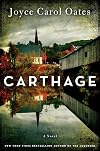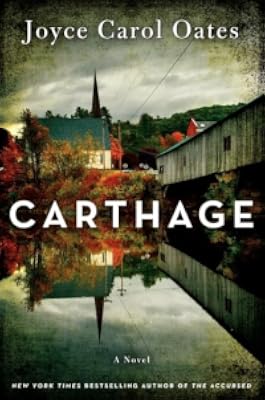
Carthage
by Joyce Carol Oates
On This Page
Description
When a young girl disappears near a community in the Adirondacks, the people of the town of Carthage must face the fact that an Iraq War veteran is the prime suspect.Tags
Recommendations





Member Reviews
This novel was a bit of a muddle for me, at times so, so good and at others, painfully labored. It's about a missing girl and the effect of her disappearance on her family and the accused perpetrator. That's the surface story anyway. Deeper, it's an exploration of alienation and misperception, and about the dark currents often flowing just below placid surfaces. Oates' characters are both sympathetic and infuriating, their actions and motivations perfectly understandable at times and completely inscrutable at others. It's this kind of complexity that I loved, despite my struggle with some parts of the book.
I never mind a book with "unlikeable" characters, and in fact, I often relate to them. That was the case with Cressida, whose diagnosis of autism was never completely confirmed, only offered as a possibility during her childhood. But she is definitely written with many autistic traits. There were many passages from Cressida's point of view that reminded me of myself (I am autistic). I think this novel was written beautifully, and Oates is one of my very favorite prose stylists. It is a slow novel, though, and I understand why others disliked it. I rarely mind a slow pace without much plot, as long as the characters are interesting, and most of these characters intrigued me.
A richly rewarding novel that grips from the outset. It's not one of her more difficult works in terms of style. She uses multiple narratives and several stylistic tricks but the novel flows seamlessly throughout. I'm not sure why readers are put off by the characters not being 'likeable'. Most of them are still relatable and personally I find her characters in general to be as realistic and multifaceted as real life, albeit that several of them are murderers and such! Cressida is not wholly sympathetic but I'm surprised more bookworms wouldn't find her 'outsider' personality fascinating. The novel keep readers on their toe when the reader is lulled into a particular narrative only to have the rug pulled. It's also quite provocative in show more its themes of war and incarceration. Although realistic it also has Gothic elements and I think those new to Oates couldn't find many better places to start in terms of her style and concerns. show less
Cressida Mayfield is the cynical, socially inept, and less pretty Mayfield sister in a prominent Carthage family.
She secretly carries a torch for her beautiful sister’s finance, who tragically returns hideously disfigured from Iraq. Juliet, the elder sister, seems willing to stick by Brett Kincaid, but Brett’s emotional scars prevent him from reciprocating her love and their engagement ends.
Cressida, seeing this as her chance to inveigle Brett, attempts to seduce him at a rowdy bar where she finds him drowning his sorrows. Brett rejects her violently. Cressida disappears. Months later, Brett confesses to her murder, is convicted and imprisoned despite the fact that Cressida’s body was never recovered.
The story alludes once or show more twice to the possibility that Cressida is autistic, or at the very least ‘on the spectrum.’ But as the story unfolds I found her rather to be manipulative, narcissistic and immature. She misconstrues her awkwardness for superiority, and uses tactlessness to control everyone around her. In the end, many perfectly happy lives are ruined by her deceit.
Like other Joyce Carol Oates novels, I found this one to be a good story, easy to read and provocative, even though I didn’t much like the main character. show less
She secretly carries a torch for her beautiful sister’s finance, who tragically returns hideously disfigured from Iraq. Juliet, the elder sister, seems willing to stick by Brett Kincaid, but Brett’s emotional scars prevent him from reciprocating her love and their engagement ends.
Cressida, seeing this as her chance to inveigle Brett, attempts to seduce him at a rowdy bar where she finds him drowning his sorrows. Brett rejects her violently. Cressida disappears. Months later, Brett confesses to her murder, is convicted and imprisoned despite the fact that Cressida’s body was never recovered.
The story alludes once or show more twice to the possibility that Cressida is autistic, or at the very least ‘on the spectrum.’ But as the story unfolds I found her rather to be manipulative, narcissistic and immature. She misconstrues her awkwardness for superiority, and uses tactlessness to control everyone around her. In the end, many perfectly happy lives are ruined by her deceit.
Like other Joyce Carol Oates novels, I found this one to be a good story, easy to read and provocative, even though I didn’t much like the main character. show less
In the small Adirondacks town of Carthage, New York, 19-year-old Cressida Mayfield goes missing. The prime suspect in her disappearance is a severely wounded Iraq war veteran who happens to be her older sister's fiance. I don't want to say much more about the plot, because it's twisty enough that every time you think you've got a hold on something or someone, it turns out you don't.
I love how Joyce Carol Oates takes a fiction genre and plays around with it until it is more than the sum of its parts, while remaining completely respectful of the genre she is borrowing. Here, the whodunit aspect is legitimately suspenseful, but the reader's attention is more strongly drawn to the the seething emotions of the characters. I didn't quite show more know what to make of Cressida - is she on the autism spectrum or not? - but I was drawn to her in all her brittle unlikability.
It's an odd book. It's dark. Joyce seems to delight in confounding the reader! I do have to wonder about all the exclamation points and italics. They seem to be an Oates trademark, but in this book they really struck me. show less
I love how Joyce Carol Oates takes a fiction genre and plays around with it until it is more than the sum of its parts, while remaining completely respectful of the genre she is borrowing. Here, the whodunit aspect is legitimately suspenseful, but the reader's attention is more strongly drawn to the the seething emotions of the characters. I didn't quite show more know what to make of Cressida - is she on the autism spectrum or not? - but I was drawn to her in all her brittle unlikability.
It's an odd book. It's dark. Joyce seems to delight in confounding the reader! I do have to wonder about all the exclamation points and italics. They seem to be an Oates trademark, but in this book they really struck me. show less
I enjoyed reading Carthage immensely. At times, I connected strongly with Cressida and found myself wondering if most of her behaviors weren't just teenage things. Not the big things, but the disconnection from others, the push to keep herself at a distance from the rest of the world, while still needing love and attention. I took a lot of little notes in her narrative chapters.
This quote:
Strange how Cressida could be right about so much, and yet – (…) you resented her remarks, and were inclined to dislike her for making them.
Unlikable characters, yet you follow their stories and care what happens to them.
I love JCO's stance on war and the horrors it inflicts. Also, I love the way she handles middle-age, love and marriage. Some of show more her two-dimensional characters created to express simplistic opinions are a little insulting, but they are popular, so okay. show less
This quote:
Strange how Cressida could be right about so much, and yet – (…) you resented her remarks, and were inclined to dislike her for making them.
Unlikable characters, yet you follow their stories and care what happens to them.
I love JCO's stance on war and the horrors it inflicts. Also, I love the way she handles middle-age, love and marriage. Some of show more her two-dimensional characters created to express simplistic opinions are a little insulting, but they are popular, so okay. show less
En liten by, en familie, en forlovelse, en terrorhandling og en krig. Så rammer ulykkene suksessivt der liv tar nye og ulike veier. Vi følger vekst og fall, frykt og kjærlighet, bitterhet og rådløshet. Det er Amerika etter 22.juli, etter Irak-krigen, Det er Amerika etter at vi ikke har sett hverandre, etter at frykten har besatt våre hjerter. Det er også fortellingen om annerledesheten idet den truer oss, vi kjenner jo ikke dette som vi tror vi ser. Hva kan et menneske tåle, hvor snur vi oss for å få hjelp, hvem er jeg nå? Ikke minst er det fortellingen om glemselens teppe som sikter mot å beskytte oss.
Members
- Recently Added By
Lists

Llibres que he llegit el 2014
23 works; 1 member
Author Information

473+ Works 63,233 Members
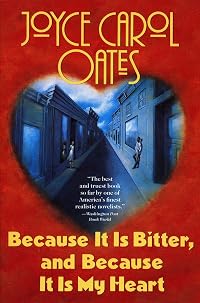
Joyce Carol Oates was born on June 16, 1938 in Lockport, New York. She received a bachelor's degree in English from Syracuse University and a master's degree in English from the University of Wisconsin. She is the author of numerous novels and collections of short stories. Her works include We Were the Mulvaneys, Blonde, Bellefleur, You Must show more Remember This, Because It Is Bitter, Because It Is My Heart, Solstice, Marya : A Life, and Give Me Your Heart. She has received numerous awards including the National Book Award for Them, the PEN/Malamud Award for Excellence in Short Fiction, and the F. Scott Fitzgerald Award for Lifetime Achievement in American Literature. She was a finalist for the 2015 Pulitzer Prize for Fiction with her title Lovely, Dark, Deep. She also wrote a series of suspense novels under the pseudonym Rosamond Smith. In 2015, her novel The Accursed became listed as a bestseller on the iBooks chart. She worked as a professor of English at the University of Windsor, before becoming the Roger S. Berlind Distinguished Professor of Humanities at Princeton University. She and her late husband Raymond J. Smith operated a small press and published a literary magazine, The Ontario Review. (Bowker Author Biography) Joyce Carol Oates is one of the most eminent and prolific literary figures and social critics of our times. She has won the National Book Award and several O. Henry and Pushcart prizes. Among her other awards are an NEA grant, a Guggenheim fellowship, the PEN/Malamud Lifetime Achievement Award, and the F. Scott Fitzgerald Award for Lifetime Achievement in American Literature. (Publisher Provided) show less
Some Editions
Common Knowledge
- Canonical title
- Carthage
- Original publication date
- 2000
- People/Characters
- Cressida Mayfield; Zeno Mayfield; Brett Kincaid; Juliet Mayfield; Arlette Mayfield
- Important places
- Carthage, New York, USA
- Important events
- Iraq War
- Dedication
- To Charlie Gross
my husband and first reader - First words
- Didn't love me enough. (Prologue)
- Last words
- (Click to show. Warning: May contain spoilers.)Driving the long wall.
Classifications
Statistics
- Members
- 569
- Popularity
- 52,028
- Reviews
- 16
- Rating
- (3.68)
- Languages
- 6 — English, French, Italian, Norwegian (Bokmål), Spanish, Swedish
- Media
- Paper, Audiobook, Ebook
- ISBNs
- 31
- UPCs
- 1
- ASINs
- 8