
Tim O'Brien (1) (1946–)
Author of The Things They Carried
For other authors named Tim O'Brien, see the disambiguation page.
About the Author
Tim O'Brien was born on October 1, 1946 in Austin, Minnesota. He graduated from Macalester College in 1968 and was immediately drafted into the U. S. Army, serving from 1969 to 1970 and receiving a Purple Heart. Three years later, his memoirs of the Vietnam War were published as If I Die in a show more Combat Zone, Box Me Up and Ship Me Home. Later works include Northern Lights (1975), Going After Cacciato (1978, winner of the National Book Award), and The Things They Carried (1990, winner of the Melcher Book Award and finalist for the Pulitzer Prize and the National Book Critics Circle Award). (Bowker Author Biography) show less
Image credit: Tim O'Brien, on 14 avril 2014
Works by Tim O'Brien
Associated Works
The Story and Its Writer: An Introduction to Short Fiction (1976) — Contributor — 1,213 copies, 3 reviews
The Scribner Anthology of Contemporary Short Fiction: Fifty North American American Stories Since 1970 (1999) — Contributor — 580 copies, 4 reviews
The Vintage Book of Contemporary American Short Stories (1994) — Contributor — 542 copies, 2 reviews
You've Got to Read This: Contemporary American Writers Introduce Stories that Held Them in Awe (1994) — Contributor; Introduction — 413 copies, 3 reviews
The Ecco Anthology of Contemporary American Short Fiction (2008) — Contributor — 140 copies, 2 reviews
Novel History: Historians and Novelists Confront America's Past and Each Other (2001) — Contributor — 139 copies, 1 review
War No More: Three Centuries of American Antiwar and Peace Writing (2016) — Contributor — 109 copies, 2 reviews
The Heath Anthology of American Literature, Concise Edition (2003) — Contributor — 72 copies, 1 review
The Other Side of Heaven: Post-War Fiction by Vietnamese and American Writers (1995) — Contributor — 43 copies
Very seventies : a cultural history of the 1970s, from the pages of Crawdaddy (1995) — Contributor — 27 copies
American Soldier: Stories of Special Forces from Iraq to Afghanistan (Adrenaline) (2002) — Contributor — 22 copies
Tagged
Common Knowledge
- Legal name
- O'Brien, William Timothy
- Birthdate
- 1946-10-01
- Gender
- male
- Education
- Macalester College (B.A., Political Science, 1968)
Harvard University (graduate work) - Occupations
- journalist
novelist
infantry foot soldier (United States Army)
teacher (Texas State University) - Organizations
- Texas State University-San Marcos (endowed chair ∙ MFA program)
Washington Post (intern)
United States Army - Awards and honors
- American Academy of Arts and Letters Academy Award (Literature ∙ 1992)
Richard C. Holbrooke Distinguished Achievement Award (2012) - Nationality
- USA
- Birthplace
- Austin, Minnesota, USA
- Places of residence
- Austin, Minnesota, USA (birthplace)
Worthington, Minnesota, USA
Central Texas, USA
Cambridge, Massachusetts, USA - Associated Place (for map)
- USA
Members
Reviews
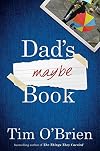
In a collection of essays, almost letters written to his sons, Tim O'Brien reflects on what matters most to him: fatherhood, love, pacifism, Hemingway, and so much more that he wants to share with his boys.
Being an older father, O'Brien is cognizant of his own mortality and this seems to drive much of the force behind the essays that have disparate but windingly related topics, all things that Tim O'Brien seems to want his sons, and readers, to know about him when he's gone. It gives us a show more peek behind the curtain at the man who wrote The Things They Carried and despairs of being known as a "war writer," the man who enjoys putting on amateur magic shows and above all absolutely adores his sons. At once far reaching and deeply personal, I highly recommend Dad's Maybe Book to any fan of his fiction and any parent who reflects on what they'd like their children to remember after they're gone. show less
Being an older father, O'Brien is cognizant of his own mortality and this seems to drive much of the force behind the essays that have disparate but windingly related topics, all things that Tim O'Brien seems to want his sons, and readers, to know about him when he's gone. It gives us a show more peek behind the curtain at the man who wrote The Things They Carried and despairs of being known as a "war writer," the man who enjoys putting on amateur magic shows and above all absolutely adores his sons. At once far reaching and deeply personal, I highly recommend Dad's Maybe Book to any fan of his fiction and any parent who reflects on what they'd like their children to remember after they're gone. show less
Dad’s Maybe Book is Tim O’Brien’s first new book in seventeen years – and, sadly enough, it is likely to be his last one. But never say never, because O’Brien didn’t expect the material that comprises Dad’s Maybe Book ever to be published when he began writing the pieces to his two young sons back in 2003. Near the end of this one, though, the seventy-three-year-old author does seem to be formally announcing his retirement when he says, “…no more early (writing) mornings. show more The daily agenda will be simple: sleep until seven or eight, then settle in to read the books I want to read. At my age, a certain selfishness seems permissible – doing the things I long to do and not what some preacherly internal voice tells me I must do.”
In June of 2003, the fifty-seven-year-old Tim O’Brien was surprised by the gift of a first child, a little boy called Timmy that the author describes as “an eater of electrical cords, a fertilizer factory, a pain in the ass, and a thrill in the heart.” As Timmy entered his sixteenth month of life, O’Brien was struck by the thought that his young son might never really know him. After all, if the actuarial tables were correct, they would not be spending too many more years together.
And that’s when Dad’s Maybe Book was born. But the book didn’t really begin to gain much momentum until O’Brien and his wife learned that they were expecting a second son, a little boy they would call Tad. The book that began as a series of “love letters to his children, along with a few anecdotes and some tentative words of advice” was finally published in late 2019. That Dad’s Maybe Book turned into so much more than that, and that Tim O’Brien (the National Book Award winner for 1979’s Going After Cacciato) fans would enjoy reading it, seems to have caught O’Brien at least a little bit by surprise.
Personally, I’m not surprised by that at all because what O’Brien has written here is as much a terrific memoir as it is a book about parenting or a series of letters to his young sons. Even more importantly for contemporaries of the author, this is a very fine reflection on the aging process and facing the ultimate ending that grows closer for all of us with each day’s passing. The book is largely structured around “Home School” and “Homework” assignments that O’Brien requires of his sons over the years. Surprisingly, many of those assignments focus on the stories and novels of Ernest Hemmingway, an author whose work O’Brien both admires and dislikes – often at the same time. It is in these five sections of the book (titled “Timmy and Tad and Papa and I) that O’Brien, a decorated Vietnam War veteran, explains how he became a pacifist and why he despises wars of any type so much today. (He particularly despises those who are so willing to fight wars using someone else’s sons to fight them.)
Dad’s Maybe Book was written over a fifteen-year period during which O’Brien’s sons grew from babyhood to teenagers; a time during which they, their father, the country, and the world changed greatly. It is a hopeful book, but it is often a sad book, one in which the author’s anxiety about being so much older than his children becomes more and more obvious as the years pass. It ends, though, with a comforting piece that O’Brien calls “One Last Lesson Plan,” instructions on just how he want his sons to spend the day together on what would have been the author’ hundredth birthday, October 1, 2046 (wouldn’t it be something if he were still here to spend that day with them). He wants them to play a round of golf together, drink some beer, look at some old family pictures, and “Forgive what needs forgiving, laugh at what needs laughing, and then go home.”
Bottom Line: I saved my favorite quote from Dad’s Maybe Book for this summation because I think it represents the overall tone of the book so well: “It’s 3:12 a.m., October 1, 2016. I have turned seventy. Daylight will bring slices of cake and cheerful goodwill. It will be like celebrating a hernia.” God help me, but I love this quote. show less
In June of 2003, the fifty-seven-year-old Tim O’Brien was surprised by the gift of a first child, a little boy called Timmy that the author describes as “an eater of electrical cords, a fertilizer factory, a pain in the ass, and a thrill in the heart.” As Timmy entered his sixteenth month of life, O’Brien was struck by the thought that his young son might never really know him. After all, if the actuarial tables were correct, they would not be spending too many more years together.
And that’s when Dad’s Maybe Book was born. But the book didn’t really begin to gain much momentum until O’Brien and his wife learned that they were expecting a second son, a little boy they would call Tad. The book that began as a series of “love letters to his children, along with a few anecdotes and some tentative words of advice” was finally published in late 2019. That Dad’s Maybe Book turned into so much more than that, and that Tim O’Brien (the National Book Award winner for 1979’s Going After Cacciato) fans would enjoy reading it, seems to have caught O’Brien at least a little bit by surprise.
Personally, I’m not surprised by that at all because what O’Brien has written here is as much a terrific memoir as it is a book about parenting or a series of letters to his young sons. Even more importantly for contemporaries of the author, this is a very fine reflection on the aging process and facing the ultimate ending that grows closer for all of us with each day’s passing. The book is largely structured around “Home School” and “Homework” assignments that O’Brien requires of his sons over the years. Surprisingly, many of those assignments focus on the stories and novels of Ernest Hemmingway, an author whose work O’Brien both admires and dislikes – often at the same time. It is in these five sections of the book (titled “Timmy and Tad and Papa and I) that O’Brien, a decorated Vietnam War veteran, explains how he became a pacifist and why he despises wars of any type so much today. (He particularly despises those who are so willing to fight wars using someone else’s sons to fight them.)
Dad’s Maybe Book was written over a fifteen-year period during which O’Brien’s sons grew from babyhood to teenagers; a time during which they, their father, the country, and the world changed greatly. It is a hopeful book, but it is often a sad book, one in which the author’s anxiety about being so much older than his children becomes more and more obvious as the years pass. It ends, though, with a comforting piece that O’Brien calls “One Last Lesson Plan,” instructions on just how he want his sons to spend the day together on what would have been the author’ hundredth birthday, October 1, 2046 (wouldn’t it be something if he were still here to spend that day with them). He wants them to play a round of golf together, drink some beer, look at some old family pictures, and “Forgive what needs forgiving, laugh at what needs laughing, and then go home.”
Bottom Line: I saved my favorite quote from Dad’s Maybe Book for this summation because I think it represents the overall tone of the book so well: “It’s 3:12 a.m., October 1, 2016. I have turned seventy. Daylight will bring slices of cake and cheerful goodwill. It will be like celebrating a hernia.” God help me, but I love this quote. show less
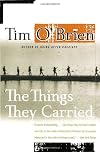
The flawless audiobook presentation, read by none other than Bryan Cranston (of Malcolm in the Middle fame) was riveting. This is good storytelling, and a lesson on how to use repetition. It sheds light on nuanced emotions amid the chaos of wartime.
I've always disliked war stories in general. They're just not my thing. I found The Naked and the Dead difficult. I don't understand the level of cruelty in these tales. They accomplish the depiction of human strength, endurance, weakness and show more moral outrage. But how is it possible to justify a bombing, a mine, or the massacres that have occurred in every era of history? I'm always thinking, why is our civilization doing this? I'm no historian. I don't know a lot about Vietnam. But I believe I can appreciate some of the contradictions, the hypocrisy and the tragedy. Maybe Hollywood has ruined my perception. It is safe to assume that those who had a personal connection with the time and events will get slightly more out of the literature it produced.
Luckily, Tim O'Brien's book really comes off as authentic. Vietnam was another troubling time in history, and the author has a lot to say about war and the damage it has done on the psyches of the Americans involved. The author's account at the end added even more food for thought.
This is an affecting, powerful, immersive book. A well-written chronicle, limited in scope, but all the more memorable for the idiosyncratic characters and clear, crystalline voice.
This book does its job. It captures attention, widens understanding, it engages the heart and mind. I doubt I will find a more effective war story anytime soon. show less
I've always disliked war stories in general. They're just not my thing. I found The Naked and the Dead difficult. I don't understand the level of cruelty in these tales. They accomplish the depiction of human strength, endurance, weakness and show more moral outrage. But how is it possible to justify a bombing, a mine, or the massacres that have occurred in every era of history? I'm always thinking, why is our civilization doing this? I'm no historian. I don't know a lot about Vietnam. But I believe I can appreciate some of the contradictions, the hypocrisy and the tragedy. Maybe Hollywood has ruined my perception. It is safe to assume that those who had a personal connection with the time and events will get slightly more out of the literature it produced.
Luckily, Tim O'Brien's book really comes off as authentic. Vietnam was another troubling time in history, and the author has a lot to say about war and the damage it has done on the psyches of the Americans involved. The author's account at the end added even more food for thought.
This is an affecting, powerful, immersive book. A well-written chronicle, limited in scope, but all the more memorable for the idiosyncratic characters and clear, crystalline voice.
This book does its job. It captures attention, widens understanding, it engages the heart and mind. I doubt I will find a more effective war story anytime soon. show less

This book is a bit hard to pin down. Is it a novel, a collection of short stories, a memoir – or a unique hybrid of all three? Whatever it is, it should be considered the ultimate war story, and as the narrator (whose name is also Tim O’Brien) points out, war stories are never true and yet are always completely true.
While the entire book is compelling, its structure naturally leads to some sections standing out. There is the story of a soldier who ships his girlfriend out to Vietnam, and show more she goes native, becoming a part of the war and the country in a way her American sweetheart never could – that was one that stuck with me. And then there was the loosely connected set of stories detailing what happened in a shitfield one night, and who exactly was to blame. Or the story of what happened before the narrator was sent to Vietnam, when he considered running away to Canada and called himself a coward for not following through.
No matter which story stays with you the most, you can’t help but admire the entire construction of the work for the precisely detailed way it evokes the war and the experiences of the poor fools who had to live (or die) through it. Anyone who is familiar with O’Brien’s work will surely know how his war experiences have touched everything he has written; this is his ultimate retelling of that time in his life, and probably one of the best chronicles of the Vietnam era. show less
While the entire book is compelling, its structure naturally leads to some sections standing out. There is the story of a soldier who ships his girlfriend out to Vietnam, and show more she goes native, becoming a part of the war and the country in a way her American sweetheart never could – that was one that stuck with me. And then there was the loosely connected set of stories detailing what happened in a shitfield one night, and who exactly was to blame. Or the story of what happened before the narrator was sent to Vietnam, when he considered running away to Canada and called himself a coward for not following through.
No matter which story stays with you the most, you can’t help but admire the entire construction of the work for the precisely detailed way it evokes the war and the experiences of the poor fools who had to live (or die) through it. Anyone who is familiar with O’Brien’s work will surely know how his war experiences have touched everything he has written; this is his ultimate retelling of that time in his life, and probably one of the best chronicles of the Vietnam era. show less
Lists
Into the Woods (1)
Metafiction (1)
Carole's List (1)
Asia (1)
Favourite Books (1)
Best War Stories (1)
100 New Classics (1)
Read This Next (1)
War Literature (1)
AP Lit (3)
Wishlist (2)
B-B to Get (1)
E's Reader (1)
Allie's Wishlist (1)
1990s (1)
Epistolary Books (2)
THE WAR ROOM (2)
Fiction For Men (2)
Unread books (1)
Fiction: Asia (1)
Five star books (1)
Books I've Read (1)
Awards


You May Also Like


Associated Authors
Statistics
- Works
- 20
- Also by
- 38
- Members
- 26,145
- Popularity
- #799
- Rating
- 4.0
- Reviews
- 618
- ISBNs
- 295
- Languages
- 13
- Favorited
- 86


